
Small UK catering teams often assume a good menu and great tasting food will shield them from inspection risk. In reality, ratings hinge on evidence you can show, not just what’s on the plate. This article explains why many ratings below 5 arise from weak records, weak controls and uncertain management confidence. It also offers practical steps to tighten documentation, standardise daily routines and improve inspection readiness, with clear examples you can apply in a busy kitchen.
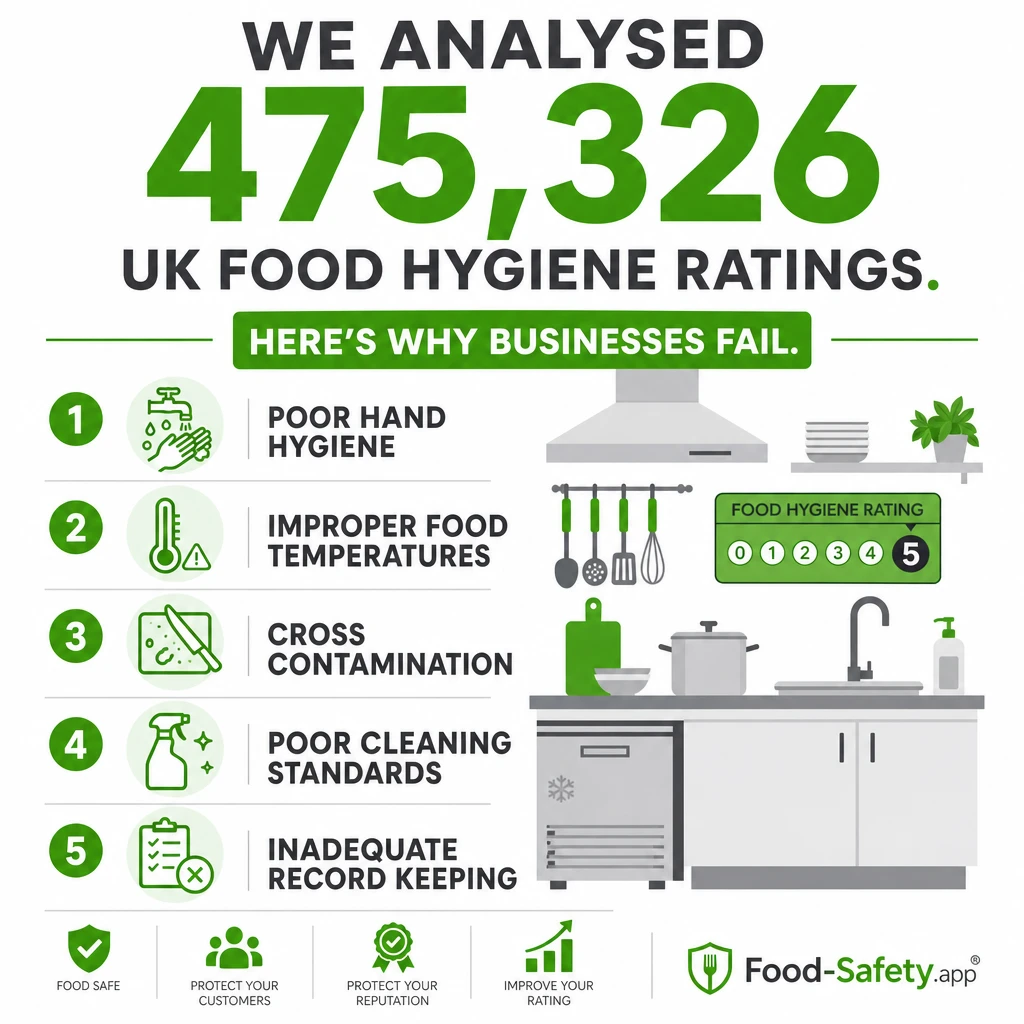
What the 475326 hygiene ratings reveal about common failure points
The most common reason for a rating below 5 is the absence of verifiable records, not the appearance of safe food.
The nationwide tally shows frequent patterns that inspectors flag. Many ratings below 5 come from a lack of verifiable evidence that safe practices are consistently followed. In bustling kitchens, teams may rely on memory or informal checks, but inspectors need traceable proof that each control was addressed, when and by whom.
Practical scenarios
- Fridge temperatures are checked but not recorded, leaving no proof for the inspector
- A cleaning task is done informally, but there’s no schedule or completion log
- Allergen details are known by one staff member, but not linked to menu records
- A delivery is accepted with no goods-in check for temperature or damage
- A faulty probe is used without calibration records, affecting trust in measurements
- A defect spotted in equipment is not followed up with an action log
Why confidence in management often drops ratings even when food looks safe
Confidence in management is the hinge; investigators read the system through the people running it, not just what’s on the plate.
A strong management show, with weekly reviews, clear task ownership and visible problem resolution, can lift a rating even when a single lapse occurred during the inspection window.
How poor documentation weakens the case during an inspection
Without records, a kitchen is effectively operating in the dark; records are the light inspectors rely on.
Documentation lets inspectors follow the kitchen’s logic from arrival to service. When records are missing or incomplete, it becomes hard to prove that corrective actions were taken, that allergens were controlled, or that temperatures remained within safe ranges across all stages. In practice, a lack of documented evidence can turn a safe-looking dinner into a risk discussion, because there’s no verifiable trail of compliance.
Practical examples to watch for
- Temperature readings that exist only in memory, not written down
- Cleaning tasks performed but with no date, frequency or responsible person
- An allergen matrix that isn’t aligned to the latest menu items
- Deliveries accepted without a goods-in inspection or damage notes
- Equipment defects spotted but no corrective action recorded or time-stamped
The link between daily routines traceable records and consistent standards
Consistent daily routines create predictable outcomes; traceable records start with opening and closing checks.
Daily routines are the backbone of consistent safety performance. Opening and closing checks, routine cleaning schedules, and moment-by-moment temperature monitoring create a chain of evidence that supports a high rating. When records are clear, trends can be reviewed during audits, and management can demonstrate ongoing attention to safety rather than heroic saves after a near-miss.
A practical approach is to embed simple, easy-to-use checks into service flow. For example, an opening checklist might confirm that fridges are at safe temperatures, cleaning tasks for the previous day were completed, and allergen controls for the day’s menus are current. A closing checklist can capture what was done, what was not completed and what needs follow-up.
Which controls matter most in busy kitchens
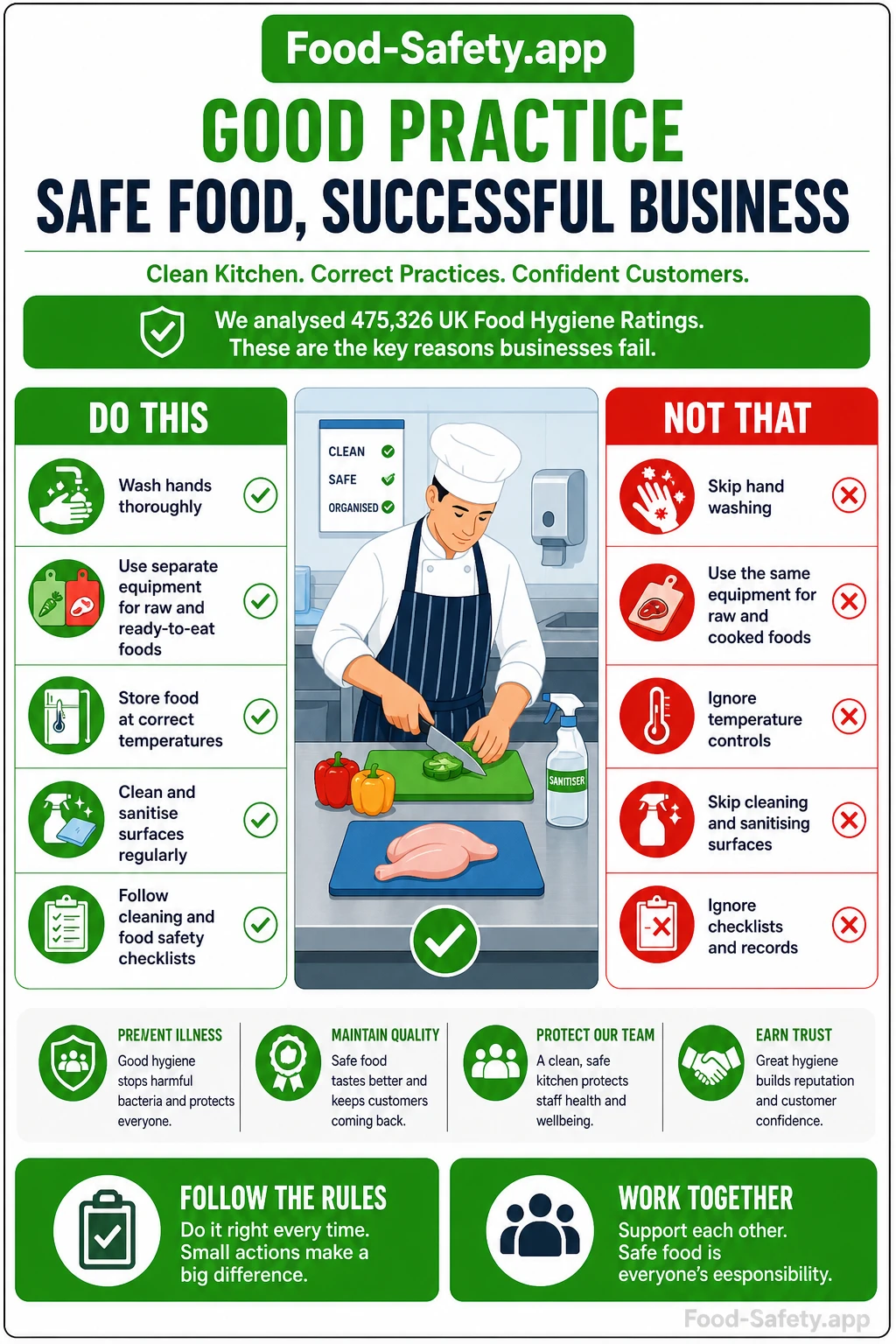
In high-pressure environments, five areas tend to drive most compliance concerns. Prioritising them helps teams stay inspection-ready without overwhelming staff.
- Temperature management
- Record cooking, cooling, cold storage, reheating and hot holding temperatures at set times. Use a single log for all temperature points to simplify review.
- Cleaning and sanitisation
- Implement a clear cleaning schedule with responsible persons and dates. Include high-touch areas and implement colour-coded cloths where practical to reduce cross-contamination risks.
- Allergen management
- Maintain an allergen matrix covering the 14 recognised allergens and link it to menu items. Ensure staff can access updated allergen information quickly.
- Deliveries and goods-in
- Check deliveries on arrival for temperature, packaging integrity and any visible damage. Log checks and outcomes to prove traceability.
- Corrective actions and defect handling
- When faults or deviations occur, record the problem, the action taken, who authorised it and when. Track the time to completion and verification of resolution.
A simple, reliable system that captures these five areas can stand up to inspection scrutiny and improve confidence in management.
The safest procedure is the one that can be followed consistently during a busy service.
Practical steps for compliance and inspection readiness
Adopt a practical, no-fruss-driven plan that works in real kitchens, offline if needed, and supports management confidence as well as day-to-day safety.
- Create simple record-keeping that covers all critical controls
- Implement opening, closing and cleaning checks with clear ownership
- Maintain allergen controls and link them to current menu items
- Log deliveries, defects, corrective actions, pest sightings and probe calibration
- Make records easy to export for inspections and internal reviews
- Build a system that works offline and in real kitchens, and supports consistent evidence for management confidence
A small, reliable system that’s easy to use every day is worth more than complex software that sits unused.
By focusing on these practical steps, small UK catering teams can close the gaps that commonly trigger inspections to offer below a five rating. The result is a clearer inspection narrative, better management oversight and a stronger, verifiable commitment to food safety.