
If you are wondering what records a small kitchen needs, the short answer is: fewer than most people think, but the ones you do keep must be current, easy to understand, and actually used. A small commercial kitchen does not need paperwork for the sake of it. It needs the right food safety records to show that checks are being done, issues are being fixed, and safe systems are being followed during busy service.
In the UK, the exact paperwork can vary depending on the business and the foods you handle, but the basic approach is the same: keep records that help you control risks, prove due diligence, and make inspections smoother. This guide breaks down the food safety records a small kitchen really needs, with practical examples for restaurants, cafés, takeaways, hotels, school canteens, and catering teams.
Core records every small kitchen should keep
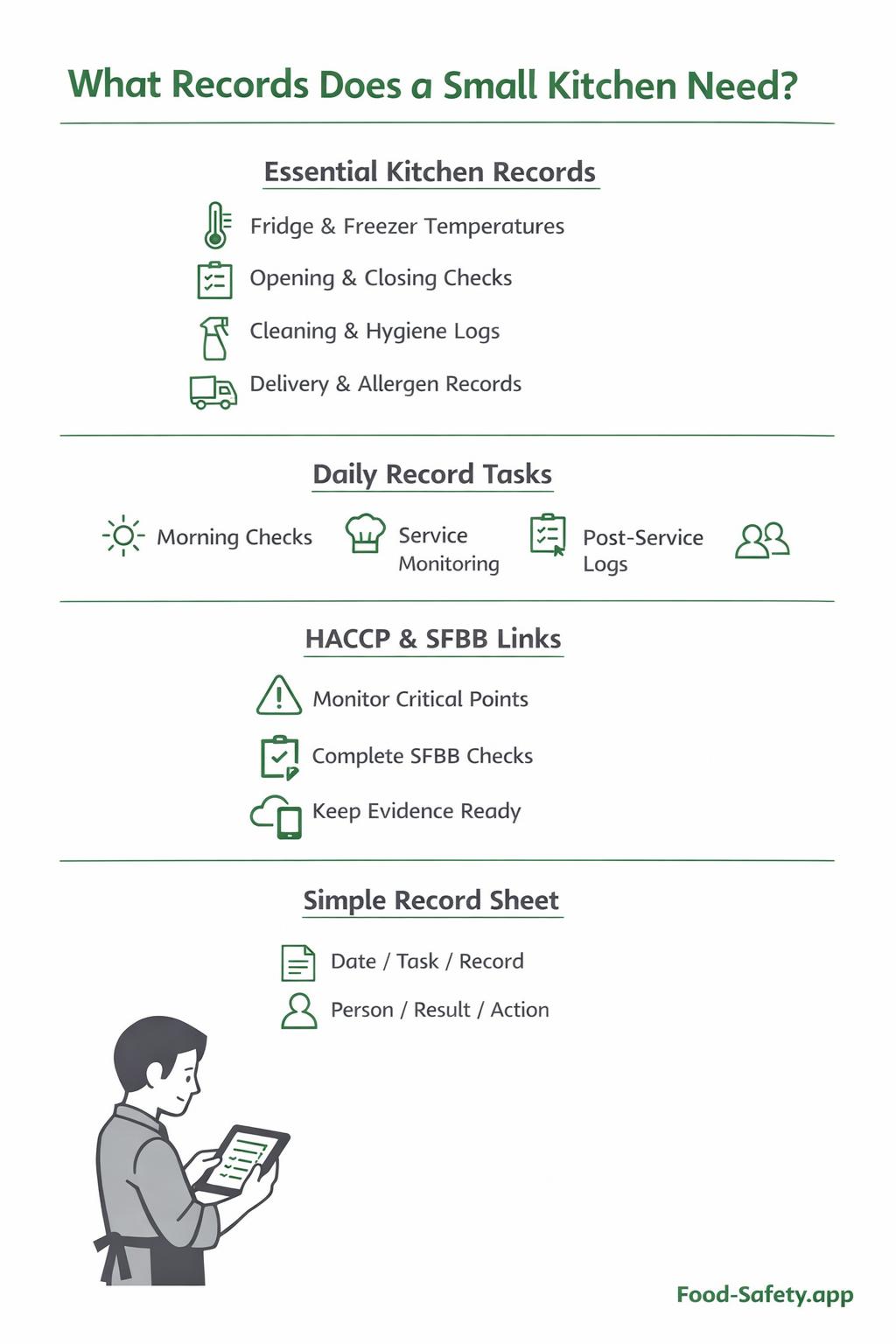
For most small kitchens, the core food safety records are the ones that show your controls are working day to day. Think of them as the paperwork that backs up your safe routine, not a separate admin task that sits untouched in a folder.
The most useful records usually include:
- Fridge and freezer temperature checks
- Cooking, cooling, and hot holding checks where needed
- Cleaning schedules and sign-off sheets
- Allergen information and recipe control sheets
- Delivery and supplier checks
- Pest control visit notes or monitoring logs
- Staff training records
- Maintenance and repair records for equipment that affects food safety
If you run a small café with a limited menu, your paperwork may be lighter than a hotel banqueting kitchen. But you still need records that match your risks. A takeaway using chilled ingredients all day will rely heavily on temperature checks. A school canteen will usually need tighter menu and allergen control. A bakery with low-risk products may need less cooking paperwork, but still needs cleaning, maintenance, and stock traceability records.
For a HACCP-based approach, see HACCP principles explained.
Food safety records for temperature checks
Temperature logs are one of the most important food safety records a small kitchen needs. They show that cold food is being kept cold, hot food is being held safely, and equipment is working properly.
What to record
- Fridge and freezer temperatures at the start of service
- Any mid-shift checks if doors are opened often or the kitchen is busy
- Hot holding temperatures where food is kept ready to serve
- Cooking and reheating checks if you cook in batches
- Cooling times for food that is saved for later use
What a good log should show
- Date and time
- Unit or equipment name
- Actual reading
- Name or initials of the person checking
- What action was taken if something was out of range
Corrective actions to record
If a fridge is warm, don’t just write the number down and move on. Note what was done, such as moving food to another unit, checking the door seal, reducing stock load, calling maintenance, or discarding food if safety was compromised. Inspectors want to see action, not just readings.
For practical cross-contamination controls, see Cross-contamination and food safety management.
For practical guidance on food hygiene basics, the Food Standards Agency is a useful UK source for business owners and kitchen managers.
Cleaning and hygiene records
Cleaning records are one of the simplest ways to show control in a small kitchen. They do not need to be complicated. In fact, the best ones are brief, realistic, and easy for the team to keep up during busy service.
Your cleaning records should cover:
- Daily cleaning tasks for food contact surfaces
- Weekly deep-clean tasks for equipment and storage areas
- Colour-coded cloth and mop routines if used
- Toilet and handwash area cleaning
- Cleaning of high-risk touch points such as fridge handles, taps, and switches
A small kitchen often fails on cleaning paperwork because the list is too long and nobody signs it properly. Keep the schedule practical. For example, a café might only need a morning, close-down, and weekly deep-clean sheet. A busy service kitchen may need line-by-line checks for prep tables, slicers, and utensils.
Where issues appear, record the fix. If a drain smells, a shelf is sticky, or a fridge gasket is damaged, note the action taken and who was told. That turns a cleaning list into a useful control record.
For practical cleaning scheduling, see kitchen cleaning schedule in action.
Allergen and ingredient records
Allergen control is one of the most important parts of what records a small kitchen needs, especially for restaurants, takeaways, cafés, and schools. Good records help staff answer customer questions confidently and reduce the risk of mistakes.
Keep records of:
- Recipe ingredients and supplier product details
- Allergen information for menu items
- Any recipe changes or substitutions
- Special preparation notes for allergy orders
- Separation steps for allergen-free food where relevant
In a small kitchen, one swapped mayonnaise, one changed sauce, or one different bread roll can make the allergen information wrong. That is why recipe sheets need to be updated whenever ingredients change. It is especially important in takeaway and café kitchens where staff may prepare food quickly and from memory.
Use a simple system that staff can actually follow. If the menu changes regularly, keep a master recipe file and a quick-reference allergen sheet at the pass or order point. For allergy orders, record any special handling required so the whole team sees it, not just the first person who took the order.
For broader allergen management, Natasha’s Law for UK food businesses is a key reference. See Natasha’s Law for UK food businesses.
Supplier and traceability records
Traceability records help you show where food came from and what happened to it. Small kitchens do not usually need a huge filing system, but they should be able to trace important stock quickly if there is a recall or a food safety problem.
Keep:
- Delivery notes or invoices
- Supplier details and contact information
- Checks on damaged, out-of-date, or temperature-abused deliveries
- Date labels for opened or prepared foods
For a simple delivery check sheet is often enough. Note the delivery date, the supplier, any issues, and whether anything was rejected. If chilled food arrives warm, write down the decision and the reason. That record helps protect the business if questions come later.
Pest control and maintenance records
Even small kitchens need evidence that pests are being monitored and equipment is being kept in a safe condition. These records matter because a minor fault can quickly turn into a bigger food safety issue during a busy service.
Useful records include:
- Pest control visits and findings
- Any sightings reported by staff
- Actions taken, such as blocking entry points or cleaning spillages
- Repair notes for fridges, dishwashers, extractors, sinks, seals, and drains
If a fridge keeps running warm, a bin lid breaks, or a fly screen tears, do not leave it until the next review. Record the fault, the temporary control, and the repair request. Small kitchens often operate with limited backup equipment, so prompt maintenance records can be vital.
Staff training records
Staff training records are an easy win for small kitchens because they show who has been trained, when, and on what. They are especially useful when team members are part-time, seasonal, or working split shifts.
Record training for:
- Food hygiene basics
- Allergen awareness
- Cleaning routines
- Temperature checks
- Cross-contamination prevention
- Opening and closing procedures
You do not need a huge training file. A simple sheet with the staff name, topic, date, and manager sign-off is usually enough for a small operation. If someone is new, add a short induction checklist and make sure they are supervised before working alone. For quick reference, see Training records.
What not to overdo in a small kitchen
One of the biggest mistakes is copying paperwork from a large site and expecting a small team to keep up with it. That usually leads to blank forms, rushed signatures, and records nobody trusts.
In most small kitchens, you should avoid:
- Duplicate logs that say the same thing twice
- Overly long daily checklists
- Paperwork that nobody reviews
- Forms that do not match the actual menu or equipment
- Records kept in different places with no clear owner
Ask one simple question: does this record help us run safer food service today? If not, it may be clutter. Keep what supports control, not what just fills a folder.
For practical cross-contamination controls, see Cross-contamination and food safety management.
How to keep food safety records simple and inspection ready
The best small kitchen system is the one the team will actually use. Keep forms short, put them where staff can reach them, and review them every day or every shift if needed. A quick manager check at close-down can catch missed signatures, temperature issues, or cleaning gaps before they become a bigger problem.
A simple routine works well:
- Check fridges and key equipment at the same time each day
- Sign cleaning sheets after the task, not later from memory
- Update allergen sheets whenever ingredients change
- File delivery notes weekly
- Review maintenance issues before the next service
Digital systems can help smaller businesses stay organised, especially if you want reminders, central storage, and easier reviews. Food-Safety.app is a food safety management system for catering businesses, and tools like that can reduce missed checks without adding clutter.
If you are unsure what is expected in the UK, use official guidance to shape your own paperwork and remember that other countries may have different rules. The aim is always the same: keep records that prove your kitchen is controlled, your team is trained, and your food is handled safely.
For a quick reference on training, see Training records.
Conclusion
A small kitchen does not need endless paperwork. It needs the right food safety records, kept consistently and tied to real kitchen practice. Focus on temperature checks, cleaning, allergens, supplier traceability, maintenance, pest control, and training. Keep each record simple enough for busy staff to complete properly, and make sure every issue has a clear corrective action.
If your records are easy to use, up to date, and matched to how your kitchen really works, they will support safer service and make inspections far less stressful.