Building a food safety culture is about more than passing inspections. It means making safe practice the normal way of working, even when the kitchen is busy, staff are short, or service is under pressure. For restaurants, cafés, hotel kitchens, school canteens, takeaways and caterers, that culture is what keeps food safe day after day, not just when someone is watching.
If you want to know how to build a food safety culture, the answer starts with leadership, clear routines, and staff who understand why standards matter. In the UK, good practice is guided by organisations such as the Food Standards Agency, although requirements can vary in other countries. The aim is simple: make safe food handling easy, consistent, and part of every shift.
What food safety culture means in a professional kitchen
A strong food safety culture means everyone in the business understands that safe practice is part of service, not extra paperwork. In a busy kitchen, that could mean a chef stopping to wash hands before plating, a supervisor challenging poor fridge checks, or a front-of-house team member reporting a spill that could lead to contamination.
In practice, food safety culture shows up in small decisions. For a structured approach, HACCP principles explained.
- Staff clean as they go instead of leaving tasks for later.
- Team members follow allergen controls without cutting corners.
- Managers take temperature checks seriously, even during a rush.
- New starters are shown how things are done, not just handed a folder.
When culture is weak, standards slip in predictable ways: a probe thermometer is not cleaned, raw and ready-to-eat food are handled on the same bench, or records are filled in after the event. A good culture reduces that pressure because safe habits are built into the way the team works.
Lead from the top every day
The fastest way to build a food safety culture is for managers and owners to model it themselves. Staff notice what leaders ignore. If a kitchen manager skips handwashing, signs records without checking them, or tells the team to “just get through service”, that becomes the real standard.
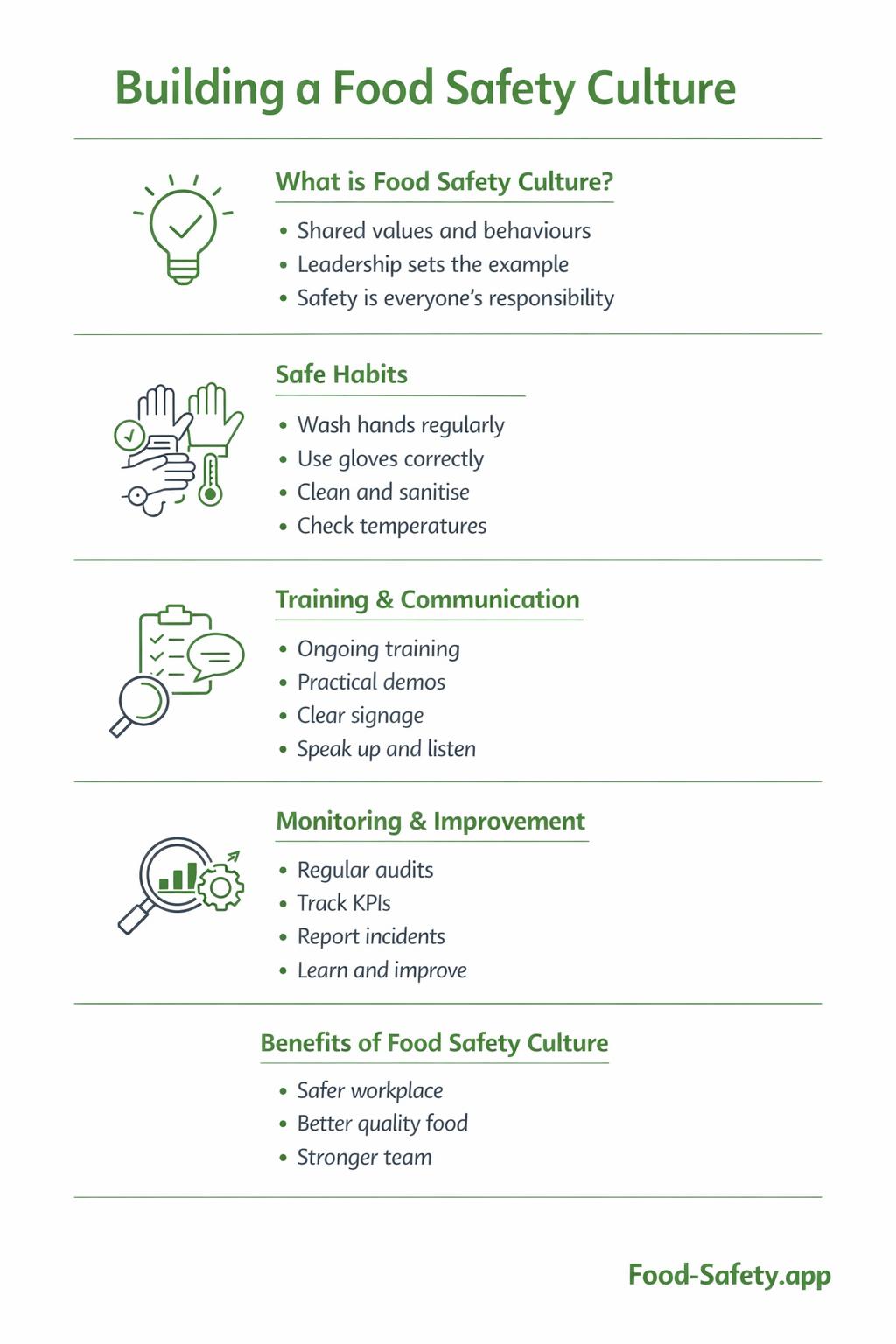
What strong leadership looks like
- Showing up on the floor and checking practice, not just paperwork.
- Backing staff when they stop an unsafe task.
- Making time for cleaning, temperature checks, and stock rotation.
- Using mistakes as learning points rather than shouting matches.
In a school canteen, for example, the manager might pause service to fix a label problem before food goes out. In a hotel breakfast kitchen, the head chef might insist on checking hot holding temperatures before the first rush. Those visible actions tell the team that food safety matters when the pressure is on.
Train for the job, not just the form
Training should help people do the job safely in the conditions they actually face. A checklist on its own will not build understanding. Staff need clear explanations, demonstrations, and refreshers that match the pace of the business.
Practical training topics to cover
- Handwashing and glove use.
- Cleaning and disinfection routines.
- Cross-contamination control.
- Allergen awareness and communication.
- Chilling, reheating, and safe hot holding.
- What to do when equipment fails or food is suspected to be unsafe.
For allergen management guidance under Natasha’s Law, see Natasha’s Law for UK food businesses.
It also helps to train by station. A pastry team does not need exactly the same detail as a grill section, but both need the same standard of control. New starters should be supervised closely until they can show they understand the process.
Build food safety into daily routines
A food safety culture becomes strong when safe actions are built into ordinary tasks. That means making the right thing the easy thing.
Useful daily routines for busy service
- Start of shift checks for fridges, freezers, and probes.
- Handwashing at key points, not just when convenient.
- Colour-coded boards and tools used correctly.
- Clear labelling on opened, prepared, and ready-to-use food.
- End-of-shift cleaning with named responsibility.
See Colour-coded chopping boards in use for a practical example.
In a busy restaurant, a simple prep board can list who checks deliveries, who records temperatures, and who signs off cleaning. In a school kitchen, a short opening routine can confirm that handwash sinks are stocked, allergens are identified, and chilled items are stored correctly before students arrive.
If a routine keeps failing, simplify it. Long forms and unclear responsibilities create gaps. A strong culture values practical systems that staff can actually follow on a crowded shift.
Make reporting easy and normal
Staff should feel safe reporting problems early. That includes broken equipment, pest sightings, unsafe temperatures, missing labels, or a colleague handling food unsafely. If people worry they will be blamed, they are less likely to speak up, and small issues become bigger ones.
Build open communication into the shift
- Use quick handover notes between shifts.
- Ask staff to report issues before service starts.
- Keep a clear escalation route for urgent food safety concerns.
- Act on reports and let the team know what was done.
For example, if a fridge is running warm, staff should know exactly who to tell and what happens next. If a dish contains an undeclared allergen risk, it should be removed from sale immediately and checked before service resumes. Communication is part of control, not an extra admin task.
Monitor standards and act quickly
You cannot improve what you do not check. Monitoring should be regular, simple, and useful. It is not about catching people out. It is about spotting where systems drift under pressure. It is also wise to follow trusted UK guidance such as the Food Standards Agency’s advice on food hygiene and food safety: Food Standards Agency. For more on ratings, see Understanding food hygiene ratings.
What to monitor
- Fridge and freezer checks.
- Cleaning standards.
- Handwashing and PPE use where relevant.
- Allergen controls.
- Staff understanding of critical tasks.
When something is wrong, fix the cause, not just the symptom. If temperature logs are incomplete, ask whether the process is too complicated or the checks are happening at the wrong time. If cross-contamination keeps appearing on the same prep bench, review layout, workflow, and supervision.
It is also wise to follow trusted UK guidance such as the Food Standards Agency’s advice on food hygiene and food safety: Food Standards Agency. For more on ratings, see Understanding food hygiene ratings.
For a deeper dive on preventing cross-contamination, see How cross-contamination happens and how to stop it.
Create accountability without blame
A food safety culture works best when people are responsible for their role and supported to do it properly. Accountability does not mean punishment for every mistake. It means clear expectations, fair supervision, and consistent follow-up.
For example, if a team member repeatedly forgets to record opening temperatures, the fix may be coaching, a better checklist layout, or a change to shift handover. If a chef keeps using the wrong board, they need immediate correction and a reminder of why it matters. The aim is reliability, not embarrassment.
Review incidents as a team where appropriate. Ask:
- What happened?
- Why did it happen?
- What will stop it happening again?
Common mistakes that weaken food safety culture
Some habits damage culture quickly, even in otherwise well-run businesses.
- Focusing on paperwork more than behaviour.
- Expecting new staff to “pick it up as they go”.
- Allowing shortcuts during busy service.
- Ignoring small problems until they become serious.
- Using blame instead of coaching.
These issues are common in catering because the work is fast, physical, and under constant time pressure. The answer is not more noise. It is clearer standards, better supervision, and routines that fit the pace of the kitchen.
Practical next steps for busy teams
If you want to strengthen your food safety culture this week, start with a few simple actions:
- Check whether managers are modelling the standards they expect.
- Review one daily routine and make it easier to follow.
- Speak to staff about any food safety issues they have noticed.
- Refresh one key training point during a pre-service briefing.
- Fix one recurring problem at its root cause.
Over time, these habits build a workplace where safe food handling is normal, expected, and supported. That is the heart of a strong food safety culture. Tools can help too, and a system like Food-Safety.app, a food safety management system for catering businesses, can make checks, records, and follow-up more consistent across busy shifts.
When everyone understands what good looks like, has the tools to do it, and sees managers taking it seriously, food safety becomes part of the business identity. That is what protects customers, supports staff, and keeps standards steady during service. For a deeper dive, see Building a strong food safety culture in your kitchen.