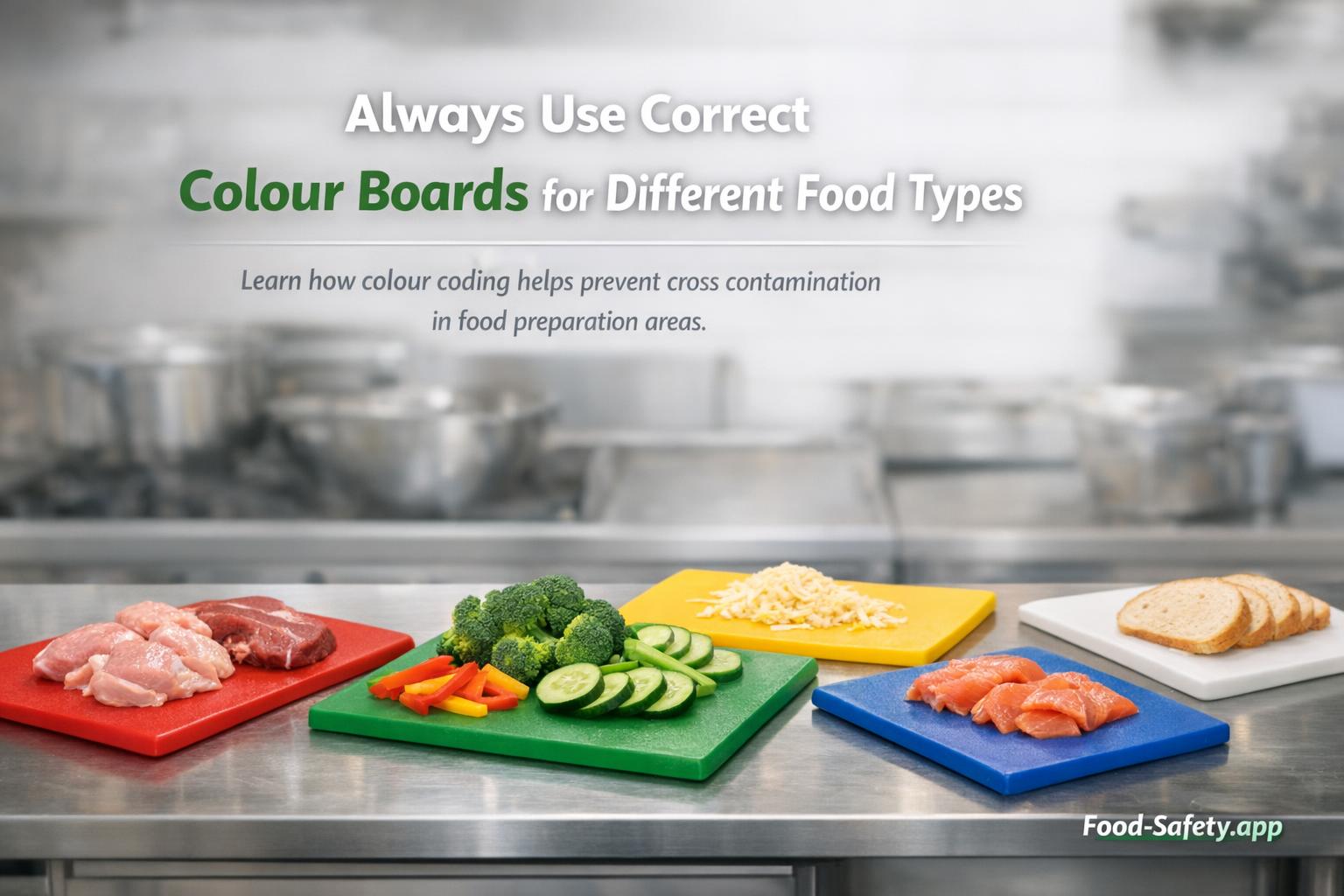
Learn how colour coding rules help prevent cross contamination in food preparation areas and keep your team confident, not confused.
How colour coding works in food safety
Colour coding is a simple control that helps stop bacteria, allergens and dirt moving from one area to another. In practice, colour coding rules make it clear which cloths, chopping boards, mops and tools belong where, so staff don’t have to guess. That matters because the biggest risk often comes from everyday habits, such as wiping a prep surface with the wrong cloth or using one board for raw meat and ready-to-eat food. Clear rules reduce mistakes, speed up service and support safer kitchen routines.
Food businesses still need cleaning, handwashing and separation procedures alongside colour coding, but the system gives teams an easy visual reminder. It works best when every item has a single purpose and staff understand why that purpose matters. In many kitchens, the system is used for raw meat, raw fish, cooked food, vegetables, allergens and cleaning equipment. For official hygiene guidance, it’s worth reviewing the UK Food Standards Agency advice on kitchen hygiene and food safety at Food Standards Agency.
Common UK colour coding standards
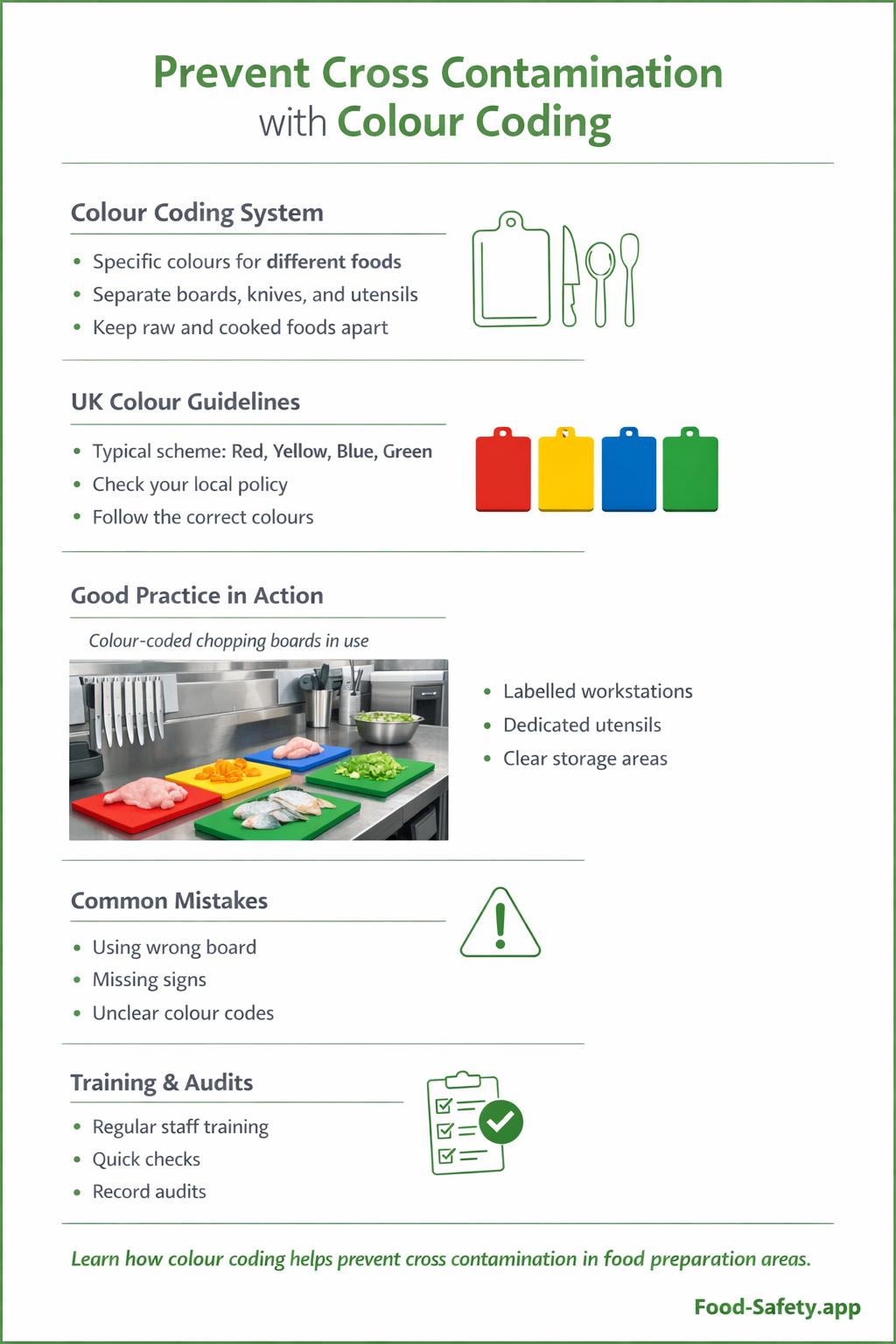
There isn’t one universal legal colour chart for every business, but many sites follow the same practical pattern. Red is often used for raw meat, blue for raw fish, yellow for cooked meat, green for salad and fruit, and brown for vegetables or root vegetables. White is commonly used for bakery and dairy, while different colours may be set aside for cleaning areas. The key is consistency. Once your business chooses a system, everyone must follow it in the same way every day.
This is where written procedures matter. A mixed system quickly causes confusion if one team member uses blue boards for fish and another uses them for ready-to-eat food. The safest approach is to define your own chart, train staff on it and keep the colour meaning visible near prep areas. If your business is building a wider food safety process, HACCP food safety systems can help you fit colour coding into a full risk-control plan, not just treat it as a standalone habit.
Why consistency matters more than the colour itself
What protects your business isn’t the colour on its own, but how consistently people use it. A red chopping board only helps if everyone knows it’s for raw meat and never places ready-to-eat food on it. The same applies to knives, tongs, cloths and buckets. If a kitchen changes colours from site to site without retraining staff, the system loses value. Consistency also helps when agency workers, temporary staff or new starters join during busy periods and need to work safely from day one.
Practical examples in catering and hospitality
In a hotel kitchen, colour coding rules may separate breakfast prep, buffet handling and dinner service tasks so staff don’t use the same equipment across different food types. In a school canteen, one set of boards might be reserved for fruit and vegetables while another is kept for raw poultry. In a sandwich shop, colour coded cloths can help prevent a surface used for raw ingredients being reused on a ready-to-eat prep station. These small controls make a big difference when kitchens are busy.
Colour coding also helps support other controls, such as allergen management and temperature control. For example, a designated board and knife for allergen-free orders can reduce the chance of residue transfer when preparing a meal for a customer with a dietary need. For businesses wanting more help with everyday operational safety, running a food business safely offers useful wider context, while food safety fundamentals helps teams understand the basics behind these controls.
Simple examples of good practice
A few examples make the system easier to visualise. A green board used only for washed salad leaves should not be moved to raw chicken prep. A red cloth should not be used to clean a table where plated food is being assembled. A separate mop for kitchen floors should not be used in the dining area if it has picked up raw food debris. These examples may sound basic, but most contamination problems start with basic lapses, not complex failures.
Common mistakes that break the system
One of the biggest mistakes is buying colour coded equipment without telling staff how to use it. Another is mixing old and new items, so the same colour means different things depending on who is working. Some businesses also fail to replace damaged or faded tools, which makes the system hard to trust. When a board is cracked or a cloth is past its best, it can harbour bacteria and create an additional hygiene problem. Clear replacement rules should be part of the system.
Another common issue is using colour coding as a substitute for cleaning. A clean red board is still only for raw meat, and a dirty green cloth still needs washing or disposal. Businesses can also make mistakes by overcomplicating the scheme. Too many colours can be just as risky as too few because staff struggle to remember the meaning. Keep the system practical, visible and easy to maintain. Linking it with cleaning, hygiene and cross contamination guidance can help maintain focus on the real risks.
It also helps to keep related controls in mind, especially when handling foods that need extra care. For example, poor colour coding can affect allergen safety if the wrong cloth or board is used during preparation. In busy operations, paperwork can be useful too. A digital system such as Food-Safety.app, a food safety management system for catering businesses, can support cleaning tasks, training records and inspection ready logs so your procedures stay visible and easy to check.
Training staff to follow colour coding rules
Training only works when it is simple, repeated and shown in real kitchen conditions. Staff should know what each colour means, where each item is stored and what to do if the correct tool isn’t available. New starters need this on day one, and existing staff need refreshers when the system changes. Short visual guides near prep stations often work better than long written manuals because they reinforce the right action at the point of use.
Managers should also explain the reason behind the system. When staff understand that colour coding rules help stop bacteria and allergens spreading, they’re more likely to follow them carefully. This is especially important in fast-paced service settings where people may be tempted to improvise. For teams that need ongoing support, training staff development can strengthen daily routines and keep standards consistent during rota changes, busy shifts and staff turnover.
Making training stick
Good training should include practical demonstrations, quick checks and supervision. Ask staff to identify the correct board, cloth or utensil before they start a task. Correct mistakes immediately and explain why the correction matters. Visual labelling, photos and colour charts near sinks and prep tables can also help. When training is tied to real tasks, it becomes part of the workflow instead of an extra document that people forget to read.
Audits, checks and proving compliance
Regular audits help you see whether your colour coding system is actually working. During a walk-through, check whether the correct items are in the right areas, whether any colours have faded, and whether staff are storing tools properly after use. Look for signs that people are borrowing equipment across stations or leaving colour coded items mixed together. Small issues spotted early are easier and cheaper to fix than a contamination incident later.
Records also matter. If your business uses a digital system, you can log cleaning checks, corrective actions and training updates in one place. That makes it easier to show inspectors that your system is active rather than just written down. For businesses that want a wider compliance picture, compliance law inspections can support your understanding of what regulators expect, while paperwork and digital food safety can help reduce missing records and keep evidence organised.
Colour coding is most effective when it is part of a broader food safety routine, not a standalone idea. That means cleaning, separation, staff training, checks and corrective action all need to work together. If your business wants a practical way to keep those controls visible, simple and inspection ready, a structured digital system can make day-to-day management easier without adding clutter to the kitchen.
Keep food safety controls clear and organised
Food-Safety.app helps catering teams keep colour coding, cleaning checks, training records and corrective actions organised in one simple digital system. Make everyday food safety routines clearer, reduce missing paperwork, and stay better prepared for inspections without adding unnecessary clutter to busy kitchen operations.