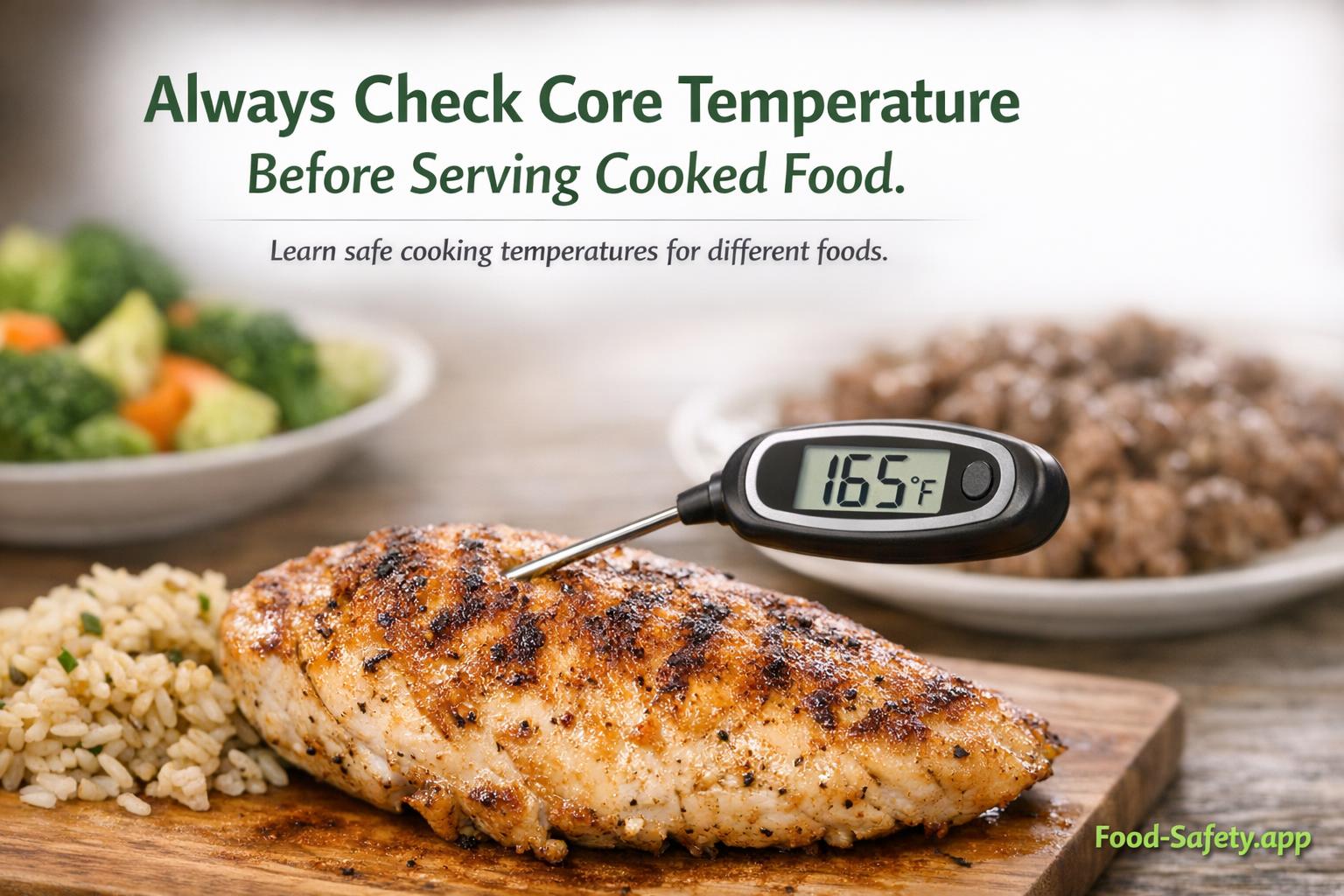
Learn safe cooking temperatures for different foods. With the right cooking temperature, you can keep meals safe and serve them with confidence.
Safe cooking temperatures for common foods
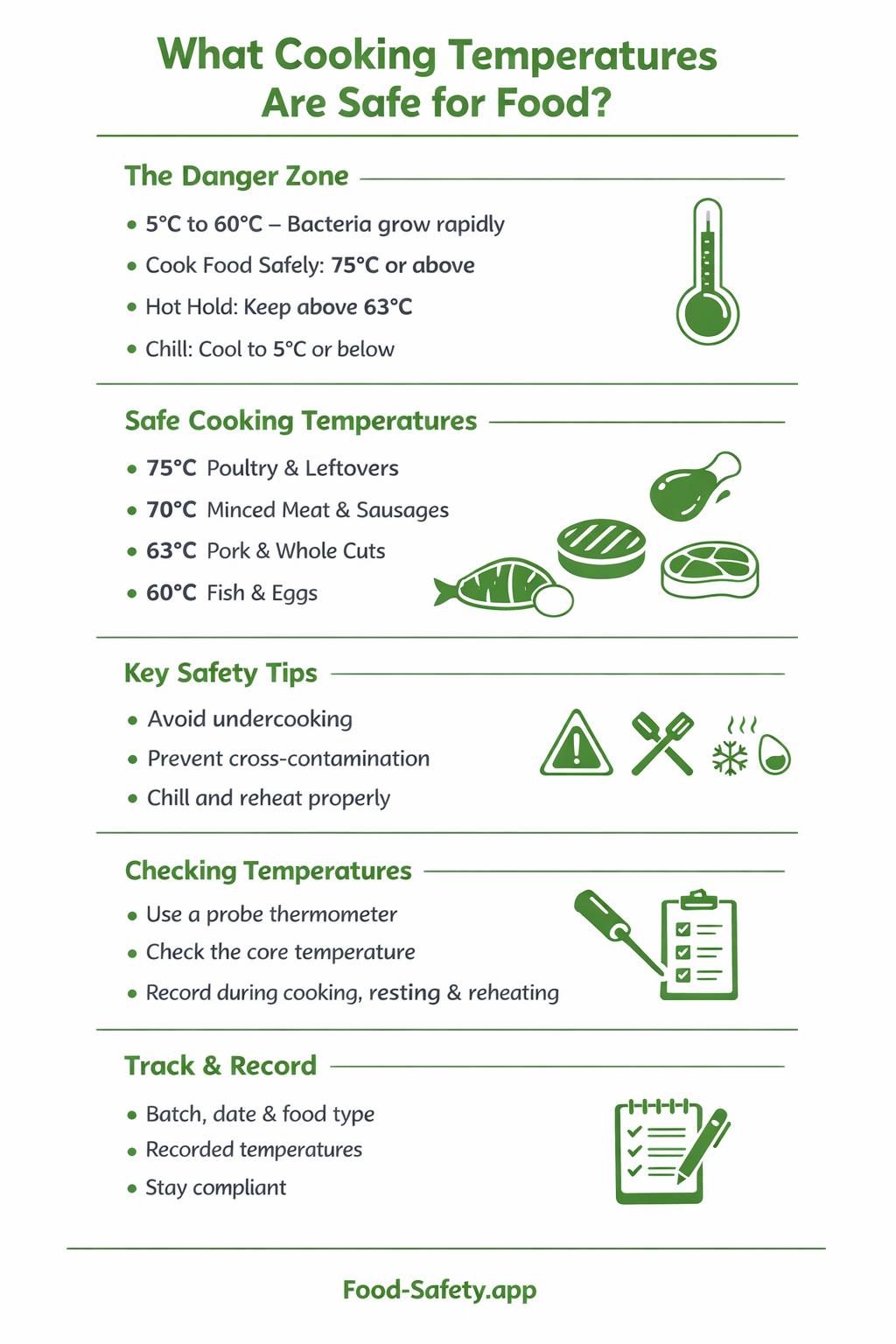
A safe cooking temperature depends on the food type, the cut, and the method used. For most catering settings, the aim is to cook food thoroughly so harmful bacteria are destroyed in the centre, not just on the outside. As a general rule, cooked food should reach at least 75°C in the centre, or an equivalent time and temperature combination if your local guidance allows it. Always follow the highest applicable standard for the food you serve and the controls in your food safety plan.
Some foods need extra care because they’re more likely to carry pathogens or cook unevenly. Poultry, minced meat, sausages, rolled joints, stuffed products and reheated dishes should be checked carefully. Whole cuts of beef or lamb may be served less done in some businesses, but only if your procedures, supplier controls and customer expectations support that. In all cases, the cooking temperature should be verified where it matters most: the coldest point in the food.
Real-world examples for catering teams
In a busy kitchen, examples help staff apply the right cooking temperature quickly. A chicken breast in a hotel breakfast buffet must be cooked right through, then held hot safely. A batch of minced beef chilli needs thorough cooking because bacteria can be spread through the mix during preparation. A pie with a thick filling needs the centre checked, not just the pastry. These are everyday situations where a simple, repeatable process prevents mistakes during service.
Consider a care home lunch service where roast chicken is carved for multiple residents. If the joint looks done on the outside but the centre is undercooked, one error can affect many plates. The same applies to school catering, pub kitchens and event buffets. If you’re updating your procedures, it helps to pair safe cooking checks with wider systems from HACCP food safety systems so staff know when to act, record and escalate issues.
Why undercooking is a serious risk
Undercooking is one of the easiest ways for harmful bacteria and viruses to survive in food. That can lead to food poisoning, complaints, waste, reputational damage and in some cases legal action. Foods such as poultry, minced meat, eggs and reheated rice or leftovers are common risk points because they may contain bacteria throughout the product or support rapid growth if time and temperature are poorly controlled. A safe cooking temperature is not just a technical detail, it’s a basic control that protects customers and the business.
Food businesses also need to think about cross-contamination and poor process design. A clean-looking worktop won’t fix a weak system if raw and ready-to-eat foods are handled badly or if staff rush checks during service. That’s why temperature control should sit alongside good hygiene, clear separation and staff training. If you want a broader refresher on everyday safe practice, the guide to food safety fundamentals is a useful place to start.
What can go wrong in practice
Common mistakes include removing food from the oven too soon, relying on colour instead of temperature, not checking thick items in the middle and using an uncalibrated probe. Staff may also forget that large batches cool unevenly, meaning some parts are safe and others are not. Reheated food is another weak spot, especially in banqueting and contract catering where trays are reheated quickly to meet service times. A clear cooking temperature procedure reduces guesswork and makes performance more consistent across shifts.
How to check a cooking temperature properly
Good checks start with the right method. Insert a clean, sanitised probe thermometer into the thickest part of the food, avoiding bone, gristle or the sides of the pan. For layered or mixed dishes, check the centre and several points if the batch is large. Wait for the reading to stabilise before deciding if the food is done. If the temperature is too low, continue cooking and recheck. This simple routine should be part of daily kitchen practice, not something staff do only when they remember.
It also helps to build checks into opening, prep and service routines. For example, a café may check oven performance at the start of the day, then verify cooked chicken portions during lunch. A takeaway may test cooked items before packing, then again for reheated dishes. If your team uses digital logs, Food-Safety.app, a food safety management system for catering businesses, can help keep cooking, cooling and hot holding records together with automatic timestamped entries and inspection-ready history.
Choosing and using thermometers
A reliable thermometer is essential because you can’t manage what you don’t measure. Probe thermometers are the most common choice for checking a cooking temperature in catering, but they need to be clean, accurate and easy for staff to use. Many businesses keep one probe for raw foods and another for ready-to-eat checks, or clean and sanitise carefully between uses. Staff should also know when a reading looks suspicious, such as a faulty display, slow response or repeated inconsistent results.
Calibration matters too. If a thermometer is out by even a small amount, it can give false confidence and allow unsafe food to be served. That’s why regular calibration checks should sit alongside training and maintenance. In practice, good tools save time, reduce waste and support compliance. If you’re improving documentation, paperwork and digital food safety resources can help you see how temperature logs, checks and corrective actions fit together in one workflow.
Simple thermometer habits that reduce errors
Keep probes within easy reach, label them clearly and train staff to use the same check points each time. Clean the probe before and after every use, then record any issue immediately if it seems damaged or unreliable. It’s also good practice to check thermometer accuracy on a schedule and after any drop or heavy use. Small habits like these make food safety more dependable during busy service periods when staff can’t afford to stop and guess.
Why records matter
Records show that safe cooking temperature checks are actually happening. They help managers spot trends, identify equipment problems and prove due diligence during inspections. If a complaint or incident occurs, records can show what was cooked, when it was checked and what action was taken if the temperature was not right. That makes it easier to investigate quickly and correct the issue before it affects more customers.
For many businesses, digital records are simpler than paper because they’re quicker to complete and easier to review. They also support team consistency across sites, shifts and seasons. A short log of cooked items, probe readings and follow-up actions can make a big difference when service is busy. If you’re looking for a practical way to manage this, Try Food-Safety.app for FREE and streamline temperature control with records your team can actually keep up with.
Safe cooking temperatures are a daily control, not a one-off task. When staff know the target, check the right place, use a reliable probe and keep accurate records, they lower the risk of foodborne illness and improve consistency. That’s good for customers, good for compliance and good for business.
For a stronger overall system, many operators link temperature checks with wider controls such as training and incident follow-up. If that’s an area you’re improving, the guidance on training staff development can help turn food safety procedures into everyday habits.