Keeping on top of daily food safety checks is one of the simplest ways to protect customers, reduce waste, and stop small mistakes turning into costly service problems. In a busy professional kitchen, the issue is rarely one dramatic failure; it is usually a build-up of missed checks, rushed handovers, and assumptions that “someone else already did it”. This guide sets out the practical daily checks that restaurant owners, chefs, kitchen managers, caterers, cafés, hotels, school canteens, takeaways, and other food businesses should carry out every day.
Taking a HACCP-informed approach can help structure these checks more effectively; see HACCP principles.
Why daily food safety checks matter
Daily food safety checks are the controls that keep a kitchen safe before, during, and after service. They help you spot issues early, such as poor fridge performance, unclean prep areas, damaged packaging, incorrect labels, or staff hygiene gaps. If these problems are caught at the start of the day, they are usually easy to fix. If they are missed, they can spread through prep, service, and storage.
What commonly goes wrong is not lack of knowledge, but inconsistency. One shift checks everything, another assumes the previous team already did. A supplier delivery is signed in without checking the temperature. A fridge is “cold enough” by feel rather than by measurement. A cleaning task is ticked off without anyone looking at the actual surface.
Opening and start-of-day checks
Start-of-day checks are the backbone of daily food safety checks. They show whether the kitchen is safe to open and whether any issues need action before food is prepared. These checks should happen before service starts, ideally as part of a set opening routine.
What to check
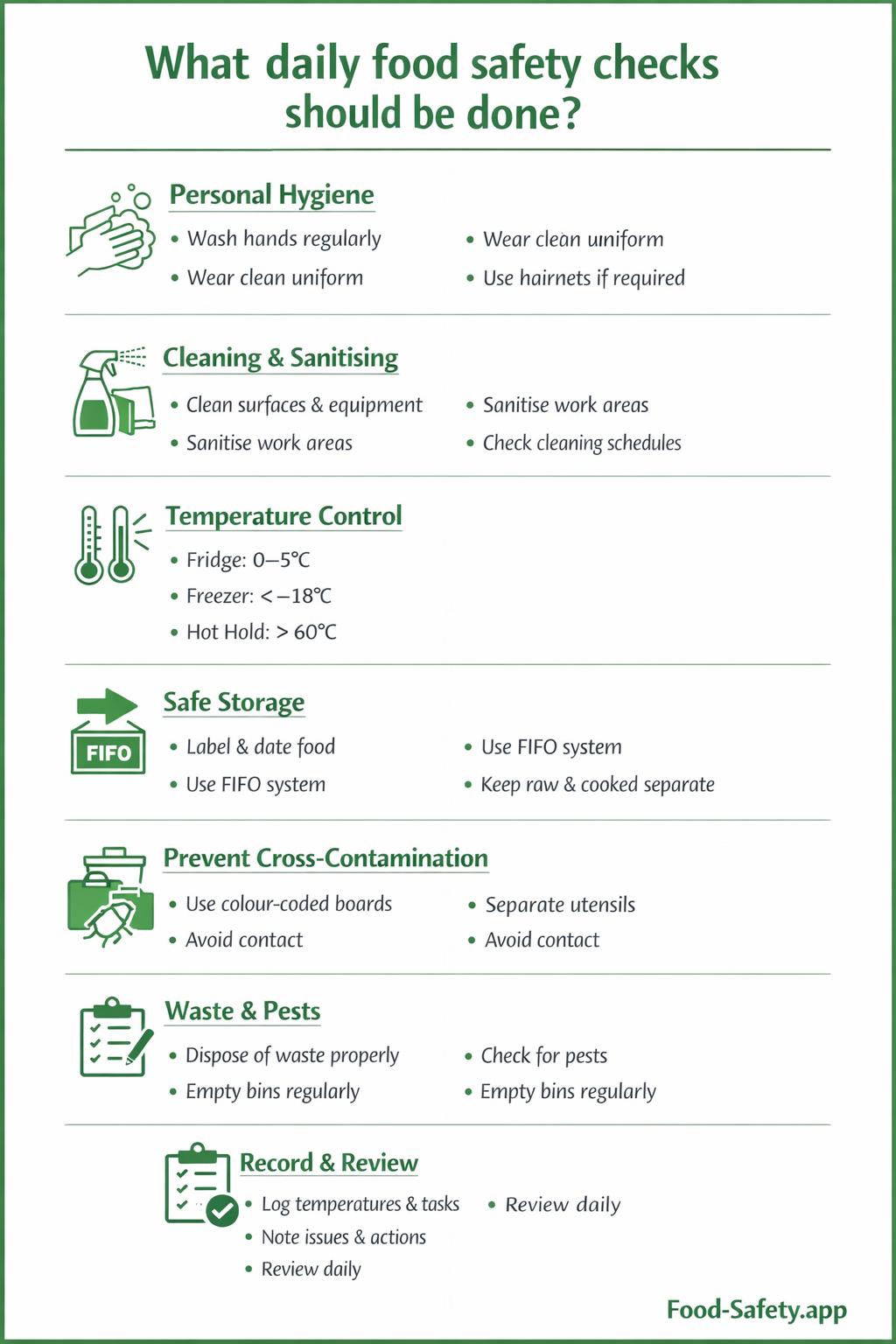
- Handwashing sinks are stocked and working.
- Soap, paper towels, and bins are in place.
- Floors, worktops, and food contact surfaces are clean.
- Fridges, freezers, and hot holding equipment are on and functioning.
- Cleaning chemicals are stored correctly and away from food.
- Staff are in clean clothing and have suitable PPE where needed.
- Delivery areas, prep rooms, and storage areas are tidy and unobstructed.
What commonly goes wrong
Teams often open quickly and discover problems too late, such as an empty soap dispenser, a fridge left slightly ajar overnight, or a prep table still dirty from the previous shift. In a busy kitchen, people may avoid reporting minor issues because they do not want to delay the start of service. That is how small faults become hygiene risks.
What good looks like
Good opening checks are done in the same order every day. One person is responsible, but everyone knows what “ready for service” means. If something is not right, it is corrected before food is handled. That could mean replacing soap, recleaning a surface, moving food away from a leaking pipe, or keeping a faulty fridge out of use until it is safe again.
Why it matters
A safe opening routine prevents contamination at the point where standards are easiest to lose. It also sets the tone for the shift. If the team starts with clear checks, they are more likely to stay consistent through the day.
Temperature checks and monitoring
Temperature control is one of the most important parts of daily food safety checks. It protects food in chilled storage, frozen storage, cooking, cooling, and hot holding. The common mistake is assuming equipment is fine because it sounds or looks normal. In practice, only checks and records show whether food is being kept safely.
For robust practice, ensure temperature control is actively monitored throughout service.
What to check
- Fridge and freezer temperatures at the start of the day.
- Hot holding units are maintaining food safely during service.
- Cooked food is kept separate from raw food.
- Food being cooled is cooled quickly and covered appropriately once safe to do so.
- Probe thermometers are clean, accurate, and available.
What commonly goes wrong
Staff often check the display on the unit rather than the actual food or internal air temperature. Another common issue is opening fridges repeatedly during busy prep, which can affect performance and make a weak unit appear acceptable. In catering, food can also sit too long while waiting for transport, loading, or plating.
What staff should do
Check and record temperatures at set times, not just when someone remembers. If a fridge is out of range or behaving oddly, isolate the food if needed and report the issue straight away. Use a clean, sanitised probe for spot checks where appropriate, especially for cooked food, reheated food, and food that has been cooling.
Original operational insight
One issue many kitchens miss is the “false safe” fridge: a unit may show a normal reading at the top panel while the back shelf or lower drawer is warming because of poor loading, blocked airflow, or a failing seal. Daily checks should include looking at how the fridge is packed, not only what the dial says.
Why it matters
Temperature failures are often invisible until food has already been compromised. A reliable monitoring routine reduces waste, protects customers, and helps managers spot equipment problems early enough to call maintenance before a full breakdown.
Cleaning and hygiene checks
Cleaning is only effective if the right areas are cleaned at the right time and to a standard that matches the task. Daily food safety checks should confirm that the kitchen is not just “tidy”, but hygienic enough for safe food preparation.
What to check
- Food contact surfaces are cleaned and sanitised between tasks.
- High-touch areas such as fridge handles, taps, switches, and drawer pulls are cleaned.
- Bins are emptied regularly and fitted with liners if used.
- Spillages are cleared immediately.
- Cleaning cloths, brushes, and mops are stored hygienically.
- Toilets, staff washrooms, and changing areas are clean and stocked.
What commonly goes wrong
Busy teams often clean what is visible and forget the small contact points that spread contamination. Cloths may be reused across multiple tasks without proper cleaning or replacement. Mops and buckets may be left in the prep area, creating a contamination risk and an unpleasant working environment.
What good looks like
Cleaning checks should focus on “clean enough for the next task”, not just end-of-day appearances. For example, a prep board that has been used for raw meat must be cleaned and sanitised before being used for ready-to-eat foods. A breakfast service pass may need wiping down several times in the morning, not once before opening.
Why it matters
Good hygiene reduces the spread of bacteria, allergens, and foreign body risks. It also improves staff confidence, which matters in kitchens where pressure can make small shortcuts more likely.
Storage and stock checks
Storage problems are easy to miss because stock can look fine even when it is not being managed safely. Daily food safety checks should cover stock rotation, packaging condition, segregation, and date control.
What to check
- Raw and ready-to-eat foods are stored separately.
- Chilled and frozen stock is organised so older items are used first.
- Packaging is intact, dry, and undamaged.
- Food is labelled clearly with the correct use-by or opening information where required by your system.
- Ingredients with allergens are stored and handled carefully.
- No food is stored directly on the floor unless the packaging and storage system specifically allows it and it remains protected.
What commonly goes wrong
Teams can lose control of stock during delivery rushes and changeovers. Items get pushed to the back of shelves, partial packs are left unlabelled, and older food is overlooked. This increases waste and raises the chance of using out-of-date or poorly stored ingredients.
What staff should do
Use a clear stock rotation method and check it every day, not just when deliveries arrive. Make sure anything opened is labelled in a way your team understands. If packaging is damaged, swollen, leaking, or contaminated, remove the item and deal with it immediately.
Original operational insight
A practical daily habit is to check the “problem shelf” in each fridge or dry store: the shelf where partial packs, leftovers, and nearly-finished ingredients tend to accumulate. That is often where date errors, cross-contamination, and forgotten allergens appear first.
Why it matters
Good stock control reduces food waste, supports menu consistency, and helps prevent unsafe food being served. It also makes stock counts and ordering more accurate, which is important for commercial kitchens working on tight margins.
Pest, equipment, and structure checks
Daily checks should not stop at food and surfaces. Kitchens also need to watch for signs of pest activity, damaged equipment, leaks, and building defects that can create food safety problems.
What to check
- No signs of droppings, gnaw marks, insects, or nesting materials.
- Doors close properly and are not left open.
- Windows, fly screens, and seals are intact where fitted.
- Equipment is clean, working, and not leaking.
- Ceilings, walls, and floors are free from obvious damage that could contaminate food.
- Waste areas are managed and not attracting pests.
What commonly goes wrong
Minor faults often get ignored because they do not seem urgent. A drip under a sink, a gap under a door, or a broken seal on a delivery hatch may seem small, but these issues can quickly lead to contamination, pests, or operational disruption.
Cross contamination remains a key concern in kitchens, even when pest activity is limited; daily checks should address controls to prevent it.
What staff should do
Record and report faults immediately. If a problem could affect food safety, isolate the area or equipment until it is resolved. Do not rely on verbal handover alone for serious defects; write it down so the issue cannot be missed between shifts.
Why it matters
A kitchen can have excellent cleaning routines and still be at risk if pests or structural defects are ignored. Daily checks help you catch the early warning signs before they become a larger incident or a failed inspection.
Allergen and labelling checks
Allergen control should be part of every set of daily food safety checks. For many businesses, the most serious mistakes happen during service rather than in storage. A tray may be in the wrong place, a label may be unclear, or a staff member may not know which ingredients contain a specific allergen.
Allergen management is essential to prevent cross-contact and mislabeling; see Allergen management.
What to check
- Labels are clear and up to date.
- Ingredient information is available for the dishes being served.
- Allergen-containing ingredients are stored and prepared carefully to prevent cross-contact.
- Dedicated utensils, containers, or prep areas are used where needed.
- Front-of-house and kitchen teams understand the current menu changes.
What commonly goes wrong
Menu changes, substitutions, and specials boards are common weak points. A dish may be sold as safe when the garnish, dressing, or side is different from the standard recipe. Staff changeovers can also leave new team members unaware of ingredient changes from the previous day.
What good looks like
Allergen checks should be part of the daily brief. The team should know what changed overnight, what items are out of stock, and which dishes need special handling. If you serve a takeaway, delivery, or pre-packed item, make sure the label matches the actual contents, not the previous batch.
For official guidance on allergen and food hygiene basics, the Food Standards Agency is a trusted source.
Why it matters
Allergen mistakes can cause severe harm and reputational damage. Clear daily checks reduce the chance of a communication failure between prep, service, and customer-facing teams.
Handover, records, and escalation
The best daily food safety checks are only effective if the information reaches the next person on duty. In many businesses, problems happen because the opening shift spots an issue but does not pass it on clearly, or the evening team forgets to close the loop.
Effective handover is supported by proper training; see Training and induction resources.
What to do every day
- Record checks in a simple, consistent format.
- Note any corrective action taken.
- Highlight anything unresolved for the next shift.
- Escalate serious issues to the manager or responsible person immediately.
What commonly goes wrong
Paperwork can become a tick-box exercise if nobody acts on it. On the other hand, if records are too complicated, staff will rush them or fill them in later from memory. Both approaches reduce the value of the checks.
What good looks like
Records should be short, specific, and useful. Instead of writing “fridge okay”, note the actual check and any action taken if there was a fault. If a temperature, cleanliness issue, or stock problem was found, write down what happened and who dealt with it. That makes handover safer and gives managers a clear picture of repeat issues.
Original operational insight
Daily records are most useful when they are linked to action, not just compliance. If the same fridge, prep area, or shift repeatedly appears in the notes, that is usually a sign of a root-cause problem such as staffing pressure, poor layout, or equipment failure. Good managers spot patterns early.
If you want a simple way to keep daily checks organised across sites and shifts, Food-Safety.app is a food safety management system for catering businesses.
Common mistakes to avoid
Even well-run kitchens can fall into the same traps. These are the most common mistakes that undermine daily food safety checks:
- Checking equipment by appearance instead of actual condition or readings.
- Rushing opening checks when delivery or prep pressure is high.
- Leaving cleaning tasks until the end of service, when contamination has already spread.
- Failing to report minor faults because they seem unimportant.
- Using vague labels or no labels on opened food.
- Letting handover happen verbally only, with no written follow-up.
To avoid these problems, keep the routine simple, assign responsibility clearly, and make sure corrective action is part of the normal process. If something is wrong, the check is not finished until the problem is dealt with or escalated.
Simple daily checklist for busy teams
Here is a practical checklist that can be adapted for restaurants, cafés, hotels, canteens, and catering kitchens:
- Open the kitchen and confirm it is clean, stocked, and safe to start.
- Check handwashing points, soap, towels, and bins.
- Check fridge, freezer, and hot holding conditions.
- Inspect food storage for separation, labelling, and date control.
- Check prep areas, utensils, and food contact surfaces.
- Look for signs of pests, leaks, or equipment faults.
- Confirm allergen information and menu changes with the team.
- Record issues and complete corrective actions.
- Pass unresolved problems to the next shift clearly.
This type of checklist works best when it is short enough to be used every day. A long checklist that no one finishes is less useful than a focused one that the team actually follows.
Final thoughts
Daily food safety checks do not need to be complicated to be effective. The best systems are practical, consistent, and built around the realities of busy service. Focus on the checks that protect food, staff, and customers every day: opening hygiene, temperature control, cleaning, storage, allergens, pest awareness, and clear handover.
What matters most is follow-through. If staff can spot a problem, fix it, and record it quickly, your kitchen is far more likely to stay safe and compliant. In a professional kitchen, that discipline protects your reputation as much as your customers.