Communicating through inspection aware practices
What inspectors notice: review habits
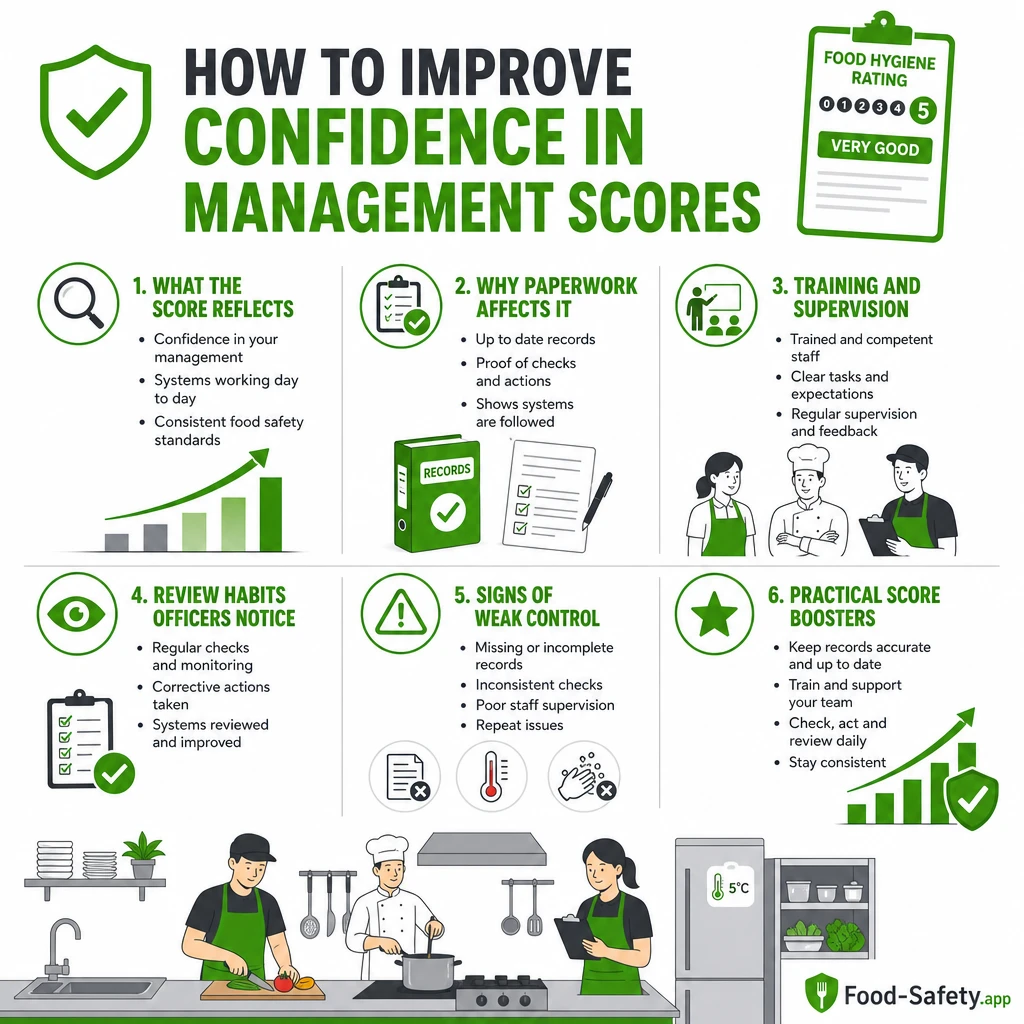
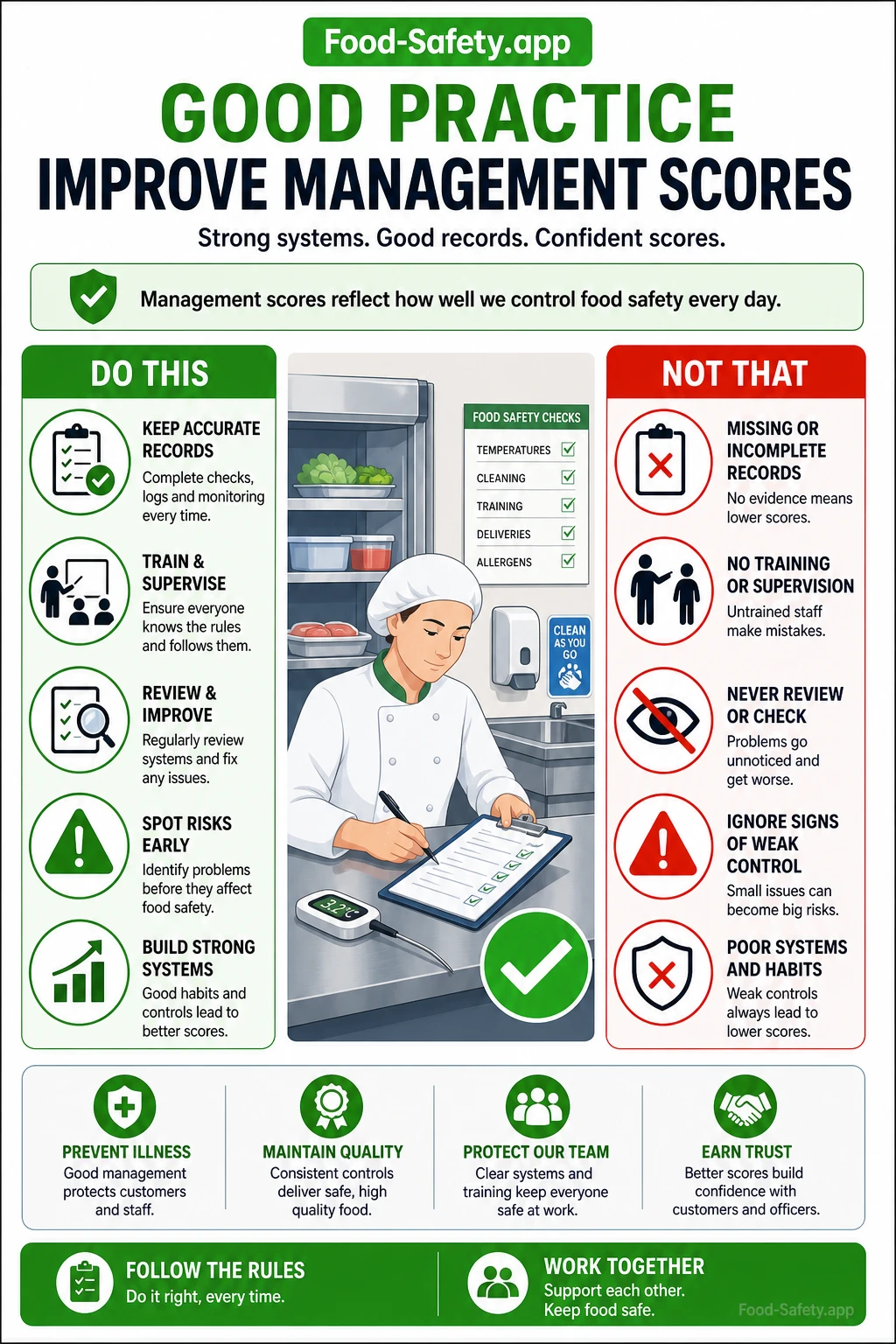
Inspectors look for a habit of continuous improvement rather than sporadic compliance. Daily sign‑offs, routine checks, timely follow‑ups on issues, and a full history of actions taken signal a mature control culture. A well‑documented history supports both immediate audits and long‑term risk reduction. For deeper understanding of inspection scoring, see the inspection scoring details.
Building a review‑ready routine
- Run morning opening checks with timestamps before service
- Close with a closing check and any required follow‑ups logged
- Record any deviations and the corrective actions taken, including who reviewed them
Signs of weak control
Several indicators suggest deteriorating control, which can threaten the management score. Watch for repeated temperature failures, gaps in cleaning records, no corrective action log, or inconsistent allergen information. These gaps often point to missed training, overloaded shifts, or fragmented record keeping.
Practical warning signs
| Weak sign | What it implies |
|---|
| Missing opening/closing checks | Lack of routine control signals; service risk |
| Repeated temperature failures | Thermometer calibration or habit gaps in monitoring |
| No corrective action log | Issues untracked or unresolved |
| Inconsistent allergen information | Allergen controls not reliably communicated |
For official guidance on key controls, consult reputable sources such as the Food Standards Agency. A practical approach to safety can also be supported by a HACCP framework to structure critical control steps.
Practical boosters
Turn daily routines into solid evidence. Use simple, repeatable processes that create timestamps and clear records, and exportable PDFs when needed. The aim is to reduce reliance on memory and last‑minute scrambles during inspections. A HACCP‑based mindset helps ensure consistent results across shifts. Adopt a HACCP approach to strengthen your controls.
Actionable boosters
- Automate timestamps for checks and sign‑offs
- Keep custom opening/closing checks consistent across shifts
- Record defects, assign corrective actions, and track closure
- Include a regular audit of probe calibration and pest control actions
- Export PDF evidence packs for inspection readiness and staff handovers
Practical examples or scenarios
Realistic scenarios help translate theory into action. Consider the following daily events and how to document them for a stronger management score.
Scenario: fridge temperature out of range
A fridge thermometer shows a reading outside the safe range. The issue is logged, corrective action is initiated, and stock is moved to a safe unit before any product is affected. The incident and actions are recorded with timestamps and reviewed by a supervisor. Ensure fridge temperature checks are captured accurately in records.
Scenario: opening checks with timestamps
Opening checks are completed each morning and saved with timestamps. Any discrepancies trigger immediate follow‑up and a note in the records, ensuring routine control is visible to an inspector.
Scenario: missed cleaning task
A cleaning task is missed, recorded as a defect, assigned a corrective action, and reviewed at the next shift handover. The full history shows the pattern and the improvement over time.
Scenario: warm deliveries
A delivery arrives warm and is rejected. The goods‑in check, including the temperature record and rejection note, is saved as evidence for the inspection trail.
Off‑line, no‑login records and PDF export
Where connectivity is an issue, maintain offline records with automatic timestamps and the ability to export as PDFs. This ensures you stay inspection‑ready even during service pressures. The ability to capture and package evidence quickly is a practical advantage for small catering teams.
Suggested compliance or operational focus
Focus areas that align with good practice and practical risk reduction include temperature monitoring across cooking, cooling, cold storage, reheating, and hot holding; custom opening/closing checks and cleaning schedules; allergen management for all 14 recognised allergens; defect reporting and corrective actions; probe calibration and pest control; and training records. Emphasise offline capability and easy PDF exports for inspections.
Conclusion and next steps
Building a robust management score comes from consistent daily habits, complete records, and timely actions. By making evidence collection and corrective actions automatic parts of your service routine, you reduce risk and improve confidence during food hygiene inspections.
Food-Safety.app is a food safety management system for catering businesses.
For practical guidance and official standards, review reputable guidance from authorities such as the Food Standards Agency.