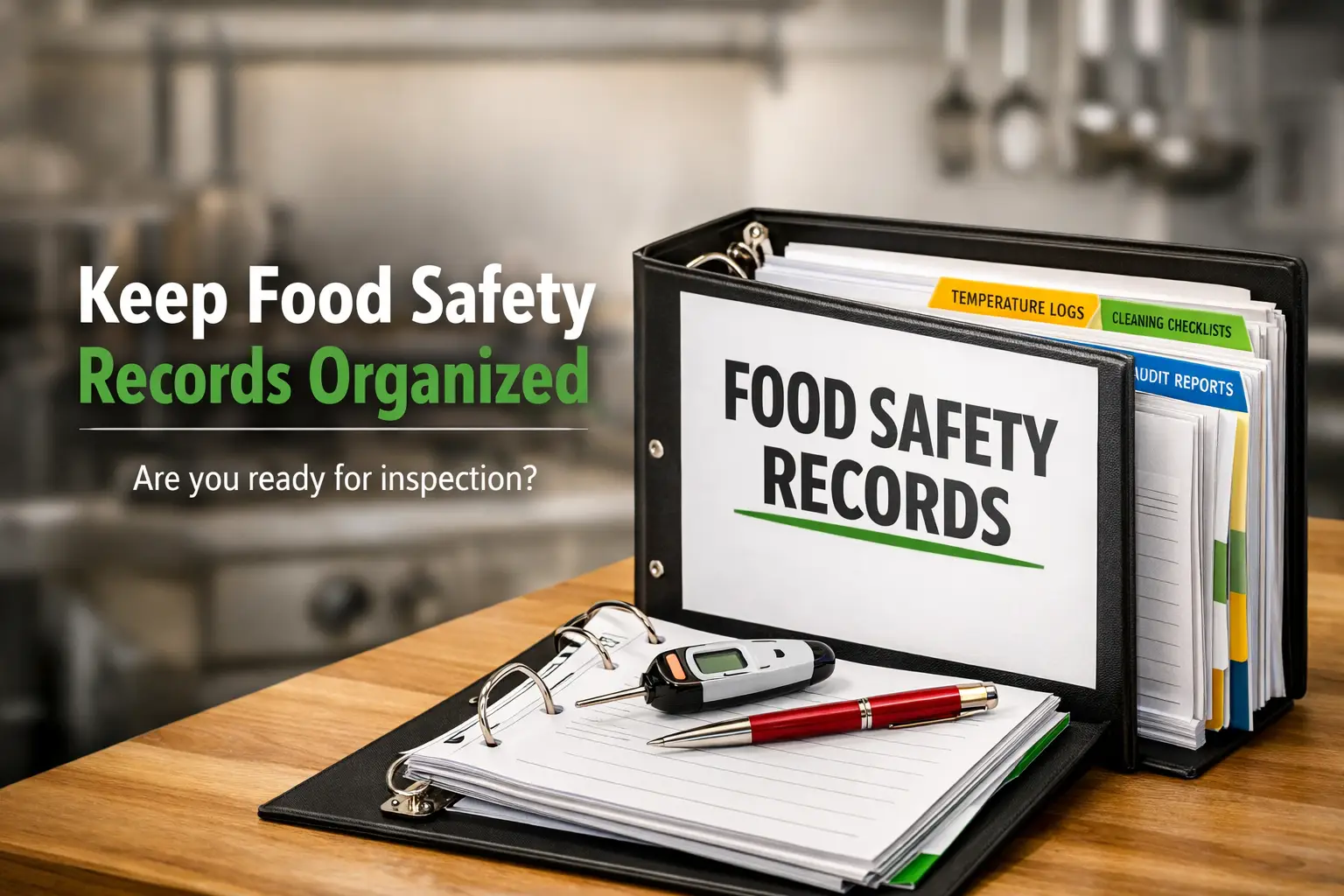
Learn which food safety records matter most and how to keep them organised useful and ready to support due diligence when questions are raised.
Table of contents
Why records matter
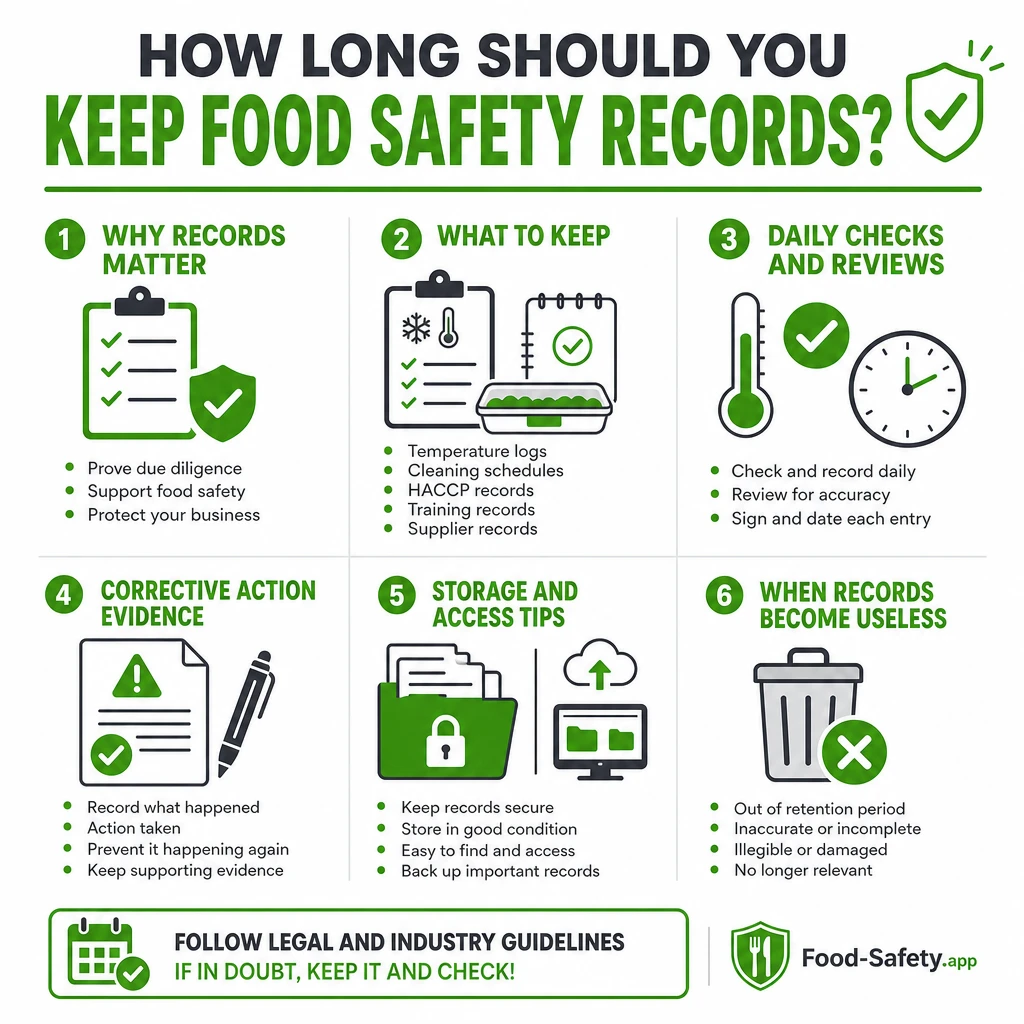
Records are more than paperwork. They prove daily due diligence, enable traceability from supplier to plate, and show what controls were in place during service. When an issue arises, the ability to quickly review records reduces investigation time, supports root cause analysis, and underpins management confidence during inspections.
Proof of daily due diligence
Shift logs, temperature checks, and cleaning records collectively demonstrate that monitoring occurs as part of routine operations, not as a last-minute afterthought. Regular sign-offs indicate accountability and a consistent approach across teams.
Traceability and control
Well-kept records create a clear traceability trail from delivery to disposal. They help identify where a product originated, how it was stored, and who handled it. This is essential for effective recalls, supplier questions, and audit readiness.
Evidence for investigations
In the event of a complaint or incident, corroborated records provide objective evidence of actions taken, dates, and personnel involved for investigations.
What to keep
Key records cover temperatures, cleaning, opening and closing checks, goods in, allergens, defects, corrective actions, probe calibration, pest control, training, and HACCP documentation. Keeping these items organised makes them quick to review during a busy service, incident, or inspection.
Temperature and environmental logs
Daily fridge and storage temperatures, kitchen ambient readings, and calibration checks should be captured consistently. Use a simple format that captures date, time, location, reading, and any action taken when readings fall outside the set range.
Cleaning and hygiene checks
Records should show who performed cleaning, what areas were covered, and when. Include any deviations and follow-up cleaning in the same thread to maintain a complete story of cleanliness between audits.
Opening and closing checks
Document opening stock levels, equipment readiness, and closing checks. A signed close-off confirms a shift has ended with expected standards in place for the next service.
Goods in records
Keep receipts, delivery notes, and temperature readings for incoming stock. This supports traceability if a product issue emerges and helps verify that stock arrived in good condition.
Allergen information
Record updates to allergen menus, ingredient changes, and cross-contact controls. When recipes change or suppliers shift, a paper trail shows due diligence in protecting at-risk customers.
Defect reports and corrective actions
Note any quality defects, the cause if known, and the immediate remedial steps taken. Each item should include who acted and when, creating a clear chain of responsibility.
Probe calibration
Calibration records prove thermometers read accurately. Include calibration date, next due, and the person who performed the check.
Pest control and maintenance
Regular inspections, service reports, and actions taken help demonstrate ongoing pest management and equipment maintenance as part of overall food safety.
Training records
Document staff training on food safety, HACCP basics, allergen handling, and cleaning procedures. Updated training after changes ensures everyone remains aligned with current practices.
HACCP and critical control points
Keep up-to-date copies of your HACCP plan, CCP monitoring records, and review notes. This formal framework supports consistency across shifts and sites.
For official guidance on expectations around record-keeping and traceability, you can consult guidance from the Food Standards Agency.
How long to keep records
Retention should be driven by policy, legal expectations, and risk assessment. Maintain a retention schedule that is aligned with your business policy, local authority guidance, and the potential use of records for investigations or trend reviews. Retain higher-risk or high-value records longer and consider shorter periods for routine logs that do not support decision-making.
Follow policy, legal expectations, and risk-based retention
Establish a documented policy that outlines minimum retention periods for each record type. Review this policy at least annually and after any major process changes or inspections.
Longer retention where records support investigations or trend review
Keep records longer when there is potential for ongoing analysis, supplier audits, or regulatory inquiries. Longer retention supports trend analysis, equipment performance reviews, and supplier performance histories.
Practical guidance on setting retention periods
In busy operations, a practical approach is to retain core records for the duration of the business and for a defined post-service period (for example, the current year plus the previous 12 months). Tailor retention by risk level, with higher-risk kitchens holding data longer.

Daily checks and reviews
Make records useful by reviewing them every shift, not just filing them away. A quick, five-minute routine at handover can catch issues early and drive timely action.
Shift-by-shift review routines
Have a standard checklist for quick review: confirm reading anomalies, confirm corrective actions have been implemented, and ensure new entries are signed and dated. This habit reduces backlog and keeps records actionable.
Sign-off practices
Assign clear owners for each log type. A physical or digital signature at the end of a shift enhances accountability and speeds up audit-handovers.
Corrective action evidence
Records should clearly show what went wrong, what was done, who acted, and when. A robust corrective action trail demonstrates prompt, effective response and learning for future prevention.
What went wrong
Describe the incident succinctly, including date, time, and location. Do not omit specifics; focus on the observable cause where possible.
What was done
Record immediate containment steps, product disposition, cleaning, and any process changes implemented to prevent recurrence.
Who acted and when
Include names or roles and the timestamp of actions. This enables traceability and accountability across shifts and teams.
Storage and access tips
Keep records organised, backed up, and readily accessible to managers, supervisors, and inspectors. A clear filing system reduces retrieval time during audits and incident reviews.
Organised systems
Use a simple, consistent folder or binder system for physical records, or a straightforward digital structure with clear naming conventions. Regularly audit the system for completeness.
Backups and accessibility
Digital records should be backed up and accessible to authorised personnel. For busy service, ensure critical documents remain available offline if network access is disrupted.
Roles and permissions
Define who can create, edit, review, and archive records. Regularly review access levels to maintain data integrity and security.
When records become less useful
Old, incomplete, unsigned, or unreviewed logs that do not support action or decision-making are the most likely to be discarded. Regular audits help identify records that should be retired or archived, freeing space for the current, action-oriented material.
Signs a record is past its usefulness
Repeated missing entries, unsigned forms, or logs that have not informed any decision over a long period indicate records may be overdue for review or retirement.
Practical retirement process
Implement a simple archiving rule: move inactive files to a separate archive folder, with a cue in the retention policy for eventual deletion after the defined period. Ensure critical active records remain easily accessible.
In practical terms, robust record-keeping supports fast, confident decisions during a shift, a surprise inspection, or a supplier issue. It helps teams standardise practice, reduces the risk of missing steps, and underpins continual improvement across a catering operation.
For businesses seeking a streamlined approach to managing all these records, consider a dedicated tool such as Food-Safety.app, a food safety management system for catering businesses, which helps keep records organised, timestamped, exportable, and ready for inspection—with offline access and custom checks tailored to kitchen workflows.
Streamline your record management
Discover how Food-Safety.app can help you keep records organised, timestamped, and ready for inspection with offline access and easy export.