A poor inspection score can feel daunting, but a focused follow-up plan helps you protect guests and regain compliance quickly. This guide helps catering and hospitality teams read the report accurately, fix the right issues, gather solid evidence, train everyone, streamline paperwork, and stay prepared for the revisit.
Read the inspection report properly
Separate legal breaches from minor observations to avoid misprioritising your recovery plan.
Start by separating legal breaches from minor observations, and identify what must be fixed now, what requires monitoring, and what can wait. Create a quick triage list: critical food safety risks, items needing corrective action, and notes that are housekeeping in nature.
Document the exact wording of each finding and map it to your current procedures. If a breach is cited, confirm the exact standard or requirement and note the inspector’s expectation for evidence of correction.
Fix the right issues first
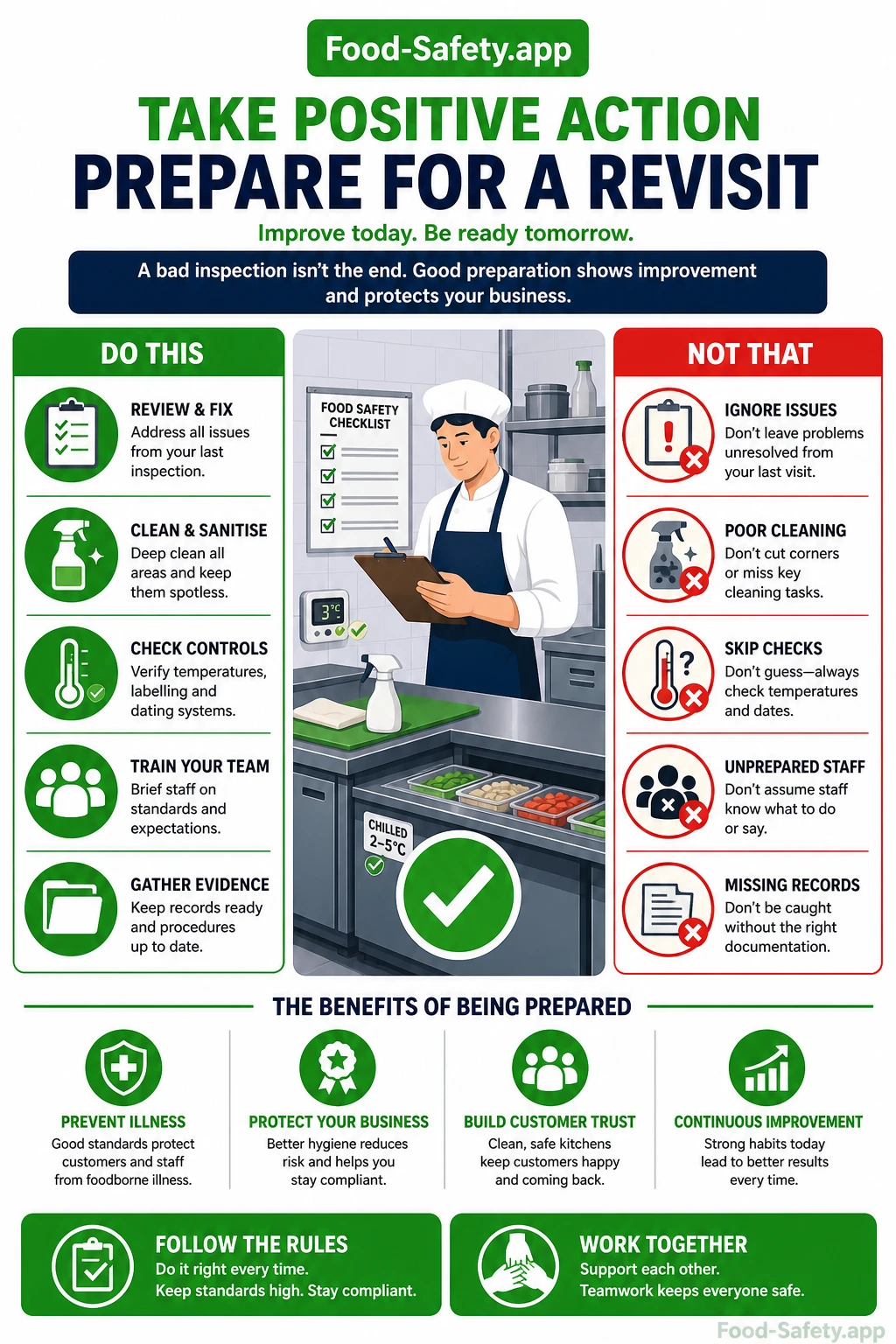
Prioritise fixes that reduce risk most quickly: temperature control, cleaning and sanitising, allergen management, pest issues, and any maintenance defects that affect safety. Use corrective actions to record what you did, who did it, and when it was completed.
Prioritise fixes that directly reduce risk, not cosmetic fixes, and document each corrective action with date and responsible person.
Begin with your HACCP-based controls and daily monitoring routines. After correcting, re-check that the evidence supports the change and that staff can follow the new step consistently.
Practical examples or scenarios
- Fridge temperatures recorded too late: fix monitoring routine and review equipment settings
- Missing cleaning records: set custom cleaning tasks and assign responsibility per shift
- Allergen errors on menu items: update allergen information and recheck staff knowledge
- Poor delivery checks: log goods in temperature and condition on every delivery
- Equipment defect found during service: raise a defect report and document the repair
Build evidence quickly
Build a concise, timestamped evidence pack that the inspector can review in moments.
Set up digital records you can easily pull for the revisit: opening and closing checks, cleaning schedules, delivery receipts, probe calibration records, pest monitoring, and temperature logs. Save PDFs or print-ready files with clear folder names and dates so an inspector can follow the trail.
Keep offline backups or a simple local drive copy, so you’re never stuck if primary systems are busy. Regularly audit your file structure to ensure recent actions are easy to locate.
Train the whole team
Ensure every role understands the updated standards; training should be retrievable and auditable.
Training must cover the new standards, not just the kitchen. Include chefs, kitchen porters (KP), front-of-house staff, and supervisors. Deliver short, practical sessions and refreshers, then record each training event with attendees and dates.
Encourage on-the-floor coaching after training and use quick reference checklists so staff have reminders during service. A well-documented training log helps demonstrate ongoing compliance.
Avoid rushed paperwork
Use structured checklists rather than backfilling records to keep evidence accurate and trustworthy.
Rushed, backfilled records are a common source of post-inspection issues. Use structured checklists for routine tasks, and ensure every record is dated, signed, and easy to show an inspector. Avoid creating records after the fact; capture actions as they happen.
Where possible, automate where appropriate (digital logs, time stamps, auto-generated reminders) but keep manual backups for busy periods. Consistency and readability matter more than volume.
Stay ready after the revisit
Ongoing monitoring creates a trail of compliance and helps you demonstrate sustained improvements.
Maintain a schedule for reassessment and continuous improvement. Regularly review whether corrective actions have become standard practice and whether any new risks have emerged in menu changes or supplier deliveries.
Suggested compliance or operational focus
HACCP-based controls and daily monitoring
Evidence for environmental health officers
Safe systems of work for repeated tasks
Offline record keeping for busy kitchens
Consistent, timestamped documentation to support inspection readiness
Final notes
A negative inspection outcome is not the end of your operation. With a clear plan, precise evidence, trained staff, and disciplined record-keeping, you can show progress and reduce the likelihood of repeat findings. Stay methodical, communicate clearly with your team, and keep your records accessible for the revisit.