Looking for a simple food safety checklist for small kitchens? The best version is short enough to use every day, but detailed enough to stop common mistakes before they turn into complaints, waste, or a close-down risk. In a busy professional kitchen, that means focusing on cleaning, cross-contamination, temperature control, staff hygiene, allergen handling, and sensible checks at the start, during, and end of service.
This guide is written for UK food businesses, but local rules and expectations can vary in other countries. Keep it practical, keep it visible, and make sure the checks fit how your team actually works.
What a simple food safety checklist should cover
A good food safety checklist for small kitchens does not need to be long. In fact, if it is too detailed, staff stop using it. The aim is to catch the handful of things that most often go wrong in cafés, takeaways, school canteens, hotel kitchens, and catering units.
For a structured approach to HACCP, see our HACCP principles explained.
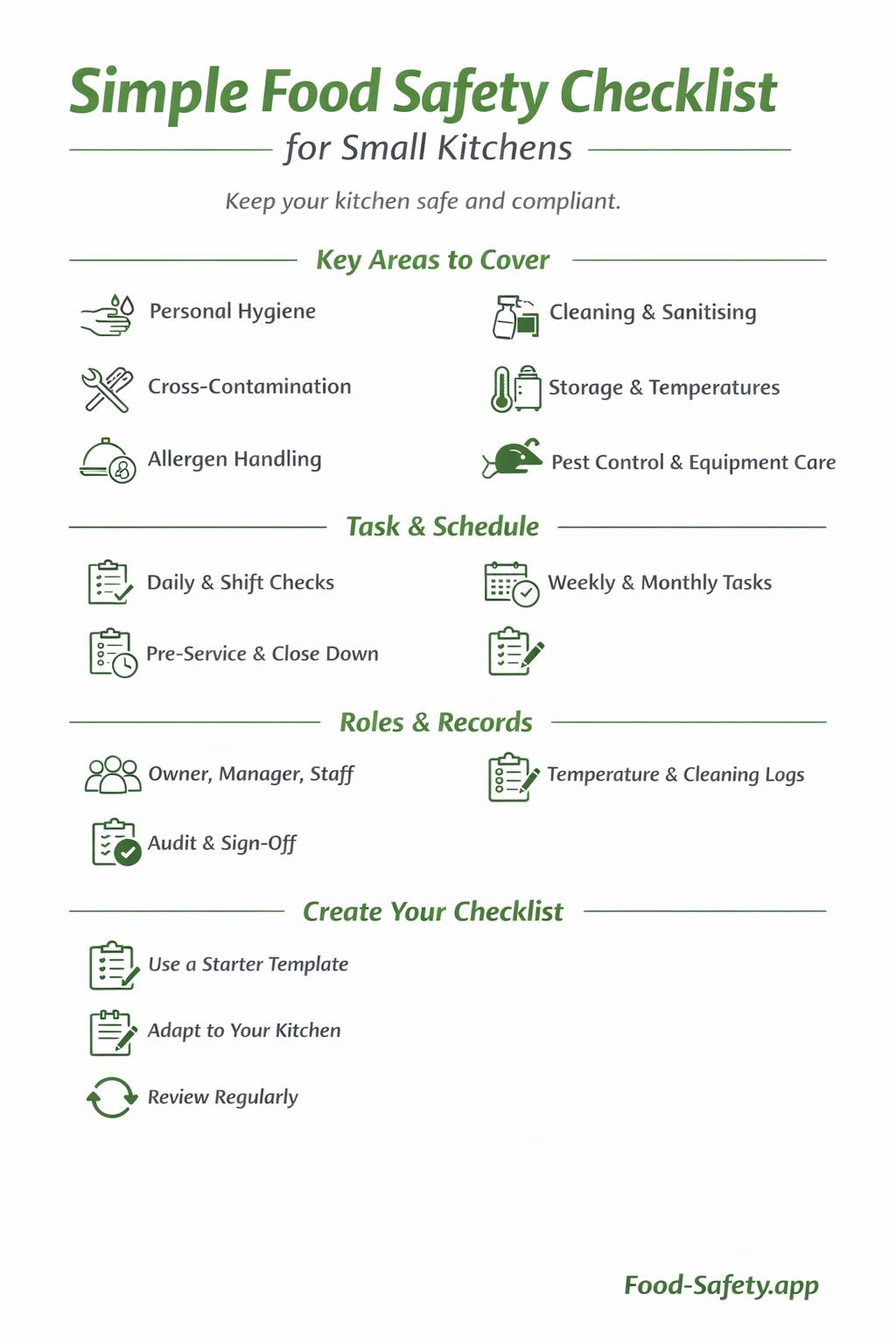
Your checklist should cover:
- Handwashing and staff hygiene
- Cross-contamination controls
- Fridge, freezer, and hot holding checks
- Cleaning and sanitising routines
- Allergen control
- Food date marking and stock rotation
- Waste removal and pest prevention
- Equipment condition and basic maintenance
In small kitchens, the biggest risk is usually not one dramatic failure. It is lots of small misses: a fridge left open, a cloth used on multiple surfaces, raw chicken stored above salad, or a label that no one trusts. A simple checklist helps staff spot these issues early.
Opening checks for small kitchens
The opening check should take only a few minutes, but it sets the standard for the whole shift. This is especially useful in a professional kitchen where different people may open, prep, and serve on the same day.
Opening checklist items
- Hands are washed before prep starts and after handling waste, raw food, or cleaning tasks
- Uniforms, aprons, and hair restraints are clean and suitable for food work
- Fridges and freezers are clean, closed properly, and not overloaded
- Raw foods are stored below ready-to-eat foods
- Cleaning chemicals are stored away from food and food contact items
- Work surfaces, utensils, and equipment are clean before use
- Labels and date marks are clear and in date
- Staff know today’s allergen risks and any special orders
If anything looks wrong at opening, do not assume someone else will sort it later. Fix it immediately or record who is responsible and by when. In a takeaway or café, for example, one missing fridge check can affect everything from milk safety to sandwich fillings and desserts.
Simple opening temperature checks
Where your business uses temperature logs, check chilled storage and hot holding equipment according to your own procedures. Do not rely on guesswork. If equipment is outside normal working range, move food to safe storage, reduce the load, or call for maintenance.
Checks during service
Busy service is where standards slip. Staff are moving fast, orders stack up, and the temptation is to cut corners. A simple food safety checklist for small kitchens should include a few key checks during service, not just at the start and end of the day.
During service checklist items
- Raw and ready-to-eat foods stay separate at all times
- Different chopping boards, tongs, and utensils are used correctly
- Cloths and wiping materials are clean and changed often
- Hands are washed between tasks, especially after handling raw food or rubbish
- Hot foods are kept hot and cold foods are kept cold using your normal controls
- Food is covered or protected where appropriate
- Allergen orders are checked before food leaves the pass
- Spillages are cleared quickly to prevent slips and contamination
A practical way to manage this is to assign one person per shift to keep an eye on standards, even in a very small team. That person does not need to police everyone. They just need to spot the obvious risks before they spread across the service.
If you run a school canteen or hotel breakfast service, the most common issue is shared equipment. Tongs moving from one tray to another, lids being left off, or staff reusing a cloth across multiple areas can create contamination fast. Keep the checklist focused on the behaviours that are easiest to get wrong under pressure.
Closing checks at the end of the day
Closing checks matter because tomorrow’s safety depends on today’s finish. A good close-down routine reduces cleaning time, helps with stock control, and lowers the risk of pests, odours, and spoiled food.
End-of-day checklist items
- All food is stored correctly, covered, labelled, and dated
- Opened products are sealed and put away properly
- Fridges and freezers are shut, tidy, and not overfilled
- Worktops, sinks, handles, and equipment are cleaned and sanitised
- Floors are swept and washed where needed
- Bins are emptied, cleaned, and lids closed
- Dishwashing areas are left ready for the next shift
- Any faults, incidents, or out-of-stock issues are recorded
For small kitchens, end-of-day recording does not have to be complicated. A short tick sheet with a space for comments is often enough. What matters is that someone is clearly responsible and that issues are not hidden or forgotten.
Allergen control and communication
Allergen control deserves its own place on the checklist because mistakes here can have serious consequences. In cafés, bakeries, takeaways, and catering businesses, allergens can be missed when staff are rushed or when menus change quickly.
Allergen checklist items
- Staff know the allergen information for the menu they are serving
- Special orders are written down clearly and passed to the kitchen
- Separate utensils, boards, or preparation steps are used where needed
- Ingredients are checked if a supplier changes a product
- Labels are kept accurate on pre-packed or prepared foods
- Staff never guess when asked about allergens
If a customer asks a question and the answer is not certain, stop and check before serving. A simple food safety checklist should support a culture where staff feel able to pause rather than make assumptions.
For more on allergen management in busy operations, see our article Managing allergens safely in a busy kitchen.
For practical allergen handling guidance, the Food Standards Agency is a useful UK authority source: Food Standards Agency.
What to do if something is wrong
A checklist is only useful if it includes a clear response when something is wrong. Do not just tick boxes and move on. Small kitchens need simple corrective actions that staff can follow without waiting for a manager to explain every time.
Common problems and practical actions
- Fridge too warm: move food to another safe unit, reduce stock, and report the fault immediately
- Raw food stored incorrectly: separate it at once and check nearby items for contamination
- Unclean surface or utensil: stop using it, clean and sanitise properly, then restart
- Unknown allergen risk: do not serve until the ingredient and preparation steps are confirmed
- Missing date label: treat the item cautiously, identify it, and follow your stock policy
- Spillage or pest sign: clean up fast and escalate if the problem suggests a wider issue
Keep corrective actions short and realistic. In a commercial kitchen, staff need to know what to do in the moment, not read a full policy document during service.
How to make the checklist actually work
The best checklist is the one your team will use every day. Keep it short, place it where staff can see it, and make it part of routine rather than extra paperwork.
Tips for small food businesses
- Use one page for opening, service, and closing checks
- Keep wording simple and specific
- Make sure each shift knows who completes it
- Review it when the menu, layout, or team changes
- Train new staff on why each check matters, not just how to tick the box
- Store completed sheets so you can spot repeated issues
It also helps to match the checklist to your actual operation. A small café may need a lighter version than a school kitchen or hotel banqueting prep area, but the basic risks are the same. The format can change, but the control points should stay strong.
If you already use digital records, a simple food safety checklist can sit alongside your daily logs and task lists. Systems like Food-Safety.app, a food safety management system for catering businesses, can help teams keep checks organised without adding unnecessary admin.
For practical cleaning and scheduling, see our kitchen cleaning schedule in action.
Final takeaway
A simple food safety checklist for small kitchens should be short, practical, and easy to follow under pressure. Focus on the basics: hand hygiene, separation of raw and ready-to-eat food, temperature control, cleaning, allergen control, and clear corrective actions. If the checklist helps staff act quickly and consistently during busy service, it is doing its job. A strong food safety culture supports these practices in everyday operations.
For the best results, keep it visible, train the team to use it properly, and update it when your kitchen changes. Simple, consistent checks are what protect customers, reduce waste, and keep a small food business running smoothly.