Starting a new job in a kitchen can feel overwhelming. A good food safety induction helps new starters understand exactly how your business works, what standards matter most and what to do if something goes wrong. This practical guide explains what to cover on day one so staff can work safely and confidently from the start.
What every new starter should learn first
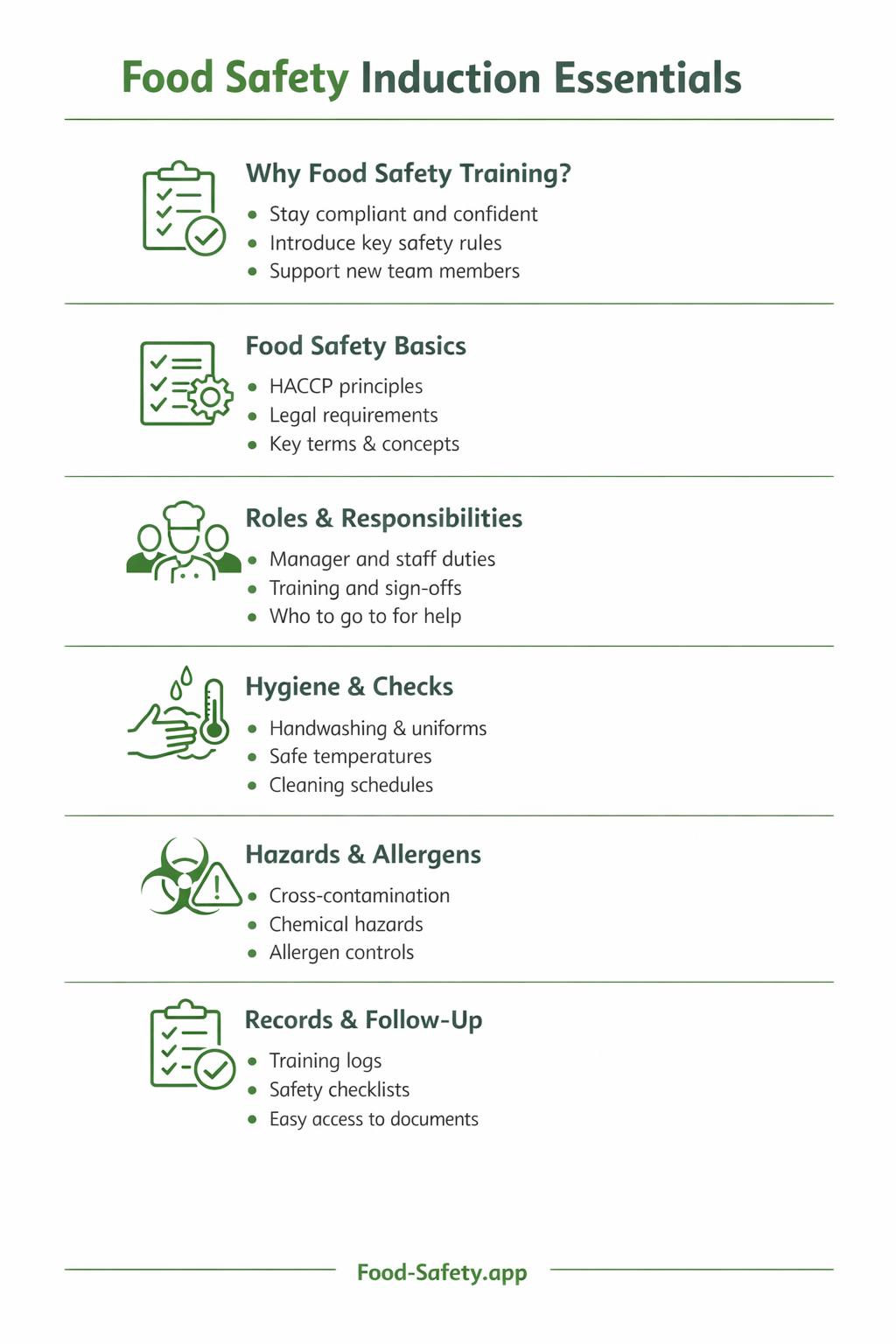
A food safety induction should explain the essential rules for working safely from day one. New starters need to understand how your kitchen works, where risks usually happen and what good practice looks like during a busy shift. This includes temperature control, personal hygiene, cleaning routines, stock rotation and what to do if they are unsure about something.
Induction should also set expectations early. For example, if chilled deliveries must be checked and put away within 15 minutes, say that clearly. If probe thermometers must be sanitised before and after use, show staff exactly how. The goal is not to overload people with paperwork, but to give them enough confidence to work safely without guessing.
To help staff understand the bigger system behind these tasks, link induction to your wider HACCP food safety systems, food safety fundamentals and running a food business safely. This helps new starters see that food safety is part of everyday service, not just a box-ticking exercise.
Roles and responsibilities in a food safety induction
Every new starter should know exactly what they are responsible for. A kitchen porter, line cook, barista and supervisor all play different roles in keeping food safe. Induction should make this clear from the start, including who checks deliveries, who records temperatures, who labels prepared food and who escalates issues.
For example, in a busy café, the morning supervisor may be responsible for fridge checks and opening sign-off, while the chef de partie is responsible for cooling logs and allergen communication during service. If staff understand these responsibilities early, there is less confusion and fewer mistakes later.
It also helps to explain what must be reported immediately, including illness symptoms, broken equipment, pest sightings, damaged packaging or suspected contamination. Clear reporting lines protect customers and help avoid small problems becoming serious incidents.
Hygiene and contamination control
Personal hygiene is one of the most important parts of any induction. Staff should be shown when and how to wash their hands properly, when gloves are appropriate and why clean uniforms, tied-back hair and short nails matter. They should also understand illness reporting rules, especially for vomiting, diarrhoea, fever or infected cuts.
Cross contamination should be explained with real examples, not just theory. A new prep chef who slices cooked chicken on the same board used for raw poultry can create serious risk in seconds. Likewise, using the same cloth on raw prep and ready-to-eat areas can spread bacteria across multiple surfaces.
Use practical walk-throughs in the kitchen so staff can see where raw and ready-to-eat food are stored, where sanitiser is kept and how equipment is cleaned between tasks. For more support, link to cleaning, hygiene and cross contamination and allergen management.
Daily checks and monitoring
A strong food safety induction should show staff how routine checks prevent problems before they affect service. This includes checking deliveries, recording fridge and freezer temperatures, date labelling prepared food, monitoring hot holding and confirming cleaning tasks have been completed.
Real examples make this easier to understand. In a takeaway, a new starter might be shown how to check that cooked rice has been cooled quickly enough before storage. In a bakery, they may need to verify that cream cakes stayed below safe chilled temperatures after a busy lunch rush. These checks are simple, but they matter.
To make daily monitoring easier, show staff how your records system works. Whether you use paper or digital logs, staff should know where to record issues and what happens next. Related guides such as paperwork and digital food safety and temperature control danger zone can reinforce these habits.
Why temperature control matters
Temperature control is one of the biggest practical risks for new starters. Explain safe chilled storage, hot holding and cooling in plain language. Show staff how long food can safely stay out, when to probe products and what to do if something is outside safe limits.
For example, if a pan of curry has been left out after service, staff should know not to guess whether it is still safe. They should know how to check it, who to ask and when to dispose of it. Clear examples like this build confidence and reduce unsafe shortcuts.
Hazards and allergen awareness every starter should understand
New starters should understand the main hazards they are likely to come across. These include bacteria from poor temperature control, chemicals from cleaning products and physical hazards such as glass, plastic or metal fragments. The aim is to help people recognise risks early and report them quickly.
Allergen awareness deserves proper attention during induction. Staff should know where allergen information is stored, how to avoid cross contact and how to respond if a customer asks about ingredients. A simple mistake at service can have serious consequences.
For example, a new front-of-house team member should never guess whether a sauce contains mustard or dairy. They should know how to check the allergen matrix, who to ask and when to pause service until they are sure. For broader compliance support, see compliance, law and inspections.
Induction records and documentation that support compliance
Food safety induction should be documented clearly. A short verbal briefing is not enough if there is no evidence later. Good records help show what was covered, who delivered it and whether follow-up training is needed.
Useful induction records usually include:
- Date of induction
- Name of trainer and staff member
- Topics covered
- Site-specific risks explained
- Any refresher training needed
- Staff sign-off
If your team works across shifts or sites, digital records make this much easier to manage. Food-Safety.app can help store induction notes, training records, daily checks and corrective actions in one place, making it easier to stay inspection-ready without extra admin.
Real first-day induction example for a small café
Imagine a new team member starting at an independent café on a Saturday morning. Instead of handing them a sheet and hoping for the best, the manager walks them through the kitchen before opening.
First, they explain handwashing points, apron storage and illness reporting. Then they show how milk is date labelled, where allergen folders are kept and how to clean the coffee machine steam wand safely. Before service starts, the new starter watches the opening fridge check and sees how issues are recorded.
During the lunch rush, they are shown how to separate gluten-free orders, where to place used cloths and how to escalate if a customer asks something they are unsure about. By the end of the shift, they understand both the rules and the reasons behind them. That is what a good induction should achieve: safe habits that make sense in real service, not just information staff forget after day one.