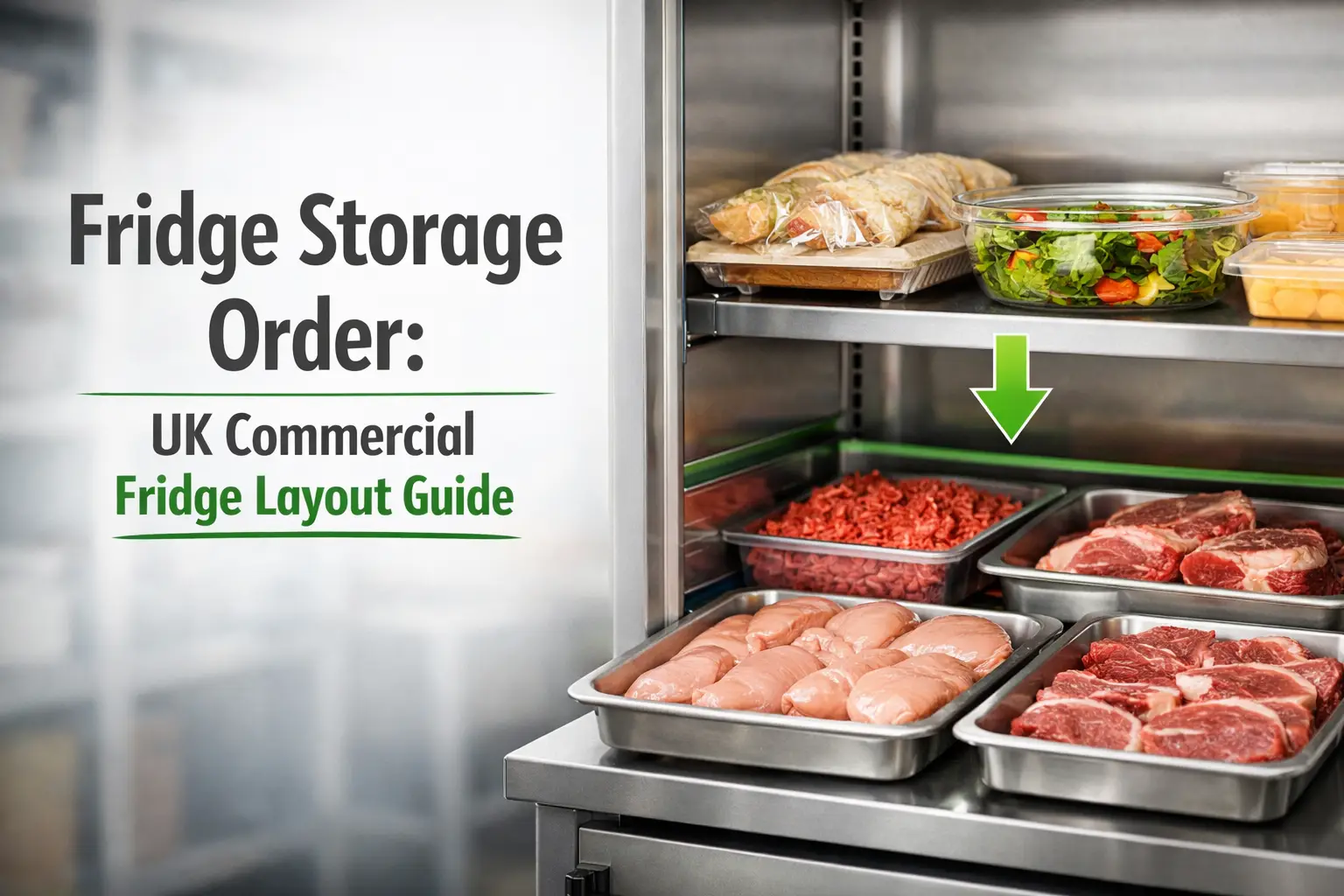
Learn how to organise a kitchen fridge so raw food cannot drip onto ready to eat items and staff can follow the system easily.
- Why fridge layout matters
- Keep raw and ready-to-eat foods strictly separated
- Best shelf planning order
- Effective labelling and packaging
- Storing high-risk foods clearly and rotation
- Date labels, rotation and opening dates
- Daily fridge temperature checks and action plan
- Common layout mistakes to avoid
- Practical scenarios you can apply now
- Practical checklist and record keeping
Why fridge layout matters for food safety and stock control
The way you organise the fridge influences both safety and efficiency. A logical fridge storage order minimizes cross-contact and makes daily checks straightforward, which in turn supports accurate stock counts and faster service decisions. When staff know exactly where items live, opening and rotation become routine rather than reactive during peak service.
Reducing cross-contact
Assign dedicated zones for raw and ready-to-eat items. Keep poultry, pork, beef and seafood on lower shelves away from salads, dairy, and cooked products. Use covered containers and, where possible, physical barriers to prevent dripping or splashes from above. For practical steps on preventing cross-contact, see how cleaning stops allergen cross-contact.
Improving stock visibility
Group similar items together and label everything clearly. A transparent, predictable arrangement helps staff locate items quickly, verify stock levels, and spot missing or expired products at a glance. This is aligned with what small food businesses need to implement effective stock controls. Small-business food safety needs.
Keep raw and ready-to-eat foods strictly separated
Separation is a non-negotiable in safe fridges. When raw and ready-to-eat foods mix, the risk of contamination increases and the chance of mislabelling rises. A clear separation protects customers and reduces waste from unnecessary discards.
Zone the fridge
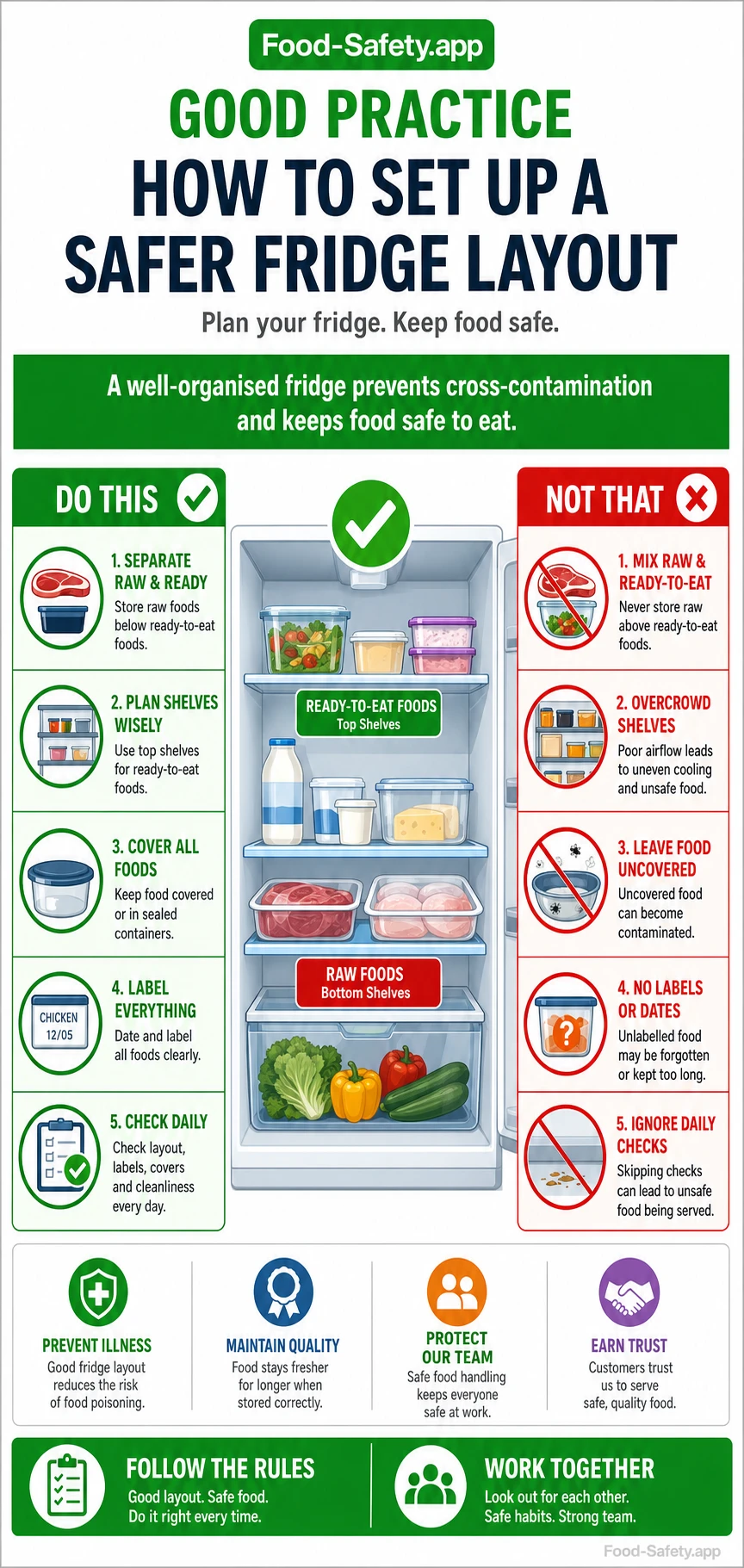
Install distinct zones: top shelf for ready-to-eat, middle shelves for dairy and cooked items, lower shelves for raw meats. If space allows, keep raw foods in dedicated bins placed at the back of lower compartments to minimise drip risk. To reinforce cross-contamination prevention, see Cross-contamination explained: causes, examples and prevention.
Labelled containers
Use labelled, airtight containers for every item. Containers should be clearly dated and named, with contents written on the lid or container side. Avoid loose trays that can be moved or knocked, increasing the chance of cross-contact. For allergen management protocol guidance, see Allergen management protocol.
Best shelf planning order
A practical shelf order reduces misuse during busy service and supports quick checks. The aim is to protect cooked and ready-to-eat foods while keeping raw ingredients below them to stop any potential drip from reaching ready-to-eat items.
Top shelves for ready-to-eat foods
Place ready-to-eat items, dairy, and prepared salads on the upper shelves. Keep these items covered and away from direct splashes. This makes it easier for staff to grab what they need without handling raw products. This approach aligns with the 4 Cs of food hygiene.
Lower shelves for raw foods
Raw meat, poultry, and seafood sit on the lower shelves with a drip tray and in sealed containers. Use secondary containment to capture any leakage and prevent cross-contact with other foods. For cross-contamination training that staff remember, see Cross-contamination training that staff remember.
Effective labelling and packaging
Clear labelling and tight packaging reduce confusion and speed up routine checks. When staff can identify the content, origin, use-by and opening date at a glance, decisions are quicker and safer.
Clear labels for every container
Labels should include product name, date of opening (where applicable), and use-by date. Use consistent wording and avoid ambiguous shorthand. Place labels on the front of containers so they are visible when shelves are inspected.
Covered containers and gastro trays
Keep prepared foods in covered trays or bags. For items used throughout service, label gastro trays by use-by date and rotate them by the oldest date first. This supports straightforward rotation during busy periods.
Storing high-risk foods clearly and rotation
High-risk foods require special attention to location, labelling and rotation. Staff should be able to locate, use and check such items quickly, without sifting through mixed storage. Clear zones and consistent rotation reduce the likelihood of temperature abuse and waste.
Location and access
Store high-risk items in easily accessible zones that are easy to audit. Keep a simple rotation routine and refresh the layout when stock is delivered or displaced.
Use-by and opening date clarity
Record both use-by dates and opening dates where relevant. Open date tracking helps in determining when a product enters a risk window, and reduces reliance on memory during shift changes.
Date labels, rotation and opening dates
First In, First Out (FIFO)
Always rotate stock from the oldest date to the newest. When new stock arrives, place it in the back, and move older stock forward for use. This is especially important for high-turn items with short shelf lives.
Open date policy
Where items have opening dates (such as sauces or dairy), record the date once opened and set a clear review point for discard if contamination risk rises or shelf life is breached.
Daily fridge temperature checks and action plan
Temperature control is a core element of fridge safety. Conduct a quick review at the start and mid-shift, and log readings. If temperatures drift outside safe ranges, follow a predefined corrective action path.
Operational practice aligns with established guidance from the Food Standards Agency. For specifics on recommended ranges and responses, refer to official guidance linked here.
What to check
Record the fridge temperature, ensure all doors are closed, check for condensation, and verify that items are in their correct zones with lids on and labels visible.
What to do if readings are out of range
If the temperature is too high or unstable, isolate affected items, move them to a functioning unit if possible, log the fault, and arrange prompt corrective action with maintenance or replacement of equipment. Recheck after adjustments and document outcomes.
Common layout mistakes to avoid
Avoid predictable risks that undermine safety and efficiency. Common mistakes include uncovered trays, mixed storage on the same shelf, overfilled shelves that block airflow, and poor date control that makes FIFO difficult.
Uncovered trays
Leave no food exposed to air or staff traffic. Use lids or covers for all prepared items.
Mixed storage
Do not store raw and ready-to-eat foods on the same shelf, even briefly. Use separate zones and containers.
Overfilled shelves
Allow space for air circulation and easy access. Overcrowding hides issues and slows checks during service.
Poor date control
Maintain consistent date labeling and check procedures. A chaotic system increases waste and risk of serving out-of-date products.
Practical scenarios you can apply now
- A prep fridge where raw chicken is stored below dairy, salad, and cooked meats: Use a dedicated bottom shelf for poultry, with sealed packaging and a separate spill tray. Label all items and rotate by the oldest use-by date.
- A service fridge where labelled gastro trays are stacked by use-by date for easy rotation: Keep trays in clear order, top-to-bottom by date, with lids secured and labels facing outward for quick checks during service.
- A dessert fridge where ready-to-eat items are covered and kept away from raw ingredients: Top shelves house desserts in labelled containers; raw items stay in lower zones with strict separation.
- A delivery day scenario where new stock is checked, labelled, and placed in the correct zone straight away: Allocate a delivery corner, stamp each item with date and use-by, and rotate stock into its zone immediately.
Practical checklist and record keeping
| Check | Time | Responsible | Action | OK/Action |
|---|---|---|---|---|
| Fridge door seals | Start of shift | Duty chef | Inspect for breaks or gaps | Yes / Replace seal |
| Temperature | Morning, mid-shift | Supervisor | Record temp; compare with range | OK / Corrective action |
| Labelling | During stocking | All staff | Check labels are legible and dates present | OK / Update |
| Drainage / drip | Weekly | Maintenance | Check trays and seals | OK / Report issue |
For ongoing fridge management, Food-Safety.app provides a food safety management system for catering businesses.
Explore food safety management
Discover how the Food-Safety.app system can help you implement practical fridge controls, maintain records, and stay compliant with food safety standards across catering operations.