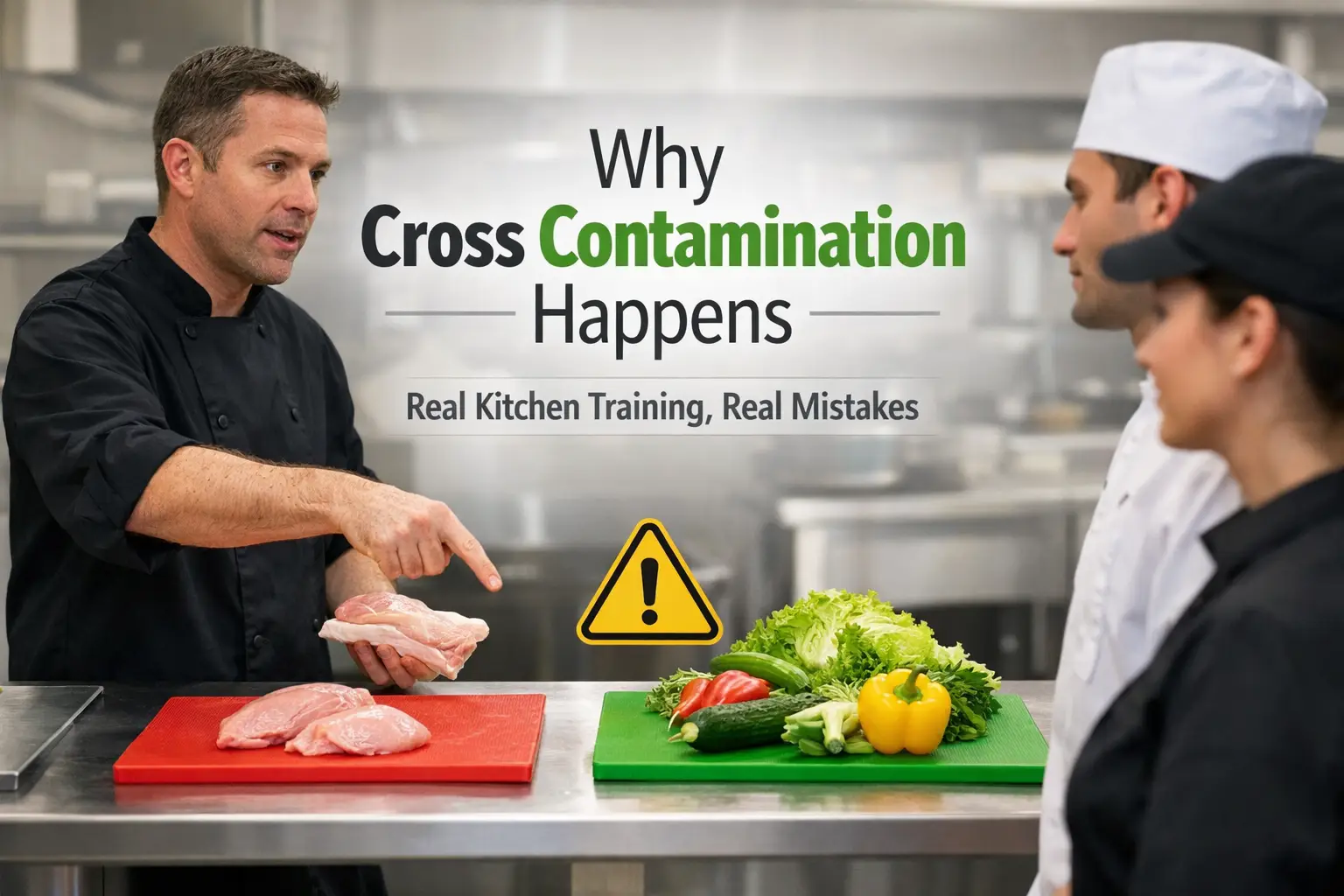
Cross contamination training must be practical to work in busy kitchens. Learn how to teach separation clearly and stop repeat mistakes.
Why cross contamination still happens
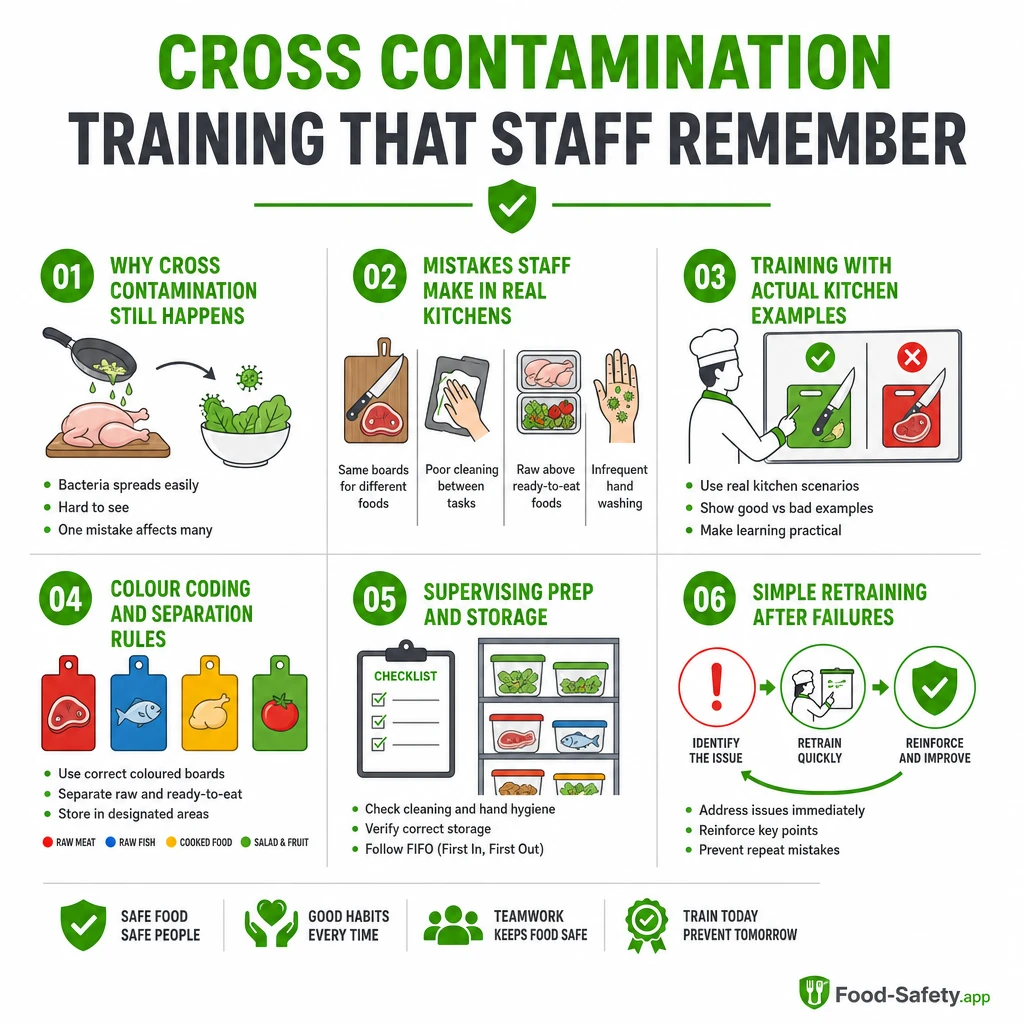
In busy service, routine tasks compete for attention and small lapses multiply into bigger risks. Cross contamination remains a live issue because workflow gaps, rushed prep, and subtle habit patterns outpace training when the clock is ticking. Key factors include cramped layouts that force risky transitions, inconsistent supervision on the floor, and the fatigue that comes with long shifts. Recognising these realities helps managers design controls that actually work in service, not just in theory.
Clear guidance from regulatory bodies emphasises separation and prompt corrective action. For example, allergen management guidance highlights the need for strict separation between raw and ready-to-eat ingredients and for routine checks to catch slips before service ends. See the external guidance for reference. Food Standards Agency allergen management guidance.
Common staff mistakes
Using the same board, knife or cloth for raw and ready-to-eat food
Cross contact is often a matter of equipment sharing without proper cleaning. Raw poultry or meat on a chopping board can leave residues that transfer to salads or cooked items when the same board is used again without sanitising.
Poor handwashing after handling raw meat, eggs or allergens
Under pressure, handwashing may be skipped or shortened. Hands can carry allergens to ready-to-eat foods, equipment, and packaging if staff do not wash thoroughly or at the required points in the workflow.
Storing raw foods above cooked or ready-to-eat items
Poorly organised fridges and shelves create accidental drips and contamination from drips or splash zones. Raw items above ready-to-eat products are a common, easily fixable risk that teams can address with simple shelving rules.
Mixing allergen-free prep with normal prep
Allergen-free lines can be compromised when dedicated surfaces or tools aren’t used. Even small crossovers, like crumbs from bread or spice residues, can trigger reactions for sensitive customers.
Training with real kitchen examples
Training should translate directly to the busy floor. Use short, repeatable examples drawn from breakfast prep, sandwich assembly, salad service, and delivery put-away to ground the learning in actual workflow.
- Breakfast prep: raw bacon or eggs handled near toast stations without cleaning between tasks, leading to crumb transfer or surface contamination.
- Sandwich assembly: same tongs used for burgers and garnishes without sanitising between stations.
- Salad service: allergen-free greens handled on a surface that previously held breadcrumbs or nut toppings.
- Delivery put-away: packaging checked late, with temperature checks skipped, risking temperature abuse during transport.
Colour coding and separation rules
Simple, visible systems reduce reliance on memory during peak service. Implement colour-coded boards, knives, cloths, and containers, and establish clear zones for preparation, cooking, and plating. A practical approach:
- Assign coloured boards and knives to specific tasks (raw meat, ready-to-eat, dairy, gluten-free).
- Use dedicated cloths for each zone and ensure cleaning cloths are part of a strict rotation.
- Designate separate prep surfaces for allergen-free orders and standard prep.
- Keep allergen-containing ingredients away from non-allergen zones during storage and handling.
Supervising prep and storage
Ongoing supervision is the cure for drift in busy shifts. Implement simple, repeatable checks that can be done by supervisors, shift leaders, or night managers.
- Spot checks during service to verify boards, knives, and cloths are correctly allocated and clean.
- Closed-loop checks on fridges, shelves and allergen prep areas, with a clear record trail.
- Assign responsibility for delivery checks and stock rotation, so missed issues don’t accumulate.
Simple retraining after failures
When a lapse occurs, address it quickly and constructively. A short retraining loop is more effective than a long classroom session that staff forget after a week. Refresher training helps.
Operational focus and compliance
Turn the principles into everyday routines that support compliance and inspection readiness. The goal is to show consistent practice across shifts, not just a one-off training day. HACCP principles inform actions on separation, storage and handling.
| Control area | Suggested action |
|---|---|
| Separation | Colour coding, dedicated equipment, clear zones |
| Storage | Low-level storage for raw above ready-to-eat avoided; label all allergen items |
| Cleaning | Regular sanitising schedule between shift handovers |
For teams looking to record training, corrective actions, cleaning checks and goods-in checks, consider a digital system that keeps a simple audit trail. Food-Safety.app is a food safety management system for catering businesses.
Learn more
Discover practical tools and guidance to implement separation and storage controls across shifts and teams, helping you sustain consistent compliance and readiness for audits.