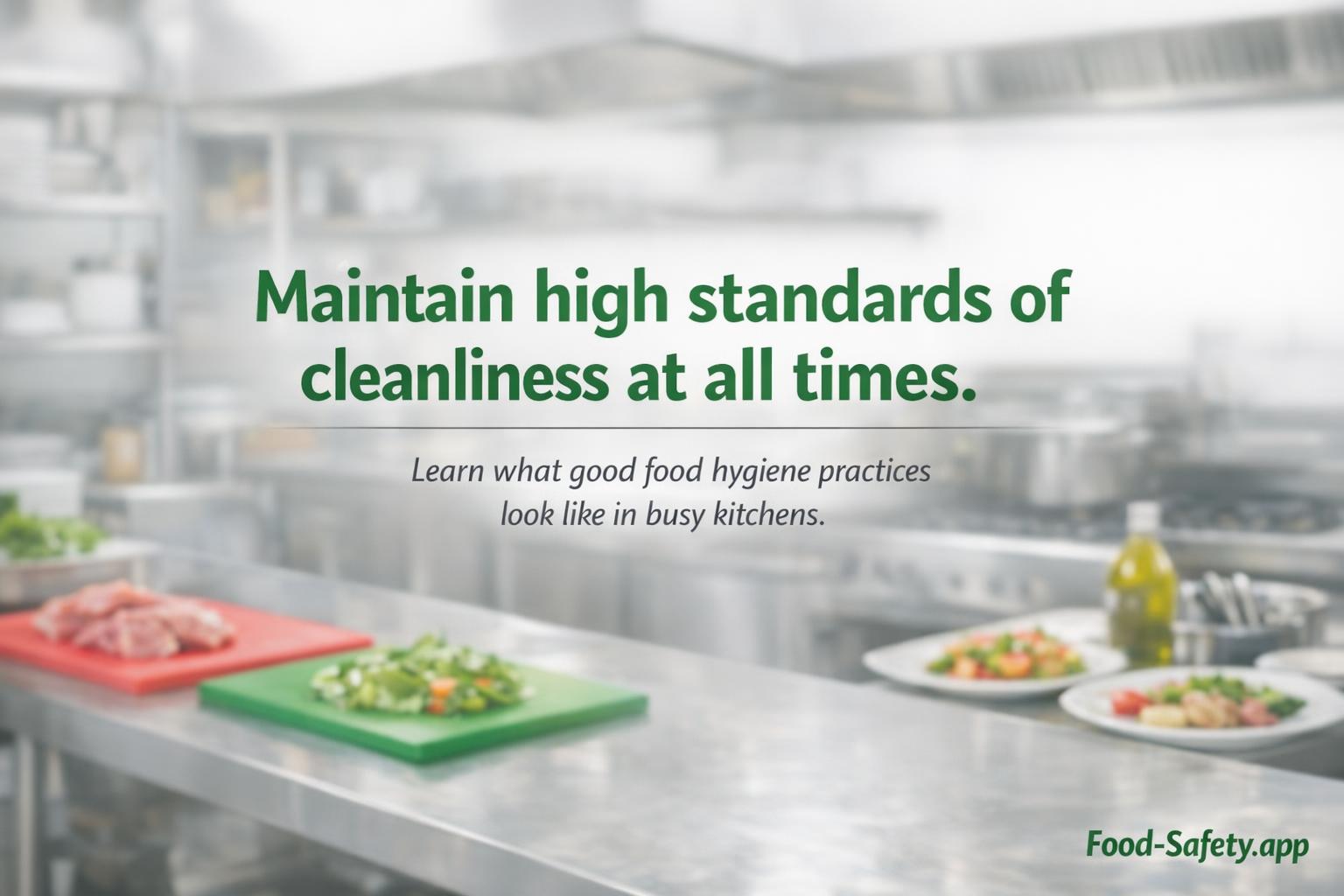
Learn what good food hygiene practices look like in busy kitchens. food hygiene practices help keep food safe, staff confident and customers protected.
What are food hygiene practices?
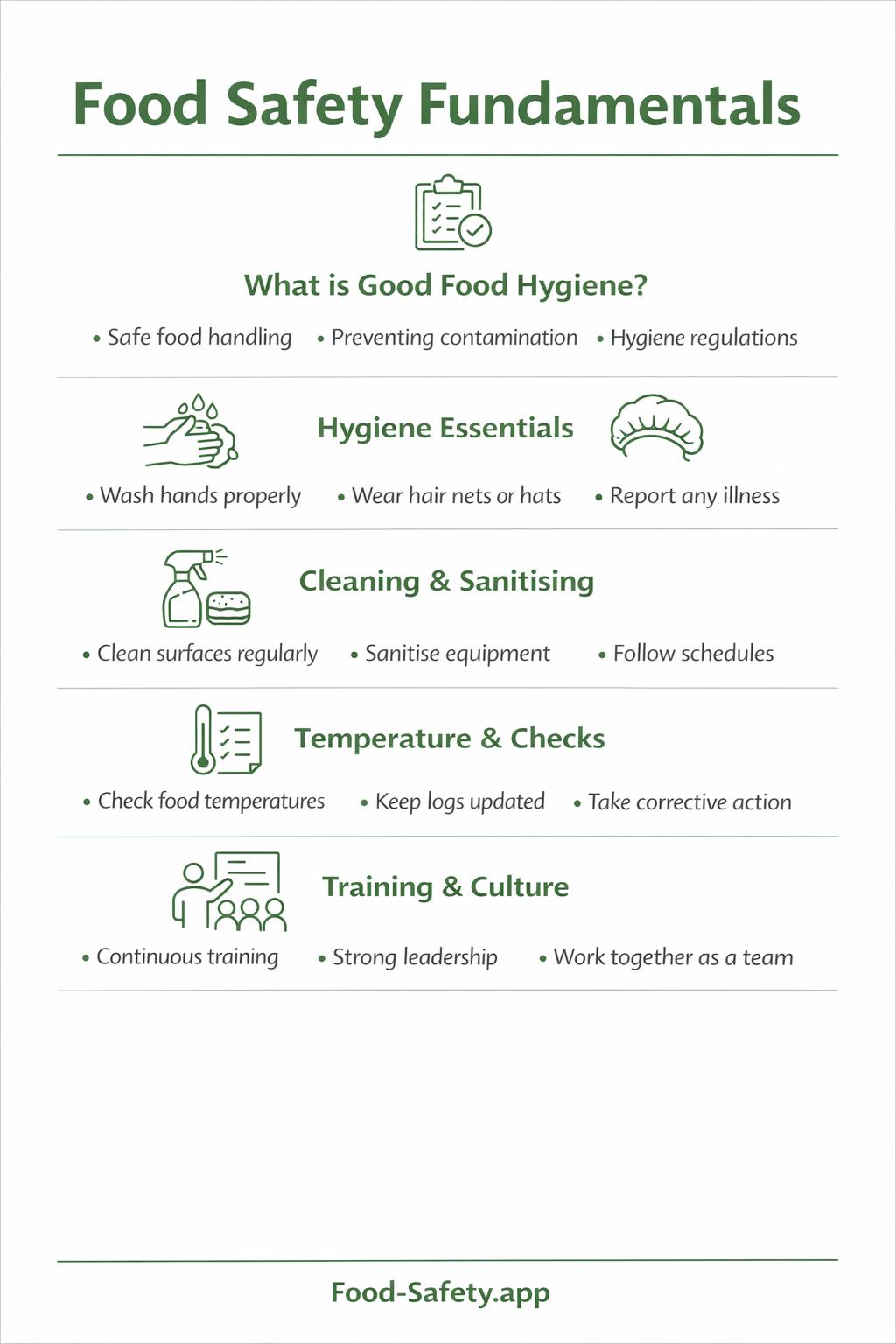
Food hygiene practices are the everyday actions that help stop food from becoming unsafe. In catering and hospitality, that means controlling contamination, keeping food at safe temperatures, cleaning properly and making sure staff follow clear routines. Good practice protects customers from food poisoning and helps a business meet legal duties on hygiene, traceability and safe handling. It also makes service smoother, because teams know what to do, even during a busy lunch rush or a late-night event.
At their simplest, these practices are about reducing risk at every stage of food handling. That includes receiving goods, storing them correctly, preparing food safely, cooking and cooling it at the right temperatures and serving it without delay. Businesses that treat food safety fundamentals as part of daily work are less likely to face complaints, waste or costly mistakes. For a wider structure, many teams use a food safety management system for catering businesses to keep controls clear and consistent.
What are examples of good food hygiene practices?
Good food hygiene practices show up in small, repeatable actions. For example, chilled food should be stored at the right temperature, raw meat should be kept separate from ready-to-eat food and staff should use clean utensils instead of bare hands where possible. In a sandwich shop, that might mean changing gloves when switching tasks and wiping down prep areas between batches. In a hotel kitchen, it could mean labelling sauces, checking delivery temperatures and making sure food goes straight into storage.
The details matter because contamination can happen quickly. A dirty cloth, an unwashed knife or a tray of chicken stored above salad ingredients can create a serious problem. It’s also important to understand temperature control and the danger zone, since food left warm for too long can support rapid bacterial growth. If you want a practical guide to that risk, see temperature control and the danger zone. For legal and inspection context, official advice from the Food Standards Agency is a useful reference point.
Which staff habits matter most for food hygiene practices?
Staff habits are at the heart of safe food handling. Clean hands, clean clothing and a habit of reporting problems early all make a difference. Handwashing is still one of the most effective controls, especially after handling raw food, touching bins, cleaning or using the toilet. Staff should also avoid working when they are ill, particularly if they have vomiting or diarrhoea, and managers should know when exclusion from work is needed. Good habits reduce risk before it reaches the customer.
Training helps those habits stick. New starters need simple instructions on cross-contamination, personal hygiene and when to use separate equipment. Experienced staff need refreshers too, because shortcuts creep in during busy periods. A quick pre-service briefing can remind teams to check colour-coded boards, change cloths, label containers and keep raw and ready-to-eat items apart. If your business wants a simple way to support this, training staff development resources can help turn policy into routine practice.
How can managers make good habits easier?
Managers make a big difference by setting clear expectations and making the right action the easy action. That means placing soap, towels and sanitiser where people actually use them, not hidden away in a corner. It also means writing down steps for opening, closing and handover so the team isn’t relying on memory. Short, visible prompts near sinks, fridges and prep stations work better than long notices. When staff see hygiene as part of service rather than an extra task, compliance improves.
How do cleaning and cross-contamination control fit in?
Cleaning isn’t just about looking tidy. It removes dirt, food residues and germs that can contaminate food or surfaces. A proper cleaning schedule should say what needs cleaning, how often, who is responsible and which chemicals to use. High-touch points such as handles, taps, slicers and fridge seals often need more attention than staff realise. Equally important is separating cleaning equipment so cloths and mops used in toilets never end up in food areas. That separation supports safer working conditions across the whole site.
Cross-contamination control should be built into daily layout and workflow. Raw meat, allergens and ready-to-eat food need careful separation, and tools should be stored where staff can grab the correct one quickly. If your menus change often or you handle multiple allergens, a dedicated system can help you stay organised. See allergen management for more on protecting customers with food allergies, and cleaning hygiene and cross-contamination for practical control measures that fit busy kitchens.
What checks should food businesses do every day?
Daily checks turn good intentions into evidence. Businesses should confirm fridge and freezer temperatures, look at delivery condition, check cooking and hot holding limits where relevant and make sure cleaning tasks are completed. These checks don’t need to be complicated, but they do need to be regular and recorded. When something goes wrong, such as a fridge running warm or a probe reading outside safe limits, staff should know what to do next. Fast corrective action can prevent waste and reduce risk.
Using a digital system can save time and improve consistency, especially when teams work across shifts. Food-Safety.app is a practical option for logging checks, keeping inspection-ready records and tracking corrective actions without adding unnecessary paperwork. Its temperature records, cleaning schedules and opening and closing checks can help teams stay organised, even offline and without login. That kind of support is especially useful for operators who need reliable records during a busy service or a compliance visit.
What should you record and review?
It’s worth recording the checks that show whether your controls are actually working. That usually includes temperatures, cleaning completion, delivery checks, probe calibration, pest sightings, defects and any action taken when results are outside limits. Records should be reviewed, not just filed away, so patterns can be spotted early. For example, repeated fridge issues may point to poor maintenance or overloading. A good record system helps managers notice trends before they become incidents, complaints or inspection concerns.
How do you build a strong food hygiene culture?
Strong food hygiene culture means safe behaviour happens even when nobody is watching. It starts with clear rules, but it grows when managers lead by example, staff speak up and problems are fixed quickly. If someone notices a spill, a faulty fridge door or a missing label, they should feel able to report it without blame. That approach keeps standards high because people are more likely to flag risks early. Over time, hygiene becomes normal working practice rather than a last-minute scramble.
A good culture also needs simple systems that fit real service pressure. Businesses often do better when their processes are easy to follow, easy to train and easy to prove. For owners who want stronger oversight, paperwork and digital food safety can reduce admin while improving visibility. You can also explore running a food business safely for more on building reliable day-to-day controls. When food hygiene practices are part of the routine, the whole operation becomes safer, calmer and more consistent.
In practice, the best food hygiene practices are the ones your team can repeat every day. Keep them simple, train them well, check them often and act fast when something slips. That’s how busy kitchens protect customers and stay ready for service, inspection and growth.