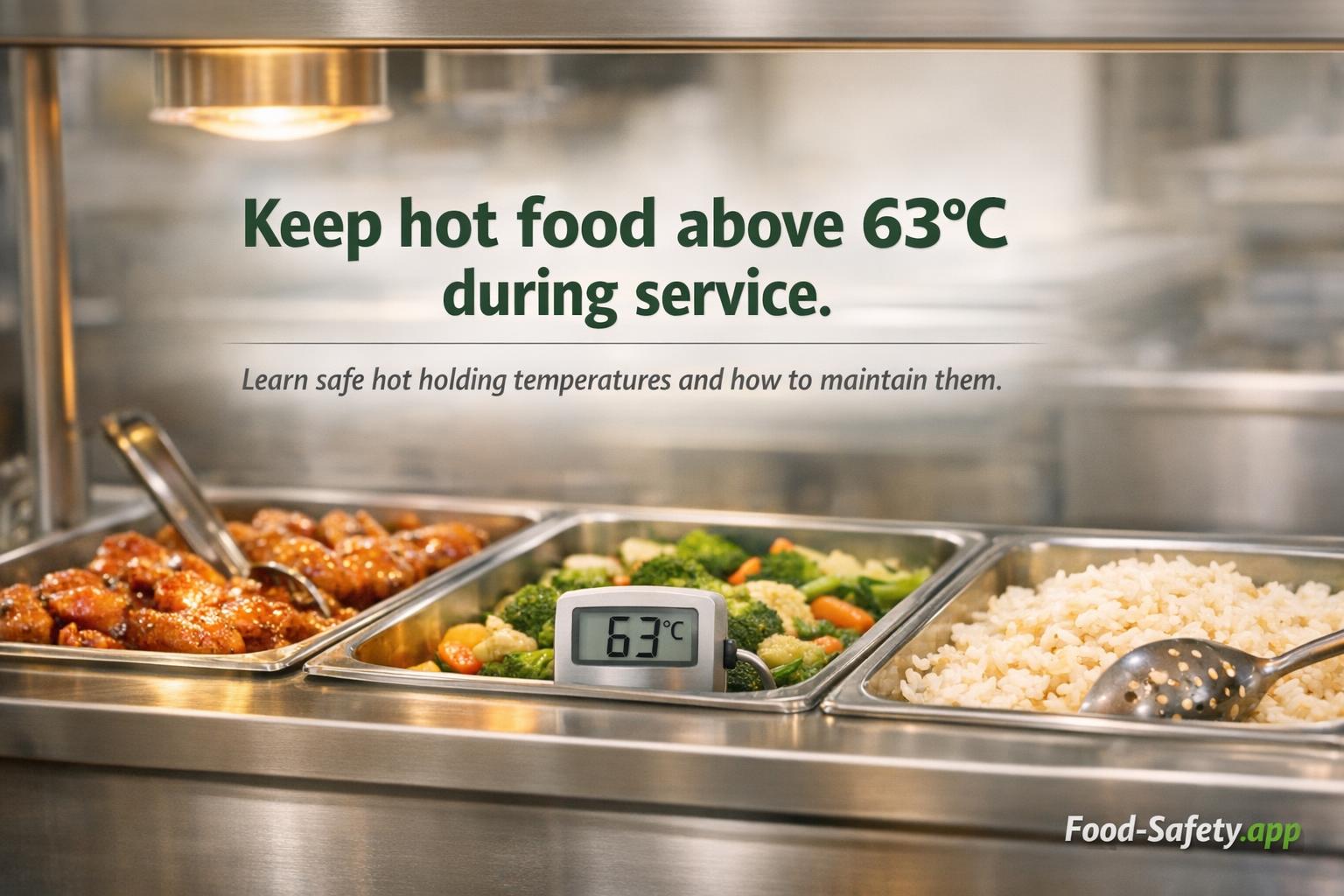
Learn safe hot holding temperatures and how to maintain them, so your food stays safe, compliant, and ready to serve without risk.
What is the safe hot holding temperature range?
The safe hot holding temperature is typically 63°C or above. This threshold is widely recognised in food safety guidance because it prevents harmful bacteria from multiplying. Once food has been cooked thoroughly, it must be kept at or above this temperature if it is not served immediately. Dropping below this level, even for short periods, can increase risk if not properly managed.
Some regulations allow limited flexibility, such as holding food below 63°C for a short, controlled period, but this must be carefully documented and justified. For clear guidance, refer to recognised authorities such as the Food Standards Agency. Consistency is key, as fluctuating temperatures can quickly compromise food safety.
What happens if hot holding temperature is too low?
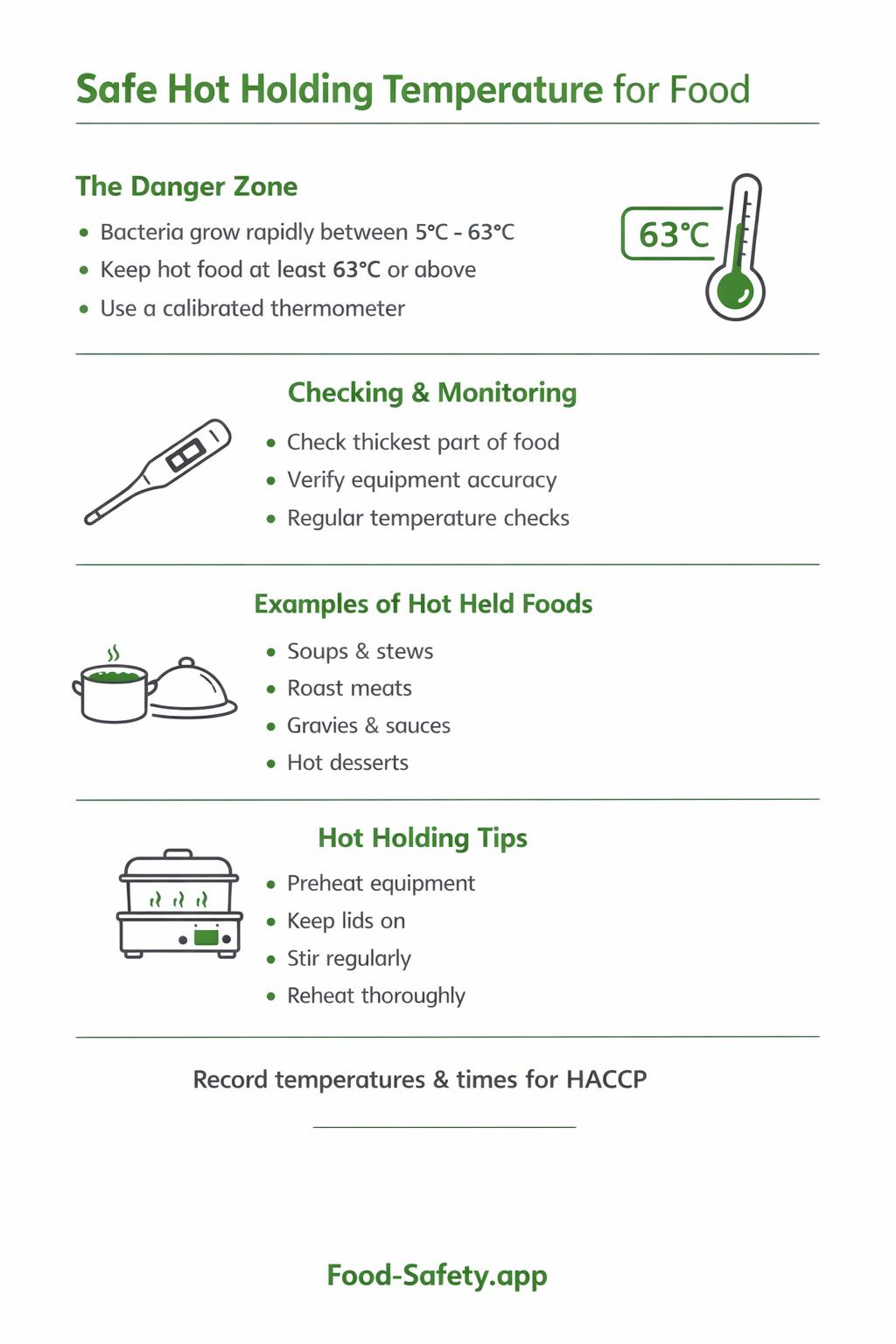
If the hot holding temperature drops below safe levels, bacteria can begin to grow rapidly, especially within the danger zone between 8°C and 63°C. Foods such as cooked meats, sauces, rice, and soups are particularly vulnerable. Even if food looks and smells fine, it may still be unsafe to eat.
The main risks include foodborne illness, customer complaints, and potential enforcement action. Businesses must understand that unsafe hot holding is not just a technical issue but a serious public health concern. Strong procedures, staff awareness, and links to broader practices like foodborne illness prevention help reduce these risks significantly.
Examples of hot holding in real food settings
Hot holding is used across many types of food businesses. In a buffet, dishes like curries or pasta are often kept in bain-maries. In quick-service outlets, items such as fried chicken or chips may be held under heat lamps. In care homes or hospitals, prepared meals may be held before service rounds.
Each setting presents slightly different challenges. For example, large volumes of food can lose heat quickly when lids are removed frequently. Similarly, shallow trays may cool faster than deeper containers. Understanding these practical differences helps staff maintain the correct hot holding temperature consistently.
How should you check hot holding temperature?
Checking the hot holding temperature should be done using a clean, calibrated probe thermometer. Measurements should be taken at the thickest part of the food, avoiding surface-only readings. Regular checks ensure that equipment is working correctly and food remains within safe limits.
Good practice includes:
- Checking temperatures at set intervals, such as every 2 hours
- Recording results immediately
- Taking corrective action if food falls below 63°C
These checks form part of a wider safety system and should be supported by proper staff training, such as guidance found in training and staff development resources.
How to monitor hot holding temperature effectively
Monitoring goes beyond occasional checks. It involves having a clear system that ensures temperatures are controlled at all times. This includes setting equipment correctly, avoiding overloading units, and ensuring lids or covers are used where appropriate to retain heat.
Digital tools can make monitoring easier and more reliable. For example, Food-Safety.app, a food safety management system for catering businesses, allows teams to log hot holding temperatures with automatic timestamps and alerts for out-of-range readings. This helps reduce human error and ensures issues are spotted quickly.
Why keeping hot holding temperature records matters
Accurate records provide evidence that food has been kept safely and that your business is meeting its legal obligations. They are also essential during inspections, helping demonstrate that controls are in place and followed consistently.
Records should include the time, temperature, the person responsible, and any corrective actions taken. Keeping these logs organised, whether on paper or digitally, supports accountability and continuous improvement. Over time, patterns in records can highlight recurring issues, such as faulty equipment or gaps in staff procedures, allowing you to take action before problems escalate.
Ultimately, maintaining the correct hot holding temperature is about protecting customers and ensuring your operation runs smoothly. With the right systems, checks, and awareness in place, it becomes a routine and reliable part of daily food safety management.