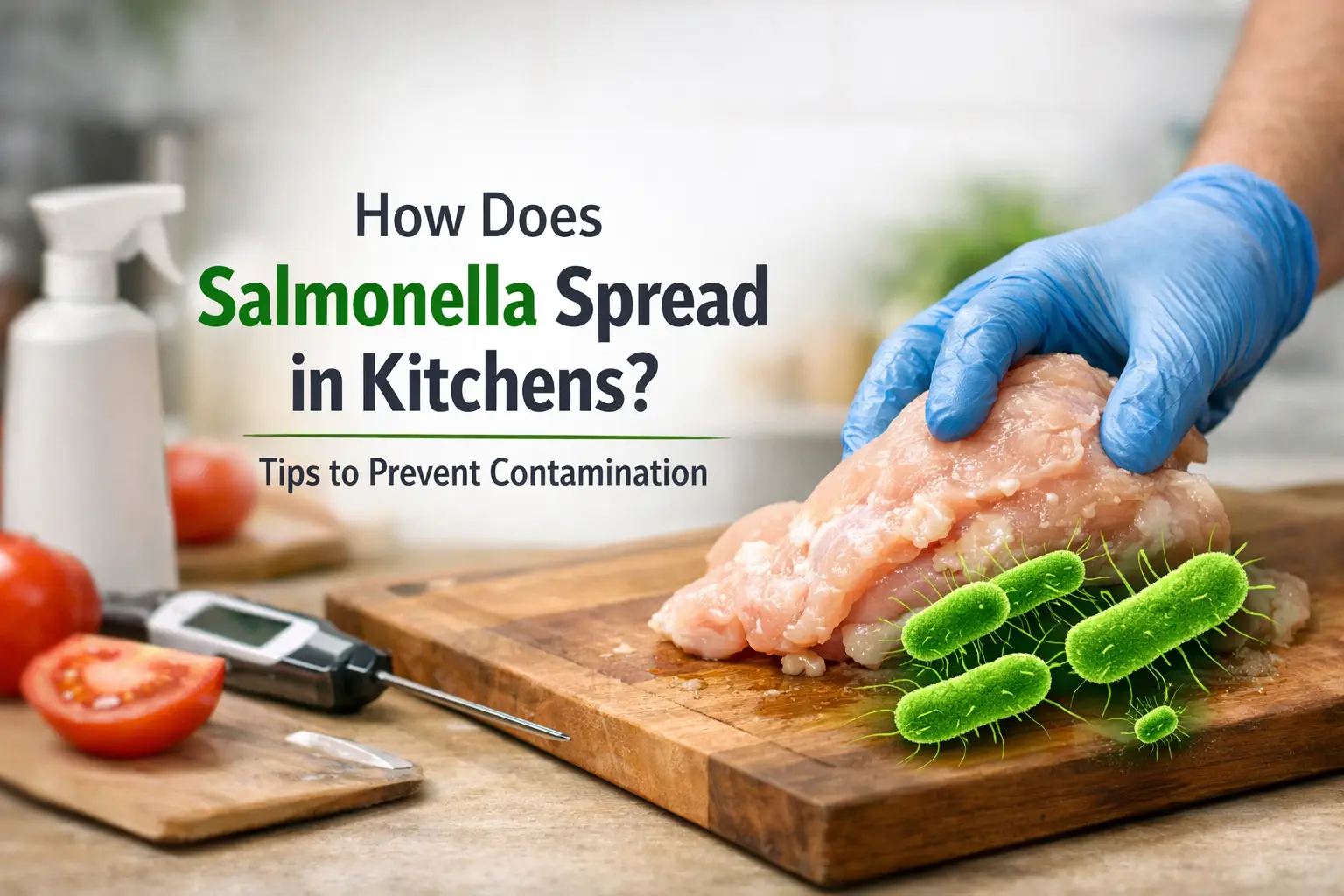
Salmonella outbreaks in catering can start from everyday kitchen practices. This guide explains how the bacteria moves in kitchens, identifies common routes of contamination, and outlines practical controls you can implement to protect customers and stay compliant.
What Salmonella Is and Why It Matters for Food Businesses
Important: Salmonella can be present even if a product looks, smells or tastes normal, so hygiene controls matter more than appearances.
Salmonella is a bacterium that causes gastroenteritis. In food businesses it’s a leading cause of illness worldwide and can contaminate a wide range of foods. It may survive on surfaces for hours or days, and while most people recover, vulnerable groups can suffer severe outcomes. For catering and hospitality, a single lapse can trigger complaints, closures or reputation damage. Understanding how Salmonella behaves helps you design safer processes, reduce risk and stay aligned with good practice.
Raw poultry, eggs and other unpasteurized foods are common sources in professional kitchens, but the bacteria can hitch a ride on hands, cloths, utensils and surfaces used throughout the service cycle. Effective controls aren’t glamorous, but they’re reliable and practical.
Main Sources in Kitchens
Physical separation of raw and ready-to-eat items is a foundational control in all catering operations.
In kitchens, four broad sources drive Salmonella risk:
- Raw poultry, eggs, meat, and unpasteurised foods
- Contaminated hands, cloths, equipment and surfaces
- Poor fridge storage and inadequate temperature control
- Cross-contamination during prep, cooking, cooling and service
In practice, the majority of incidents arise when raw products and ready-to-eat items share space, tools or workflows. Keeping raw and cooked foods physically separate and maintaining clean-to-dirty workflows are foundational controls.
How Salmonella Spreads in Practice
The safest procedure is the one you can consistently follow during peak service.
Salmonella spreads through several interrelated pathways. The most common are:
- Direct contact between raw and ready-to-eat foods (e.g., using the same board for raw poultry and ready-to-eat items)
- Drips and splashes from raw food onto ready-to-eat foods or surfaces
- Shared utensils, chopping boards, thermometers, and storage containers
- Inadequate handwashing after handling raw food, waste or dirty equipment
Once contamination occurs, it can cascade through a kitchen if controls are weak. The spread is often subtle—one rushed action can set off multiple cross-contact points.
Foods and Operations at Higher Risk
Buffets and open-service setups increase the chance of cross-contact; keep hot foods hot and cold foods cold and separate.
Certain foods and daily operations pose higher risks for Salmonella in catering environments:
- Chicken, turkey, duck, egg dishes and mayonnaise-based foods
- Buffets, open-service setups, and sandwich prep areas
- Deliveries, cold storage, defrosting and reheating processes
These contexts require tighter controls and clearer separation of raw and ready-to-eat items, plus robust monitoring of temperatures, times and hygiene practices.
Practical Examples and Scenarios
A formal cleaning and temperature-logging routine makes problems visible before guests are affected.
Real-world situations illustrate how easily gaps can appear if controls aren’t consistent. Consider:
- Raw chicken stored above salad ingredients in a fridge, risking drips onto produce.
- A chef using the same board for raw poultry and cooked chicken without sanitising in between.
- Staff handling eggs, then assembling ready-to-eat sandwiches without washing hands.
- A probe thermometer used on both raw and cooked foods without cleaning in between.
- Leftovers cooled too slowly before refrigeration, enabling bacterial growth.
In each case, a small lapse can cascade into a larger contamination issue. Training and simple, repeatable checks help prevent these scenarios from becoming actual problems.
If you need a quick-start checklist, start with clear separation rules, a simple daily temperature log, and a short opening/closing hygiene routine. Those basics make a surprising difference in preventing Salmonella spread in busy kitchens.
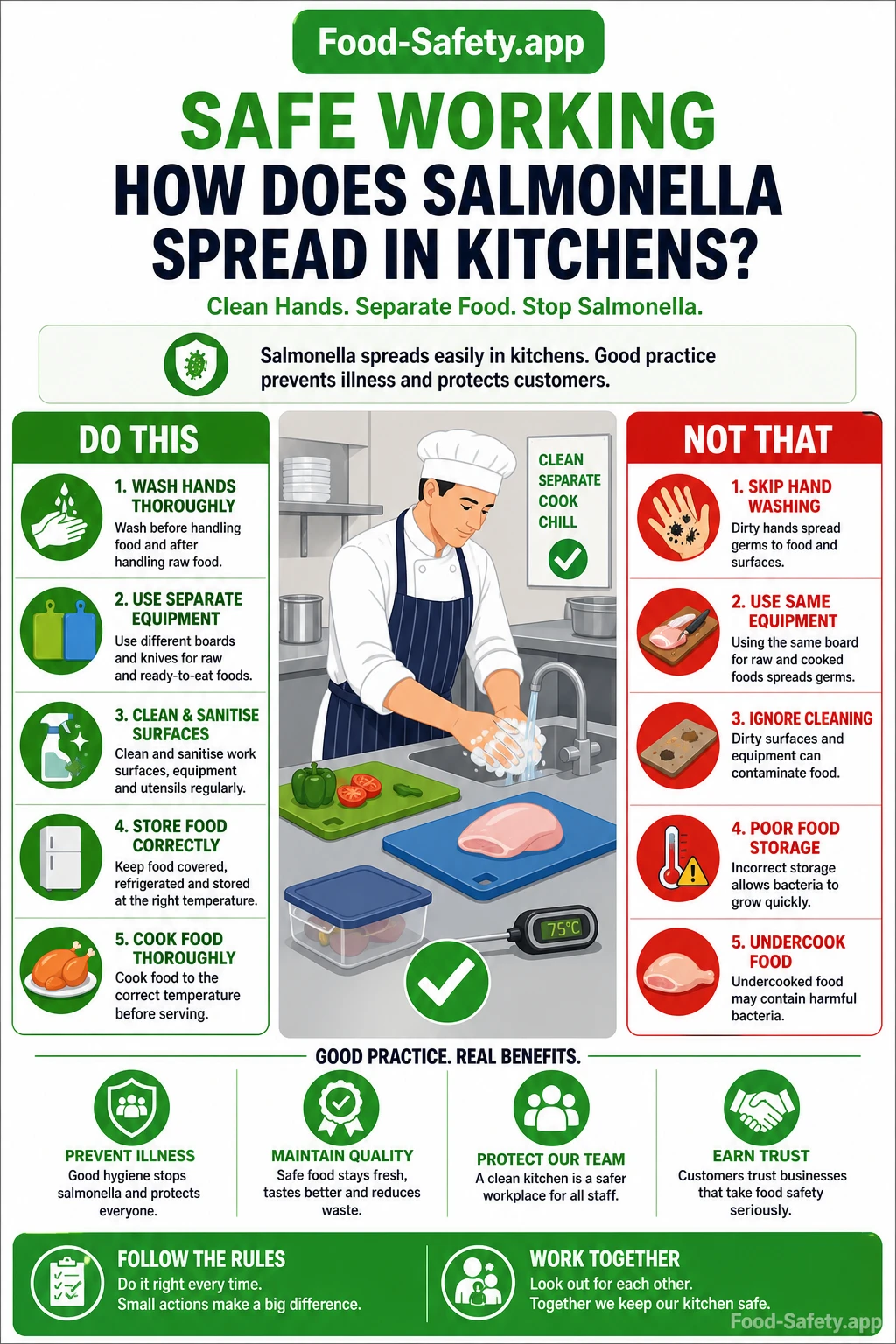
Practical Controls and Compliance Focus
A routine that captures temperatures, cleaning, and corrective actions helps you act quickly when issues arise.
Put in place practical, verifiable controls that align with daily operations:
- Separate raw and ready-to-eat food areas, tools, and storage
- Record cooking, cooling, cold storage, reheating and hot holding temperatures
- Use opening and closing checks to confirm hygiene controls
- Log cleaning tasks, defect reports, corrective actions and probe calibration
- Check deliveries for condition and temperature
- Keep training records up to date and reinforce hand hygiene
- Use allergen and menu controls where foods are handled in mixed production areas
- Maintain clear HACCP-based procedures and review them after any incident
In practice, the most important habit is consistency: train staff to treat raw foods, waste, and dirty equipment as separate from ready-to-eat items, and document what you do. Regular reviews of procedures after incidents help evolving risks stay in-check and protect both guests and staff.
If you need a quick-start checklist, start with clear separation rules, a simple daily temperature log, and a short opening/closing hygiene routine. Those basics make a surprising difference in preventing Salmonella spread in busy kitchens.