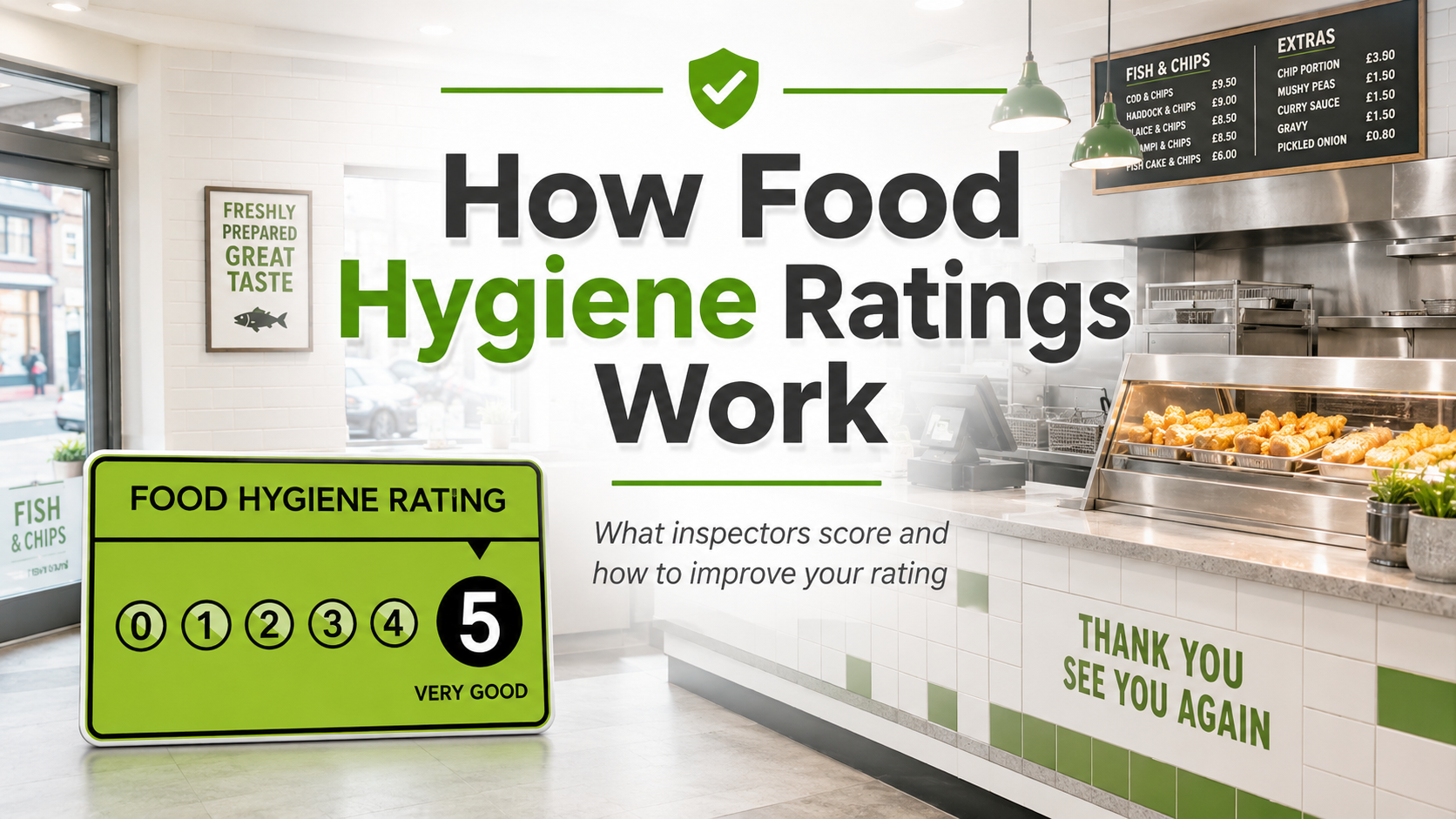
A food hygiene rating can feel difficult to understand. This guide explains the scores, what inspectors assess and how to improve.
Table of contents
- What is a food hygiene rating?
- What do food safety officers score?
- How is the final rating worked out?
- Why can one score limit the rating?
- How can a business improve its rating?
- What can you do if you disagree?
What is a food hygiene rating?
A food hygiene rating shows the hygiene standards found when a local authority food safety officer inspected a business. Under the Food Hygiene Rating Scheme used in England, Wales and Northern Ireland, businesses receive a rating from 5, meaning very good, to 0, meaning urgent improvement is necessary. Scotland uses a different system called the Food Hygiene Information Scheme.
| Rating | Meaning |
|---|---|
| 5 | Very good |
| 4 | Good |
| 3 | Generally satisfactory |
| 2 | Improvement necessary |
| 1 | Major improvement necessary |
| 0 | Urgent improvement necessary |
The rating reflects what the officer found on the day. It isn’t simply a score for cleanliness, and it doesn’t judge food quality, customer service or how attractive the premises look.
What do food safety officers score?
The officer assesses three areas: hygienic food handling, the condition of the premises, and confidence in management. Each area receives a numerical score, but the system works in reverse to what many people expect. A lower score means better compliance, while a higher score means more improvement is required.
| Assessment area | What the officer considers | Possible scores |
|---|---|---|
| Hygienic food handling | How food is received, stored, prepared, cooked, cooled, reheated and served | 0, 5, 10, 15, 20 or 25 |
| Condition of premises and facilities | Cleanliness, layout, repair, equipment, handwashing, ventilation, drainage and pest-proofing | 0, 5, 10, 15, 20 or 25 |
| Confidence in management | Food safety knowledge, procedures, records, compliance history and consistent control of risks | 0, 5, 10, 20 or 30 |
How hygienically is food handled?
This covers the way food is received, stored, prepared, cooked, cooled, reheated and served. The officer may look at:
- Temperature control
- Personal hygiene
- Cleaning standards
- Cross-contamination controls
- Separation of raw food from ready-to-eat food
A score of 0 indicates a high standard of compliance. At the other end, 25 indicates almost total non-compliance.
What condition are the premises and facilities in?
This part considers the cleanliness, layout and physical condition of the building and equipment. It can include floors, walls, ceilings, work surfaces, handwashing facilities, ventilation, drainage, pest-proofing and whether equipment can be cleaned properly.
A business can have good procedures but still lose marks where repairs are overdue, surfaces are damaged or the layout creates a contamination risk. This section is also scored from 0 to 25.
What does confidence in management mean?
Confidence in management is the officer’s assessment of whether the business understands its food safety risks and controls them consistently. It includes the manager’s knowledge, the business’s compliance history and whether suitable procedures are documented and followed.
Scores are 0, 5, 10, 20 or 30. Because this category can carry the highest individual score, weaknesses in food safety management can have a significant effect on the final rating.
| Management evidence | What it should demonstrate |
|---|---|
| SFBB pack or another HACCP-based system | Food safety risks are understood and controlled |
| Staff training | Employees understand the procedures relevant to their work |
| Temperature checks | Food is stored, cooked, cooled and reheated safely |
| Cleaning records | Cleaning tasks are planned and completed |
| Allergen information | Allergen risks are identified and communicated |
| Corrective actions | Problems are identified and dealt with appropriately |
Records should match the work taking place. Completed paperwork that doesn’t reflect actual practice won’t give an inspector confidence.
How is the final food hygiene rating worked out?
The three scores are added together. The maximum total is 80, made up of 25 for food handling, 25 for structure and 30 for confidence in management.
| Total score | Rating | Description |
|---|---|---|
| 0 to 15 | 5 | Very good |
| 20 | 4 | Good |
| 25 to 30 | 3 | Generally satisfactory |
| 35 to 40 | 2 | Improvement necessary |
| 45 to 50 | 1 | Major improvement necessary |
| Above 50 | 0 | Urgent improvement necessary |
The total alone doesn’t always decide the result. Each rating also has a maximum permitted individual score, which prevents a serious weakness in one area from being hidden by good scores elsewhere.
Why can one score limit the food hygiene rating?
Suppose a business scores 15 for food handling, 0 for structure and 5 for confidence in management. The total is 20, which would normally sit within the rating 4 band.
| Assessment area | Example score |
|---|---|
| Food handling | 15 |
| Structure | 0 |
| Confidence in management | 5 |
| Total | 20 |
However, an individual score of 15 is too high for ratings 3 or 4, so the business would be limited to a rating of 2.
This is why it’s important to review the individual inspection scores rather than only looking at the overall rating. One serious issue, such as unsafe food handling or weak management control, can determine the final outcome.
How can a business improve its food hygiene rating?
Start with the officer’s inspection report and deal with the highest-risk issues first.
- Correct unsafe food handling practices immediately.
- Complete necessary repairs to premises and equipment.
- Review cleaning standards and cleaning schedules.
- Make sure staff understand the procedures relevant to their work.
- Check that records are accurate, current and appropriate for the food processes used by the business.
- Record problems and the corrective action taken.
Management evidence also matters. Accurate food safety records can help show that checks are completed, problems are identified and corrective action is taken. HACCP records should be practical, current and appropriate for the food processes used by the business.
What can you do if you disagree with the rating?
Businesses have safeguards within the scheme. Depending on the circumstances, you may be able to appeal, submit a right to reply or request a revisit after improvements have been completed.
| Option | When it may be used |
|---|---|
| Appeal | When you believe the rating does not reflect the food hygiene standards found at the inspection |
| Right to reply | When you want to explain the circumstances or describe action already taken |
| Request a revisit | After improvements have been completed and you want the business to be reassessed |
Keeping food safety evidence under control
A strong food hygiene rating comes from safe daily practice, suitable premises and management systems that work in real conditions. It’s not about creating paperwork for its own sake. It’s about showing that risks are understood, checks are completed and action is taken when standards slip.
Manage your food safety records
Food-Safety.app helps smaller food businesses record routine checks, temperatures, cleaning, staff training and corrective actions in one place. Clearer digital records make it easier to monitor daily food safety controls, identify problems promptly and show how risks are managed across the business.