
Unsafe stock creates problems before cooking even starts. Learn how small kitchens can check deliveries fast and record the right details each day.
Why delivery checks matter in busy catering settings
Delivery checks are a frontline control that protects safety and helps keep stock within specification during peak service. In a busy catering environment, a single poor receipt can push perishable items into the danger zone, disrupt portion control, or trigger waste that hits margins. Regular checks create a predictable handover routine, support traceability, and provide evidence for inspections and internal audits. They also help staff feel confident when stocking away goods and starting service with known, compliant ingredients.
Reduce temperature excursions by catching issues at the door.
Preserve traceability for every item received, from supplier to pot or plate.
Support fast decision-making during service without compromising safety.
What to check on arrival
Temperature and time at delivery
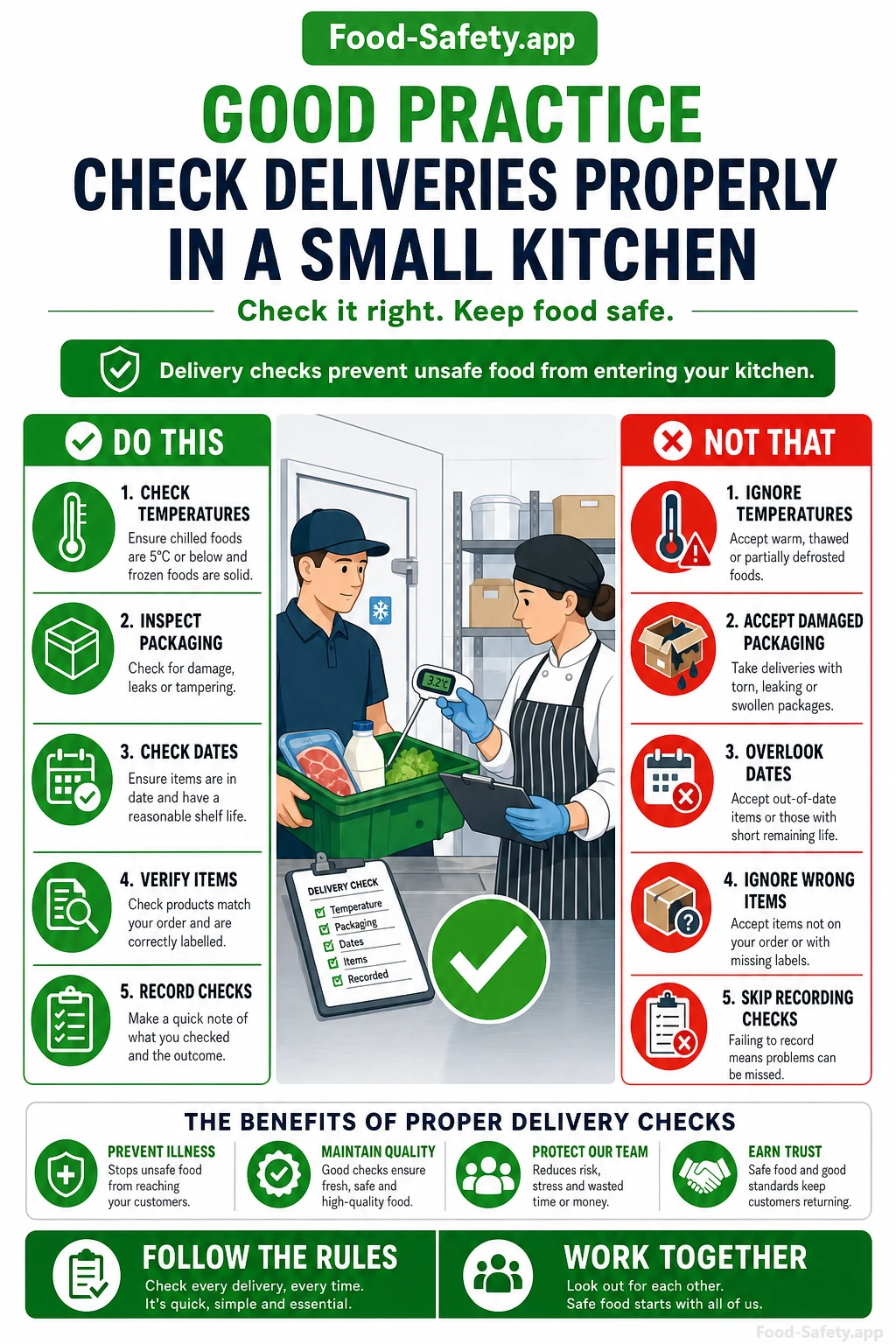
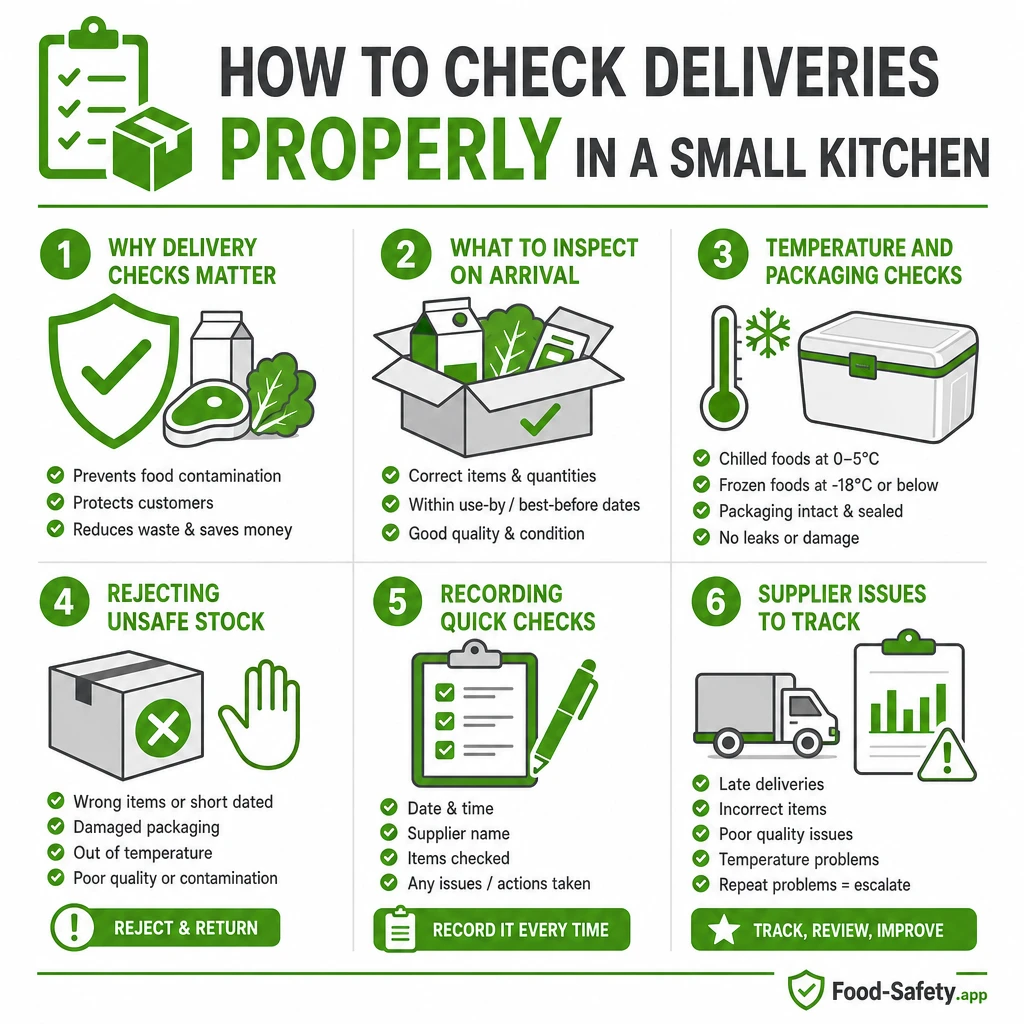
Record the delivery time and check that chilled items arrive at 5°C or below and frozen items at -18°C or below where possible. If readings are outside range, reject or segregate the affected stock immediately and log the incident. Take readings with a calibrated thermometer and note the time, temperature, and any contributing factors (outdoor heat, door left open, delays).
Packaging and labelling
Inspect packaging for signs of damage, leaks, or compromised seals. Look for intact labelling, including allergen information and supplier codes. Damaged packaging can indicate contamination risk or product exposure; reject if seals are broken or labels are illegible. Keep a clear separation between sealed and unsealed items to avoid cross-contact.
Dates and stock status
Check use-by and best-before dates and ensure products are within date ranges for storage and use. Be wary of items with missing or suspicious dates, or those with signs of thawing in packages that should be solidly frozen. Record batch or lot numbers for traceability and confirm item identity against purchase orders. This supports allergen management.
Vehicle cleanliness and handling
Observe the cleanliness of the delivery vehicle and the temperature control devices used during loading. Contaminated wheels, strong odours, or damp, dirty interiors can transfer spoilage microbes. If the vehicle looks unhygienic or conditions are poor, raise the concern and document it as part of the supplier performance review.
Signs of unsafe stock to watch for
Damaged packs or compromised seals
Crushed cartons, torn packaging, or broken seals can indicate contamination risk. Separate the affected items and do not store them with intact goods. Document the issue with notes on condition and notify the supplier if needed. Keep essential food safety records.
Signs of thawing or temperature abuse
Soft or slushy textures, condensation on packaging, or ice build-up in cartons can signal temperature abuse. If thawing is suspected, segregate items and consider discard or return in line with stock control policies.
Leaks, moisture, or visible contamination
Any liquid leaks, murky liquids, or packaging that shows liquid transfer should be treated as a potential contamination risk. Place affected goods in a separate area and arrange for rapid resolution with the supplier.
Pests or pest evidence
Visible pests, droppings, or chewed packaging require immediate action. Remove the items from service and report to management for a formal review and supplier follow-up.
Strong smells or unusual odours
Offensive or unusual smells can indicate spoilage or contamination. If aroma suggests a problem, do not accept or store the item; isolate it and escalate to a supervisor or supplier.
Out-of-date items or missing allergen labels
Expired products or items lacking clear allergen declaration should not be accepted. Mark as rejected and contact the supplier for replacement with compliant stock, then update supplier records.
When to reject a delivery and how to do it quickly
- Assess immediately: if any critical control point is compromised, do not accept the delivery.
- Speak with the driver or supplier on the spot, explaining the reason for rejection calmly and clearly.
- Tag the stock as rejected and segregate it from approved items to avoid accidental use.
- Record the incident in the daily log or delivery-check sheet with date, supplier, item, issue, and action taken.
- Notify a supervisor and arrange a prompt replacement or return, sticking to supplier agreements.
- Update HACCP records and ensure traceability is maintained for any corrective actions.
Recording and traceability of checks
Fast, accurate recording supports traceability, audits, and supplier performance reviews. Record at the point of receipt, including date, time, supplier, item, lot numbers, and the exact observation. A clear record helps identify recurring problems and demonstrates due diligence during inspections.
These records support compliance, law and inspections.
Handling supplier issues and corrective actions
Noting supplier issues and taking timely corrective actions protects service quality and compliance. Use a consistent process for non-conformances, supplier feedback, and follow-up actions. Examples below illustrate practical handling in a small kitchen context.
- Late deliveries that disrupt temperature control: document impact, request expedited replacement, and adjust stock receiving windows to minimise risk.
- Regular faults from a supplier: log recurring issues, request a CAPA (corrective action) plan, and review supplier performance quarterly.
- Damaged or mislabeled ambient stock: place on hold, inform procurement, and request corrected labeling before shelf placement.
- Repeated use-by label gaps: escalate to supplier management and require updated labelling on future deliveries.
Practical examples and quick routines for a small café
A small café can perform a quick pre-service check at the back door, with a compact routine that fits a busy shift. Each morning or before service, designate a staff member to complete a two-minute check: verify top three perishable items, confirm no signs of spoilage, and record the readings. If any issue is spotted, place the item in quarantine, alert the supervisor, and arrange immediate supplier contact for resolution. This routine reduces waste and supports safer service. This routine aligns with HACCP planning.
Making delivery checks stick in a small kitchen
In practice, these checks should be simple, fast, and traceable. Use concise check sheets, standardised language, and a clear escalation path. Documentation becomes a natural part of the daily workflow, not a burden that slows service. For busy sites, Food-Safety.app, a food safety management system for catering businesses, makes goods in checks quick to record, automatically timestamped, and easy to review, with offline use, no login, and PDF export for inspection or supplier follow-up. It also supports customisable checks and a full history view to track recurring delivery problems. These practices align with the 4 Cs of food hygiene.
Delivery checks for safer service
Explore practical delivery checks to protect stock, speed verification, and maintain consistent compliance in busy small kitchens during every shift.