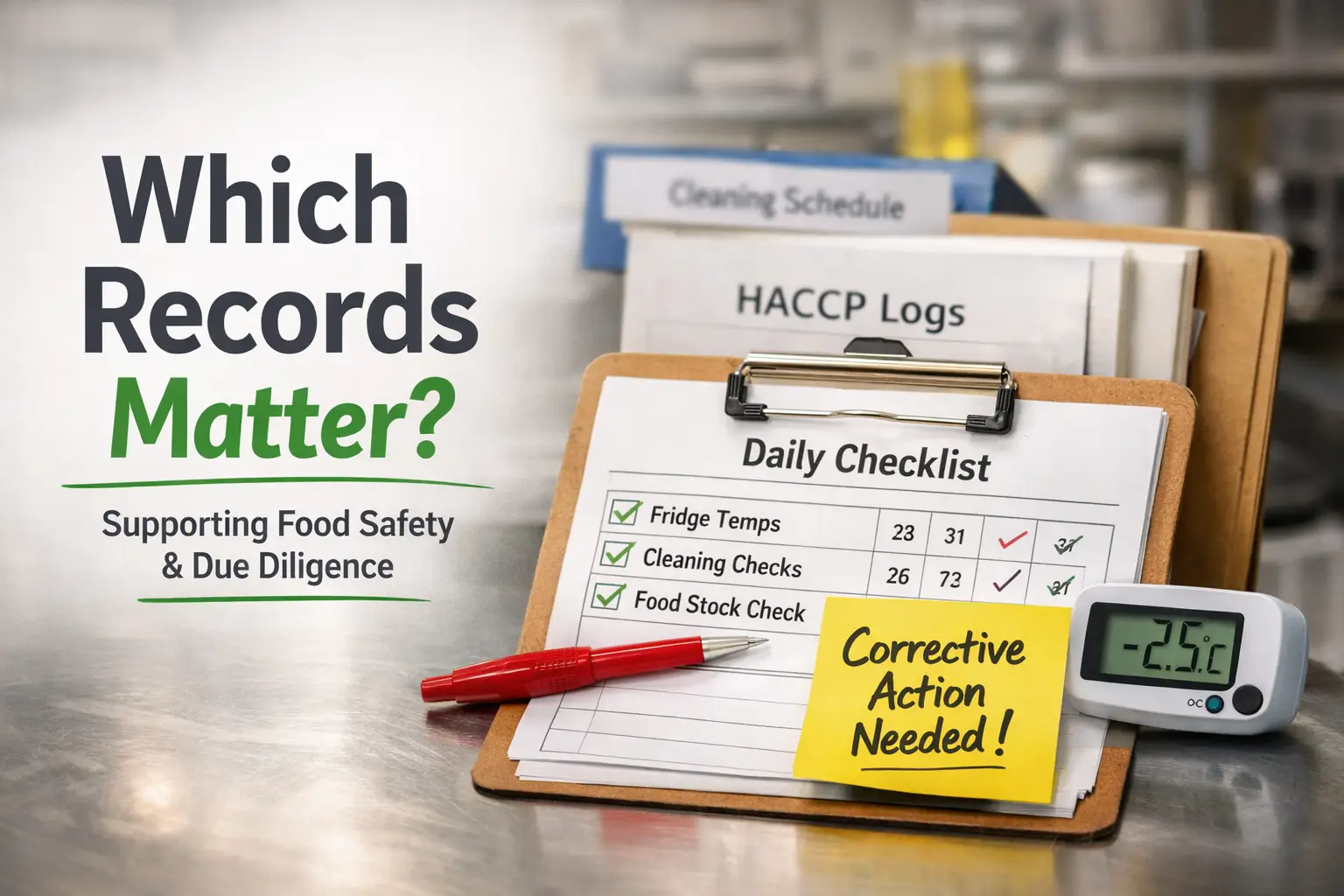
Not every record has equal value. Learn which food safety records small businesses should keep to support due diligence and daily control.
Why records matter
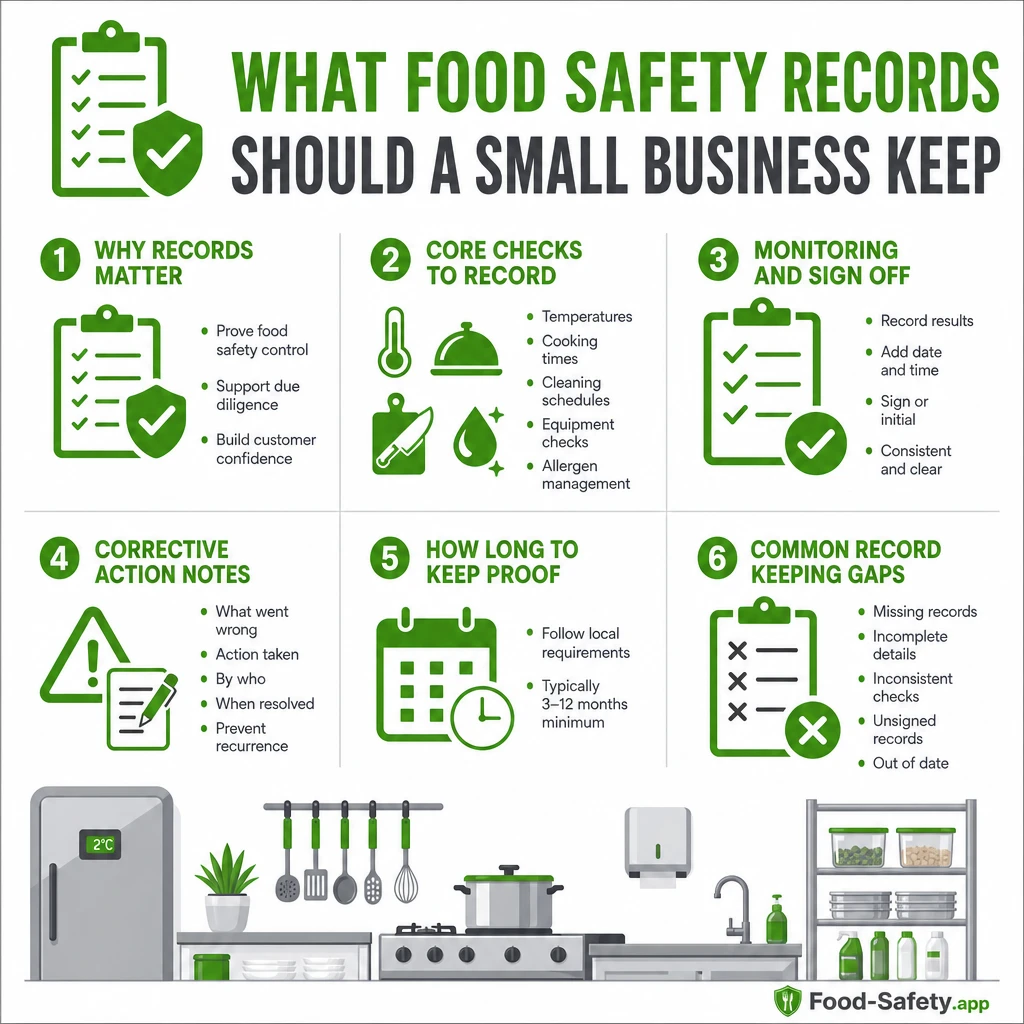
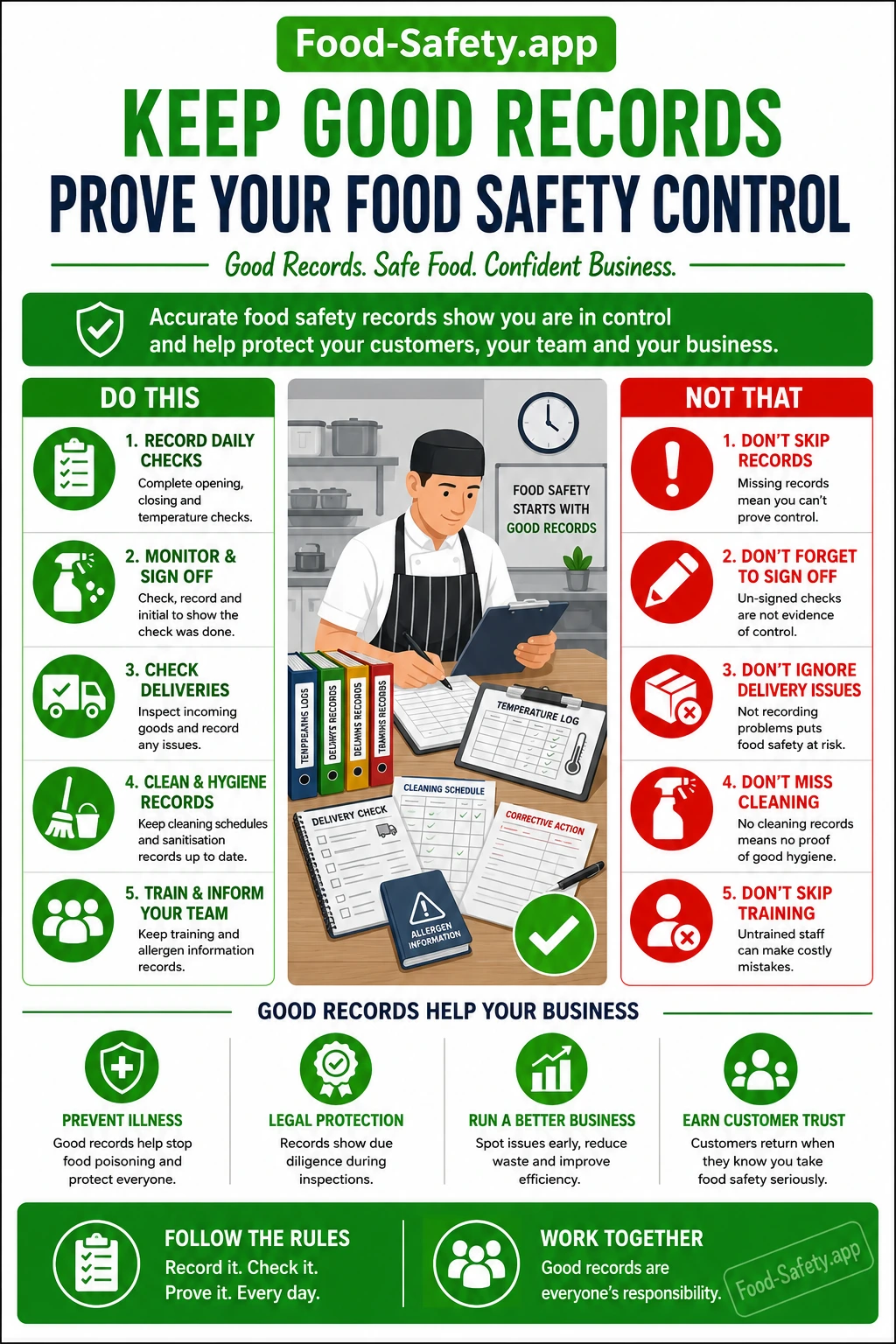
Clear records provide proof of control, reinforce staff accountability, and serve as evidence of safe practice during inspections and supplier reviews. When teams maintain legible logs, management can quickly spot trends, identify training needs, and demonstrate due diligence.
Proof of control
Records show that critical controls — temperature, cleaning, and allergen handling — are performed and documented. This creates an auditable trail from receiving through service, aligning with the 4 Cs of food hygiene.
Staff accountability
Signed checks indicate who performed tasks and when, helping identify training needs or supervision needs during busy shifts. See robust training records guidelines.
Evidence of safe practice
Logs provide traceability from supplier to plate, supporting responsible decision making and reducing risk of unsafe product reaching customers. Embrace digital records where possible.
Core checks to record
Capture the key control points that keep food safe from delivery to service. Use simple fields: date, time, area, who performed the check, result, and any action taken.
Cooking and reheating checks
Document core cooking temperatures, times, and final plating temperatures for dishes or batches. Include batch or dish identification and the method used to measure temperature.
- Target core temperature reached (state °C)
- Time to reach temperature
- Measurement method and probe location
- Person responsible and time
Cooling and cold storage
Record rapid cooling procedures and cold storage temperatures. Note start and finish times, method (fan, blast chiller, or ice), and any deviations.
For cooling records, include the initial and final temperatures during cooling, the cooling time and location, perishable item details such as item, batch, and quantity, plus the operator and timestamp.
For official guidance on temperature control, see the Food Standards Agency guidance on temperature control.
Cold storage and goods in
Log arrival temperatures for deliveries, condition on arrival, and any discrepancies. Keeping a record here helps with supplier defences and internal risk assessment cross-contamination in service.
Goods-in records should include delivery time, supplier and item, ambient versus product temperature on arrival, condition, packaging integrity, shortages, and action taken, such as reject, return, or store with note.
Hot holding and service
Keep a check on hot holding temperatures during service to ensure kept foods stay in the required range and are not left out >2 hours without control. Record holding temperature, time since start of service, re-checks during the service window, shielding, cover status, and staff attribution.
Goods in and deliveries
Record supplier delivery checks, including temperature when applicable, seal integrity, and documentation completeness. This creates a reliable delivery audit trail. Include the delivery note reference and item details, temperature or condition observations, plus discrepancies and actions such as accept, reject, or escalate.
Cleaning schedules
Document cleaning tasks with sign-off and the responsible person. Include areas cleaned, products used, and any defects observed during cleaning to avoid penalties on your hygiene rating. Record the area or equipment cleaned, date, start and end times, cleaner’s name, sign-off, and any follow-up actions.
Opening and closing checks
Record the state of kitchen premises at the start and end of service, including key temperature checks, freezer/fridge status, and any issues to be addressed before the next shift. Include doors, seals, cleanliness status, fridge and freezer temperature checks, escape routes, and waste handling confirmatory notes.
Monitoring and sign-off
Define who signs off each check, when the sign-off occurs, and why timestamps matter. A clear ownership trail supports accountability and rapid reviews after incidents.
Who should complete checks
Assign checks to trained team members aligned to their shift or area. Rotating responsibilities reduces risk of gaps and supports coverage during busy service.
When to sign off
Sign-offs should occur immediately after the task is completed, with a clear timestamp. Delayed signs-off can obscure responsibility or hide irregularities.
Timestamps and audit trails
Record date and time for each entry. A consistent timestamp format improves readability during audits and inspections.
Corrective action notes
When a parameter is out of range, capture the problem, the action taken, and any escalation. A well-documented corrective action supports ongoing control and audit readiness.
What to write when something is out of range
- Describe the issue concisely (e.g., “fridge at 6°C in morning check”).
- State the impact on safety and service
How to record actions taken
- Immediate measures (e.g., discard, reprocess) and rationale
- Who approved or performed the action and when
- Follow-up tasks or rechecks scheduled
Escalation and follow-up
Specify when to escalate to a supervisor, how it should be logged, and what kepada steps follow. Escalation helps prevent recurrence and supports management review.
Retention and archiving
Practical retention supports audits, training reviews, and supplier assessments. Keep a simple regime that aligns with your local authority expectations and business needs.
How long to keep proof
Keep logs for the longer of the next inspection cycle or the standard operating period defined by your policy. Review retention needs periodically to ensure relevance.
Retention by record type
Temperature and cooking logs should be retained for a minimum period defined by your policy or local guidance. Maintenance and calibration records should be retained for as long as equipment is in use plus a defined tail, such as 12–24 months. Allergen and cleaning records should be retained in line with training and supplier review cycles.
Common gaps and how to fix them
Missed temperatures
Always log the temperature at the start and end of critical processes, and require a sign-off before service begins.
Incomplete cleaning sheets
Link cleaning tasks to specific areas and assign a responsible person. Use a clear calendar to avoid missed checks during holidays or staff turnover.
No follow-up on defects
If a defect is identified, record the defect, action taken, and verification that the issue is resolved before the next service.
Poor allergen records
Link allergen notes to the recipe and service notes so staff can access accurate allergen information for diners with allergies.
Undocumented delivery issues
Document any delivery discrepancies and the decision on acceptance or rejection to safeguard stock quality and supplier trust.
Practical examples and scenarios
Fridge found above safe limit during a breakfast shift
Record the temperature, time, and immediate corrective action (e.g., move items, adjust cooling). Notify supervisor and recheck within the shift.
Cooling batch of soup not reaching target in time
Note batch number, start temperature, time to reach target, and any cooling method used. Escalate if the batch remains above target after the defined window.
Delivery of chilled products arriving warm or damaged
Log arrival temperatures and condition, reject if unsafe, and log the action taken with supplier details for follow-up.
Cleaner signs task completed but no defect report raised for broken door seal
Record the defect, location, and immediate risk mitigation. Schedule follow-up maintenance and recheck after repair.
Probe check done but no calibration record available
Note missing calibration evidence, assign task to obtain calibration documentation, and recheck temperature data after calibration is complete.
Allergy details for a menu item not linked to the recipe or service notes
Link the allergen information to the recipe, update service notes, and train staff on allergen communication for service.
How to implement with Food-Safety.app
Daily routines
Set a simple morning and afternoon routine for critical checks, with clear ownership and a lightweight sign-off process.
Offline record keeping
Use devices and print-outs where needed to capture checks without requiring constant internet access. Ensure records are later synced to the system for review.
Exporting reports for inspection or internal review
Generate concise PDFs of key records for internal reviews or statutory inspections, and use them to drive training and improvements.
Food-Safety.app is a food safety management system for catering businesses.
Improve your food safety records with Food-Safety.app
Discover how Food-Safety.app helps catering teams keep practical records, capture daily checks, document corrective actions, and prepare evidence for inspection. Simple routines, offline access, and exportable reports make food safety records easier to maintain.