Cleaning for allergens needs more than a quick wipe, especially when you are trying to keep a busy service moving without making a mess of allergen controls. The best approach to clean to reduce allergen cross contact is to build simple, repeatable routines that remove residues properly, protect equipment and give your team a clear way to reset between tasks. In a commercial kitchen, that means thinking beyond what looks clean and focusing on what is actually safe for the next plate, tray or batch. For more context on allergen management in busy kitchens, clear allergen labelling on packaged food.
Table of contents
- Why allergen cleaning matters
- Where allergen cross contact happens most
- How to clean to reduce allergen cross contact
- Equipment and cleaning tools that help
- Staff routines that make a difference
- How to check the job has been done properly
- What to do when things go wrong
- Training, records and accountability
- UK guidance and local differences
- Conclusion
Why allergen cleaning matters
Allergen cross contact is when traces of an allergen move from one food, surface or piece of equipment to another. In practical terms, that can happen through a knife, a chopping board, a cloth, a fryer basket, a pastry brush, a shared scoop or even a poorly wiped prep table. If you are running a café, hotel kitchen, school canteen, takeaway or catering operation, the risk is not just a complaint at the pass. It can lead to a serious reaction for a customer and a very awkward conversation for everyone else.
Unlike general dirt, allergen residues are not always visible. A surface can look spotless and still carry enough residue to cause trouble. That is why the phrase clean to reduce allergen cross contact should mean actual removal, not a fast polish and a hopeful nod. In a busy kitchen, hope is not a control measure. Neither is “I’m sure it was fine, chef”.
For a broader view on cross-contamination in kitchen workflows, how cross-contamination happens and how to stop it.
Where cross contact happens most
Most cross contact issues happen during routine work, not dramatic mistakes. The danger points are the places where speed, shared kit and limited space collide.
High-risk hotspots in professional kitchens
- Prep tables used for several dishes in a row
- Shared knives, boards, tongs and ladles
- Mixers, slicers, blenders and food processors
- Ovens, grills and fryers used for different menu items
- Pastry, bakery and dessert stations
- Service counters, garnish trays and plating areas
- Cloths, spray bottles and wiping tools used everywhere
Buffets and made-to-order stations deserve special attention. One customer’s request for an allergen-free meal can be undone if the same spoon is used in a sauce pan, or if a garnish is lifted from a shared tray with the same tongs used on another dish five seconds earlier. Busy service has a way of making small shortcuts look harmless right up until they are not. For a broader view on preventing cross-contamination in kitchen workflows, cross-contamination and food safety management.
How to clean to reduce allergen cross contact
The aim is to remove allergen residue from food contact surfaces, equipment and hands before they can transfer to another food. The most effective approach is to combine physical cleaning, the right chemicals where needed, and a logical order of work.
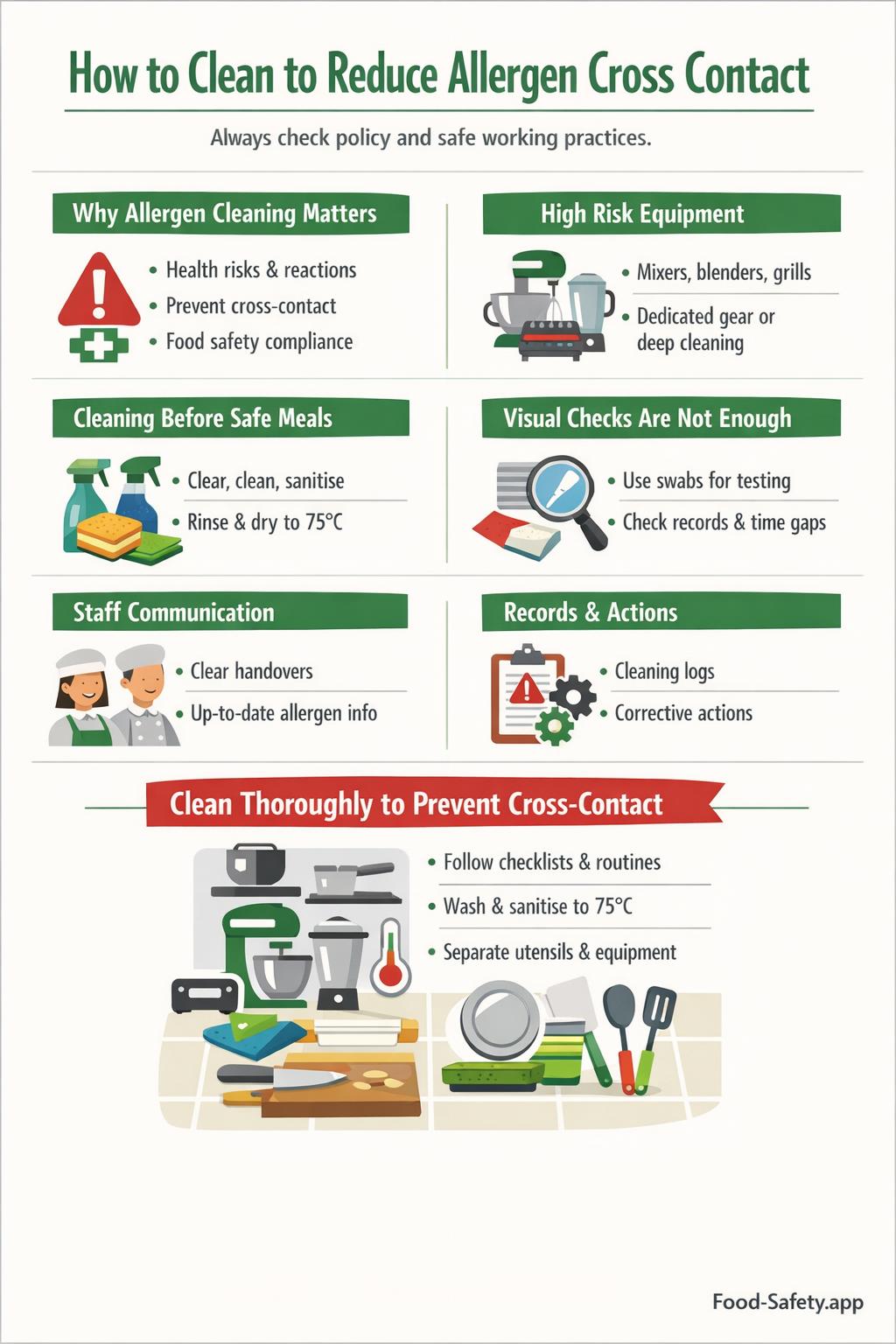
1. Remove visible food first
Start by scraping, brushing or wiping away loose food from benches, trays, blades and machine parts. If crumbs, batter, sauces or powders are left behind, cleaning products have to fight through the mess before they can do their job. That is not efficient, and in service it is usually a recipe for half-done cleaning.
Use disposable paper towels or clean single-use cloths where possible for the first removal step, especially when dealing with known allergen-containing foods such as nuts, sesame, milk, egg, wheat or soy.
2. Wash, don’t just wipe
A quick wipe with a damp cloth moves residue around. It does not necessarily remove it. For food contact surfaces, use hot water and detergent where appropriate, with enough friction to lift and remove residue. The key is the action as much as the product. If you can still feel greasy film, dust or tackiness, the job is not finished.
For equipment parts, remove the item if possible and wash it separately. A removable hopper, blade guard or garnish tray is much easier to clean properly than a fixed part you can only half reach. If your process depends on “getting in there with a folded cloth”, that is a sign the set-up needs improving.
3. Rinse if the product or method requires it
Follow the manufacturer’s instructions for detergents and sanitisers, and rinse where needed. Some products are designed for a rinse stage, others are not. The important thing is consistency. A rushed rinse with a jug of water is not the same thing as a proper rinse, and it can leave both residue and chemical issues behind.
4. Sanitize when needed for food contact surfaces
Where your procedure calls for a sanitising step, make sure the surface is already visibly clean first. Sanitiser is not a substitute for cleaning, and spraying sanitiser onto crumbs is like putting a plaster on a fence. It looks like action, but nothing important has changed.
5. Air dry or use clean single-use towels
Once clean, let equipment and surfaces dry properly. If you need to dry manually, use clean single-use towels or designated clean cloths that are not used for anything else. Shared cloths are one of the easiest ways to spread residues from one area to another.
6. Clean from low risk to high risk, not the other way round
Organise cleaning so allergen-free or lower-risk preparation happens before allergen-heavy tasks, where possible. For example, if you are preparing a gluten-free sandwich filling for lunch covers, do that on a fully cleaned surface before you start flour-heavy bread production. Once flour dust is in the air, it gets everywhere with the enthusiasm of a seagull near chips.
7. Use a separate, documented allergen clean-down
For equipment or stations that have handled a major allergen, a dedicated clean-down procedure is often needed before the area is used again for allergen-sensitive meals. This should be written down, easy to follow and realistic for the pace of the operation. If the procedure is so complicated that nobody follows it at 7:30pm on a Friday, it is not really a procedure. It is a nice idea.
Equipment and cleaning tools that help
If you want to clean to reduce allergen cross contact properly, the kit matters just as much as the method. The wrong tools can spread residue further or leave hidden build-up in seams and corners.
Useful tools for allergen control
- Colour-coded cloths for different areas or tasks
- Dedicated brushes for equipment crevices
- Single-use paper towels for first removal and spot cleaning
- Clearly labelled spray bottles
- Cleaning tools that can be fully washed and dried
- Separate utensils or prep equipment for allergen-free meals where possible
Check whether your prep equipment is easy to dismantle and clean. Slicers, mixers, conveyor toasters and grinders can hold traces in small parts that are easy to miss. A cleaning cloth dragged over the outside may make the machine look sorted, but hidden residue inside the blade guard or around the gasket can remain. That is how seemingly well-run kitchens end up with repeated mistakes.
For practical guidance on keeping tools clean, see kitchen cleaning schedule in action.
When to replace worn items
Frayed cloths, cracked boards, damaged seals and scratched utensils are harder to clean properly. If a surface is permanently pitted or a piece of kit has started holding grime in little grooves, it may no longer be suitable for areas where allergen cross contact control is critical. The same goes for old plastic boards that look like they have been through three Prime Ministers and two menu changes.
Staff routines that make a difference
Allergen cleaning works best when it is built into the rhythm of service rather than treated as an optional extra at the end of a long day.
Build clear reset points into service
- Between allergen-containing and allergen-sensitive orders
- After bakery or flour work before gluten-free prep
- When switching from one dish build to another on the same station
- At the end of each prep block
- Before any special allergen meal leaves the pass
Assign responsibility clearly
In a crowded kitchen, “someone will clean that” is an invitation for nobody to do it. Make it clear who wipes, who checks, and who signs off the area before allergen-sensitive food is made. In smaller operations, one person may carry several tasks, but the handover still needs to be explicit. For tracking training records, see Training records.
Wash hands at the right moments
Handwashing remains a basic but important control. It should happen after handling allergen ingredients, after touching shared surfaces that may be contaminated, after changing tasks, and before preparing allergen-sensitive meals. Gloves are useful, but they are not magic. If gloved hands touch allergen residue and then a plate, the glove has simply become a very confident carrier of the problem.
Avoid reusable shortcuts
Reusable cloths, the same sponge for every job and “just use the back of the spoon” are all habits that can increase risk. Use clean, task-appropriate tools. If a surface needs a wipe between orders, the wipe must actually be clean.
How to check the job has been done properly
It is not enough to say a station was cleaned. You need a way to verify that the process was completed properly before the next meal is prepared.
Practical checks for managers and chefs
- Visual check for crumbs, sauces, dust and residue
- Check hidden areas such as handles, edges and seals
- Confirm correct tools and cloths were used
- Check whether the surface is dry and ready for use
- Confirm allergen-sensitive prep only starts after cleaning sign-off
Some businesses also use test methods or verification tools as part of their wider allergen management plan. If you use them, they should support the cleaning process, not replace the basic steps. The big win is still the simple stuff done properly, every time.
Common signs cleaning has failed
- A sticky or greasy film remains on the surface
- Residue appears in seams, corners or under machine parts
- Cloths become visibly dirty too quickly
- Staff are unsure whether the equipment has been reset
- Another allergen-sensitive order is paused because nobody trusts the station
What to do when things go wrong
Sometimes an allergen cross contact issue is spotted after service has started. The important thing is to stop, control the situation and prevent repeat exposure.
Immediate corrective actions
- Stop using the affected equipment, surface or utensil
- Remove the food if there is any doubt about safety
- Re-clean the area using the full procedure
- Tell the duty manager or responsible supervisor straight away
- Check whether any other dishes or batches could be affected
If an allergen-sensitive meal has been prepared on a doubtful surface, do not try to “rescue” it with extra garnish and a hopeful stare. Re-make it from clean ingredients, on a clean area, with clean tools. That is the boring answer, which is usually the safe one.
Review what caused the mistake
Was the cleaning step missed, rushed or done with the wrong cloth? Was the equipment too awkward to clean properly? Was the team under pressure because prep timing was unrealistic? Finding the root cause helps you prevent the same issue happening again.
Training, records and accountability
Even the best cleaning process falls apart if staff do not know why it matters or how to do it in a way that fits the operation. Training should be practical, visual and repeated often enough that people remember it when the kitchen is at full tilt.
Train staff on real tasks
Show them how to break down the slicer, which cloths are used where, how to reset a prep bench, and what to do before making a special allergen meal. Keep it specific to the equipment in that kitchen, not a generic classroom version that sounds nice but breaks apart in service.
Use simple records
A short cleaning checklist can help prove the process was completed and remind staff of the steps. Keep it short enough that it gets used. A five-page form will not help if the team are too busy to find a pen.
UK guidance and local differences
This advice is based on common UK food safety practice for catering and hospitality businesses. Local expectations and enforcement can vary, and businesses outside the UK may follow different rules and guidance. If you want a trusted UK overview of allergen management, the Food Standards Agency allergen guidance for food businesses is a useful place to start.
Some businesses also use the NHS food allergy information to help staff understand why cross contact matters so much from a customer safety point of view. That understanding helps teams take the cleaning step seriously instead of treating it as just another chore on the list.
Conclusion
To clean to reduce allergen cross contact, focus on proper residue removal, dedicated cleaning tools, sensible task order, clear responsibilities and a reliable reset before allergen-sensitive meals are made. In professional kitchens, the safest routine is usually the one that is simple enough to repeat under pressure and strict enough to matter when the room is busy.
When your team knows where cross contact happens, how to clean it away, and what to do if something is missed, you reduce risk without slowing service to a crawl. That is the sweet spot for restaurants, cafés, hotels, school kitchens and catering teams: practical controls that work on a Tuesday lunchtime and still work when the dinner rush arrives with a vengeance.
For businesses looking to tighten up procedures, a food safety management system for catering businesses like Food-Safety.app can help keep cleaning checks, allergen controls and staff responsibilities organised in one place. For further context on building a strong food safety culture, see building a strong food safety culture that works.
Get started with a practical allergen program today
Establish simple, repeatable allergen cleaning routines that your team can perform under pressure. Use dedicated tools, assign clear responsibilities, and verify results to protect customers and stay compliant. Implementing a practical system today reduces risk and supports consistent service across busy shifts and menus.