Learn how small businesses can improve food hygiene easily. This food hygiene small business guide gives simple, practical steps you can follow with confidence.
What are the basics of food hygiene for a small business?
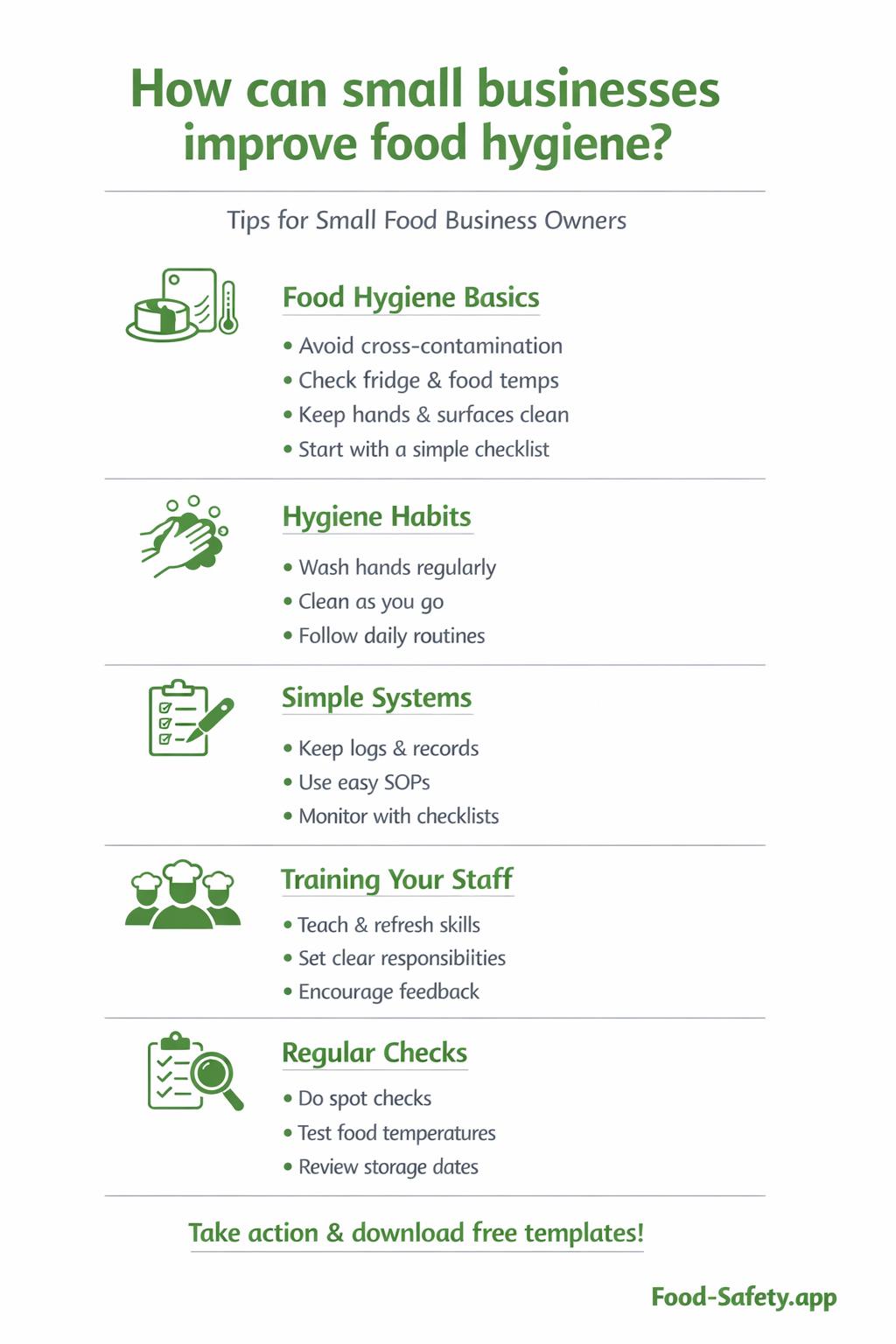
Strong food hygiene small business practices begin with understanding the core risks: contamination, temperature control, and cleanliness. Every food business must protect customers from foodborne illness by handling food safely from delivery to service. This includes separating raw and ready-to-eat foods, cooking thoroughly, and storing food at safe temperatures. Following recognised guidance such as the World Health Organization food safety advice helps ensure your approach is aligned with global standards and expectations.
Small businesses often work with limited space and staff, which increases risk if processes are unclear. Simple steps like clear labelling, using colour-coded equipment, and maintaining clean workspaces can prevent issues before they arise. If you want to strengthen your foundations, reviewing food safety fundamentals can help reinforce essential practices that apply to every type of catering operation.
What daily habits improve food hygiene small business standards?
Good habits are what turn food safety rules into everyday practice. Staff should wash hands regularly, clean as they go, and avoid shortcuts when busy. These small, repeated actions make a big difference over time. For example, wiping surfaces between tasks and checking fridge temperatures daily helps maintain consistent hygiene without adding extra workload.
Consistency matters more than complexity. When everyone follows the same routines, it becomes easier to maintain standards even during peak service. Encouraging a culture where hygiene is taken seriously, rather than seen as an extra task, helps reduce mistakes and keeps your business inspection-ready at all times.
Do small businesses need formal food safety systems?
Yes, even the smallest food hygiene small business must have a structured approach to food safety. A system based on HACCP principles helps you identify risks and put controls in place. This doesn’t need to be complicated, but it must be clear and consistently followed. For example, knowing your critical cooking temperatures and monitoring them ensures food is safe to serve.
Digital tools can make this much easier to manage. Using Food-Safety.app, a food safety management system for catering businesses, allows you to track checks, record temperatures, and organise tasks in one place. It reduces paperwork and helps ensure nothing is missed, especially when managing multiple responsibilities in a small team.
How important is staff training in food hygiene small business operations?
Staff play a central role in maintaining food hygiene standards. Even simple tasks like handling food or cleaning equipment require proper knowledge. Training ensures everyone understands risks such as cross-contamination and how to avoid them. New starters should receive basic instruction immediately, while existing staff benefit from regular refreshers.
Clear communication is just as important as formal training. Written procedures, visual reminders, and supervision all help reinforce expectations. When staff understand why hygiene matters, they are more likely to follow procedures correctly. Investing time in training reduces errors and supports a safer working environment for both staff and customers.
What checks should a small food business carry out?
Routine checks are essential for maintaining food hygiene small business compliance. These checks confirm that your controls are working and highlight problems early. Typical checks include:
- Monitoring fridge and freezer temperatures
- Checking cleaning schedules are completed
- Inspecting deliveries for quality and safety
- Verifying cooking and reheating temperatures
Keeping accurate records is just as important as carrying out the checks. These records demonstrate due diligence and are often reviewed during inspections. Learning more about compliance and inspections can help you understand what inspectors expect and how to stay prepared.
How can small businesses continuously improve food hygiene?
Improvement comes from reviewing your processes and learning from mistakes. If something goes wrong, such as a missed temperature check or a cleaning issue, it’s important to record it and take corrective action. This helps prevent the same problem from happening again and strengthens your overall system.
Regularly reviewing your procedures, updating training, and adapting to changes in your business all contribute to better hygiene standards. Small improvements over time can make a significant difference. By staying proactive and organised, even the smallest food business can maintain high levels of food safety and build trust with customers.