Level 2 is a solid hygiene foundation for many staff, but busy kitchens juggle more than classroom knowledge.
This article explains what Level 2 proves, where it falls short, and how to design role-based, on-the-job training that matches your menus, equipment, and daily checks. It also covers what inspectors look for and how to keep training records up to date across onboarding, relief staff, and seasonal teams.
Level 2 Training Foundation: What Level 2 Covers and What It Doesn’t
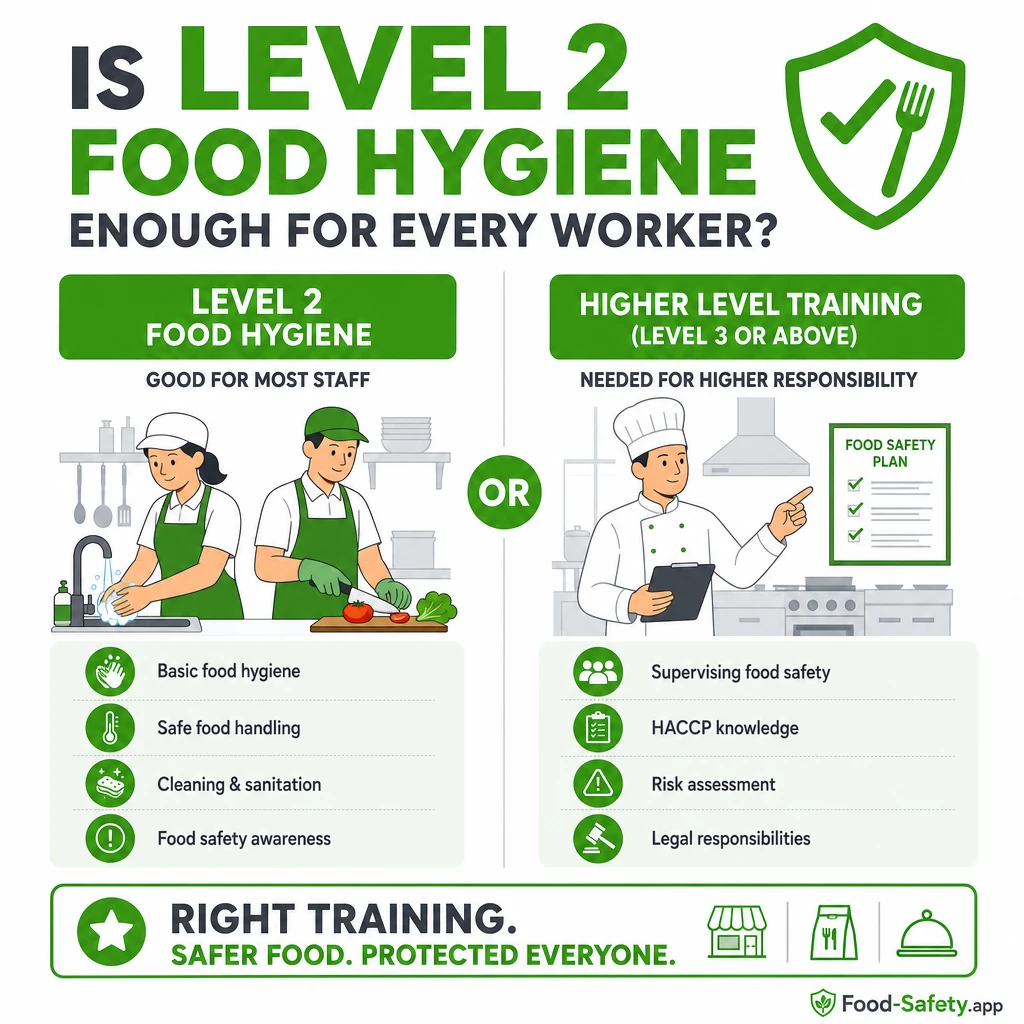
Important: Level 2 certifies awareness of foundational hygiene, not automatic competence in every kitchen routine.
Beyond theory, Level 2 doesn’t cover your unique working methods, equipment quirks, local handover rules, or the specifics of your cleaning schedules and records. It also doesn’t guarantee that every new starter can perform tasks to your restaurant’s standard on day one. A practical, on-site component is essential to bridge the gap between certificate and day-to-day performance.
Practical takeaway: treat Level 2 as a foundation, not a complete competency package.
On the Job Training in Busy Catering Settings
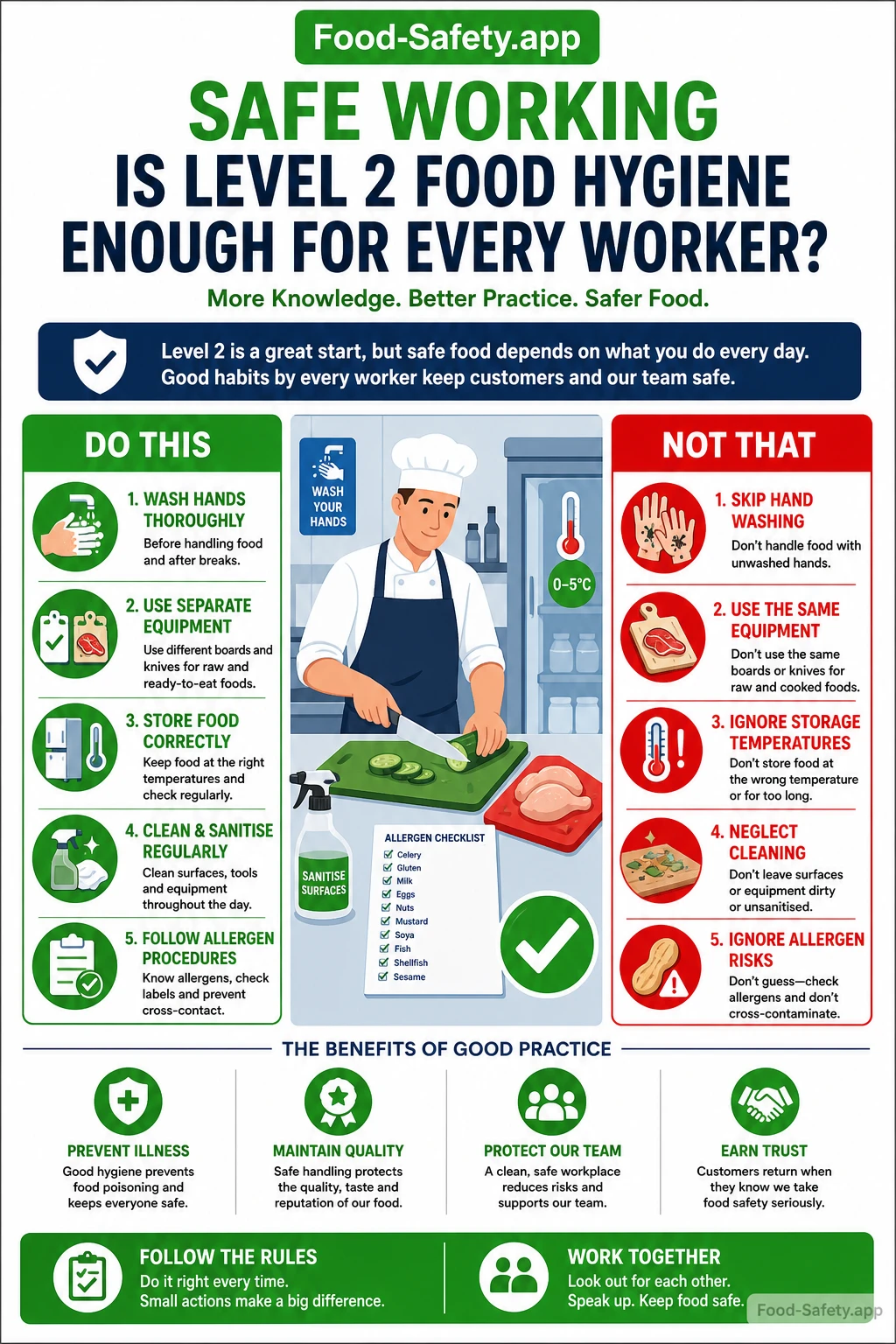
On-the-job coaching translates classroom learning into real-world habit, even under peak service pressure.
Without site-specific coaching, a Level 2 certificate may sit on a wall while everyday actions tell a different story. Short, frequent coaching cycles—especially during opening and closing—help ensure correct temperature checks, proper handover, accurate labeling, and timely corrective actions.
Practical tip: develop a lightweight local induction pack that matches your menus, equipment setup, and service flow, then reinforce it with short daily huddles.
Role Mapping to Local Procedures, Menus and Allergen Controls
A clear role-to-task map is the single best tool to prevent gaps in knowledge and ensure consistent practice.
- Commis chef or line cook: tasks around prep, cooking, cooling, and cold storage; training needs include local cooling practices, blast chiller/fridge operations, and proper labeling.
- Supervisor or team lead: tasks around monitoring, logging defects, opening/closing checks, and staff coaching; training needs include record-keeping, corrective action follow-up, and delivery temperature checks.
- Front-of-house staff: tasks around allergen briefing, service procedures, and safe handling during plating; training needs include menu-specific allergen controls and communication protocols.
- Cleaner or facilities support: tasks around cleaning cards, chemical use, and sanitation verification; training needs include chemical safety and task-specific cleaning procedures.
Supervisors and Managers: Extra Training Needs
Key distinction: theory without practice is a risk; practical coaching and accountable records help demonstrate real-world competence.
Supervisors and managers require training beyond basic hygiene to identify problems early, coach staff, and maintain records. Focus areas include:
- Monitoring daily compliance with SOPs and HACCP-related practices
- Recording, reviewing, and following up corrective actions
- Coaching skills, feedback delivery, and escalation processes
- Keeping staff training records, handover logs, and temperature logs up to date
Evidence in Practice: How Inspectors Look at Training
Proactive records and observable behaviours matter as much as or more than certificates alone.
Inspections increasingly assess whether training is being applied, not just completed. Inspectors look for:
- Evidence staff use training in routine tasks (e.g., correct handover, proper labeling, appropriate temperature checks)
- Documentation of training delivery, refresher sessions, and coaching notes
- Records showing corrective actions are implemented and reviewed
- Alignment between training content and actual kitchen procedures, menus, and equipment
Building a Role Based Training Plan for Your Kitchen
Practical takeaway: a living training plan that updates with changes keeps your team prepared and keeps inspectors confident in your management system.
A practical, scalable approach starts with a simple plan and keeps expanding as your operation grows. Here’s a workable path:
- Map each role to the tasks they actually carry out
- Create a local induction and refresher training record for every role, tied to their daily duties
- Review training after menu changes, new equipment, or repeated non-compliance
- Link training to HACCP, allergen management, cleaning schedules, temperature checks, and corrective actions
- Use a simple matrix to show who is trained in what and when it was last reviewed
A compact example training-matrix:
| Role | Core Tasks | Local Training Needs | Last Reviewed |
|---|---|---|---|
| Commis Chef | Prep, cook, cool | Safe cooling, blast chiller usage, labeling | 2026-08-01 |
| Supervisor | Monitor, log defects, coach | Record-keeping, corrective actions, follow-up | 2026-08-05 |
| Front-of-house | Allergen briefing, service steps | Menu-specific allergen controls, service protocols | 2026-07-28 |
| Cleaner | Cleaning per cards and chemicals | Chemical safety, task-specific cleaning | 2026-07-30 |
To make this practical, you can keep all training records, role-based checks, temperature logs, cleaning records, allergen controls, and corrective actions in one place. Food-Safety.app provides a centralized way to manage these elements and show inspectors a coherent evidence trail. If you’re ready to take that step, consider using a digital training and record-keeping platform.
If you’d like to discuss building a tailored role-based training plan for your kitchen, or to start digitizing training records and checks today, you can visit the Food-Safety.app site to learn more and get started.