
If you are opening a café, takeaway, restaurant, hotel kitchen or catering unit, knowing how to register a food business in the UK is one of the first jobs to get right. Registering early helps you avoid delays, missed paperwork and last-minute pressure before trading. It is also a basic part of running a safe, compliant operation, whether you are setting up a small coffee shop or a busy commercial kitchen.
For deeper context on safety controls, see HACCP principles explained.
The process is usually straightforward, but the details matter. You need the right local authority form, the right timing, and a clear understanding of what happens after you register. This guide explains the practical steps, what to prepare, and the common mistakes that can slow things down.
For practical tips on preventing cross-contamination, see how cross-contamination happens and how to stop it.
What food business registration means
In the UK, food business registration is the process of telling your local authority that you plan to start handling, preparing, storing, selling or serving food. It gives environmental health officers a record of your operation so they can contact you if needed and carry out official checks when appropriate.
For operators, registration should be treated as part of the opening plan, not an afterthought. If you are fitting out a new site, launching a delivery-only kitchen or taking over an existing venue, you still need to confirm whether registration applies to your setup. Rules can differ slightly across the UK, so always follow the guidance for your nation and local council. If your business is outside the UK, the process may be different.
Who needs to register
Most businesses that prepare or serve food need to register. That includes:
- Restaurants and pubs
- Cafés and coffee shops
- Takeaways and food delivery businesses
- Caterers and outside catering teams
- Hotel kitchens and banqueting operations
- School canteens and contract caterers
- Mobile food units and market stalls
- Businesses storing or handling food for sale
Registration is usually needed even if you only trade part-time or seasonally. A breakfast-only café, a wedding caterer working weekends, or a school kitchen that opens only during term time still needs the council to know it exists.
How to register a food business in the UK
To register a food business in the UK, you normally register with the local authority where your business is based. In most areas, this can be done online through the council website. The process is free in the UK, but you should not leave it until the week you open. For allergen management in busy kitchens, see Allergen management made practical for UK food businesses.
1. Identify the right local authority
Use the council linked to the premises where the food activity will happen. If you have several sites, each premises usually needs its own registration. A head office address is not enough if food is prepared elsewhere.
2. Complete the registration form
You will usually be asked for the business name, address, contact details, the nature of the food activity, opening date, and the type of operation. Be accurate. If you are opening a dark kitchen, sandwich production site, mobile unit or school catering operation, make sure the description matches what really happens on site.
3. Submit before you start trading
You should register at least 28 days before opening, where possible. That gives the council time to process the information and avoids unnecessary pressure during fit-out, supplier onboarding and staff training. Do not start trading and then sort registration later.
4. Keep a copy of the confirmation
Once submitted, keep the confirmation safely with your compliance paperwork. If a manager changes, the business moves, or the operation changes significantly, you may need to update the registration.
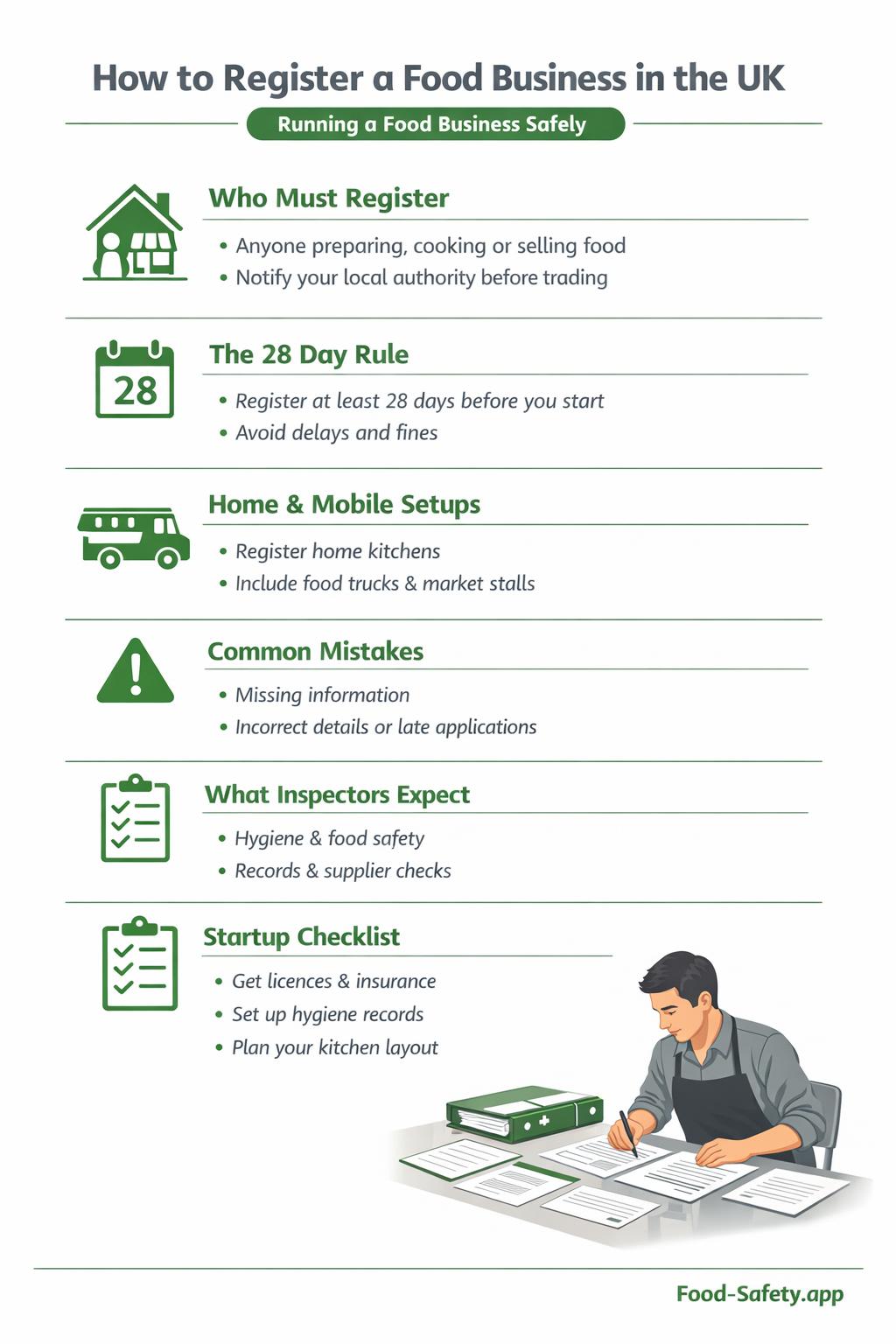
What to prepare before you submit
Before you register, gather the details your team is likely to need. This saves time and helps avoid mistakes that lead to follow-up calls from the council.
- Legal business name and trading name
- Full premises address and postcode
- Contact number and email address
- Date you expect to start trading
- Type of food business and main activities
- Any seasonal or mobile trading details
- Names of responsible managers
For allergen controls training for staff, see Allergen control training for staff.
For a catering company, this might mean listing a prep kitchen, a van base and regular event work. For a hotel, it might mean the main kitchen, breakfast service, functions and room service. Make sure the description reflects the busiest version of the operation, not the quietest.
What happens after you register
Registering does not mean you are automatically approved or inspected on day one. It simply informs the local authority that your business exists. You still need to run the site safely and keep proper controls in place.
After registration, you should expect the council to hold your details on record and contact you if they need more information. Some businesses may later receive an inspection or advice visit, depending on risk and local enforcement priorities. That is why your opening paperwork should not stop at registration.
At the same time, make sure your food safety basics are ready:
- HACCP-based food safety procedures
- Cleaning schedules for food contact and non-food contact areas
- Temperature monitoring routines where relevant
- Staff training records
- Allergen controls and accurate menu information
- Pest prevention checks
Common mistakes to avoid
Many delays come from avoidable errors rather than complicated rules. In professional kitchens, the biggest problems are usually practical.
Leaving registration too late
A common mistake is assuming registration can wait until opening week. Fit-out overruns, supplier delays and recruitment issues already eat time. Add registration late and you create avoidable pressure.
Using the wrong premises
If food is prepared in one site and sold from another, do not register only the shopfront. Councils need the actual food-handling base, not just the customer-facing address.
Giving vague activity details
Listing your business as simply “food sales” is too vague. Say what you actually do, such as sandwich prep, hot food service, chilled storage, event catering or takeaway production.
Forgetting to update changes
If you move site, change the core business model or take on a new food operation, update the council. A café adding production for external catering is not the same as a simple coffee shop.
Practical pre-opening checklist
Use this simple checklist before you open:
- Confirm the business is registered with the correct local authority
- Check the opening date is realistic and matches your fit-out schedule
- Make sure all food-handling areas are ready for use
- Brief the team on cleaning, cross-contamination and allergen controls
- Set up monitoring logs for temperatures and cleaning
- Check waste storage, pest control and ventilation arrangements
- Make sure the manager on duty knows where the registration confirmation is kept
For good kitchen habits, see Good kitchen habits.
For busy service, this is especially important. A strong opening starts with systems that are easy to follow under pressure, not just paperwork that looks complete on a file.
When to get extra help
If you are opening multiple sites, launching a new food concept, or dealing with a shared kitchen, it is worth getting advice early from your council or a competent food safety consultant. That can save time if your operation is unusual, such as a hotel with multiple outlets or a caterer working across several venues.
It also helps to keep your documents organised in one place. Many operators use a food safety management system for catering businesses such as Food-Safety.app to keep records, routines and checks easy to manage alongside opening admin.
For official guidance on food business registration in England, Wales and Northern Ireland, the Food Standards Agency is a sensible place to start.
Conclusion
Learning how to register a food business in the UK is simple once you break it into steps: find the right council, complete the form accurately, register before trading, and make sure your food safety systems are ready at the same time. For restaurants, cafés, canteens, hotels and caterers, the key is to treat registration as part of the launch plan, not a last-minute admin task.
If you get the basics right early, you reduce delays, avoid compliance headaches and start trading with more confidence. Keep your records tidy, update the council when things change, and make sure your team understands that registration is only the first step in running a safe food business. For additional context on inspections and ratings, see Understanding food hygiene ratings.