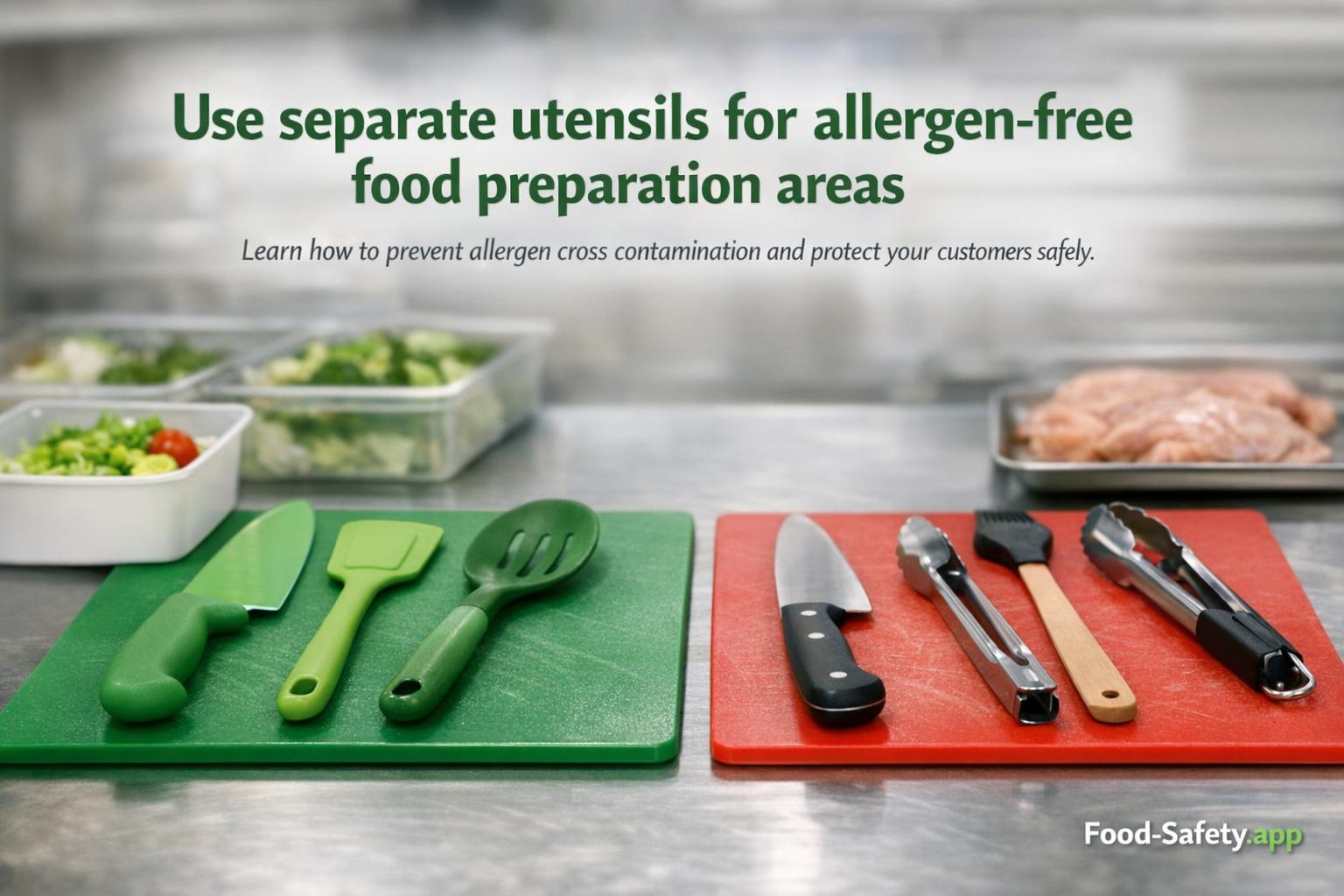
Learn how to prevent allergen cross contamination and protect your customers safely with simple controls that reduce risk in busy kitchens.
What allergen cross contamination means
Allergen cross contamination happens when a food allergen is accidentally transferred from one ingredient, surface, tool or dish to another food. It can happen with tiny amounts, so even a small mistake can put a customer at risk. In a catering or hospitality business, this might mean peanut traces on a chopping board, milk residue in a jug, or gluten crumbs in a serving spoon. The aim is not perfection but control, with clear systems that help staff avoid mistakes during busy service.
Food businesses have a legal duty to provide accurate allergen information and manage risks so food is safe for customers with allergies. Good practice means thinking about every stage of production, from delivery and storage to prep, service and waste handling. For clear guidance on the wider legal and operational picture, compliance, law and inspections is a useful place to start. If you want a wider refresher on everyday controls, see food safety fundamentals.
Where allergen cross contamination is most likely
The highest-risk moments are usually the busiest ones. Shared prep stations, bulk service, buffet layouts, takeaways, delivery bags and reused utensils can all spread allergen traces. A sandwich station, for example, can pass on sesame or milk if the same knife is used for several orders without cleaning. In bakeries, flour dust can move easily through the air and settle on other foods. In restaurants, sauces, garnishes and shared frying oil often create hidden risks that are easy to miss without checks.
Storage is another common problem. Open containers, poorly labelled ingredients and mixed shelves can lead to mix-ups before cooking even starts. This is why many businesses use a structured system for stock control and safe processes. If you’re also reviewing wider kitchen systems, running a food business safely links allergen control to day-to-day operations, while cleaning and hygiene cross contamination helps reinforce the basics that protect every customer.
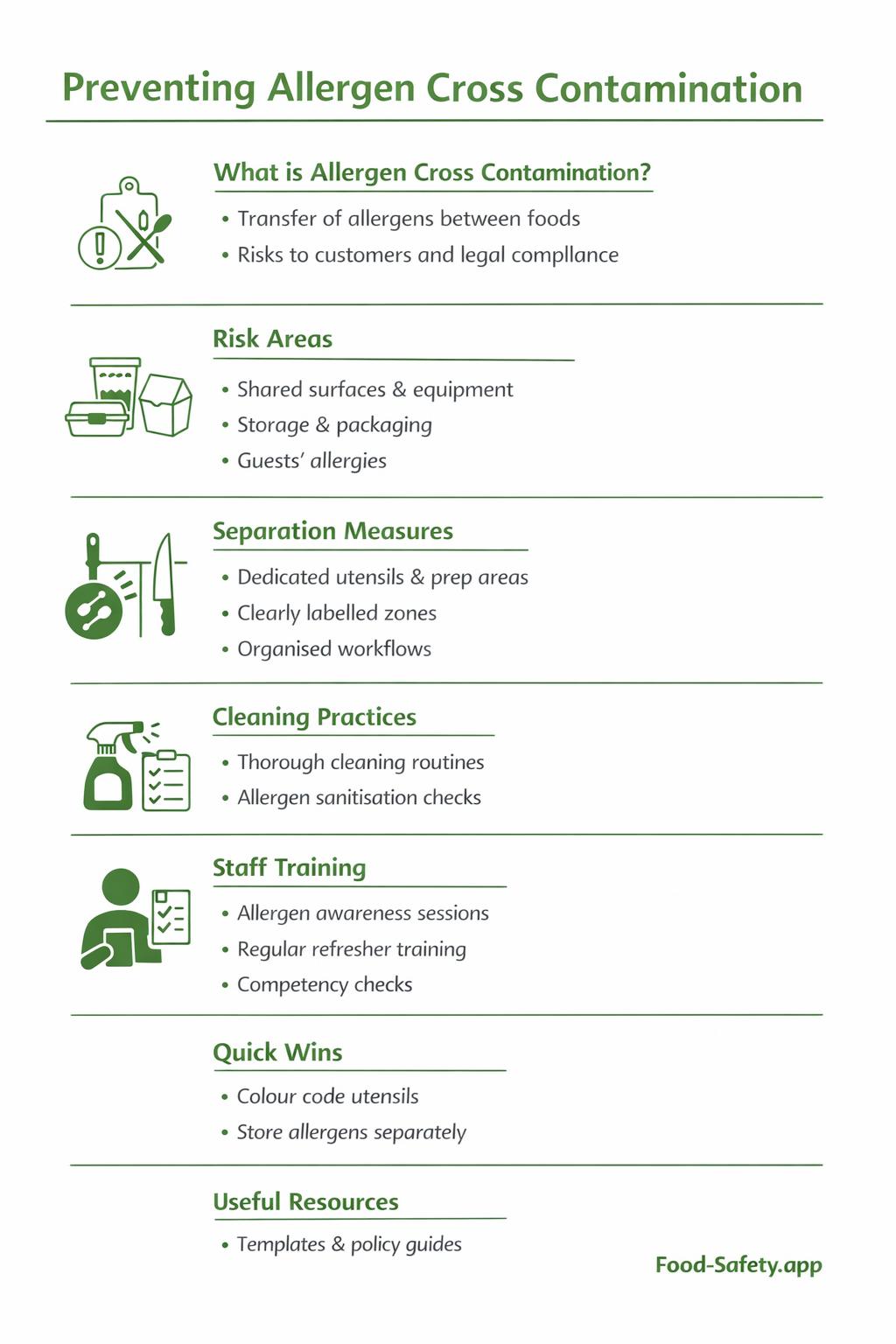
How to separate allergens from other foods
Separation is one of the most effective ways to reduce allergen cross contamination. Store allergenic ingredients in sealed, clearly labelled containers and keep them on lower shelves where they won’t drip onto other foods. Use dedicated utensils, chopping boards, trays and containers for allergen-free meals where possible. Colour coding can help, but only if staff understand it and follow it consistently. In smaller kitchens, simple physical separation and clear timing rules can make a big difference.
When preparing an allergen-safe meal, make it first in a clean area before other foods are handled, or use a dedicated workstation. If that isn’t possible, clean and sanitise the area thoroughly before starting. Keep garnishes, condiments and serving utensils separate too. This matters just as much in front-of-house service as in the kitchen. A burger assembled on the same surface used for buns and cheese may look harmless, but for a customer with a severe allergy it can be enough to cause a reaction.
Cleaning that really removes allergen risk
Cleaning for allergen control needs more than a quick wipe. Surfaces, equipment and utensils should be washed with detergent, rinsed if required and cleaned again if there is any doubt about residue. Staff should pay attention to hidden areas like handles, buttons, lids, mixers and toaster slots, since allergens can stay behind in places people forget to check. Disposable cloths or single-use wipes can help during high-risk tasks, but they must be used correctly and thrown away after use.
Dishwashing systems should be tested to make sure they remove food residues properly. If you use shared equipment, clean it between tasks and verify that no visible residue remains. For businesses that prefer a digital approach, Try Food-Safety.app for FREE, a food safety management system for catering businesses, can help record cleaning schedules and allergen checks alongside other critical tasks. It also supports inspection-ready records, which is useful when you need to show what was done and when.
Why staff training matters for allergen cross contamination
Even the best procedures fail if staff don’t understand why they matter. Training should explain what allergen cross contamination is, which foods contain the main allergens used in your business and what to do if an order asks for an allergen-free meal. New starters should learn how to read labels, store ingredients correctly, change gloves when needed and avoid guessing. Refresher training matters too, especially when menus change or new equipment is introduced.
Good training also helps staff speak up. If someone notices a shared spoon in a sauce, a contaminated board or a label missing an ingredient, they need to know that stopping the process is the right action. Make it easy for them to report problems and fix them quickly. A simple training record system can support this by showing who has completed allergen training and when refresher sessions are due. That kind of consistency protects customers and reduces avoidable mistakes during service.
Practical habits that help every shift
Small habits make a big difference in busy kitchens. Staff should wash hands before changing tasks, use clean gloves only when needed and never rely on gloves as a substitute for cleaning. Orders with allergens should be marked clearly and handled separately from the rest of the ticket stream. If a customer asks about an ingredient, staff should check rather than guess. Clear communication between kitchen and front of house is essential, especially when menus are changed, specials are added or substitutions are made.
How to monitor allergen controls day to day
Monitoring helps you spot weak points before they become incidents. Regular checks should confirm that labelled storage is correct, cleaning has been completed, utensils are in the right place and allergen meals are being handled as planned. Managers should also review complaints, near misses and customer questions because these can reveal where the system is unclear. If a process keeps failing, the answer is not more reminders alone. The procedure may need to be simpler, clearer or easier to follow under pressure.
Using digital records can make monitoring easier and more reliable. Tools such as HACCP food safety systems and paperwork and digital food safety support consistent checks, timestamped logs and a full history of actions. That makes it easier to prove control, review trends and correct problems fast. For businesses that want to strengthen allergen management without adding unnecessary paperwork, Food-Safety.app can help with menu item tracking and practical record keeping in one place.
In the end, preventing allergen cross contamination is about building habits that staff can follow every day. Separate risky ingredients, clean properly, train people well and check that the system is working. When those steps are part of normal service, customers get safer meals and your team gets more confidence. The result is better compliance, fewer mistakes and a stronger reputation for care.