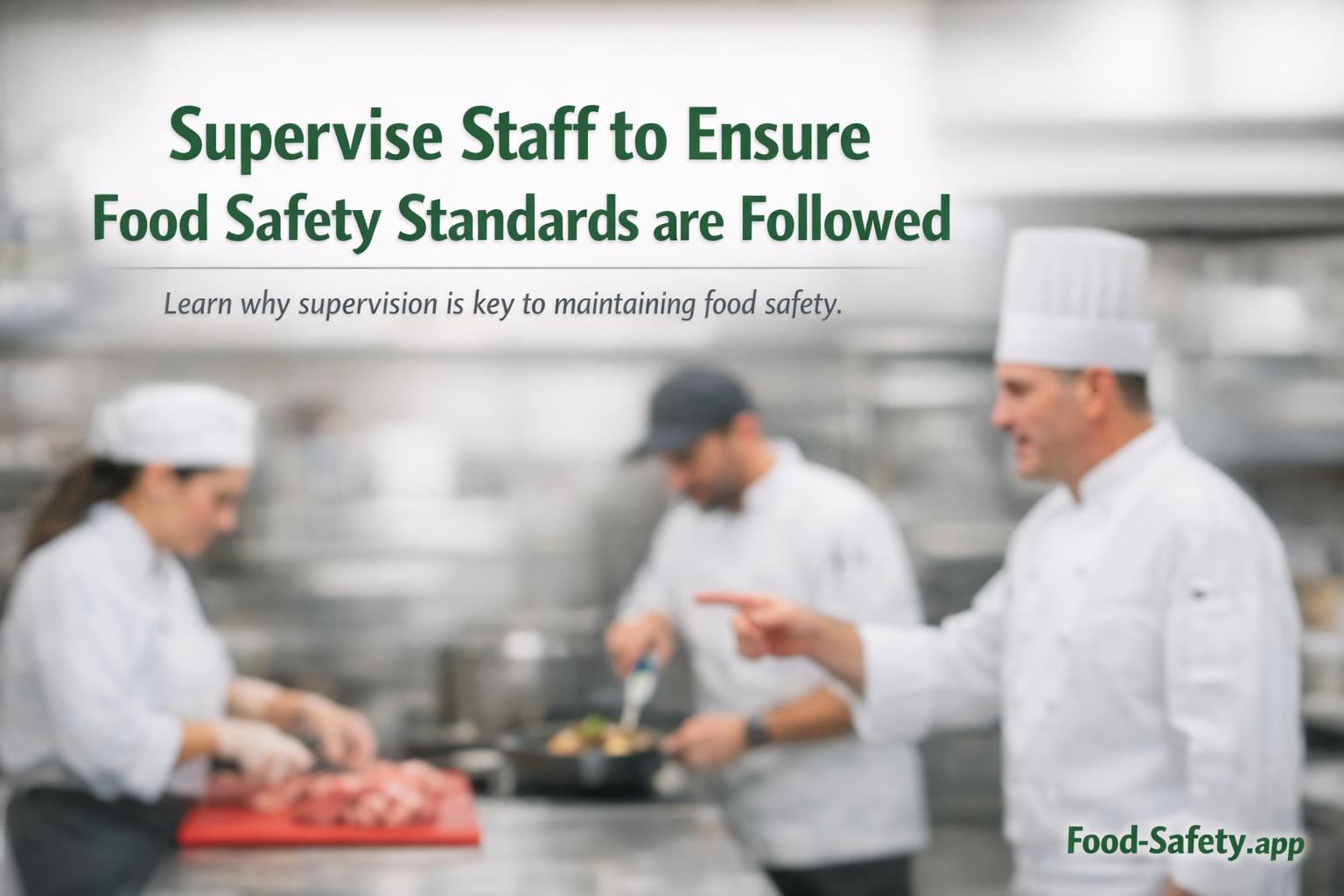
Food safety supervision is more than being physically present in the kitchen. It means making sure staff are trained, supported, and monitored well enough to carry out safe food handling every day. A supervisor might be a head chef, kitchen manager, duty manager, team leader, or senior catering assistant depending on the size of the business. This aligns with HACCP principles explained.
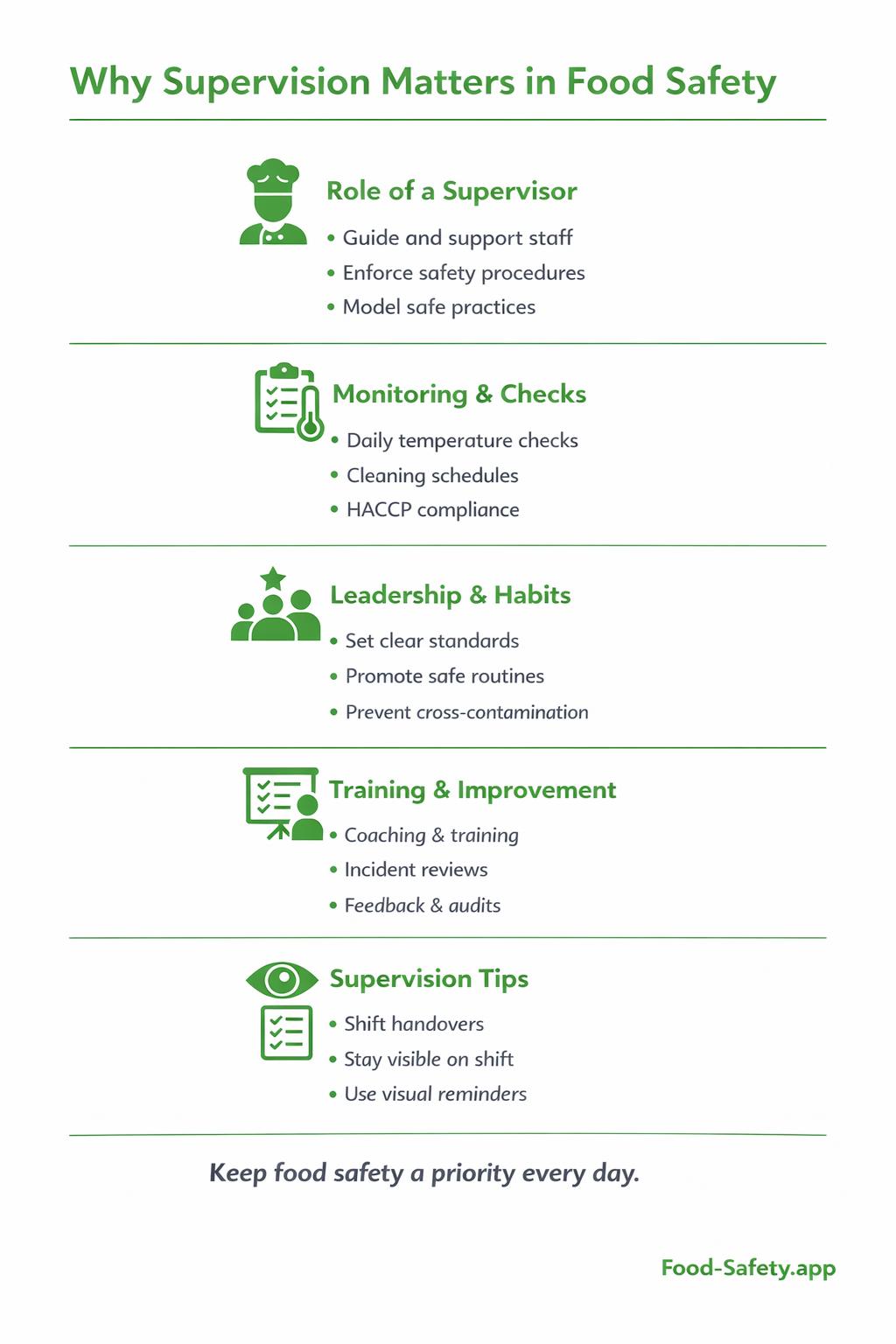
In a commercial kitchen, supervision often includes checking that staff are following handwashing and personal hygiene rules, making sure raw and ready-to-eat foods are kept separate, spotting unsafe cooling, reheating, or holding practices, confirming cleaning schedules are actually being done rather than simply signed, watching how new or temporary staff work during busy service, and dealing with problems quickly before they become a food safety issue.
This is especially important in cafés, hotel kitchens, school canteens, takeaways, and catering units where staffing levels can change quickly and service pressure can be intense.
Why supervision matters in food safety
Food safety risks usually do not happen because someone deliberately ignores the rules. More often, they happen because someone is rushed, distracted, new to the job, or copying a poor habit they have seen before. Supervision matters because it catches those weak spots before they affect the customer.
- It turns training into action. Staff may know the rules, but supervision helps them apply those rules correctly during a busy service.
- It reduces shortcuts. In a commercial kitchen, shortcuts can appear harmless, such as using the same cloth across different tasks or storing items in the wrong place.
- It protects vulnerable customers. Schools, hospitals, care settings, and hotel buffets often serve people who are more likely to be harmed by unsafe food.
- It supports consistency. One shift might be excellent while another slips. Supervision helps keep standards steady across the week.
- It improves staff confidence. People work more safely when they know there is someone available to check, guide, and correct them.
Without proper supervision, small mistakes can build up. A fridge door left open, a label missing from a prepared item, or a cleaner used on the wrong surface may seem minor on its own, but these issues can quickly lead to contamination, allergen risk, or spoilage.
Key areas where supervision makes the biggest difference
Personal hygiene and handwashing
Supervision helps make sure staff wash hands at the right times, not just when it is convenient. That means before handling ready-to-eat food, after handling raw food, after cleaning, after breaks, and after touching waste or phones. Supervisors should also watch for jewellery, poor uniform practice, wound covering, and staff working while visibly unwell.
Good hygiene practices in kitchen are essential. See good hygiene practices in kitchen.
Cross-contamination control
Cross-contamination is one of the easiest problems to overlook in a busy kitchen. Supervisors should check that raw meat, poultry, and fish are kept apart from cooked and ready-to-eat food, and that utensils, chopping boards, and storage areas are used correctly. A quick verbal reminder at the start of service often prevents a costly mistake later. For a quick guide, see how cross-contamination happens and how to stop it.
Temperature control
Temperature abuse is a common cause of food quality and safety problems. Supervisors need to make sure chilled foods are stored correctly, hot food is kept hot enough for service, and cooked food is cooled and reheated safely. If a temperature check is missed, it should be followed up immediately rather than left until the end of shift. Fridge temperature monitoring is essential to prevent temperature abuse: fridge temperature monitoring.
Cleaning and sanitising
Cleaning schedules are only effective if they are supervised. A supervisor should check that the right chemicals are used, contact times are followed, food contact surfaces are cleaned between tasks, and cloths, mops, and buckets are not spreading contamination around the kitchen. Cleaning schedules for better food safety management help maintain consistency: Cleaning schedules for better food safety management.
Allergen control
In professional kitchens, allergen mistakes can have serious consequences. Supervision is vital when taking orders, checking ingredient changes, preparing meals, and serving customers. A supervisor should make sure staff know where allergen information is kept, how to handle special requests, and when to escalate uncertainty rather than guess. Allergen management in busy kitchens is essential: managing allergens safely in a busy kitchen.
Daily supervision routines that work in busy kitchens
Good supervision does not need to be complicated, but it does need to be consistent. The best systems are built into the shift rather than added on when there is spare time.
Start-of-shift checks
Brief the team on menu changes, allergens, and busy service periods. Check staff are in correct uniform and fit for work. Confirm fridges, freezers, and hot holding equipment are in order, review any leftover issues from the previous shift, and allocate responsibility clearly, especially for prep, service, and cleaning.
During service
Observe staff handling food rather than relying only on paperwork. Watch for congestion on the pass, mislabelling, or poor utensil use. Check that allergen requests are being managed properly, step in quickly if someone starts cutting corners, and keep communication short, clear, and calm under pressure.
End-of-shift checks
Confirm food is labelled, stored, or discarded correctly. Check cleaning tasks are completed properly, review any incidents, near misses, or equipment faults, and make sure issues are handed over to the next shift.
For smaller operations, this may be done by one duty manager or senior chef. In larger hotel kitchens or multi-site catering operations, it may involve several supervisors across different stations.
Common food safety problems supervision helps prevent
Supervision is particularly valuable because it helps prevent the kind of mistakes that are easy to miss when everyone is busy.
Unlabelled food in the fridge: a supervisor can make sure date labels and descriptions are in place before storage becomes confusing.
Staff using the wrong chopping board: quick correction prevents raw and ready-to-eat foods being mixed.
Allergen information not passed on: supervision helps ensure the front of house and kitchen communicate clearly.
Food left out during prep: a supervisor can spot the issue and return the food to safe storage promptly.
Cleaning missed because service got busy: supervision helps prioritise the tasks that protect customers first.
In many kitchens, the biggest benefit of supervision is not catching dramatic incidents. It is preventing the small repeated errors that slowly weaken standards.
What good supervision looks like on the pass, in prep, and on delivery
Strong food safety supervision is visible, practical, and calm. It does not mean micromanaging every task. It means knowing what should be happening, spotting what is not, and acting early.
On the pass
A good supervisor checks portioning, plating cleanliness, allergen separation, and timing. If a dish is delayed, they decide whether it can still be served safely and to standard. They also make sure plates are not left standing too long before service.
In prep areas
Supervision should focus on organisation, separation, labelling, and cleaning between tasks. If one person is preparing raw chicken while another is portioning salad nearby, that requires active oversight to reduce contamination risk.
On deliveries and storage
When deliveries arrive, supervision helps ensure chilled and frozen goods are checked promptly, damaged packaging is rejected, and stock is rotated properly. In storage areas, a supervisor should look for overfilled shelves, poor segregation, and items that could contaminate one another.
Linking supervision with training and records
Supervision works best when it is joined up with training and simple records. If staff are trained but never observed, bad habits can settle in. If records are completed but nobody checks them, the paperwork may not reflect what is really happening.
A practical approach is to combine induction training for new starters, refresher training for existing staff, supervised shifts for new or inexperienced team members, short checklists for daily opening, service, and close-down tasks, and regular spot checks from a manager or senior team member.
For businesses looking to tighten control, Food-Safety.app can help as a food safety management system for catering businesses, especially when you want better visibility of checks, tasks, and follow-up actions.
Useful UK guidance is also available from the Food Standards Agency, which is worth reviewing alongside your own procedures.
What to do when supervision finds a problem
Finding a problem is not a failure. In fact, good supervision often works because it spots a problem early enough to fix it.
- stop the task if there is an immediate risk
- explain the issue clearly and calmly
- show the correct method if needed
- record the issue if your system requires it
- follow up later to check the correction has stuck
For example, if a team member forgets to separate raw and ready-to-eat foods, the supervisor should correct it straight away, then review whether the issue came from poor training, a rushed layout, or lack of supervision at that station. That is how you stop a one-off error becoming a repeated habit.
Conclusion
Food safety supervision matters because it keeps standards alive during the pressures of commercial service. It helps staff apply their training, reduces the chance of contamination and allergen errors, and gives managers a better grip on what is really happening in the kitchen.
For restaurant owners, chefs, caterers, and kitchen managers, the practical takeaway is simple: supervision should be active, routine, and built into each shift. Watch the work, correct problems early, support your team, and make sure training and records back up what happens on the floor. That is how food safety stays reliable in a busy professional kitchen.
Strengthen supervision and compliance
Build stronger food safety habits with digital tools that support supervision, task tracking, corrective actions, and record keeping. Give managers better visibility across shifts while helping teams maintain consistent standards, improve accountability, and stay inspection ready every day.