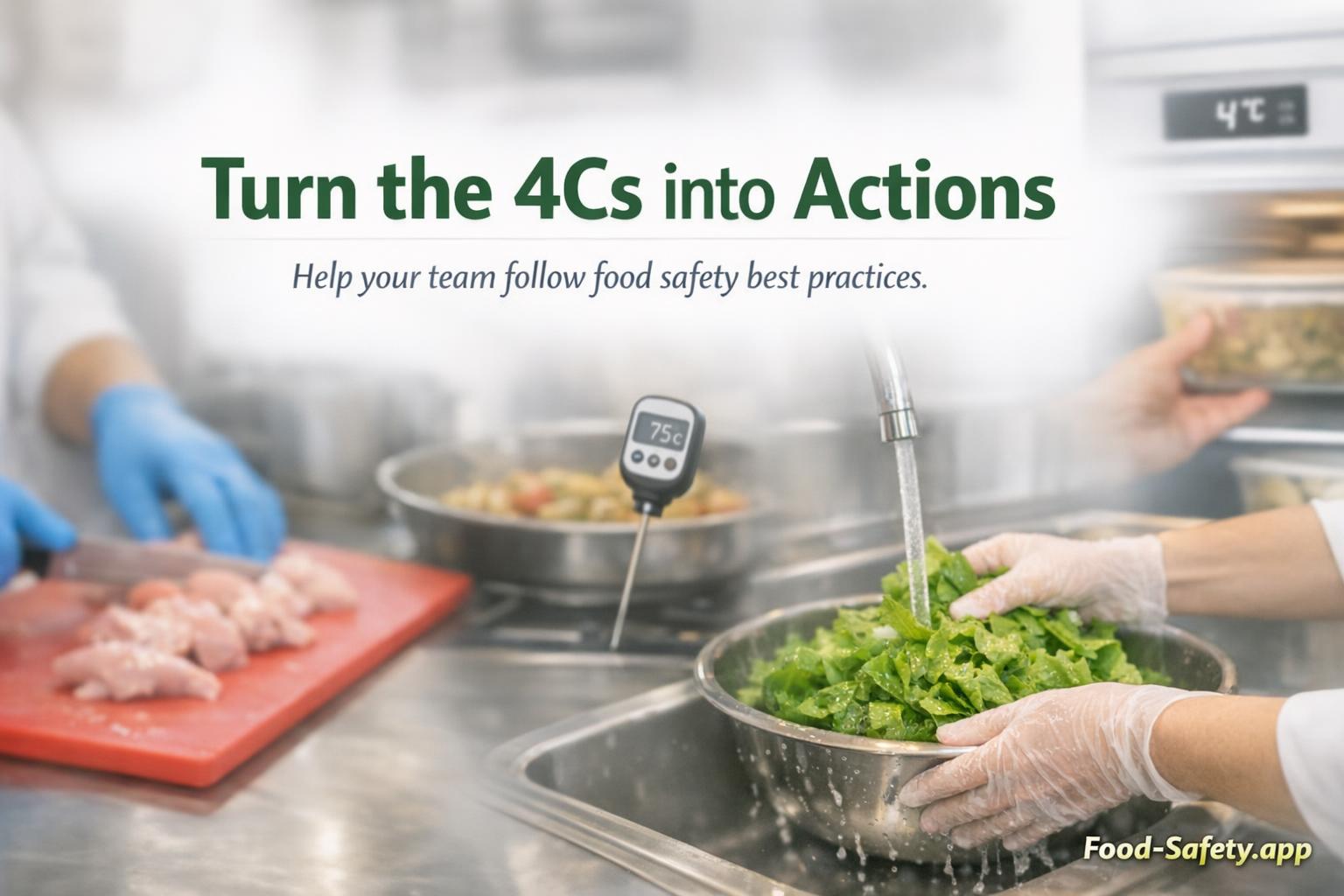
The 4Cs of Food Hygiene Explained for Professional Kitchens
The 4Cs of food hygiene help food businesses reduce food safety risks, avoid contamination issues, improve inspection outcomes, and maintain safer kitchen operations.
These four core principles form the foundation of food safety management in restaurants, cafés, hotels, takeaways, schools, and catering businesses.
- Cleaning
- Cross-contamination
- Chilling
- Cooking
When applied consistently during prep, storage, service, and cleaning routines, the 4Cs create a safer and more organised kitchen environment.
Table of Contents
Cleaning
Cleaning is one of the most important food hygiene controls in any professional kitchen. Proper cleaning removes food debris, grease, bacteria, and contamination risks from work areas and equipment.
High-contact areas such as prep counters, chopping boards, knives, fridge handles, taps, sinks, and utensils require regular attention throughout service.
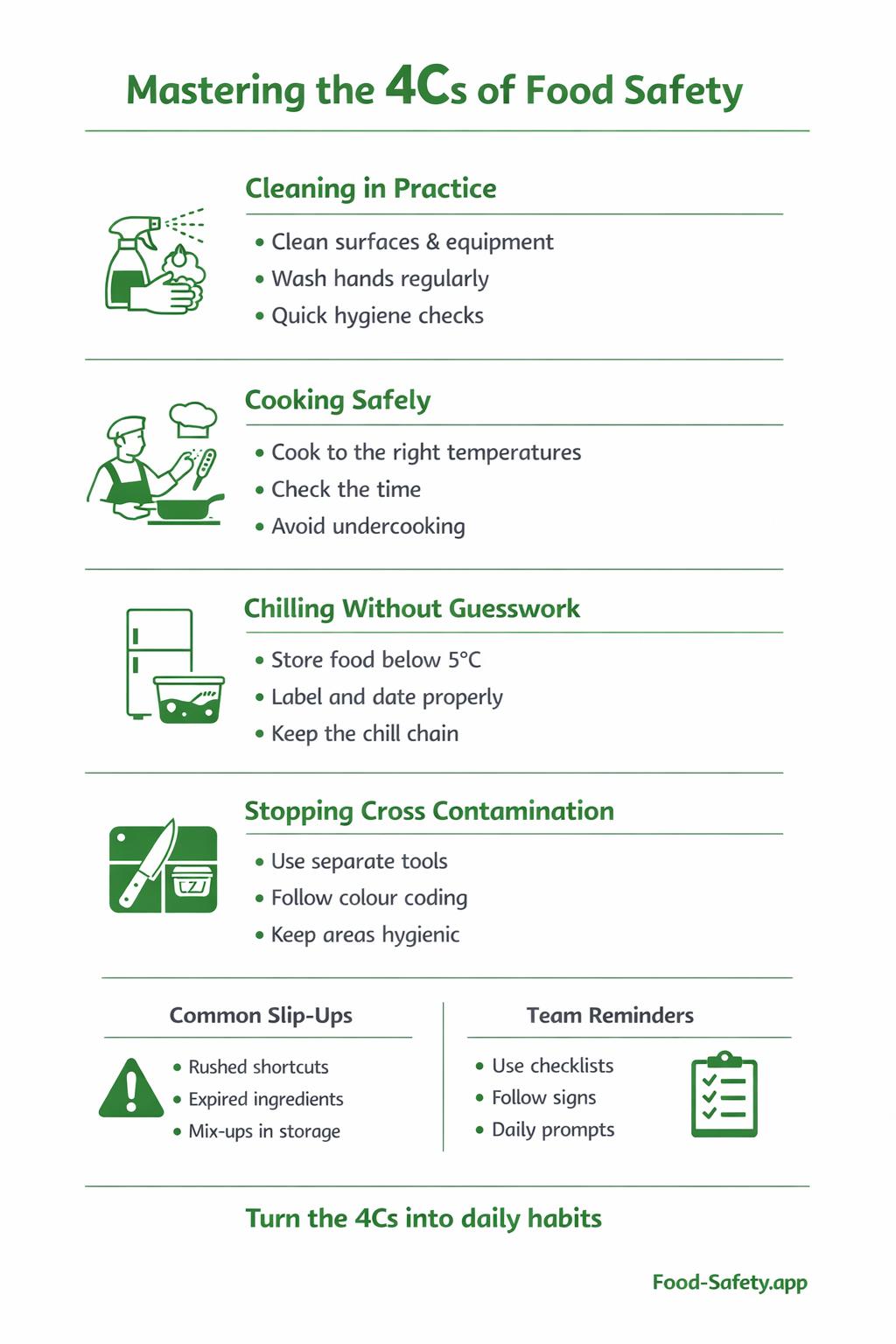
Effective Cleaning Routines
- Clean continuously during prep and service.
- Use separate cleaning cloths for different areas.
- Follow correct sanitiser contact times.
- Use approved food-safe chemicals correctly.
- Wash and dry reusable cloths thoroughly.
- Maintain deep-clean schedules consistently.
For HACCP planning guidance, see How to write a HACCP plan.
For allergen management support, see clear allergen labelling on packaged food.
Cleaning Mistakes That Increase Risk
One of the most common kitchen hygiene failures is using contaminated cloths or cleaning equipment across multiple workstations.
A cloth previously used around raw poultry can spread harmful bacteria onto ready-to-eat food preparation areas if not replaced or sanitised properly.
- Never reuse dirty cloths on clean prep surfaces.
- Sanitise areas after handling raw meat or eggs.
- Stop and clean spills immediately.
- Do not rely on visual cleanliness alone.
Even surfaces that look clean may still carry bacteria if they have not been properly sanitised.
Cross-Contamination
Cross-contamination happens when bacteria, allergens, or harmful substances transfer from one surface, food item, or person to another.
It remains one of the leading causes of food safety failures in commercial kitchens.
Common Cross-Contamination Risks
- Using the same chopping board for raw chicken and salad.
- Storing raw meat above ready-to-eat food.
- Sharing utensils between allergen and non-allergen meals.
- Handling food without washing hands between tasks.
How Kitchen Teams Reduce Risk
- Separate raw and ready-to-eat foods at all times.
- Use colour-coded boards and utensils consistently.
- Store raw meat below cooked or ready-to-eat products.
- Use dedicated equipment for allergen-free orders.
- Change gloves and aprons between tasks.
- Wash hands after touching raw food, waste, or chemicals.
In busy takeaway or café environments, staff often switch between prep, packing, serving, and payment handling. Without proper controls, contamination risks increase quickly.
For more guidance, see Cross-contamination and food safety management.
Chilling
Chilling slows bacterial growth and helps protect high-risk food during storage and service.
Refrigeration systems only work effectively when fridges are monitored, organised properly, and not overloaded.
Important Chilling Controls
- Check and record fridge temperatures daily.
- Keep fridge doors closed when not in use.
- Avoid overcrowding shelves or blocking airflow.
- Cool hot food rapidly before refrigeration.
- Label prepared and opened food clearly.
- Return chilled items to storage promptly.
Busy kitchens often experience issues during peak service when doors remain open too long or hot food is placed into refrigeration too quickly.
For fridge monitoring guidance, see Fridge temperature monitoring.
What Happens if Refrigeration Fails
If fridge temperatures rise unexpectedly, immediate action is important to protect food safety.
- Check door seals and blocked vents.
- Reduce overcrowding inside the unit.
- Move high-risk food into another safe fridge if needed.
- Follow corrective action procedures.
- Discard food if safety cannot be confirmed.
This is especially critical in hotels, schools, and catering operations storing large food volumes ahead of service.
Cooking
Cooking safely means ensuring food reaches the correct internal temperature throughout.
Appearance alone is not a reliable safety check for poultry, minced meat, stuffing, reheated foods, or sausages.
Cooking Controls That Improve Safety
- Use sanitised probe thermometers.
- Check the thickest part of the food.
- Do not rely only on colour or timers.
- Rotate and stir food during cooking.
- Ensure reheated food is piping hot throughout.
- Maintain cooking records where required.
For additional guidance, see Temperature control in kitchen.
When Food Is Undercooked
If food has not reached a safe temperature, continue cooking it properly provided it has not remained in unsafe conditions for too long.
If there is uncertainty around contamination, temperature abuse, or time spent in the danger zone, disposal may be the safest option.
Kitchen staff should never feel pressured to serve unsafe food simply to speed up service.
Making the 4Cs Work During Service
The 4Cs only become effective when they are built into daily routines and kitchen workflows.
Training posters and policies help, but consistent habits during busy service are what truly protect customers.
Ways to Improve Daily Food Safety
- Assign shift leads to monitor hygiene controls.
- Use structured shift handovers.
- Keep cleaning products accessible.
- Include food safety checks in opening and closing routines.
- Train staff using realistic kitchen scenarios.
Reducing Risk Under Pressure
When orders increase, shortcuts become more likely. Shared cloths, skipped labels, and poor station separation all increase contamination risk.
The safest kitchens simplify correct processes through better layouts, storage systems, labelling, and allergen controls.
For allergen management guidance, see clear allergen labelling on packaged food.
For official UK guidance, visit the Food Standards Agency.
Common Mistakes and Quick Fixes
Shared Cleaning Cloths
Using the same cloth across prep benches, raw food stations, and serving counters spreads contamination rapidly.
Fridge Overcrowding
Overloaded fridges restrict airflow and reduce temperature stability.
Rushed Allergen Orders
Allergen-free meals require dedicated checks and careful communication before plating.
Guessing Food Temperatures
Visual checks alone are unreliable for high-risk foods.
Poor Handwashing Habits
Hands should always be washed after handling raw food, waste, money, or cleaning chemicals.
For cleaning schedule guidance, see Kitchen cleaning schedule in action.
A Simple Daily Routine for Kitchen Teams
Start of Shift
- Check fridge temperatures and labels.
- Inspect prep areas for cleanliness.
- Prepare separate utensils and chopping boards.
- Review allergen requirements for service.
During Service
- Clean continuously throughout prep.
- Separate raw and ready-to-eat food.
- Return chilled items quickly after use.
- Follow approved cooking checks consistently.
- Replace contaminated tools immediately.
End of Shift
- Dispose of unsafe food correctly.
- Clean and sanitise all work areas.
- Record maintenance or refrigeration issues.
- Reset labels, tools, and stations for the next shift.
Digital systems such as Food-Safety.app can simplify temperature records, cleaning checks, and food safety routines for hospitality teams.
Conclusion
The 4Cs of food hygiene provide a practical framework for controlling food safety risks across professional kitchens.
Cleaning, cross-contamination prevention, chilling, and cooking each target different hazards, but together they create a safer and more reliable kitchen operation.
Strong food safety culture comes from repeatable routines, staff accountability, clear systems, and consistent daily checks.
Improve Food Safety Systems Across Your Kitchen
Manage cleaning schedules, fridge checks, allergen controls, temperature records, and daily compliance tasks in one professional platform built for hospitality teams.
Reduce paperwork, improve consistency, and simplify kitchen food safety management with Food-Safety.app.