If you handle food, manage a kitchen or own a food business, food safety law applies to you personally. It’s not just paperwork for the owner or something that only matters on inspection day. Every person involved in preparing, storing or serving food has legal responsibilities.
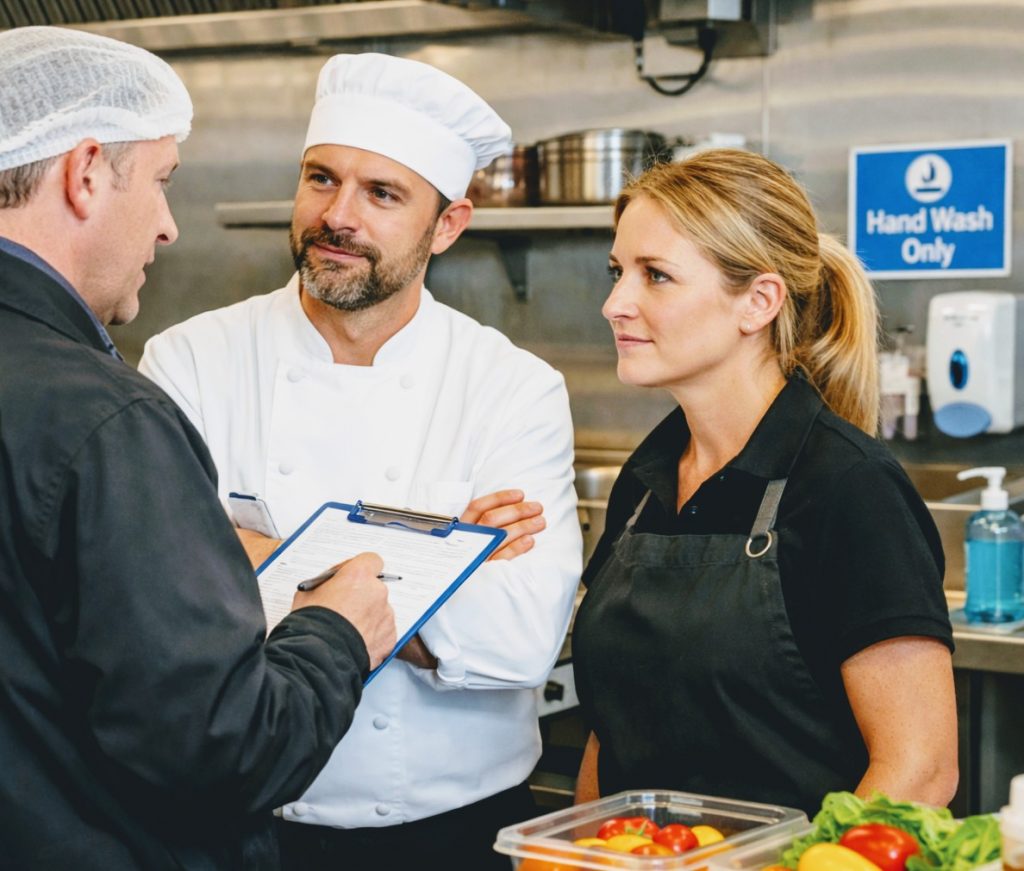
Whether you’re a new food handler, a supervisor or the business owner, understanding the law helps you protect customers, protect your job and protect the business you work in.
This guide explains what the law expects, who enforces it and what your responsibility looks like in everyday food handling.
Why food safety law matters to everyone
Food safety law exists to stop people getting ill. That’s the main aim. But it also protects people who do the right thing.
If you follow safe procedures and work within clear systems, the law supports you. If shortcuts are taken and risks ignored, the law allows action to be taken quickly.
Food safety isn’t just about big outbreaks you see in the news. It’s about everyday controls that stop small mistakes turning into serious harm.
The Food Safety Act 1990: the main legal duty
The Food Safety Act 1990 is the core food safety law in the UK. It applies to all food businesses and all food handlers.
Under this law, it’s illegal to:
- Make food unsafe
- Sell food that’s unfit to eat
- Sell food that isn’t what the customer expects
This applies whether food is sold, given away or supplied as part of a service.
What “injurious to health” really means
Food doesn’t need to make someone ill for the law to be broken. It only needs to be capable of causing harm.
Food may be unsafe because of bacteria from poor temperature control, physical contamination like glass, metal or pests, chemical contamination from cleaning products, or undeclared or poorly controlled allergens.
A common misunderstanding is thinking “no one got sick, so it’s fine”. The law doesn’t work like that.
If food could cause harm, the offence has already happened.
Everyday examples food handlers recognise
These situations all matter under the law:
- Cooked food left out too long
- Raw and ready-to-eat food stored together
- Fridges not checked or recorded
- Hands washed without soap
- Allergen questions answered without checking
They may feel routine, but they’re all legal responsibilities.
Food Hygiene Regulations: how the law is applied daily
Food Hygiene Regulations explain how food must be handled in practice. They support the Food Safety Act by focusing on day-to-day controls.
Food businesses must make sure premises are clean and well maintained, pests are controlled, food is handled safely, temperatures are kept safe, handwashing facilities are available, staff are trained and supervised, and a food safety management system is used.
These rules apply all the time. Not just when it’s quiet or when inspectors are due.
Responsibility at different levels
Responsibility depends on your role.
Owners are responsible for systems and standards. Managers are responsible for supervision and control. Food handlers are responsible for following procedures.
If you’re trained and told what to do, you’re expected to do it. Saying “I was busy” or “everyone does it” won’t protect you.
Small gaps can still be breaches of the law
Some issues feel minor but still count as non-compliance.
Examples include no soap or paper towels at handwash basins, missing temperature records, cleaning not signed off, out-of-date food safety paperwork, and unclear allergen information.
Food might look safe, but the law requires controls to be in place at all times.
Busy service is when mistakes happen. It’s also when inspectors expect systems to hold up.
Due diligence: how you protect yourself
Due diligence is a legal defence. It means you took all reasonable steps to prevent food safety problems.
It doesn’t mean nothing ever goes wrong. It means risks are managed properly.
Inspectors understand that equipment fails and people make mistakes. What matters is how those issues are handled.
What proves due diligence
Due diligence is about evidence, not good intentions.
Inspectors look for a documented food safety management system, staff training records, cleaning schedules, temperature checks, allergen controls, and records of corrective actions.
If a fridge breaks and food is thrown away, logged and the issue fixed, that shows control.
If nothing is recorded and no action is taken, it doesn’t.
What doesn’t count
These don’t demonstrate due diligence:
- Saying “I didn’t know”
- Relying only on verbal instructions
- Training without records
- Systems that exist but aren’t followed
A simple check is this. If an inspector walked in today, could you show proof, not just explain what you usually do?
Who enforces food safety law
Food law is enforced by trained officers. They are not advisors and they don’t need permission to act.
Environmental Health Officers
Environmental Health Officers deal with food hygiene and safety, premises conditions, food handling practices, food safety systems, and hygiene ratings.
They carry out routine inspections and investigate complaints.
Trading Standards Officers
Trading Standards Officers focus on food labelling, allergen information, food description and claims, and food standards and fraud.
Depending on the issue, you may deal with one or both.
Officers have legal powers to enter premises, take samples, seize food, issue notices and prosecute.
What happens if the law is broken
Food safety offences are taken seriously.
Enforcement action can include advice or warnings, Improvement Notices, emergency closure, food seizure and destruction, and prosecution.
Penalties can be severe.
Courts can issue unlimited fines. Serious cases can lead to prison sentences, criminal records and bans from running a food business.
The real impact on people and businesses
Legal penalties are only part of the impact.
Non-compliance can lead to immediate closure, loss of income, staff losing work, damaged hygiene ratings, loss of customer trust, and higher insurance costs.
Even one serious issue can affect a business for years.
Why good systems matter for everyone
Food safety law doesn’t expect perfection. It expects control.
Clear systems help food handlers know what to do, even when it’s busy. They help managers spot problems early. They protect owners if something goes wrong.
When systems are followed and records are kept, inspections are calmer and outcomes are fairer.
Final thoughts
If you handle food or have responsibility for food safety, the law applies to you every day. Your actions protect customers, your colleagues and the business.
Understanding your role makes food safety part of normal work, not something to fear.
If you want to reduce paperwork, stay organised and keep food safety records simple and inspection-ready, take a look at how the Food Safety App can help. It’s designed to make food safety easier, so you can focus on doing your job well.
Make food safety easier to manage
Keeping records accurate and inspection-ready takes time, especially during busy service periods. Food Safety App helps food businesses organise checks, manage compliance tasks, and maintain clear documentation so teams can stay focused on safe food handling and daily operations without unnecessary paperwork stress.