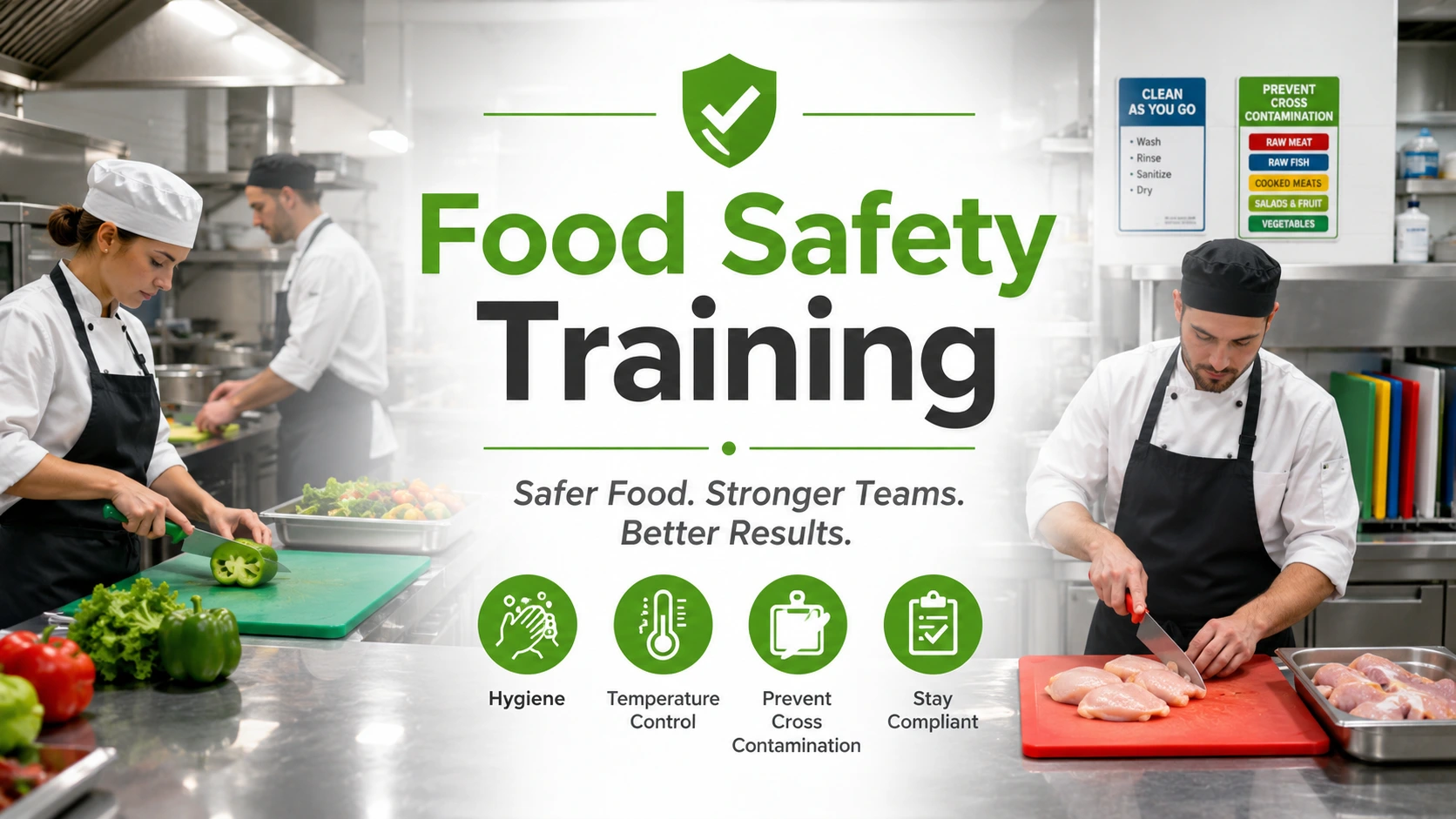
Most food safety training gets forgotten the moment staff walk back into the kitchen.
Long courses, generic slides, and rushed inductions often don’t stick — especially during busy shifts where teams are focused on service, prep, deliveries, and cleaning.
That’s why short, focused toolbox talks work so well in food businesses.
They give managers and supervisors a simple way to train staff regularly using practical, real-world food safety topics that relate directly to daily kitchen work.
The Problem With Traditional Training
A lot of businesses only think about training when:
- A new starter joins
- An inspection is due
- Something goes wrong
- Certificates expire
But food safety compliance isn’t built from one-off training sessions.
It comes from regular reminders, consistent standards, and making sure staff understand why procedures matter.
That’s where toolbox talks become useful.
Short discussions on topics like allergen safety, cross contamination, cleaning standards, temperature control, probe use, or illness reporting can help reinforce standards without taking staff away from operations for hours.
A Faster Way to Build Food Safety Training
The Food Safety Training Builder helps managers create structured toolbox talks and food safety training content quickly.
Instead of spending hours trying to write training notes from scratch, the tool helps generate practical training packs that can be used directly with staff teams.
The content is designed specifically for UK food businesses and focuses on:
- Clear explanations
- Practical kitchen examples
- Common mistakes and risks
- Simple learning outcomes
- Easy-to-understand language
It’s built for real catering environments — not corporate boardrooms.
Useful for Everyday Food Safety Topics
The Training Builder can help businesses create training sessions around topics such as cleaning and disinfection, allergen controls, personal hygiene, probe calibration, temperature monitoring, cross contamination, delivery checks, opening and closing procedures, corrective actions, and HACCP awareness.
This makes it easier to keep training regular and consistent across the team.
Designed for Busy Managers
Most managers don’t have spare hours every week to prepare staff training documents.
The goal of the Training Builder is simply to reduce that workload while helping businesses deliver clearer food safety communication to staff.
It’s not there to replace management responsibility or formal qualifications.
It’s there to help businesses deliver practical, repeatable training more efficiently.
Try the Free AI Food Safety Training Builder
The free AI-powered Food Safety Training Builder is designed to help food businesses quickly create structured food safety training packs and toolbox talks without starting from a blank page.
Part of the Wider Food-Safety.app System
The Training Builder is part of Food-Safety.app — a UK food safety compliance platform designed to help businesses manage everyday food safety records digitally.
The app also includes temperature logs, cleaning schedules, corrective action records, delivery checks, allergen management, HACCP support tools, training records, PDF exports, and opening and closing checks.
Everything is designed to stay practical, simple, and usable during busy shifts.
Built Around Practical Compliance
Food-Safety.app isn’t trying to become a complicated enterprise system.
It focuses on helping food businesses keep organised records, support due diligence, and manage food safety more consistently without unnecessary complexity.
If you want a simpler way to build toolbox talks and food safety training for your team, it’s worth exploring both the Training Builder and the wider Food-Safety.app platform.
Compliance Confidence for busy food businesses.
Build clearer food safety training
Food-Safety.app helps food businesses create practical toolbox talks, manage compliance records, and improve staff communication during busy shifts. The platform is designed for real kitchen environments, making it easier to keep training consistent, maintain due diligence, and support everyday food safety standards without unnecessary complexity.