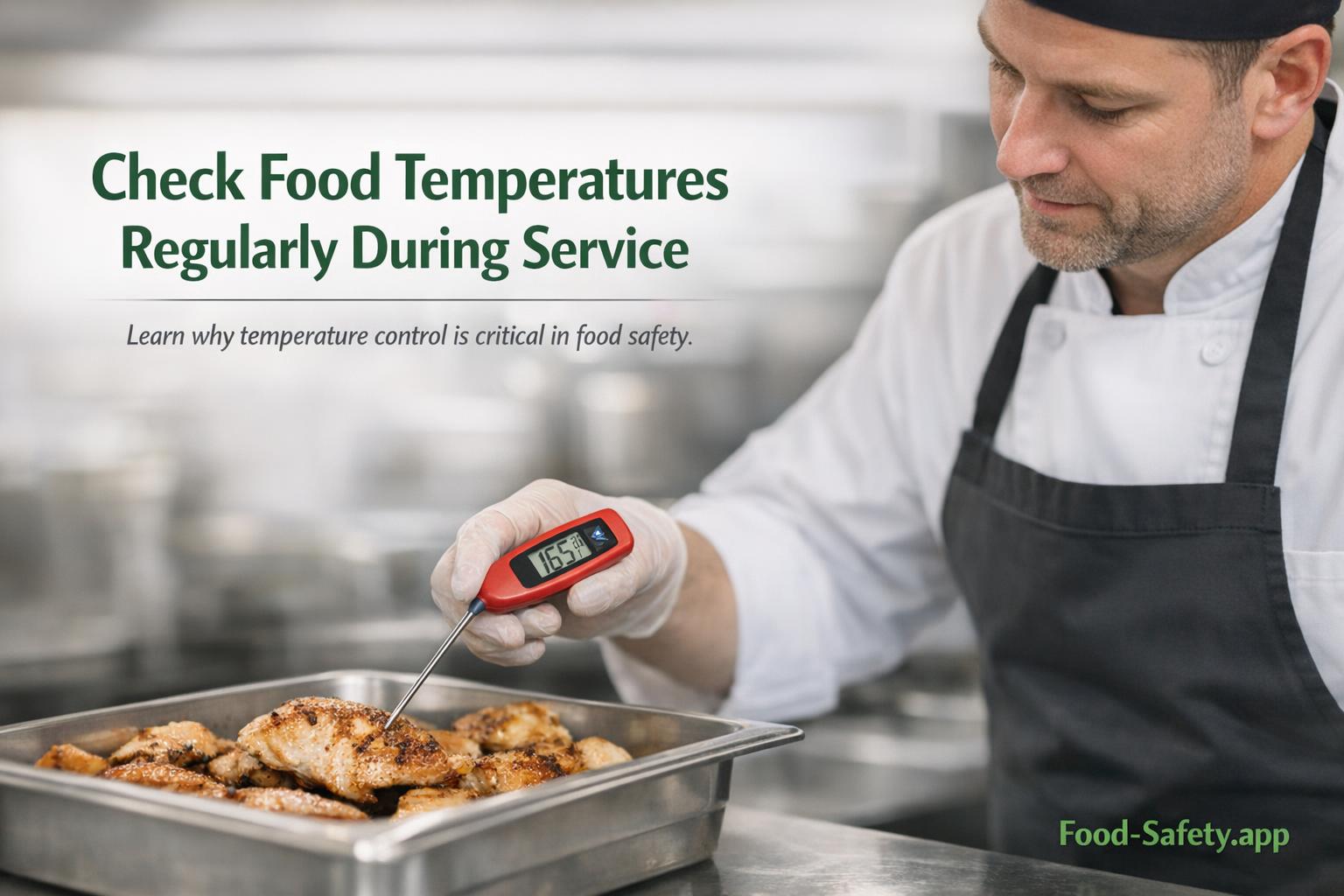
Learn why temperature control is critical in food safety. Strong food temperature control helps protect customers and keeps your kitchen compliant.
Why food temperature control matters
Food temperature control is one of the simplest ways to reduce the risk of food poisoning in catering and hospitality. Harmful bacteria grow quickly when food is left in unsafe conditions, especially in the temperature range often called the danger zone. Keeping food cold enough, hot enough, and moving through preparation safely helps stop bacteria multiplying to dangerous levels. It also protects food quality, reduces waste, and supports consistent service standards in busy kitchens.
Good temperature control isn’t just about reacting when something goes wrong. It’s part of everyday food safety management, from receiving deliveries to storing ingredients, cooking, cooling, reheating, and serving. Businesses that handle food must make sure it’s safe to eat, and temperature is central to that duty. For a deeper look at the practical side of safe handling, see food safety fundamentals and compliance, law and inspections.
What can go wrong without proper temperature control?
If food is held too warm, cooled too slowly, or reheated unevenly, bacteria can multiply and toxins may form. That creates a real risk of foodborne illness, especially for ready-to-eat foods, cooked rice, meat dishes, sauces, soups, and dairy-based items. Staff may not always notice a problem because food can still look, smell, and taste normal even when it’s unsafe. That’s why food temperature control needs to be built into routine kitchen practice, not left to judgement alone.
There are also commercial risks. A single temperature failure can lead to waste, complaints, inspection problems, or damage to your reputation. For example, a hotel breakfast buffet left lukewarm for too long can become unsafe, while a sandwich fridge that runs warm may put multiple products at risk. If you want more detail on the science behind unsafe temperature ranges, the temperature control and danger zone page is a useful next step. Foodborne illness risks are also covered in foodborne illness and bacteria.
Common temperature control examples in catering
In a busy café, food temperature control starts with delivery checks: chilled goods should arrive cold, frozen foods should stay hard frozen, and hot deliveries must be served or cooled safely. In a restaurant, cooked chicken should be checked before service, soups should be kept piping hot during holding, and leftovers should be cooled quickly in shallow containers. In a care setting or canteen, the same rules apply, but staff often need extra care with timing and portioning.
Temperature mistakes often happen during busy periods. A cook might leave rice on the side for too long before chilling it, or a server may forget to return a tray of desserts to the fridge. Small lapses add up. That’s why businesses should train teams to recognise risky situations and follow clear procedures. Practical help is available through running a food business safely and training and staff development.
How to control food temperatures safely
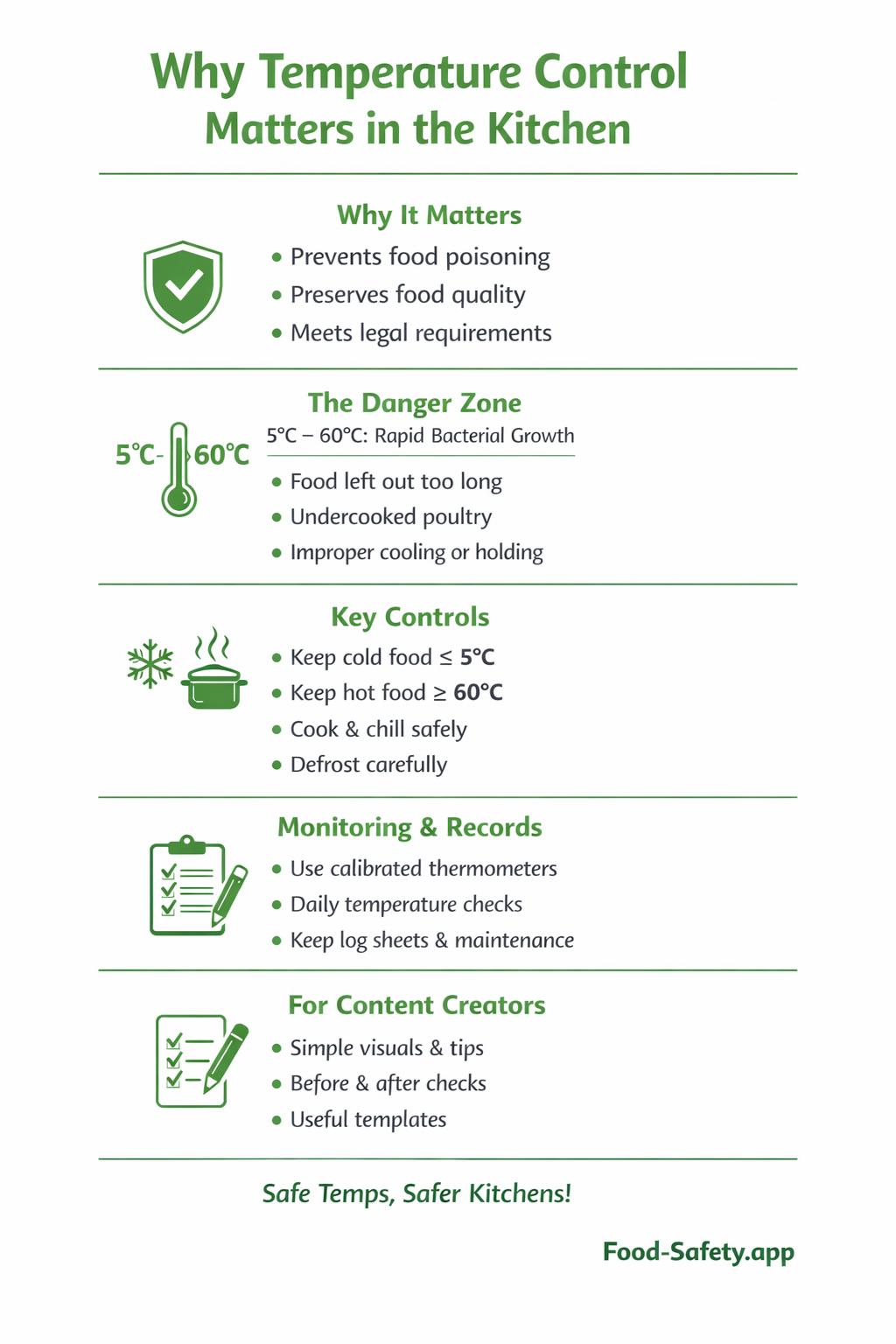
Effective food temperature control depends on a few core controls. Keep chilled foods at the correct refrigerator temperature, store frozen items solidly frozen, cook foods to a safe core temperature, and hold hot food hot until service. Cool cooked food quickly, then refrigerate it promptly. Reheat food thoroughly and only once where possible. These steps are straightforward, but they must be applied consistently across shifts, sites, and menus.
Modern systems can make this easier. Food-Safety.app is a food safety management system for catering businesses that helps teams log cooking, cooling, cold storage, reheat and hot holding temperature records. That supports safer working, clearer accountability, and better day-to-day control. It can also help with related paperwork, which is especially useful if you’re trying to keep your operation organised without relying on paper forms. For businesses moving away from manual systems, paperwork and digital food safety can be a practical area to explore.
Simple controls that make a big difference
Use covered containers, separate raw and ready-to-eat foods, and keep fridges uncluttered so cold air can circulate properly. Label food with dates and times, especially after cooking or opening. Make sure staff know when food should be discarded if it’s been left out too long. Small habits like these help reduce risk without slowing service. If you manage kitchen hygiene alongside temperature control, this also supports safer operations across the whole site.
What checks should staff carry out?
Regular checks are essential because equipment can drift out of range without obvious warning. Staff should check fridge and freezer temperatures, probe cooked food when needed, confirm hot holding temperatures, and review cooling progress for high-risk foods. It’s also important to verify delivery temperatures and inspect any equipment that seems faulty. Checks should be simple enough for staff to complete correctly every day, even during a rush.
Thermometers need to be accurate, so probe calibration matters too. A poorly calibrated probe can give false reassurance and lead to unsafe decisions. Staff should know how to clean probes properly and when to report defects. Clear opening and closing checks make it easier to spot issues early, before they affect service. If you need support creating reliable routines, look at HACCP food safety systems and small food business support.
Why temperature records matter
Records prove that food temperature control is being managed properly. They help managers spot trends, identify recurring equipment problems, and show inspectors that controls are in place. Good records also make it easier to take corrective action when something goes wrong, such as discarding unsafe food, adjusting equipment, or repairing a faulty fridge. In practice, records turn temperature checks from a task into evidence of control.
Well-kept records should be clear, dated, and easy to review. Many businesses now use digital systems because they reduce missing entries and make audits simpler. Automatic timestamped logs, full history, and inspection-ready records can save time and improve consistency. If that sounds useful, Food-Safety.app can help teams manage temperature records alongside cleaning schedules, defect reporting, and corrective actions in one place. That kind of structure is especially valuable when you need to stay organised during busy periods or inspections.
Final thoughts on food temperature control
Food temperature control protects customers, reduces waste, and helps your business meet safety expectations every day. The key is to make it routine: check temperatures, act quickly when something is wrong, and keep records that show your controls are working. When staff understand why it matters, safe practice becomes much easier to maintain.
If you’re building a stronger system, start with simple checks, clear procedures, and reliable records. That combination makes food safety easier to manage and helps keep service safe from kitchen to customer.