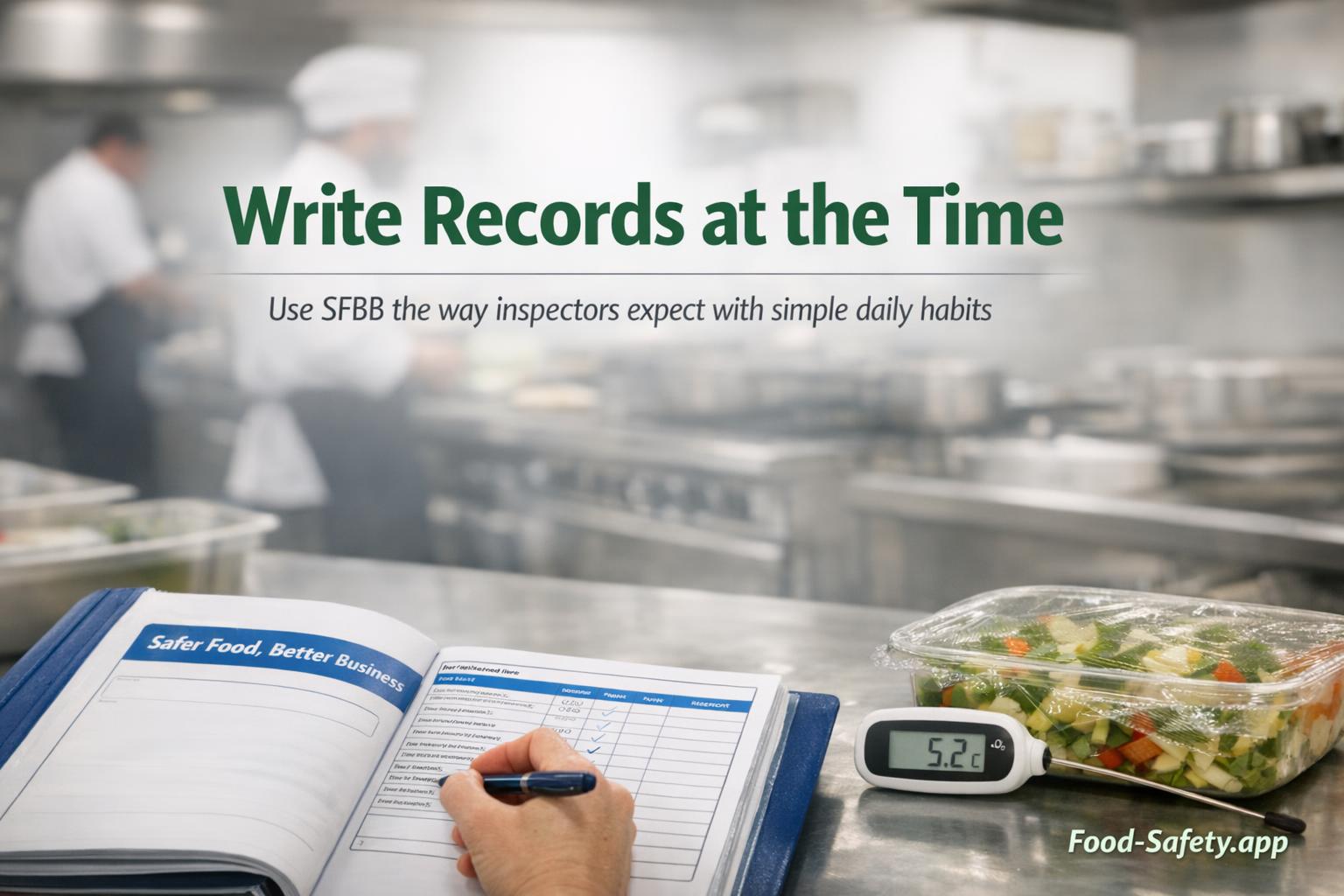
How to use SFBB properly in a busy kitchen
If you want SFBB to actually help during a busy service, it needs to become part of the day, not an extra job left to the end of it.
Used properly, SFBB can keep your records current, make checks easier to complete, and help your team stay on top of the controls inspectors expect to see in a professional kitchen.
This aligns with HACCP principles explained.
Quick takeaway
The key is to keep SFBB simple, consistent, and realistic for the pace of your business. It should follow the work, support safe routines, and help staff act on issues straight away.
What SFBB is and why it matters
SFBB, or Safer Food Better Business, is a simple food safety management system designed for small food businesses.
In practice, it helps you show how you control food safety day to day: cleaning, chilling, cooking, cross-contamination, allergen management, and staff hygiene.
In a busy kitchen, good intentions are not enough. If records are missing, out of date, or impossible to complete during service, the system stops being useful.
For restaurants, cafés, hotel kitchens, school canteens, takeaways, and catering teams, the aim is not to produce paperwork for its own sake. The aim is to prove that your team follows safe routines consistently, even when the pass is busy, deliveries are arriving, and shifts change hands quickly.
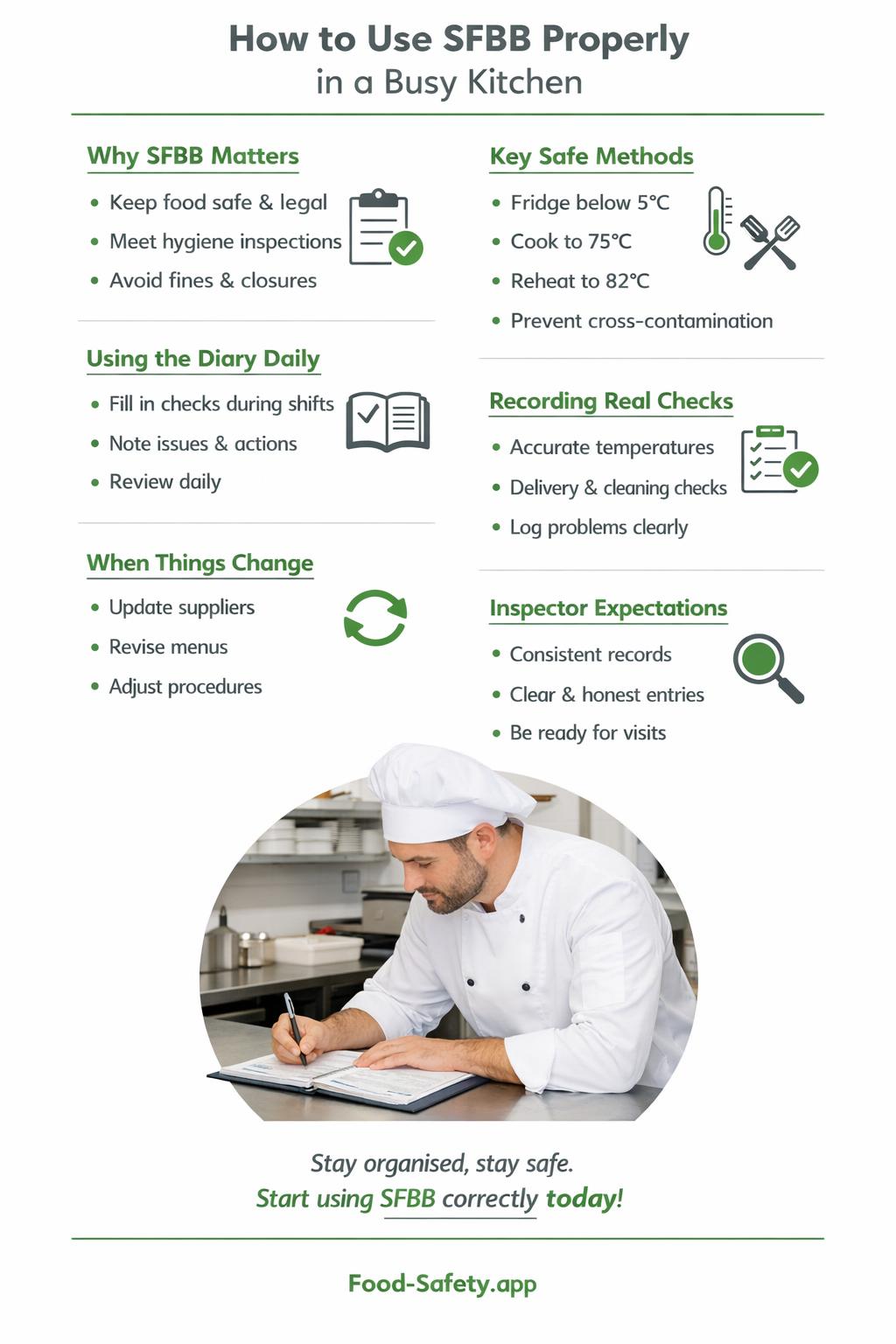
How to use SFBB properly in a busy kitchen
The best way to use SFBB properly in a busy kitchen is to build it into the working day at points where staff already pause or change tasks.
If you wait until the end of a long shift, records get rushed, guessed, or skipped. If you attach SFBB checks to existing routines, they’re far more likely to be completed properly.
Start with the controls that matter most
Focus first on the records and checks that protect food most directly.
Assign ownership
One person per shift should check the checks are done, chase missing entries, and sign off the record.
Make records easy
Keep the SFBB folder or digital system in the same place every day.
Controls to focus on first
- Delivery checks on temperature, condition, and packaging.
- Fridge and freezer checks.
- Cooking and reheating checks where needed.
- Cooling and hot holding controls.
- Cleaning schedules.
- Allergen controls and ingredient checks.
- Staff hygiene and illness reporting.
If your kitchen is short on time, keep the routine tight. A small number of well-completed checks is better than a pile of forms filled in after the event.
For temperature control specifics, see Temperature control in kitchen.
Link checks to fixed moments in the day
- First thing: fridge temperatures, stock rotation, opening checks.
- After deliveries: delivery condition and temperature checks.
- Before service: prep checks, allergen controls, ready-to-use equipment checks.
- During service: hot holding and fridge door discipline where relevant.
- Close down: cleaning, waste, leftover food decisions, and final temperatures if needed.
That way, the paperwork follows the work instead of competing with it.
Daily SFBB routines that hold up in service
Good SFBB is not about doing everything at once. It’s about making the right controls part of the shift. The following routines are practical in professional kitchens because they fit around real pressure.
Opening checks
Confirm that storage, equipment, and cleaning standards are ready for production before prep begins.
Delivery checks
Make temperature, condition, date, and packaging checks part of the receiving routine.
Prep controls
Keep raw and ready-to-eat food separate and make allergen handling clear.
Service checks
Use thermometers correctly, clean them between uses, and record the checks that matter.
When something is wrong, act straight away
If a prep fridge is too warm at 7 am, don’t wait until lunch. Move high-risk foods to another working fridge, record the issue, and arrange a repair or maintenance call.
A note in the SFBB record without action is not enough.
Deliveries can create problems fast if boxes are damaged, chilled food is warm, or items are out of date. Staff should know what to reject, what to quarantine, and who signs off the delivery.
For cross-contamination and food safety management guidance, see Cross-contamination and food safety management.
Closing should include cleaning verification, waste removal, stock dating, and a final look at what needs to be carried over. This is also the time to note any faults, spills, missing labels, or equipment issues.
See kitchen cleaning schedules in action: kitchen cleaning schedules in action.
Common SFBB mistakes in catering and hospitality
Even well-run businesses can let SFBB slip when the kitchen gets busy. The most common problems are usually simple, but they can undermine the whole system if they keep happening.
Filling in records after the shift
If staff complete logs from memory, the record is less reliable and the team loses sight of real problems.
Using SFBB as paperwork only
If forms are completed but nobody acts on poor temperatures, dirty equipment, or missing labels, the system becomes cosmetic.
Keeping old forms in use
Out-of-date sheets, crossed-out sections, and old printing create confusion.
Letting temporary staff guess
Agency staff, seasonal staff, and new starters need to be shown the system properly.
SFBB should reflect the actual operation. If a task doesn’t happen in your business, remove or adapt it. If a risk is common, such as allergen service or chilled prep, build that into the routine more clearly.
Handover, training, and accountability
SFBB is much easier to maintain when the handover between shifts is tight. A rushed verbal update in the middle of service is not enough.
Make sure supervisors hand over key issues clearly: fridge faults, delivery problems, cleaning tasks left open, and any allergen concerns.
Training should be short, practical, and repeated
- Show the opening checks during the first morning shift.
- Demonstrate a delivery check when stock arrives.
- Walk through a closing clean with the person doing the close.
- Use real examples of what happens when a temperature, allergen, or label check fails.
Staff don’t need a long lecture to understand SFBB. They need to know how to use the actual forms, where to find them, what good looks like, and what to do when something is wrong.
How SFBB helps during inspections
When an inspector looks at SFBB, they’re usually trying to understand two things: whether the business controls food safety properly, and whether the records are being used in a meaningful way.
Neat paperwork helps, but it’s not the whole story. Inspectors also look for consistency between what is written and what happens in the kitchen.
If your SFBB records show regular checks, but the kitchen is untidy, food is poorly labelled, or staff can’t explain the routine, that creates a weak impression.
On the other hand, if staff can explain their daily process clearly, know where the records are kept, and can show how problems are dealt with, SFBB becomes evidence of real control.
For official guidance on food safety management in England, the Food Standards Agency has useful information here: Food Standards Agency.
Keeping SFBB current without creating paperwork drag
The challenge for many operators is keeping SFBB up to date without drowning the team in admin. The answer is regular, short reviews rather than occasional big catch-up sessions.
Set a fixed time each week to check that forms are complete, issues have been closed off, and the system still matches how the kitchen works.
Weekly checks should look for patterns
- Are the same fridges failing checks?
- Are closing sheets incomplete on one shift?
- Are allergen records hard to follow?
- Are staff writing notes that do not lead to action?
These trends are valuable because they show where the process is breaking down. Build a strong food safety culture in your kitchen.
Fixing the routine is usually easier than trying to force better paperwork from a broken system.
If your operation is growing, changing menus, or moving to more delivery work, review whether the current SFBB setup still fits. A system that worked for a small lunch offer may need updating once you add buffet service, functions, or more complex prep.
Keeping records organised
Businesses looking for a simpler way to keep records organised may also benefit from a food safety management system for catering businesses such as Food-Safety.app, especially if multiple shifts need to stay aligned.
Food-Safety.app supports the same practical aim covered in this article: keeping records simple, organised, time stamped, and inspection ready.
Conclusion
Using SFBB properly in a busy kitchen comes down to making it practical. Keep checks tied to real working moments, assign clear responsibility, train staff on the actual routine, and deal with problems straight away rather than writing them down and moving on.
The best SFBB systems are the ones that help a team stay in control during pressure, not the ones that create more stress.
If your records are current, your actions are logged, and your team understands the why behind each check, SFBB becomes a useful part of daily kitchen management rather than a box-ticking job.
That is what makes it work in restaurants, cafés, hotels, canteens, takeaways, and any other professional kitchen where service never stops for paperwork. See good kitchen habits for more basics.