Small teams often get caught out by the same food hygiene mistakes in small kitchens, and it is usually because the pace is fast, storage is tight, and everyone is wearing more than one hat. The good news is that most problems are preventable with a few sensible routines, clearer labels, and better control of the busy service.
This guide sets out the mistakes that still trip up cafés, takeaways, school canteens, hotel kitchens, restaurants and caterers, plus what to change before they turn into inspection problems. Food safety expectations can vary slightly between the UK and other countries, so this article is written for UK businesses.
1. Poor handwashing at the wrong moments
One of the most common food hygiene mistakes in small kitchens is handwashing being treated as an occasional job rather than a habit. It is not just about washing hands after the toilet. It matters before starting prep, after handling raw food, after touching bins, phones, face masks, cleaning cloths, money or delivery boxes, and before moving back to ready-to-eat food.
In a small kitchen, the same person may take orders, prep salads and plate desserts. That makes hand hygiene even more important. Put soap, warm water, paper towels and a clear handwash sign where they are easy to use. If staff are rushing, they will skip steps unless the layout helps them do the right thing.
2. Cross contamination in cramped prep areas
When worktops are limited, raw chicken, salad garnish, cooked meat and allergen-free meals can end up too close together. That is a direct route to contamination. A small kitchen should create simple separation, even if there is no dedicated prep room.
Use colour-coded boards, separate utensils where possible, and a fixed flow from raw to cooked to ready-to-eat food. Clean and disinfect between tasks, not just at the end of the shift. If you only have one sink or one prep table, build in time to wash, sanitise and dry the area before switching jobs.
This is a classic case of cross-contamination.
3. Fridges that are packed too tightly
Overfilled fridges are a classic issue in busy service. Staff keep squeezing in deliveries, batch-prepped foods and staff lunches until air cannot circulate properly. That can make temperature control harder and makes it more likely that raw food drips onto ready-to-eat items.
Store raw meat and fish sealed low down, keep prepared foods covered, and avoid blocking vents. Use shelves so items are easy to find and rotate. A good rule is to keep the fridge organised enough that anyone on shift can check stock without moving half the contents around.
Good temperature control is essential—see temperature control in kitchen.
4. Cooling food too slowly
Small kitchens often cook in batches, then leave pans on counters because there is no space in the fridge. That is risky. Large containers stay warm for too long, which gives bacteria a chance to multiply.
Cool food in smaller portions, use shallow containers, and move it into the fridge once steam has dropped. If needed, use an ice bath, blast chiller or another approved cooling method. The key is to plan for cooling before you cook, not after the lunch rush has ended.
To understand why cooling matters, see The temperature danger zone explained simply for UK food businesses.
5. Using the wrong date labels or no labels at all
In small kitchens, staff often know what something is because they made it an hour ago. The problem is that later on, nobody remembers. Missed or unclear date labels lead to waste, poor stock rotation and a higher chance of using food past its safe life.
Label every prepared item with what it is, the preparation date and any use-by or discard date your system requires. Keep the label readable once the item is on a shelf. A simple “first in, first out” routine works well if it is checked during opening, prep and close-down.
6. Reheating and hot holding without enough control
A lot of small businesses keep hot food under pressure because they want to avoid waste. That is understandable, but hot holding and reheating both need control. Food should be reheated properly and kept hot only for the time it is meant to be served.
Do not guess. Use a probe thermometer correctly and check the core of the food. Stir sauces and soups during reheating so heat is spread evenly. If a dish is not selling, do not keep topping it up endlessly. Set a realistic hold time and replace food before quality and safety slip.
For more on reheating and hot holding, see Hot holding food safely.
7. Cleaning schedules that exist on paper only
Many small kitchens have a cleaning chart, but it is not always linked to what actually happens in service. High-touch points, sinks, handles, fridge seals and can openers are easy to miss when everyone is focused on getting orders out.
Break cleaning into daily, shift and weekly jobs. Make someone accountable on each shift. Use simple checks such as “wipe, wash, rinse, sanitise, air dry” where suitable for your process. If a cloth smells bad or a brush is worn out, replace it before it becomes part of the problem.
See how this works in practice with a kitchen cleaning schedule in action: kitchen cleaning schedule in action.
8. Poor allergen control during service
Allergen mistakes are especially serious in small kitchens because the team may be small enough that one person prepares multiple dishes back to back. That creates a real risk of mix-ups, contaminated utensils and incorrect menu answers.
Keep ingredient information clear, store allergen-containing foods separately where possible, and use clean equipment for allergen-free requests. Train staff to answer confidently and to check rather than guess. If a dish cannot be made safely, say so. That is better than improvising under pressure.
For wider guidance on food hygiene and safe catering practice, the Food Standards Agency is a useful UK authority.
9. Staff assuming small volume means lower risk
Small volume does not mean low risk. In fact, smaller teams can create more risk because one person’s bad habit spreads quickly across the whole operation. If the owner is also the chef and the buyer, it is easy for standards to drift when the pressure is on.
Keep short refresher briefings going. Focus on the jobs that cause mistakes most often: handwashing, separation, labels, cleaning, cooling and allergen checks. A five-minute shift start is often enough to reset standards before service begins.
10. Missing checks, records and ownership
The final issue is lack of ownership. If nobody is clearly responsible for fridge checks, cleaning checks, date rotation or probe calibration, tasks get skipped when the team is busy. That is when small gaps turn into repeated faults.
Assign one named person per shift for each key control, even if the same person covers more than one task. Keep records simple and usable. A short daily checklist is far better than a complicated system nobody completes properly.
What to do next
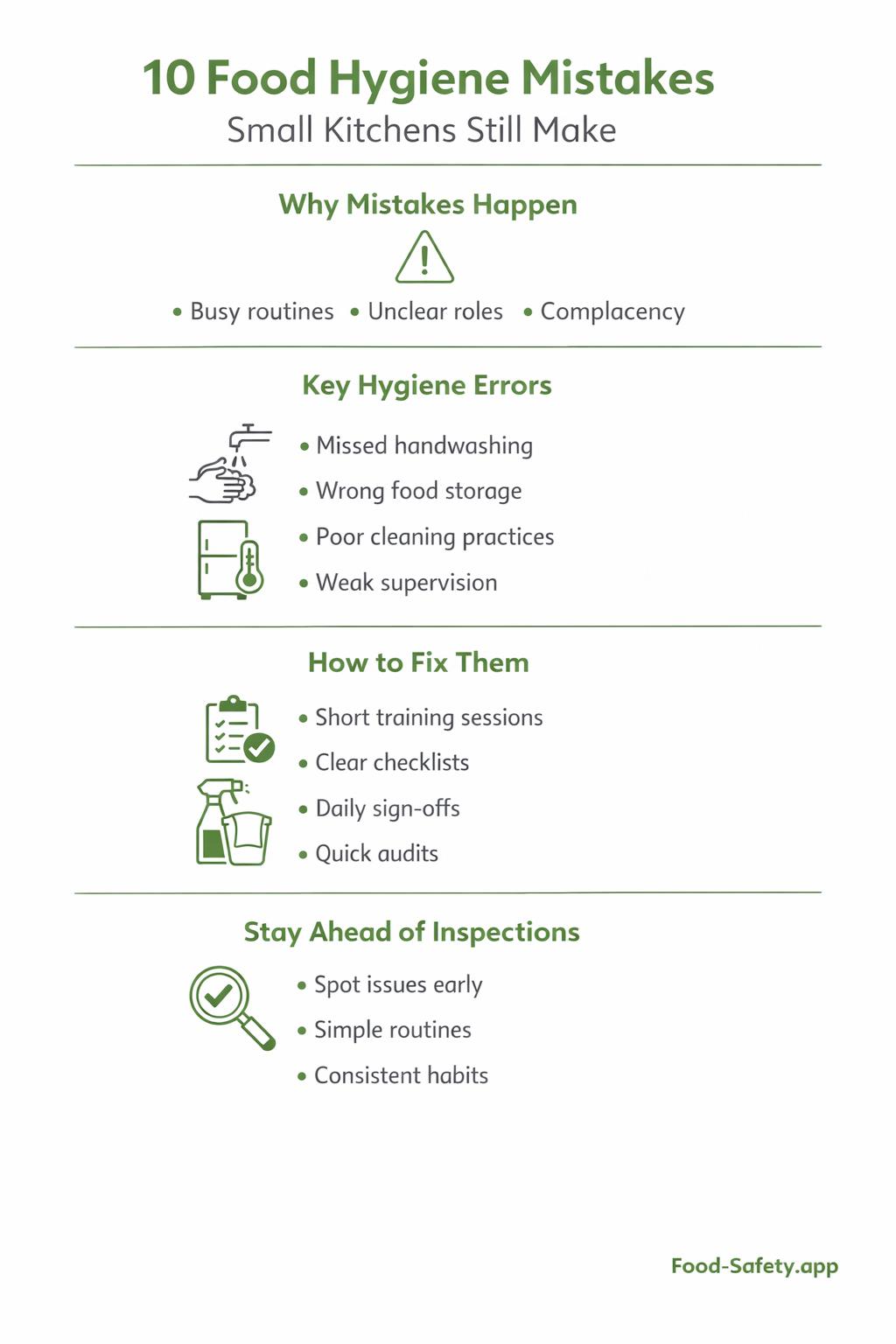
To reduce food hygiene mistakes in small kitchens, start with the basics that protect you every day: handwashing, separation, refrigeration, cooling, labelling, reheating, cleaning, allergen control and clear responsibility. Most inspection problems come from repeated small failures, not one dramatic incident.
If your kitchen is stretched thin, build systems that match the pace of service instead of relying on memory. A simple routine, a short checklist and consistent training will do more than a folder full of policies no one uses. For teams that want a structured way to keep standards visible, Food-Safety.app is a food safety management system for catering businesses.
The best kitchens are not the biggest ones. They are the ones that make safe practice easy, even when the tickets are flying in and the day is running behind.
Ready to keep standards visible?
Streamline your food safety with a structured system that fits your pace. A simple routine, a short checklist and consistent training will protect your business and your customers.