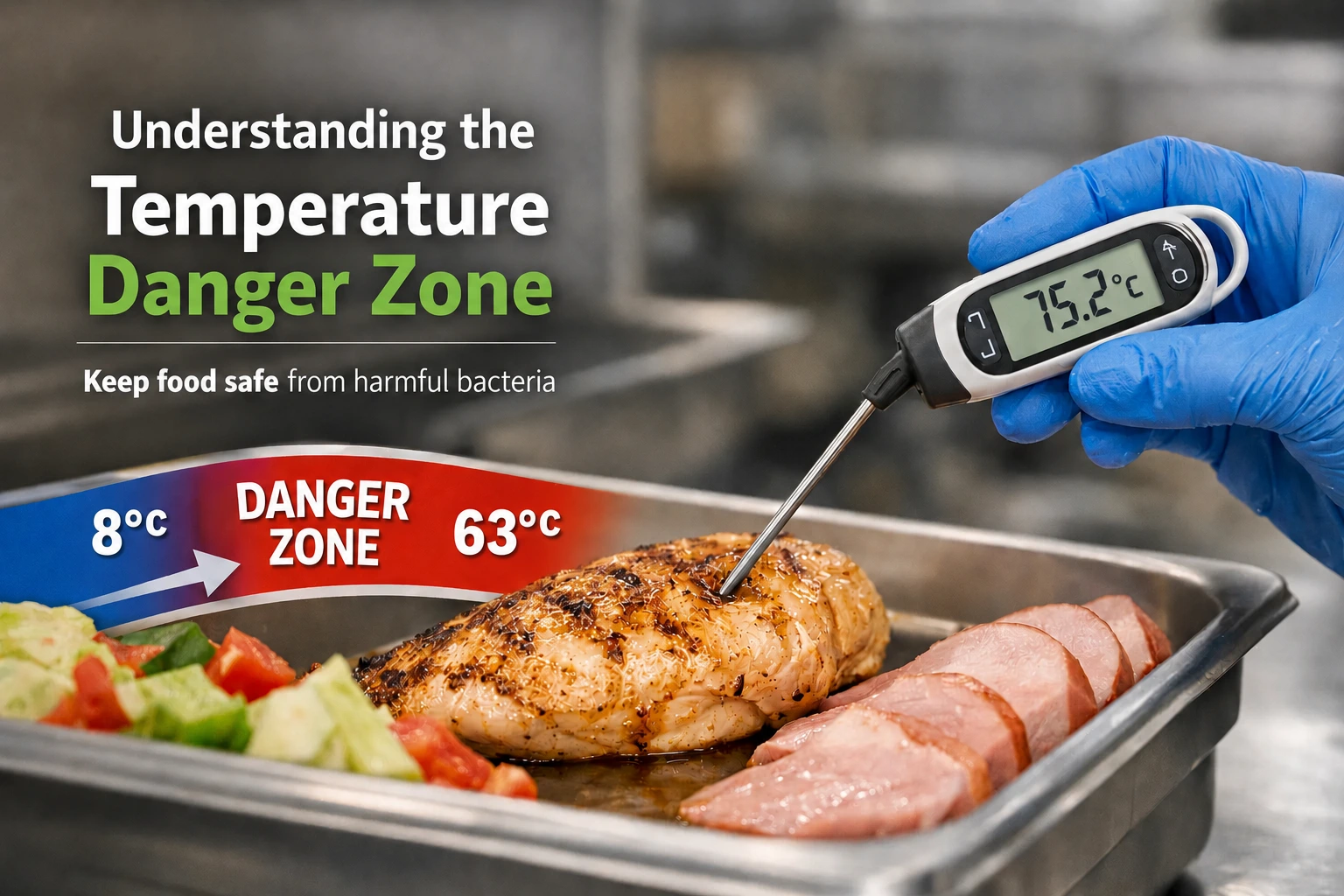
Learn what the danger zone is and how to control temperatures safely.
Table of contents
What is the danger zone in food safety?
Definition and why it matters
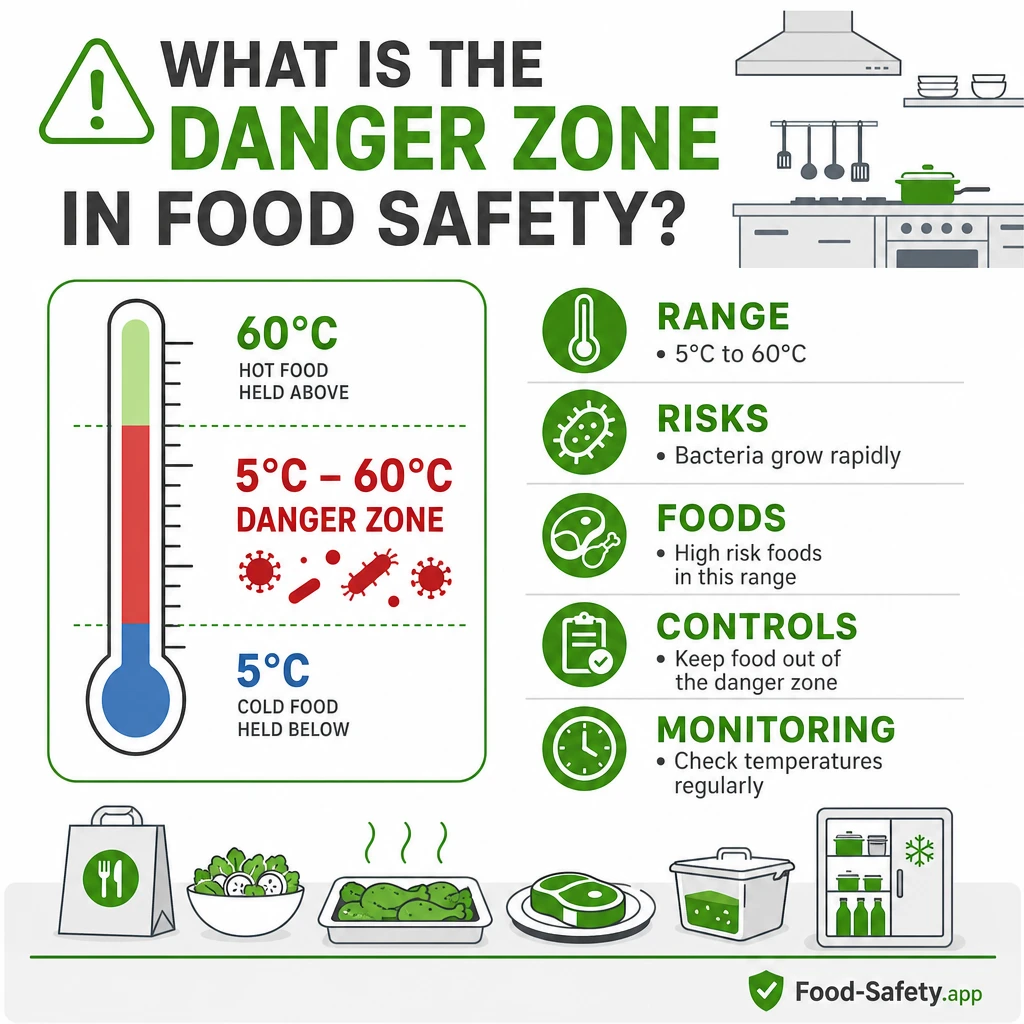
The danger zone is the temperature range in which bacteria can multiply quickly. In catering, foods that linger in this zone during preparation, cooking, cooling, storage and service pose a higher risk of foodborne illness. The faster food passes through this zone, the lower the chance of bacterial growth. Understanding the zone helps kitchen teams prioritise rapid cooking, prompt chilling and timely service decisions that prevent risky exposures. simple food safety tips for busy kitchens.
Key temperatures guidance for the UK practice
Practical targets commonly used in UK kitchens are to keep cold foods chilled at or below about 5°C and hot foods held at safe temperatures above around 60–63°C. These figures are practical targets to support HACCP plans and regular checks. Always align with your specific kitchen procedures and local guidance from your regulator or trade bodies. For official guidance, see HSE guidance on food safety in catering. For practical fridge temperature checks, see how-to-check-fridge-temperatures-properly.
Why time and temperature both matter
Temperature controls the growth potential of bacteria, but time determines how long bacteria have to multiply. A dish that is cooked properly but then kept in the danger zone for too long can become unsafe. The aim is to minimise time in the danger zone at every stage—during prep, cooking, hot holding, cooling, cold storage and during transport to customers. Documented checks give you traceable evidence that safety standards are being met and help staff stay confident during inspections.
Operational realities that challenge time and temperature
- Production backlogs that extend holding times on hot counters.
- Foils, lids and containers delaying rapid cooling or hot hold efficiency.
- High service volumes that increase the risk of doors left open or equipment misuse.
- Frequent deliveries with variable temperatures that disrupt cold storage plans.
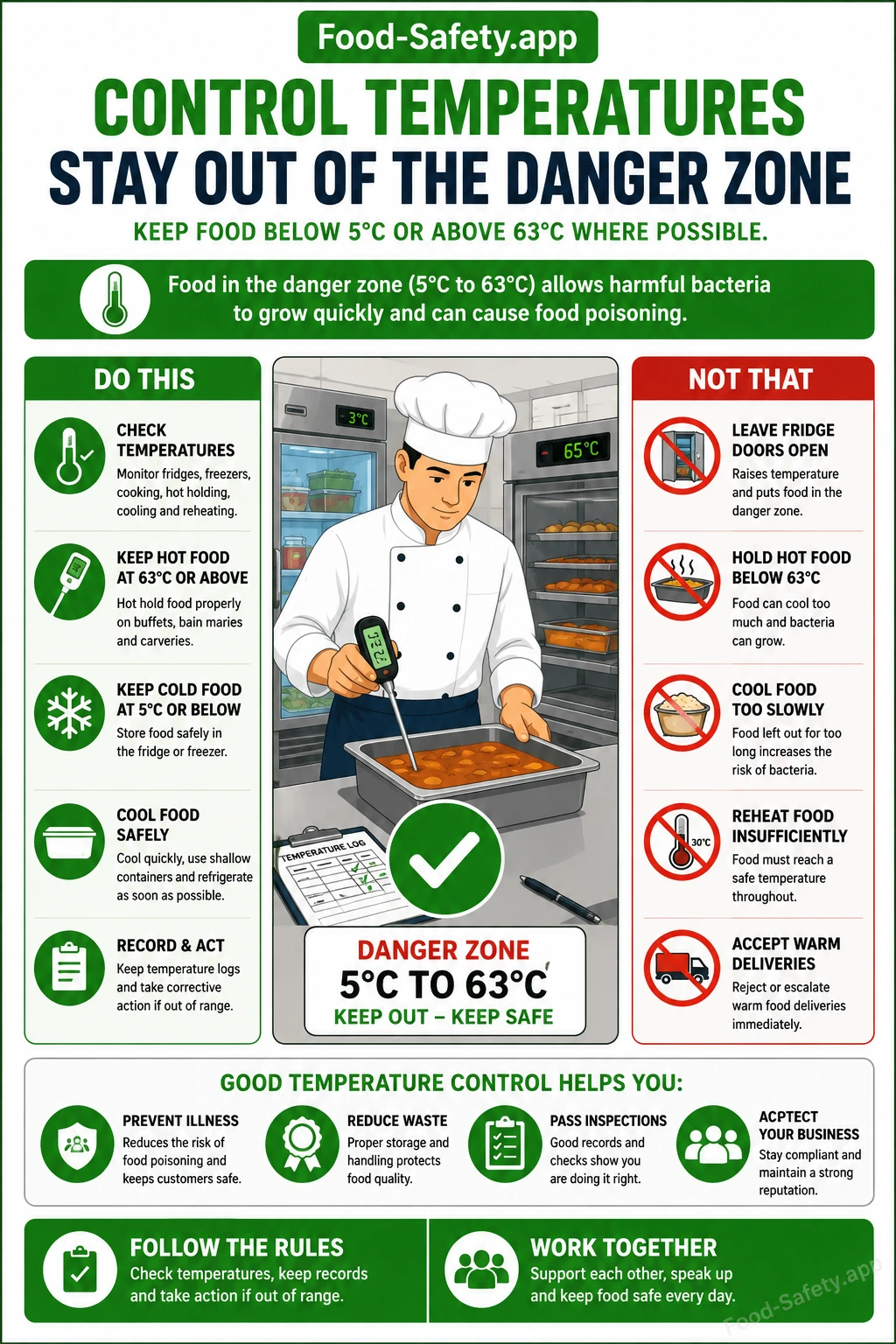
The six control points for safe handling
Cooking
- Cook ingredients thoroughly to reduce any surviving microbial load. Use calibrated probes to verify internal temperatures of the thickest parts, not just surface heat.
- Record the reading and the batch details as part of your daily logs. If a batch fails, halt service, rework or discard as per your procedure. HACCP principles explained.
Hot holding
- Keep hot-held foods above the safe threshold throughout service. Use equipment designed for hot holding and monitor at regular intervals (for example, at least every 30 minutes).
- If the temperature falls, reheat safely to a hot, even temperature before serving or relocate to immediate service. train new kitchen staff on day one.
Cooling
- Cool hot foods rapidly to reduce time spent in the danger zone. Use shallow trays, ice baths, or dedicated cooling equipment as appropriate, and stir to speed uniform cooling.
- Label and segregate foods by portion size to enable quick chilling and clear handover notes. what counts as a CCP in a small kitchen.
Cold storage
- Store perishable items in cold storage at the correct temperature and ensure doors close properly. Avoid overfilling shelves which can hamper airflow and cooling efficiency.
- Regularly verify storage temperatures and address door seals, gaskets and thermostat calibration as part of routine checks.
Reheating
- Reheat foods thoroughly so all parts reach a safe temperature throughout. Use a probe to confirm even distribution and avoid cold spots.
- Only reheat once; label and manage items that have been cooled and reheated to ensure clear traceability.
Transport
- During delivery or temporary catering events, maintain hot foods hot and cold foods cold. Use insulated carriers and confirm arrival temperature checks when possible.
- Minimise time between kitchen and customer service to prevent exposure to the danger zone in transit.
Common mistakes and corrective actions
- Cooked rice left to cool too slowly after service — action: move to rapid cooling methods, portion into shallow containers and place in cold storage; document the corrective move and communicate with the shift handover; clean to reduce allergen cross-contact.
- Fridge door left open during a busy lunch shift — action: check seals, review daily opening/closing checks, and reinforce door-closure discipline with staff reminders.
- Reheated food not reaching a safe temperature before service — action: reheat in smaller portions, verify with a calibrated probe, and remove unsafe portions from service while investigating the root cause.
- Hot food held below the required temperature on a buffet or carvery — action: discard unsafe portions, relocate items to hot holding equipment, and review portioning and replenishment timing.
- Delivery arriving warm and needing immediate rejection or escalation — action: refuse delivery or escalate for immediate segregation and return, then adjust supplier checks and goods-in procedures.
Monitoring, logs and records
Regular monitoring creates an auditable trail and supports confident decision-making during service and inspections. Use simple, consistent logs that are quick for staff to complete at shift handover or on the pass. The table below is a practical starting point for core checks.
| Stage | Target or criteria | Check frequency | Action if out of range |
|---|---|---|---|
| Cooking | Internal temp achieved and held for safe period | Per batch | Recheck with calibrated probe; separate and discard if unsafe; escalate as needed |
| Hot holding | Maintained above safe threshold | Every 30 minutes during service | Move to immediate service or reheat; log incident and corrective action |
| Cooling | Rapid cooling to safe levels | After each batch | Use cooling aids; shorten cooling time; document corrective steps |
| Cold storage | Fridge below safe temperature | Continuous with daily checks | Close door, service issue repair, log fault and action taken |
| Reheating | All parts heated evenly through | Per dish before service | Reheat thoroughly; discard if not safe; log the rework |
| Transport | Maintained temperature in transit | On every delivery | Use appropriate carriers; verify arrival temps; escalate if failing |
Building safer routines in your operation
- Define clear temperature targets for each stage: cooking, hot holding, cooling, cold storage, reheating and transport.
- Implement routine checks that staff can complete quickly at opening, during service and at handover.
- Record probe readings and calibrations regularly to keep measurements reliable.
- Log corrective actions clearly whenever temperatures fall into the danger zone, with responsible person and timestamp.
- Keep checks visible and simple to review during shift handovers, deliveries and inspections.
- Train staff with practical briefings and short checklists so safe practice becomes habit on a busy service. train new kitchen staff on day one.
Conclusion and next steps
Understanding the danger zone and applying consistent time–temperature controls across cooking, hot holding, cooling, cold storage, reheating and transport are the bedrock of safe catering. Regular checks, accurate logs and prompt corrective actions reduce waste, protect customers and increase confidence during inspections. For busy kitchens, a streamlined system helps you stay organised and focused on service quality.
Food-Safety.app, a food safety management system for catering businesses.
Explore food safety resources
Explore how Food-Safety.app can help you manage safety checks, logs and corrective actions across your kitchen operations, simplifying compliance and supporting confident service delivery.