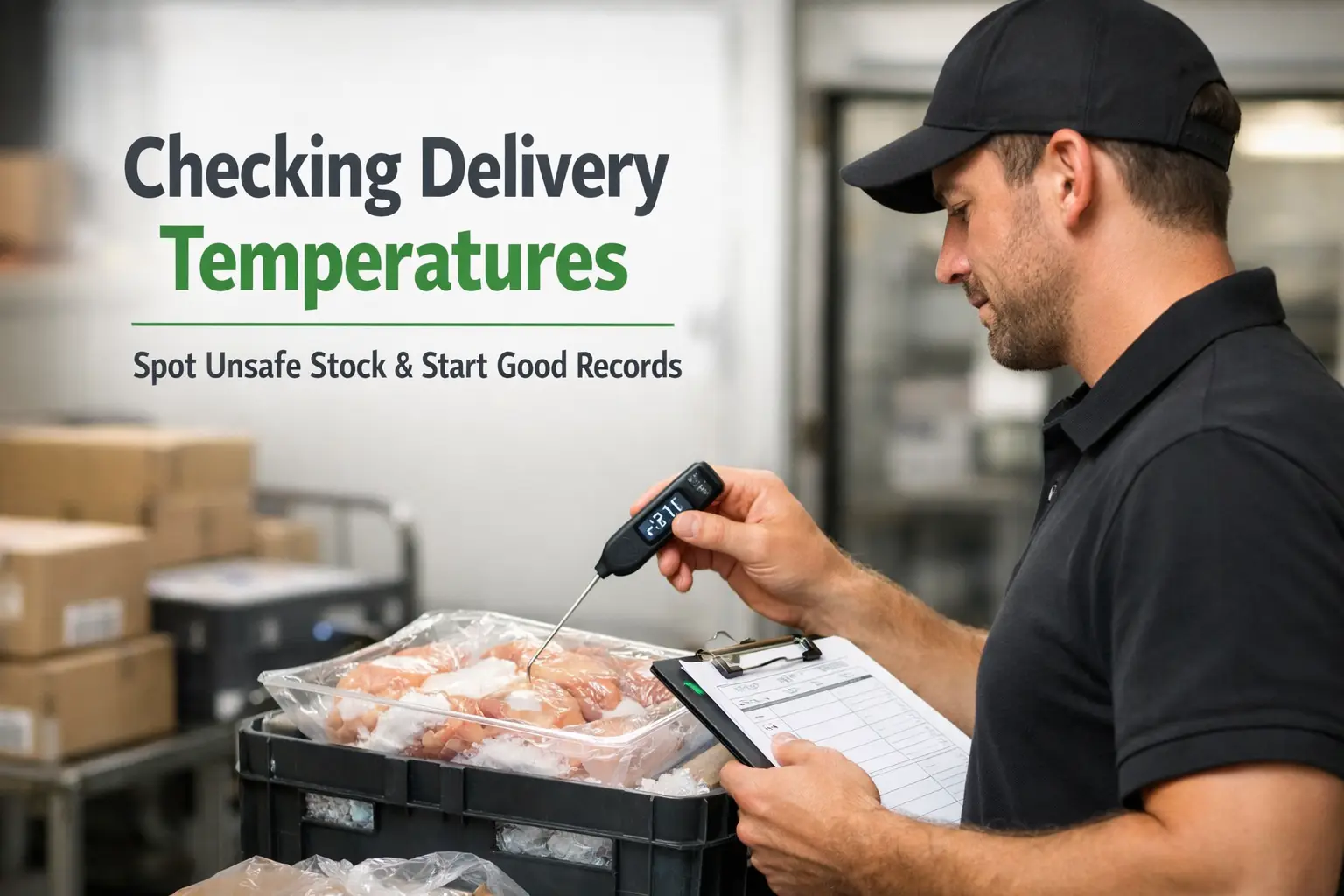
A practical guide to checking delivery temperatures at goods in. Helps small kitchens spot unsafe stock and keep better records from the start.
Why goods in checks matter
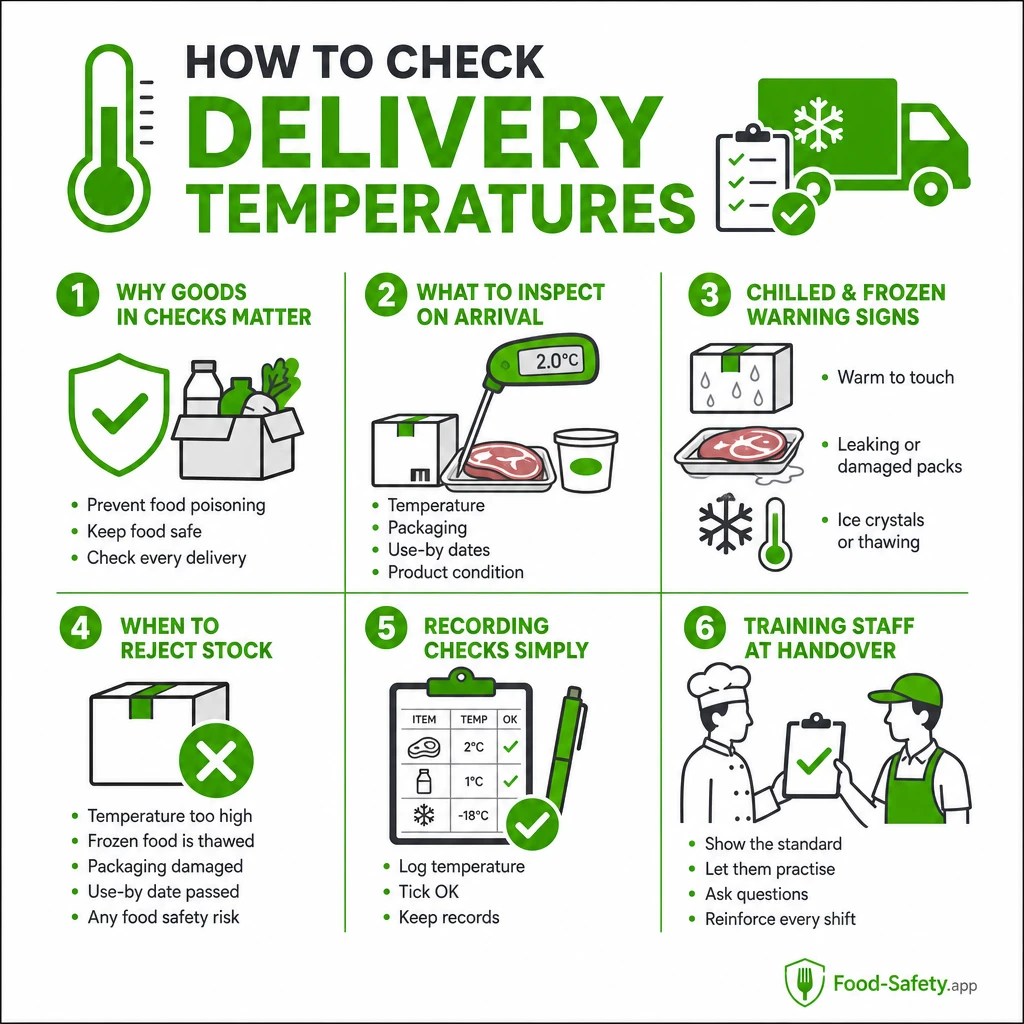
Goods in checks are a core part of food safety, stock control, and supplier accountability. By confirming the condition and temperature of goods on delivery, you create a traceable record that protects customers and supports supplier performance reviews. This routine also helps prevent stock waste and reduces the risk of unsafe product entering a busy service.
Delivery checks and stock control
When a delivery arrives, the goods in check should link safety with practical stock control. A clear record makes it easier to identify persistent delivery issues, hold suppliers to account, and demonstrate due diligence during inspections. It also speeds up handovers between shifts when there is little time for debate.
What to check on arrival
Product temperature
Readings should align with your agreed specifications: generally, chilled items should be stored at 0–5°C and frozen items at -18°C or below. If a reading falls outside these ranges, record the result and take action in line with your policy. For best practice, see how to check fridge temperatures properly.
Packaging and seals
Check for intact packaging, clear seals, and no signs of tampering. Damaged packaging can indicate contamination risk, while broken seals may compromise safety even if temperatures look acceptable. Note any compromise and escalate as required. For digital records, see digital food safety records.
Use-by dates and labelling
Verify use-by dates are legible and unexpired. Mislabelled or unclear dating should trigger a hold and an immediate investigation with the supplier. Clear labelling supports traceability during audits and recalls. Natasha’s Law for small food businesses.
Cleanliness and signs of thawing
Assess cleanliness of packaging, outer cartons, and the delivery vehicle. Look for signs of thawing in transit, such as moisture on outer packaging or condensate on cold items. Any evident thawing or post-thaw refreezing signs require action to protect safety and quality. Cross-contamination risk guidelines.
Vehicle condition
Where relevant, inspect the vehicle for cleanliness, temperature control indicators, and evidence of exposure to heat or pests. A poorly conditioned vehicle may negate good temperature readings once goods are indoors. See date labeling considerations: date labels that stop food being served too late.
Chilled stock warning signs
- Warm packs or elevated surface temperatures on arrival
- Condensation inside packaging or on outer cartons
- Soft texture or rapid perspiration of chilled products
- Slimy surfaces or unusual stickiness
- Strong, unusual odours
- Damaged or breached chill chain during transit
Frozen stock warning signs
- Partial thawing or uneven texture in ice-affected items
- Ice build-up on packaging or frost inside cartons
- Packaging is wet or damaged by meltwater
- Centre of product is soft or slushy rather than firm
- Evidence of refreezing, such as crystallisation or freezer burn
When to reject stock
- Out-of-spec temperature on arrival
- Damaged packaging or compromised seals
- Contamination risk evident from leakage, odours, or mould
- Unclear or illegible labelling
- Poor hygiene or evident contamination risk on delivery
How to record delivery checks
Keep records simple, consistent, and easy to review. A straightforward goods in check should capture the essential information without slowing service.
- Record the delivery date and time, supplier, and vehicle details.
- Record the product names, quantities, and batch codes where provided.
- Take temperature readings for each ambient, chilled, and frozen item as applicable.
- Note the condition of packaging, seals, dates, and any signs of thawing or damage.
- Indicate acceptance or rejection and the reason for any action taken.
- Sign or initial the entry to confirm the check was completed.
- Keep reference to any corrective actions taken and any follow-up required with the supplier.
| Item | Temperature | Condition | Action |
|---|---|---|---|
| Chilled chicken fillets | 6°C | Sealed packaging intact | Accept |
| Frozen desserts | -20°C | Ice build-up on packaging | Reject and escalate |
| Whole milk | 4°C | Clean packaging, date legible | Accept |
Training and handover
- Provide a clear, simple receiving rulebook for all staff
- Use a short, practical delivery checklist with fields for temperature, condition, and acceptance or rejection
- Document corrective actions and keep them accessible for audits
- Link goods in checks to supplier management and audit readiness
- Empower team leaders to train new starters on arrival checks quickly
For quick staff onboarding, see how to train new kitchen staff on day one.
Practical scenarios
- Chilled chicken delivered above safe temperature with damaged packaging: reject and record
- Frozen desserts arriving soft at the edges after a late delivery: check, photograph if needed, and escalate
- Fresh dairy accepted only after temperature check and clean condition confirmed
- Busy lunch service delivery left waiting in the corridor: spot the risk and act fast
Compliance focus
- Set clear receiving rules for all staff
- Use a simple delivery checklist with temperature, condition, and acceptance/rejection fields
- Keep a record of corrective action where stock is refused
- Link goods in checks to supplier management and audit readiness
- Ensure team leaders can train new starters on arrival checks quickly
Conclusion
Establishing robust delivery temperature checks supports safe food, efficient stock control, and clear supplier accountability in a demanding catering environment. Use practical routines, simple recording, and timely escalation to stay compliant during busy service. For official guidance on temperature control, see the Food Standards Agency.
For teams seeking digital support, Food-Safety.app is a food safety management system for catering businesses.
Food safety management resources
Access practical tools and guidance to run safe deliveries, maintain records, and stay compliant across busy service periods in catering operations.