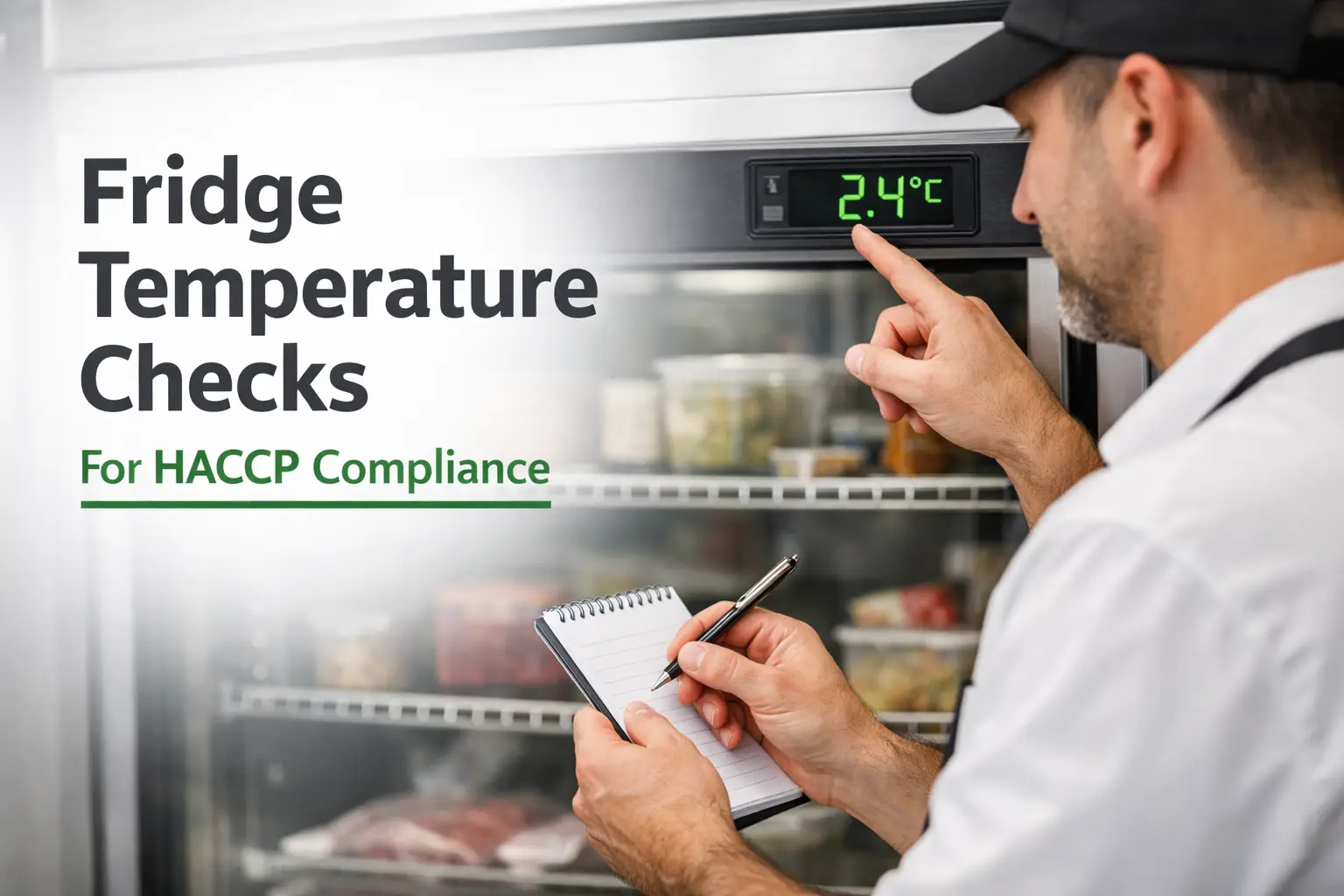
Temperature checks only help when they lead to action. Learn how small food businesses can monitor fridges properly and respond before food is lost.
What good monitoring looks like
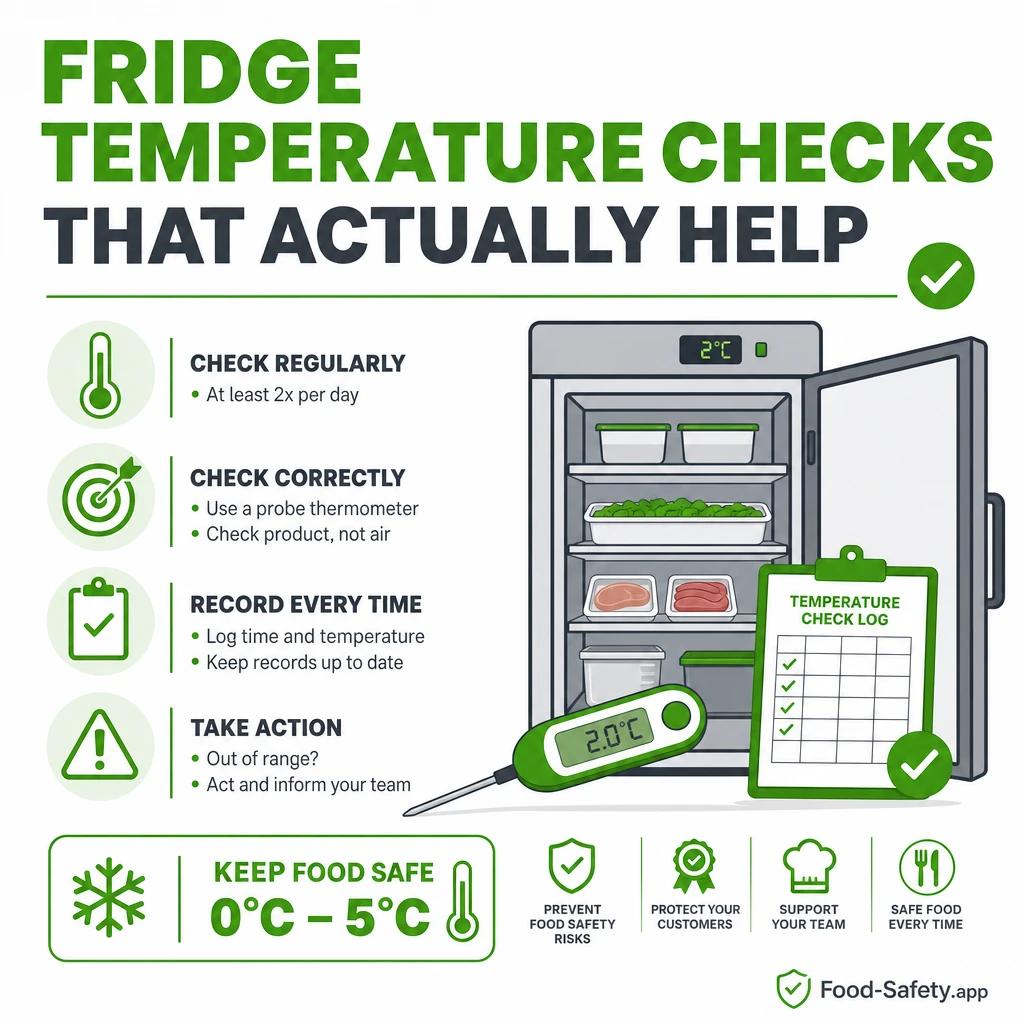
Good fridge monitoring starts with a simple, repeatable routine. Checks happen at predictable times, with clearly defined action limits and automatic timestamping to build a reliable history. Staff should know where probes live, how to read them, and what steps to take if a reading is out of range. A consistent process reduces guesswork during service and makes audits smoother. HACCP records guidance.
Key practices include assigning responsibility to a single shift lead, performing checks at the same point in service every day, and recording results in a central log. Where possible, use probes that automatically log the time and temperature, so staff aren’t left with manual data entry during a rush.
Practical tip: keep a small laminated checklist by each fridge and a digital log that links to the HACCP plan. For official guidance on temperature control, see the Food Standards Agency guidance on temperature control.
Safe limits and trend insights
Define safe targets per unit and monitor both minimum and maximum readings. Tracking trends over a shift or a day helps you spot drift before it becomes a risk. A stable trend with occasional minor fluctuations is normal, but persistent changes or repeated excursions signal equipment issues or improper usage.
Implement a simple policy: each unit has a clearly posted target, a documented minimum, and a documented maximum. Staff should review recent readings to confirm that the appliance is performing within limits and that door usage is consistent. Regularly review historical records to confirm that drift isn’t creeping across several days or services.
What to do when readings drift
- Cease use of the affected area if readings are clearly out of range or readings are inconsistent.
- Verify probe accuracy—swap in a known-good probe or calibrate if the equipment allows.
- Recalibrate or adjust setpoints if permitted by the appliance and if readings align with expected performance.
- Log corrective actions: date, time, who performed them, and what was done.
- Review affected product: determine if items were stored during the drift and assess safety risk before service reuse or disposal.
Documenting these steps creates a transparent trail for audits and helps prevent repeat incidents. Where helpful, link corrective actions to a broader HACCP risk assessment to show how the control measures address specific hazards.
Breakdown warning signs
Watch for warning signs that indicate equipment or environmental issues. Inconsistent readings, sensor faults, or rapid fluctuations may point to faulty sensors, door seal problems, power interruptions, or airflow restrictions. A dragging door gasket or a dirty condenser can cause drift that compounds during opening and closing cycles.
Set up a quick diagnostic routine: inspect door seals, verify airflow around the fridge, and confirm that power supplies are stable. When you see more than occasional spikes, escalate to maintenance and review the equipment’s health history before the next service window.
Record keeping and audit readiness
Rely on auto timestamps wherever possible and maintain a full historical log. The ability to export PDFs for audits and attach records to an overarching HACCP plan and risk assessments saves time and reduces stress on inspection days. A linked, traceable record of calibrations, corrective actions, and product checks demonstrates due diligence and operational discipline.
Avoiding false confidence
False confidence comes from infrequent calibration and inconsistent use of tools. Calibrate probes regularly, cross-check readings with a secondary thermometer, and invest in staff training so everyone understands the limits and the steps to take when readings drift. Keep offline verification methods as a backup to ensure data integrity if power or network issues arise during service.
Training should cover how to read probes, how to document actions, and how to react to abnormal results. A small, dedicated checklist reduces the likelihood of missed steps and supports a steady, audit-friendly routine.
Scenarios in practice
- Scenario 1: Lunch rush pushes fridge to 6°C. Action: verify probe, check door gasket, document corrective action, and adjust cooling if needed.
- Scenario 2: Reading drifts from 3°C to 5°C over a shift. Action: calibrate, check condenser or airflow, and review recent door openings.
- Scenario 3: Persistent 2–3°C swings after a door left ajar. Action: reinforce SOPs, log incident, and review equipment health.
These practical examples translate policy into daily routines that support quick, safe decision-making during service.
Putting it into practice
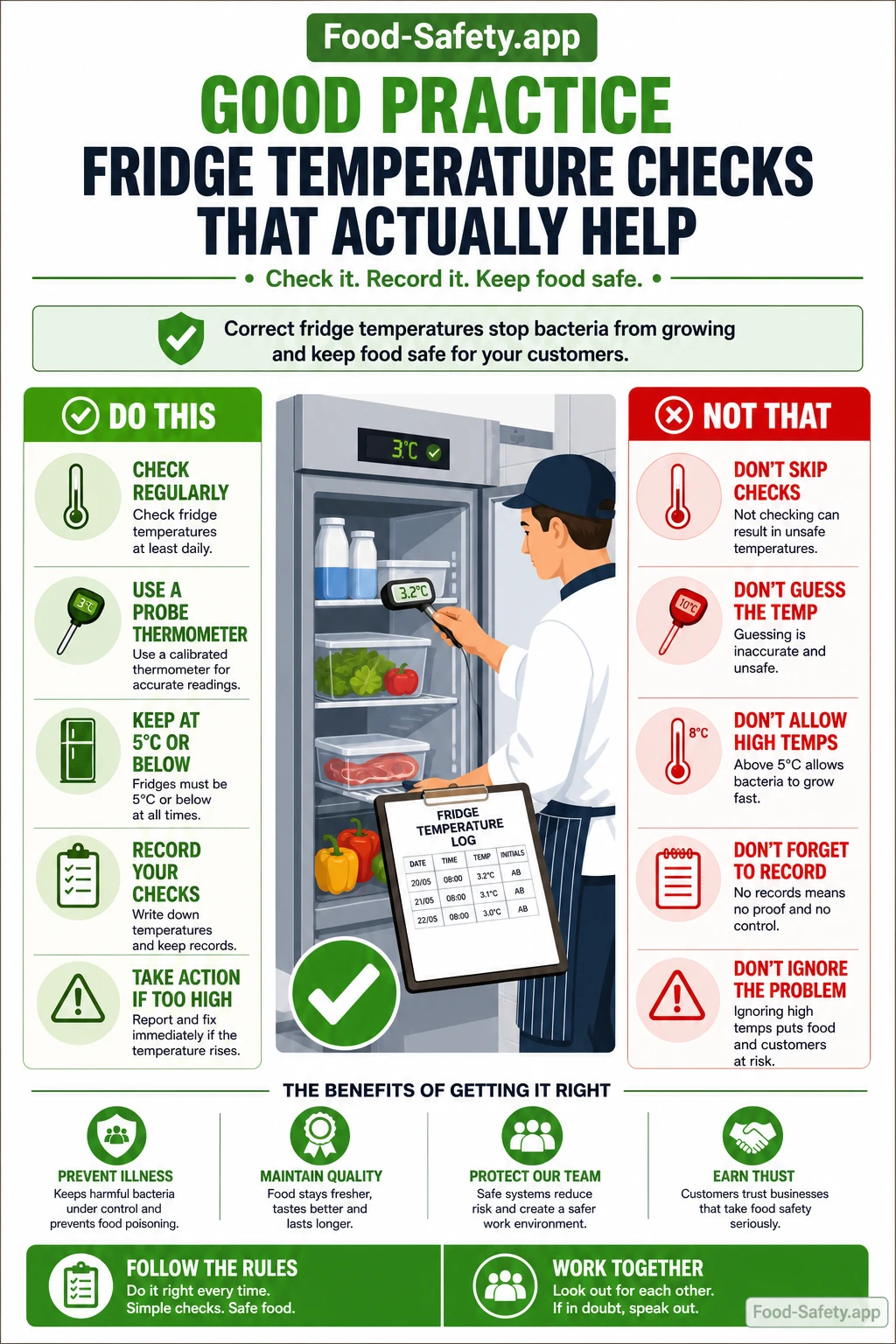
Implementing robust fridge temperature checks is a longer-term operational investment. Create a written standard operating procedure, assign responsibilities, and set a cadence for calibration and reviews. Ensure staff have access to the logs during service and that data can be exported for audits with minimal friction.
This aligns with essential food safety basics for small businesses.
Learn more
Discover practical steps for implementing robust fridge checks in small kitchens and keeping audits smooth with records and proactive action.