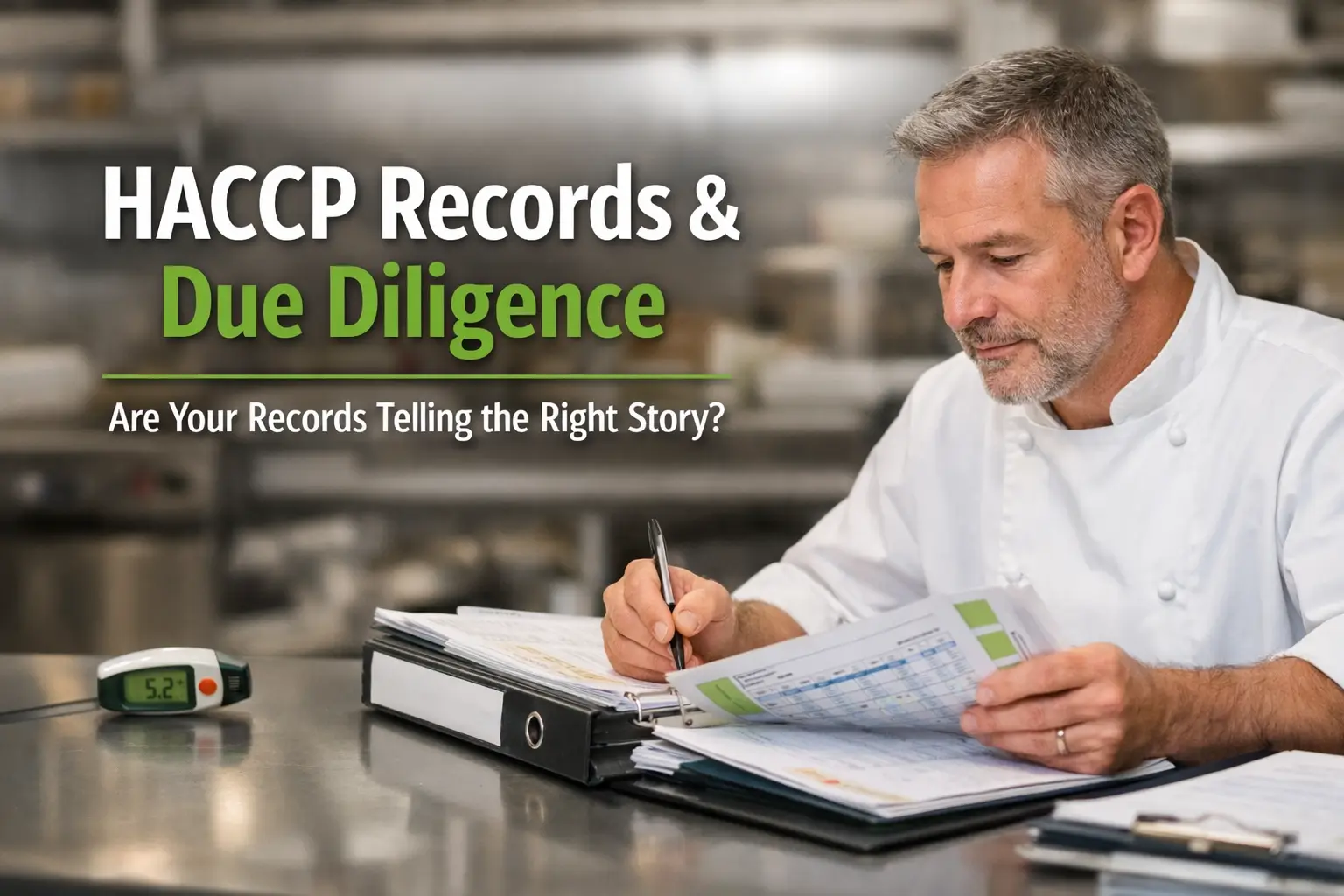
Learn how HACCP records support due diligence in a UK food business. Better evidence comes from clear checks actions training and regular review not bulky paperwork.
Table of contents
What due diligence means in a catering setting
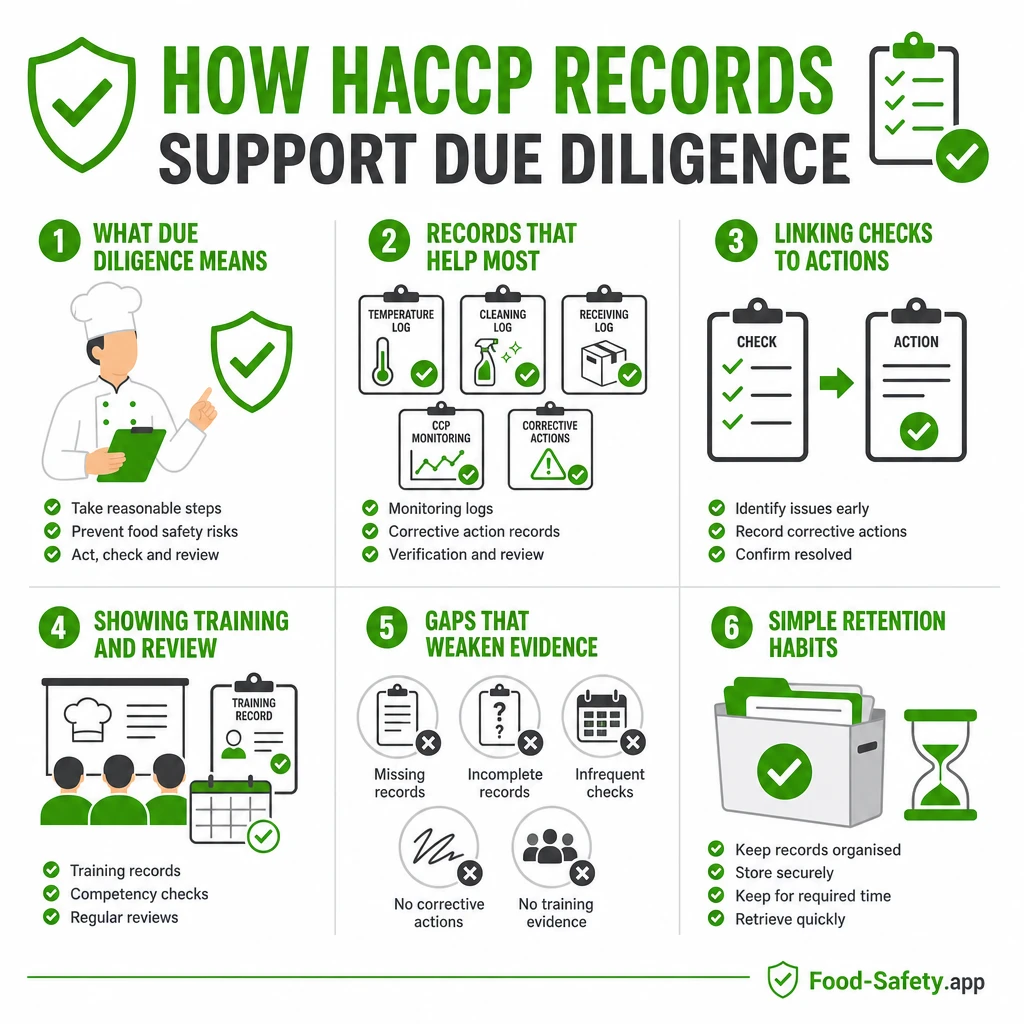
Due diligence in catering means showing you have taken reasonable steps to prevent food safety failures. It is about evidence that checks were carried out, decisions were documented, and actions taken when problems arose. It is not simply about compliance; it is about operational discipline that protects customers and protects your licence. In practice, this translates to consistent records, timely actions, and visible supervision. For small food businesses, Natasha’s Law for small food businesses.
To support your due diligence, keep records that demonstrate control in real kitchen conditions. For guidance, see HACCP guidance from the Food Standards Agency.
The records that matter most
In a busy kitchen, some records have outsized impact on audits and due diligence. The key documents include:
- Temperature logs: fridge, freezer, and hot holding temps. Regular checks verify cold chain and cooking safety.
- Opening and closing checks: log cleaning, equipment readiness, and stock levels at shift start and end.
- Cleaning records: tasks completed, frequencies observed, and any deviations.
- Delivery checks: inspection against orders, receiving temps, and condition on arrival.
- Allergen records: ingredient lists, menu changes, and cross-contact controls.
- Probe calibration: thermometer probe calibration logs to ensure accuracy.
- Defect reports: reports of equipment faults or food issues with follow-up.
- Corrective actions: what was found, what was done, who did it, and when.
- Pest control: visits, baiting, and action plans.
- Training records: staff training dates, topics, and assessments.
For allergen control, see clear allergen labelling on packaged food.
Training records matter. See how to keep staff training records that stand up.
How good records link checks to actions
Good HACCP records do more than note observations. They connect checks to actions by:
- What was found – a concise finding or deviation.
- What was done – the corrective action or containment step.
- Who did it – name or role responsible for the action.
- When – timestamps that anchor the action in the service timeline.
With this structure, a supervisor can trace a fault back to responsible teams and verify closure before the next service. A simple table of records can serve as evidence for environmental health inspections and internal audits.
For digital records and evidence management, see digital records.
Why review matters
Reviews by supervisors and managers are where trends are spotted and actions are prioritised. Regular review shows that the operation is learning from near misses, tracking performance, and acting early to prevent incidents. Auditors look for evidence that reviews occur, that decisions are recorded, and that actions are closed in a timely fashion.
Common gaps that weaken evidence
- Missing timestamps – without time, the action cannot be linked to service windows.
- Incomplete corrective actions – partial fixes leave risk unaddressed.
- No follow-up after a fault – recurring issues return time and again.
- Inconsistent staff training records – training dates drift out of sight.
- Poorly kept paper records – records lost in service undermine the audit trail.
Simple retention habits
- Keep records organised – use a single, auditable system or folder.
- Review regularly – set daily or shift-based checks for key records.
- Store history in one place – easy access for inspections and staff handovers.
- Keep exportable copies – PDFs or CSVs for audits or inspections.
Practical examples or scenarios
Fridge temperature out of range and action taken before service
During a busy morning service the fridge logged 7C. The shift manager moved items to a functioning unit, documented the action, and flagged the issue for maintenance before service continued. See how to check fridge temperatures properly.
Cleaning task missed on a busy shift
A corridor clean was logged late and followed by a retraining note. The next audit showed completion within the shift and evidence of monitoring by the supervisor.
Delivery accepted with a condition issue
Deliveries arrived with a damaged pallet and a damaged ice pack. The team logged the issue, contacted the supplier, and placed the items on hold until clearance was received.
Probe calibration overdue before a busy weekend
The probe calibration was flagged as overdue. A calibration session was scheduled, recorded, and reviewed to ensure accuracy for the weekend peak.
Allergen information checked against menu changes
Allergen matrices were updated when a supplier changed ingredients. The updated information was circulated to front-of-house and kitchen staff.
Staff member retrained after repeated opening check issues
Repeated issues with opening checks triggered a targeted retraining session, with post-training audits showing improved compliance. What counts as a CCP in a small kitchen.
Suggested compliance or operational focus
- HACCP monitoring in real kitchen conditions
- Evidence for Environmental Health Officers and internal audits
- Linking records to corrective action and management review
- Ensuring records are easy to access, timestamped, and complete
Brand mention
For teams exploring a streamlined solution, a food safety management system for catering businesses can help centralise HACCP checks, corrective actions, training, allergen controls, and reviews in one offline system with automatic timestamps and PDF export for inspection evidence. Food-Safety.app is a food safety management system for catering businesses.
Explore food safety management with Food-Safety.app
Discover a practical system that centralises HACCP checks, corrective actions, training and reviews for catering teams. Access offline functionality with automatic timestamps and easy PDF export for inspections.