
Cleaning records support due diligence when they reflect real work. Learn what to record and how to show action when standards slip.
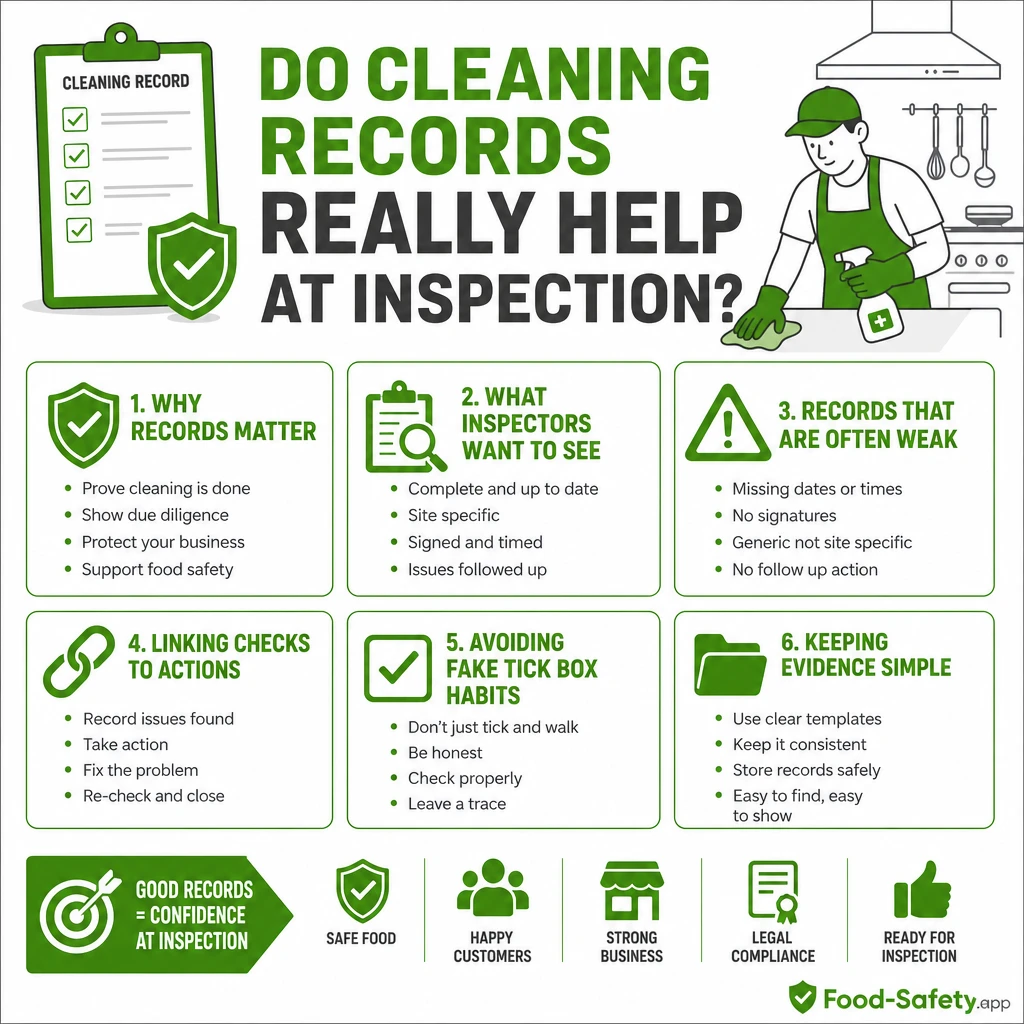
Table of contents
What inspectors want to see in cleaning records
Inspectors look for evidence that cleaning is planned, executed and reviewed. A robust record shows not only that tasks exist, but that they are completed, dated, signed off and followed up when issues arise. Key elements include a clear cleaning schedule, completed checks, precise dates and times, named responsibility, and documented follow-up actions where needed. For guidance on allergen control, see how cleaning stops allergen cross-contact.
What to include in records
- Specific tasks for routine, deep and corrective cleaning
- Dates and times of completion
- Name or initials of the person responsible
- Sign-off indicating task completion
- Any follow-up actions or rechecks required
How to structure checks for fast review
Use a simple tabular format or a one-page checklist per shift. Keep each entry concise but informative, and always record deviations together with the actions taken immediately so reviewers can quickly follow what happened.
Why weak records fail during an inspection
Weak records are a common source of concern for EHOs. They often reflect hurried, incomplete or superficial practices that undermine confidence in control measures. Typical fail points include blank sheets, identical handwriting across days, missing signatures, no proof of completion, and no recorded action after missed tasks. Cross-contamination risks can be overlooked when records lack detail or fail to show follow-up actions.
Common failure patterns
Common problems include blank or missing records for a shift, repeated signatures without evidence of actual checks, missing sign-off confirming completion, delays between identifying and resolving defects, and failures to document corrective actions or rechecks after issues.
Linking checks to actions
Checks should always connect to concrete actions. If a task is missed, a defect is found or a hazard is identified, record what happened and what was done next. This creates a traceable sequence from detection to resolution and shows a proactive approach to control. See how HACCP records support due diligence for context.
How to link checks to responses
Note the exact defect or gap, record the corrective action taken, document the outcome and date of any recheck, and indicate whether further action is required together with who is responsible.
Avoiding fake tick-box habits
Tick-box signatures should reflect real cleaning, not rushed daily initials. Rushed signatures undermine credibility and can lead to misinterpretation during an inspection. A good record captures the why, not just the that. For practical retention guidance, refer to retention practices in industry guidance.
Practical ways to keep records honest
Encourage brief notes alongside each tick explaining what was done, require a short description whenever a task is missed, use a consistent format that is easy to review, and periodically audit records to confirm entries reflect genuine activity.
Keeping evidence simple
Evidence should be focused and practical. Rather than dozens of forms that nobody uses, concentrate on a few high-risk areas and essential tasks. Simple records that are easy to review save time for staff and inspectors alike. For regulatory alignment, see the guidance on responsibilities and record-keeping.
Principles of simplicity
- Limit the number of forms to what is actually used.
- Combine related checks where sensible.
- Keep templates easy to understand.
- Ensure records remain readable for inspection review.
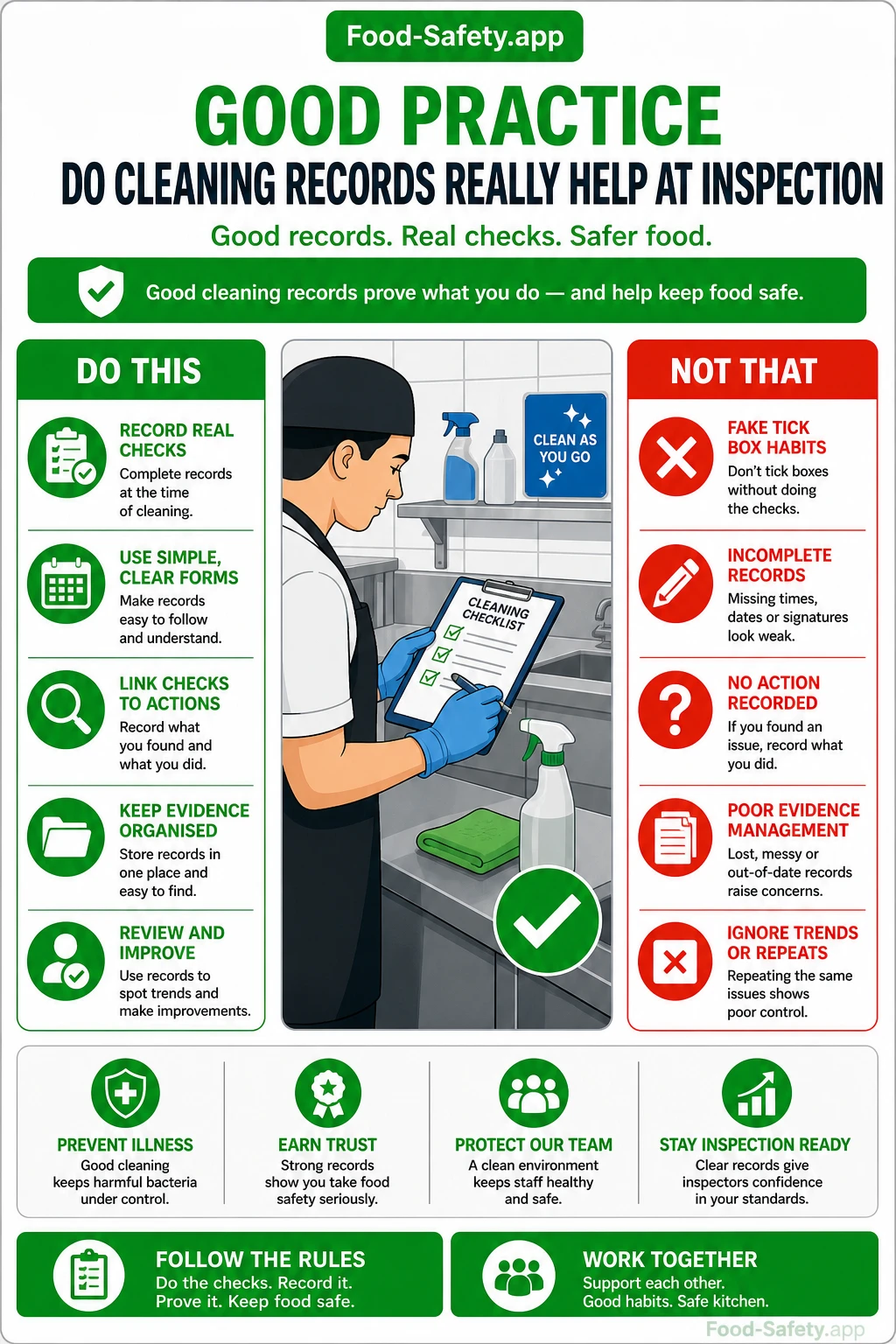
Practical examples and scenarios help translate theory into daily practice. Use these situations to shape your cleaning records so they reflect actual workflows. For deeper guidance, see relevant best-practice resources.
Practical examples and scenarios
Scenario 1: fridge miss after busy service
During a busy lunch service, a fridge cleaning task is missed. Record the miss, assign the action (re-clean and re-check within the shift), and log the completion time. Include who approved the corrective action and the recheck result.
Scenario 2: canopy grease build-up behind equipment
Note the defect in the area, log the scheduled clean, and record when it was completed. Capture the operator who verified cleanliness and the date/time of re-inspection.
Scenario 3: opening and closing checks
Opening checks confirm standards at start of service; closing checks verify end-of-day cleanliness. Record both, with time stamps and signatures, to demonstrate continuous control across service.
Scenario 4: deep-clean after a busy weekend
Record the deep-clean task, assign to a supervisor, and log the completion and any follow-up actions. Include a brief review of whether any equipment required maintenance as part of the action plan.
Compliance focus routines and best practices
A practical approach combines routine, deep clean and corrective action evidence. Tailor checks to your site, ensuring you have daily, weekly and monthly tasks, plus any custom jobs that reflect your operation.
Recommended formats include a one-page daily log covering routine and corrective actions, a weekly deep-clean section for high-risk zones, and a defect and action log to track issues and responses. Site-specific checks should cover daily, weekly, monthly and any custom seasonal tasks. Record-keeping should always include timestamps, clear responsibility, visible evidence of completion or recheck, and immediate documentation of deviations together with corrective steps.
Implementation tips for busy teams
Operationally simple processes help busy teams maintain inspection readiness without adding excessive workload. Build a routine that integrates with service workflows and minimises duplicate effort. For retention guidance, see what to keep and for how long.
Opening checks should confirm temperature logs, equipment cleanliness and readiness for service while identifying defects for immediate action. Closing checks should record completed or deferred cleaning, end-of-day inspection notes and follow-up dates before securing records for the next shift. Daily, weekly and monthly routines should include surface cleanliness, utensil hygiene, waste handling, canopy and behind-equipment areas, door seals, ambient storage, deep-clean activities, filter checks and ventilation hygiene.
Conclusion and next steps
Clean records that show clear intent, timely action and accountable ownership are a reliable indicator of control for any catering operation. By keeping records simple, actionable and inspection-ready, you reduce risk, improve staff habits and streamline audits. For teams looking to streamline this further, a practical tool can help maintain consistency and provide a full history view for reviews, audits and non-conformance handling. For regulatory guidance, consider the implications of responsibilities and best practices in your region: the law and your responsibility.
Food-Safety.app is a food safety management system for catering businesses.
For official guidance on best practices and regulatory expectations, see the Food Standards Agency’s guidance for business owners and operators: Food Standards Agency: business guidance.
Learn more about cleaning records
Keep your cleaning records consistent, practical and inspection-ready with tools designed to support everyday operations. Build reliable evidence of completed work, corrective actions and ongoing compliance while giving your team an easy way to maintain accurate records and prepare confidently for audits.