HACCP monitoring checks are the real-time controls that keep a busy catering operation safe. This article explains which checks matter, how often to run them, and how to record them without adding admin burden. By focusing on real risks, teams stay traceable, inspection-ready, and able to serve confidently. These are the HACCP monitoring checks you actually need in daily cooking and service.
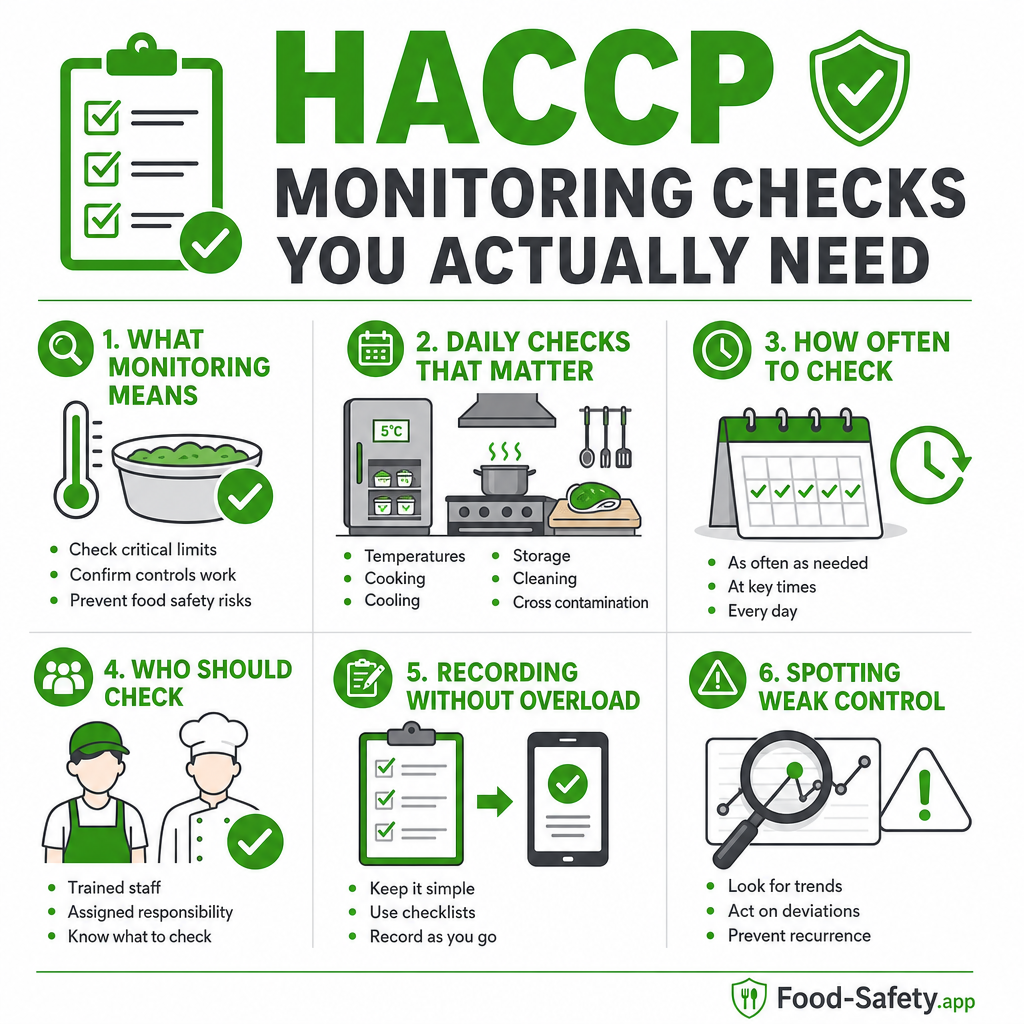
In practice, HACCP monitoring is about watching the controls that keep food safe as service runs. It isn’t just a nightly task; it’s an ongoing habit. Monitoring records show whether controls are operating within approved ranges, when to act, and how trends emerge over shifts. The goal is to prevent deviations before they turn into incidents, not to discipline teams after the event. HACCP principles.
Key monitoring activities include cooking and hot holding, cooling and cold storage, reheating, deliveries, cleaning, allergen checks, probe calibration, pest sightings, and equipment defects. Treat each as a live signal in the kitchen, not a checklist to tick off once a week.
Key monitoring activities
- Cooking temperatures and hot holding during service
- Cooling of cooked foods after preparation
- Cold storage conditions in fridges and freezers
- Reheating of ready-to-eat items
- Delivery checks on chilled or ambient goods
- Cleaning schedules and sanitation checks
- Allergen controls when menus change
- Probe calibration before shifts
- Pest sightings and equipment defects
The following table outlines typical monitoring areas and why they matter, without tying you to fixed numbers. Use your approved targets within your HACCP plan and document any deviations with corrective actions.
| Check | Frequency | Purpose | Notes |
|---|---|---|---|
| Cooking temperatures | Per batch or service | Ensure safe core temperature for each dish | Record time, dish, and outcome |
| Cooling process | After cooking, per batch | Control cooling rate to prevent growth of pathogens | Note start and finish, adjusted if necessary |
| Cold storage | Per shift | Maintain cold chain in chillers | Record fridge/freezer status and door checks |
| Reheating and hot holding | Per service | Keep food safe during service | Record temperatures and holding times |
| Delivery checks | Per delivery batch | Verify delivered goods arrive at safe temperatures | Log transit times and condition |
| Cleaning and sanitation | Daily | Reduce contamination risk | Document cleaning tasks completed |
| Allergen checks | With menu changes | Prevent cross-contact | Note any substitutions or new ingredients |
| Probe calibration | Before shifts | Ensure readings reflect true temperatures | Calibration certificate reference |
| Pest sightings | As reported | Detect harbourage early | Log location and action taken |
| Equipment defects | As observed | Prevent contamination from faults | Record fault, action, and revisit date |
These checks form the backbone of daily safety management. They should be practical, not an administrative drag, and should feed into a clear corrective-action process when deviations occur. For simple safety tips for busy kitchens, see simple safety tips for busy kitchens.
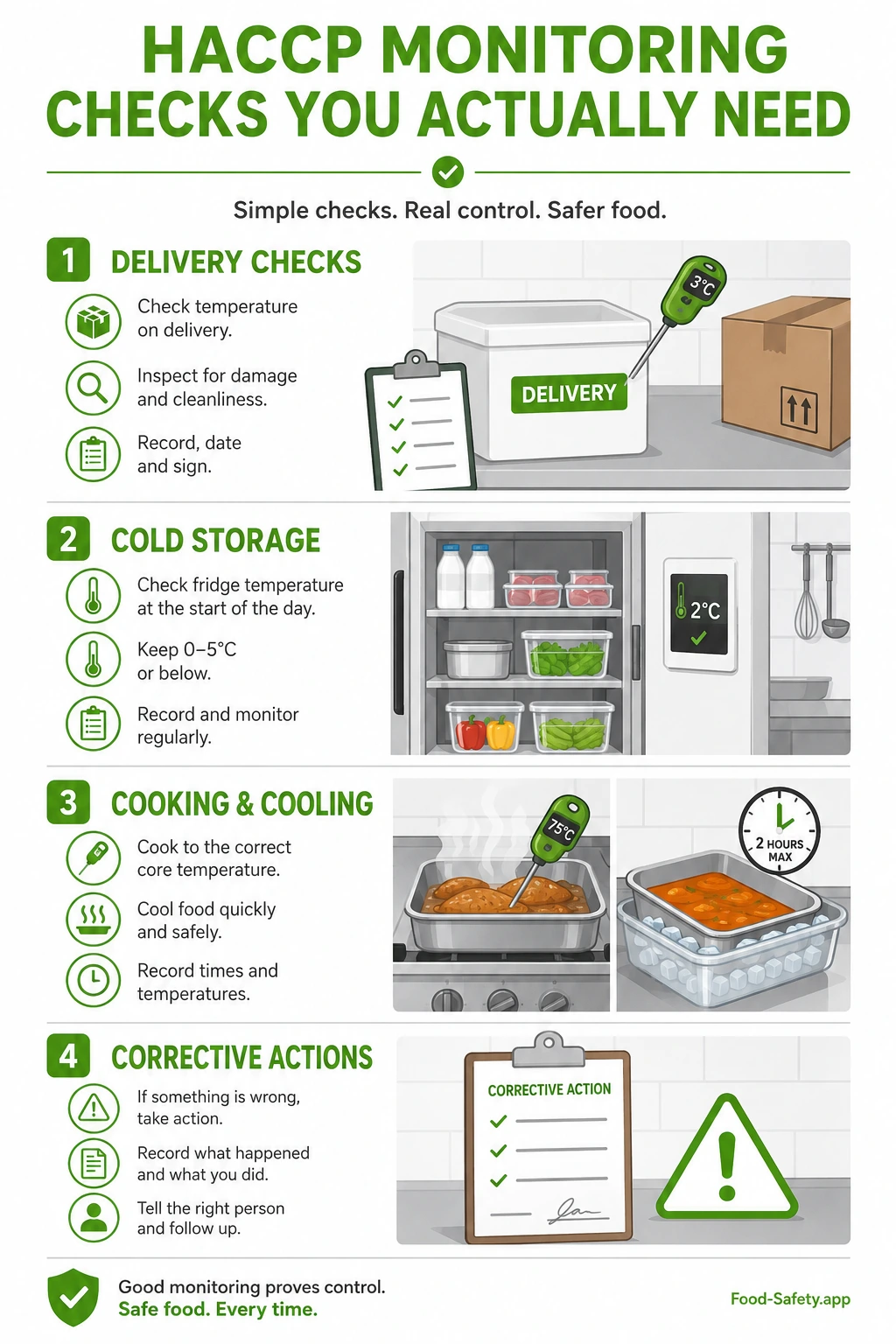
Frequency should reflect risk, activity level, and service volume. Start with high-risk areas and dynamic processes, then tailor by what is typical for your operation. A simple approach is to assign daily or per-shift checks for high-risk controls (cooking, cooling, cold storage, hot holding) and set less frequent reviews for routine tasks (cleaning, pest sightings) while ensuring records exist for audits.
Factors that influence frequency
Risk level of the product and process; Volume of service and batch count; Stability of equipment and ambient conditions; History of deviations and corrective actions; Staffing levels and training quality
Who should carry out checks
Clear responsibility helps ensure nothing slips through. In many kitchens, checks are shared across roles, with a handover from opening teams to service teams and a weekly review by a supervisor or manager. The aim is to embed checks into routines so they become second nature rather than administrative burdens.
Roles and handover
- Chefs and cooks: execute and record core monitoring tasks during service
- Supervisors: spot trends, sign off shifts, review missing logs
- Opening staff: verify handwash stations, hygiene stations, and equipment readiness
- Closing staff: complete end-of-day checks and ensure records are complete
- Managers: audit records, approve corrective actions, and identify training needs
Opening staff and managers share responsibility for maintaining hygiene standards. See how to train new kitchen staff on day one for training basics.
Spotting weak control early
Early signals save time and protect customers. Look for trends in logs, missed records, and recurrent failures. A fridge showing a slow rise in readings across several shifts, or a cooling log that stops mid-process, indicates weak control that should trigger a quick investigation and corrective action. Delivery checks that repeatedly show goods outside the safe window, or allergen items added without updated labels, require prompt attention.
Practical indicators
- Missed records or gaps in the log
- Repeated temperature excursions or failing probes
- Recurring equipment faults or door seals failing
- New menu items without updated checks
For practical tips on reducing cross-contact, see how to clean to reduce allergen cross-contact.
Monitoring versus verification and corrective action
Monitoring is the day-to-day recording of controls. Verification is periodic auditing to confirm the monitoring system is working as intended. When a deviation occurs, take corrective action immediately and document what was done and why. Link the action to a root cause where possible and re-check the affected product after the change.
In practice, use simple linked records: note the issue, record the corrective action, assign responsibility, and set a target date for re-check. This keeps inspection trails clear and actionable. For official guidance on HACCP principles, see the Food Standards Agency.
Recording for clarity and inspection readiness
Record keeping must be clear, traceable, and quick to review during inspections. Use a single method for all checks, timestamp each entry, and keep a sequential log that makes it easy to spot missing days or shifts. Where possible, automate entries and exports so your records become ready-to-file PDFs, not extra admin.
Practical approaches include shift-based checklists, simple handover notes, and a short-action field for corrective steps. Build in reminders for calibration, cleaning, and allergen reviews so nothing drifts between audits.
Food-Safety.app is a food safety management system for catering businesses.
Food safety resources for your kitchen
Access practical guidance to implement HACCP monitoring effectively, keep clear records, and stay inspection-ready across busy catering operations and service levels.