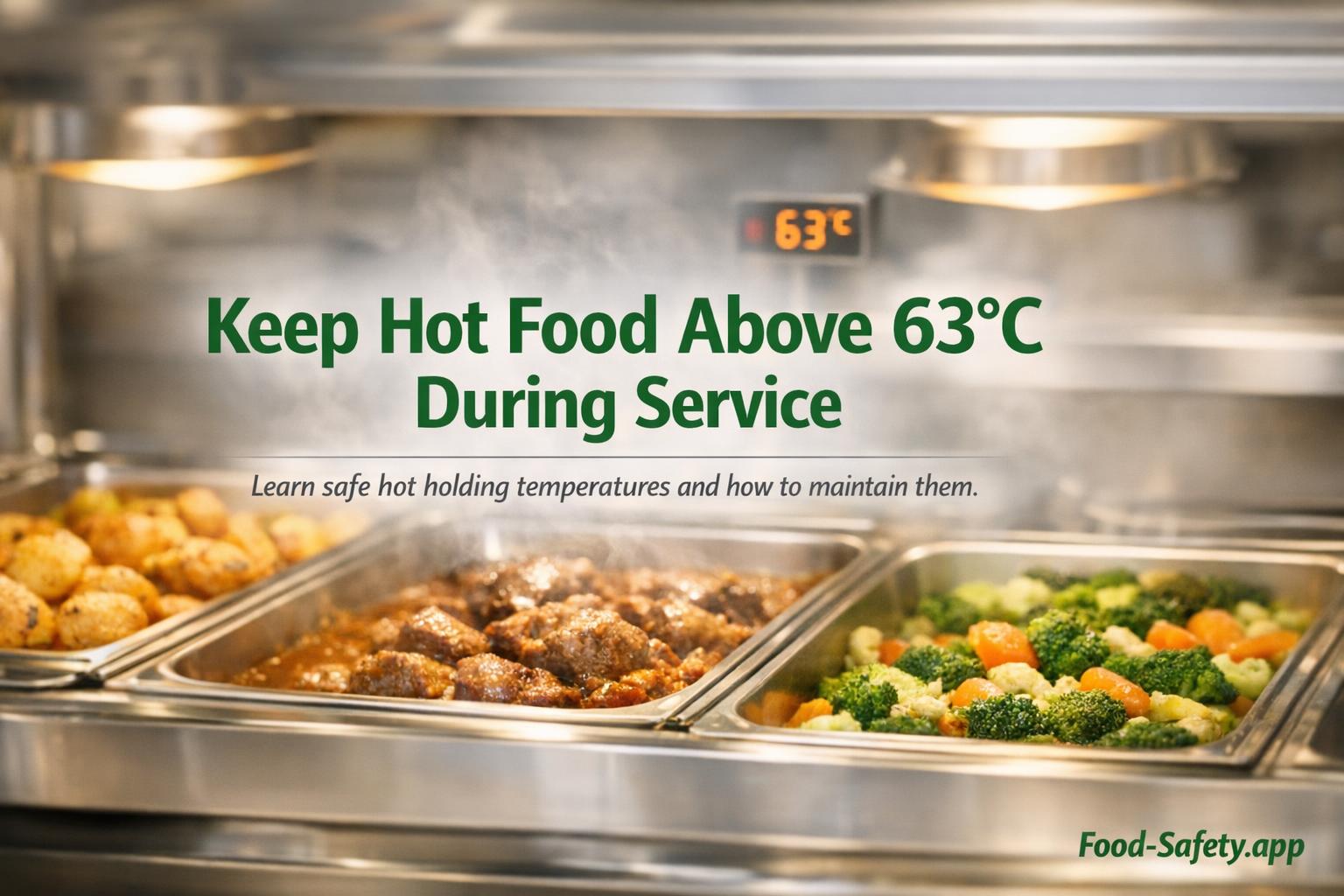
Getting hot holding right is one of the simplest ways to protect customers and keep service moving. The hot holding temperature for food in the UK is generally 63°C or above, and that matters whether you are running a restaurant, school canteen, café, hotel breakfast buffet or takeaway. For more on temperature control in kitchen practices, see our guide on temperature control in kitchen. Once food has been cooked, it needs to stay hot enough to reduce the risk of harmful bacteria growing. The challenge in a busy kitchen is keeping that temperature steady while trays are being topped up, lids lifted, portions served and food sits on a bain marie or hot cupboard for longer than planned.
Contents
- What is safe hot holding temperature?
- Why hot holding temperature matters
- How to maintain safe hot holding temperature
- Common hot holding mistakes
- What to do if food drops below temperature
- Best practice for kitchens and caterers
- Final thoughts
What is safe hot holding temperature?
In UK food safety practice, hot food should be kept at 63°C or above when it is being held ready for service. That is the practical benchmark most catering teams use for safe hot holding temperature. It applies to cooked food that is waiting to be served, such as curry in a bain marie, gravy in a heated well, or sliced meat in a hot cabinet.
If you are working to standards in another country, the requirement may be different, so always check local guidance. For UK businesses, the important point is simple: food must stay hot enough during holding to prevent rapid bacterial growth. A food probe is the quickest way to check this, and it should be used properly every time, not just when there is a food hygiene visit.
Food that is meant to be served hot should not sit in the danger zone for long. The temperature danger zone explained simply for UK food businesses is the range where bacteria can multiply quickly, so the real job in a professional kitchen is to move cooked food through service without letting it drift into that range.
For related fridge checks, see fridge temperature monitoring.
Why hot holding temperature matters
Hot holding problems often happen in ordinary service situations, not because anyone is careless. A pan of rice gets left uncovered while the team plates up. A hot cupboard runs cooler than expected. A buffet tray is kept too full, so the centre is hot but the edges cool down. These are the kinds of issues that can turn into food safety risks very quickly.
Maintaining the safe hot holding temperature for food helps to:
- Keep cooked food safe during service
- Reduce the chance of bacterial growth
- Protect customers from food poisoning
- Support consistent food quality
- Show due diligence in a busy commercial kitchen
It also helps commercially. Food held at the right temperature looks better, tastes better and wastes less. In contrast, food that dries out, cools unevenly or needs to be discarded costs time and money.
Keeping these practices consistent supports robust food safety systems in place.
How to maintain safe hot holding temperature
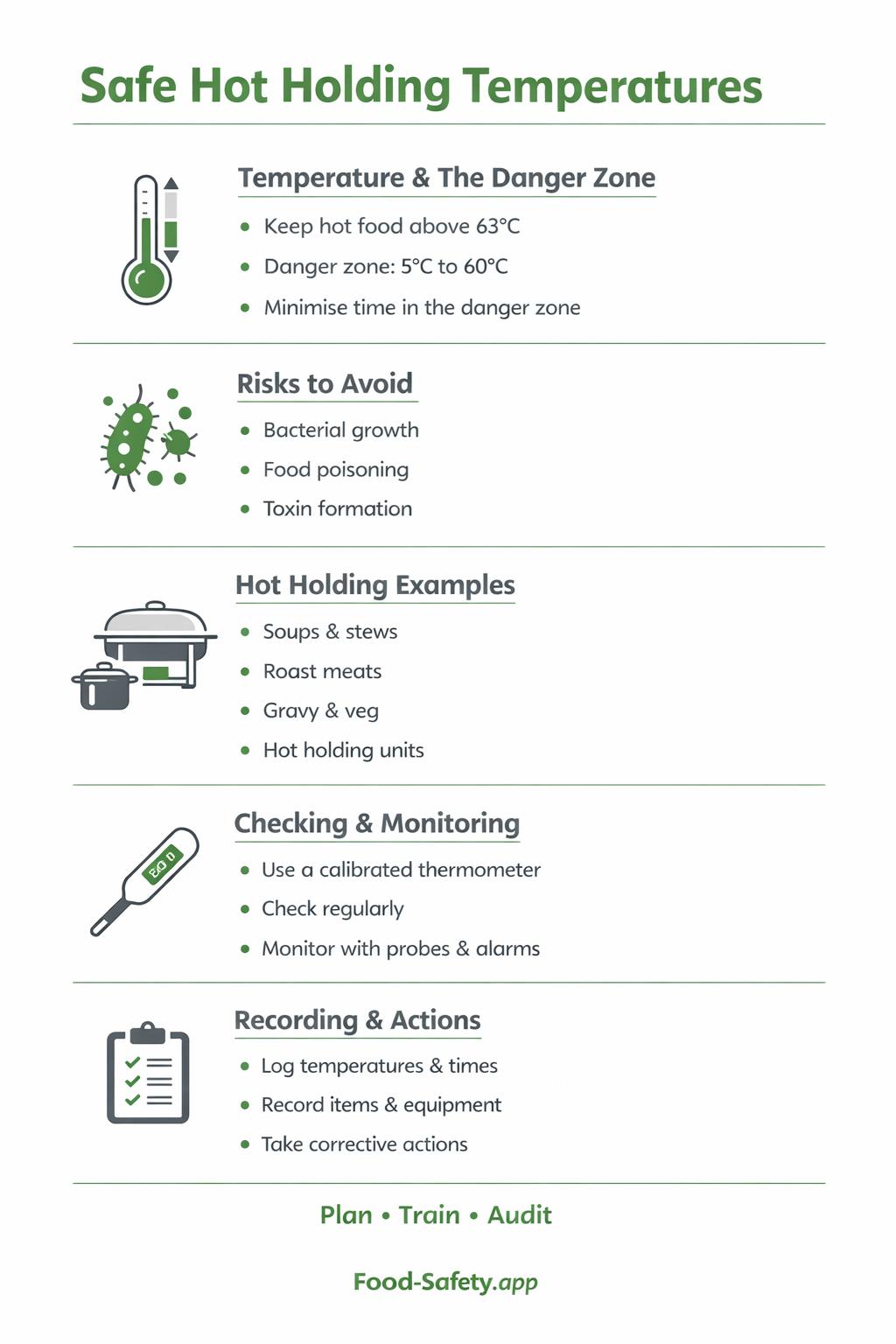
Safe hot holding starts before the food reaches the hot cupboard or bain marie. If the food is only lukewarm when it arrives, the equipment has to work harder, and the risk goes up. Good hot holding is a process, not just a setting on a machine.
1. Preheat equipment properly
Never assume a bain marie, hot cupboard or hot plate is ready just because it is switched on. Preheat it before service and check that it is actually holding temperature. In a busy hotel breakfast service or a school lunch rush, equipment that has not properly warmed up is a common weak point.
2. Start with food that is already hot
Cook food thoroughly first, then transfer it to hot holding as soon as practical. Do not use hot holding to finish cooking food. That can leave the outside hot and the inside unsafe. If food is delayed after cooking, keep it covered and controlled until it is ready to go out.
3. Use shallow, suitable containers
Deep pans can keep the middle hot while the edges cool. Shallow containers usually perform better, especially for sauces, rice, stew, chilli and vegetable dishes. Use containers that suit the equipment, and avoid overfilling them. A tray packed too full can struggle to stay evenly hot.
4. Stir and rotate food during service
Some foods hold heat better when they are stirred regularly. Soups, sauces and casseroles need attention during service so heat is distributed evenly. Rotate trays and replace lids quickly after serving. In self-service areas, assign someone to keep an eye on temperature, portion levels and lid management.
5. Check with a calibrated probe thermometer
Do not rely on touch, timing or appearance. Probe the food in the thickest part, and check more than one spot if needed. Record temperatures where your system requires it. If a dish is sitting just above the minimum at the start of service, it may not stay safe for long if demand is busy or the equipment is inconsistent.
6. Keep lids and covers on when possible
Heat escapes fast when food is left open. Use lids, foil or sneeze screens where appropriate, but make sure coverings do not create a condensation problem that harms food quality. In takeaway and canteen service, covering food is one of the easiest ways to protect temperature.
For broader guidance, see food safety culture guidance and practical tips on building a strong safety culture in the kitchen.
Common hot holding mistakes
Many hot holding failures come from routine shortcuts. The most common include:
- Putting food into holding equipment before it is hot enough
- Using the wrong container size or depth
- Leaving lids off during busy service
- Not checking temperature after a long service period
- Assuming one machine setting works for every food type
- Overcrowding a bain marie or hot cupboard
- Letting staff rely on guesswork instead of probes
Another common issue is mixing old food with fresh top-up food without checking the whole batch. If a tray has been sitting out too long, adding new product does not fix the problem. The temperature of the whole lot needs to be safe, not just the newest portion.
For broader kitchen safety practices, see good hygiene practices in kitchen.
What to do if food drops below temperature
If hot held food falls below safe temperature, act quickly and consistently. The right action depends on how long it has been cooling and whether it has stayed safe to use. In practice, your team should be trained to stop guessing and follow a clear decision process.
Immediate corrective steps
- Check the food temperature with a clean, sanitised probe
- Find out whether the equipment is functioning properly
- Return food to heat only if your procedures allow it and it has not been left unsafe
- Discard food that cannot be confidently made safe
- Record the issue and fix the cause before service continues
If the problem is the equipment, move food to a working unit immediately. If the problem is time out of temperature, the safest option is often disposal. That may feel painful during a busy lunch service, but it is far better than risking customer illness.
Best practice for kitchens and caterers
The most reliable kitchens build hot holding into the service flow. That means assigning responsibility, checking equipment before service starts and making temperature checks part of the normal routine rather than an extra task.
Practical hot holding checklist
- Preheat hot holding equipment before service
- Confirm cooked food is hot before transfer
- Use the right container depth and size
- Keep lids on whenever possible
- Probe food at regular intervals
- Rotate trays and stir where needed
- Record temperatures according to your food safety system
- Remove any food that has become unsafe
It also helps to match the method to the menu. A soup counter, carvery, delivery collection point and school lunch line all create different heat-loss problems. The safest kitchens review those risks before each service, especially during peak periods, events and buffet service where food can sit longer than expected.
For broader kitchen safety practices, see good hygiene practices in kitchen.
Final thoughts
The safe hot holding temperature for food in the UK is 63°C or above, but the real goal is to make sure cooked food stays safely hot throughout service, not just at the start. That means using the right equipment, probing regularly, keeping food covered, and acting fast when temperatures fall. For restaurants, cafés, caterers, schools and hotels, good hot holding is one of the simplest habits that protects customers and supports smooth service.
Keeping those checks consistent is easier when your team has a clear process in place, whether that is paper logs or a food safety management system for catering businesses such as Food-Safety.app. If you stay disciplined on temperature control, you will reduce waste, protect your reputation and serve food with confidence.
For extra official guidance, the Food Standards Agency is a useful place to check current UK advice on hot holding and temperature control.
Fridge temperature monitoring, hot holding safety and other related topics can help keep service smooth—for broader kitchen safety practices, see good hygiene practices in kitchen.