Fridge doors shelves and handles are often missed. Learn how often to clean them and how to build checks that support better hygiene control.
Table of contents
Why fridge hygiene matters in busy kitchens
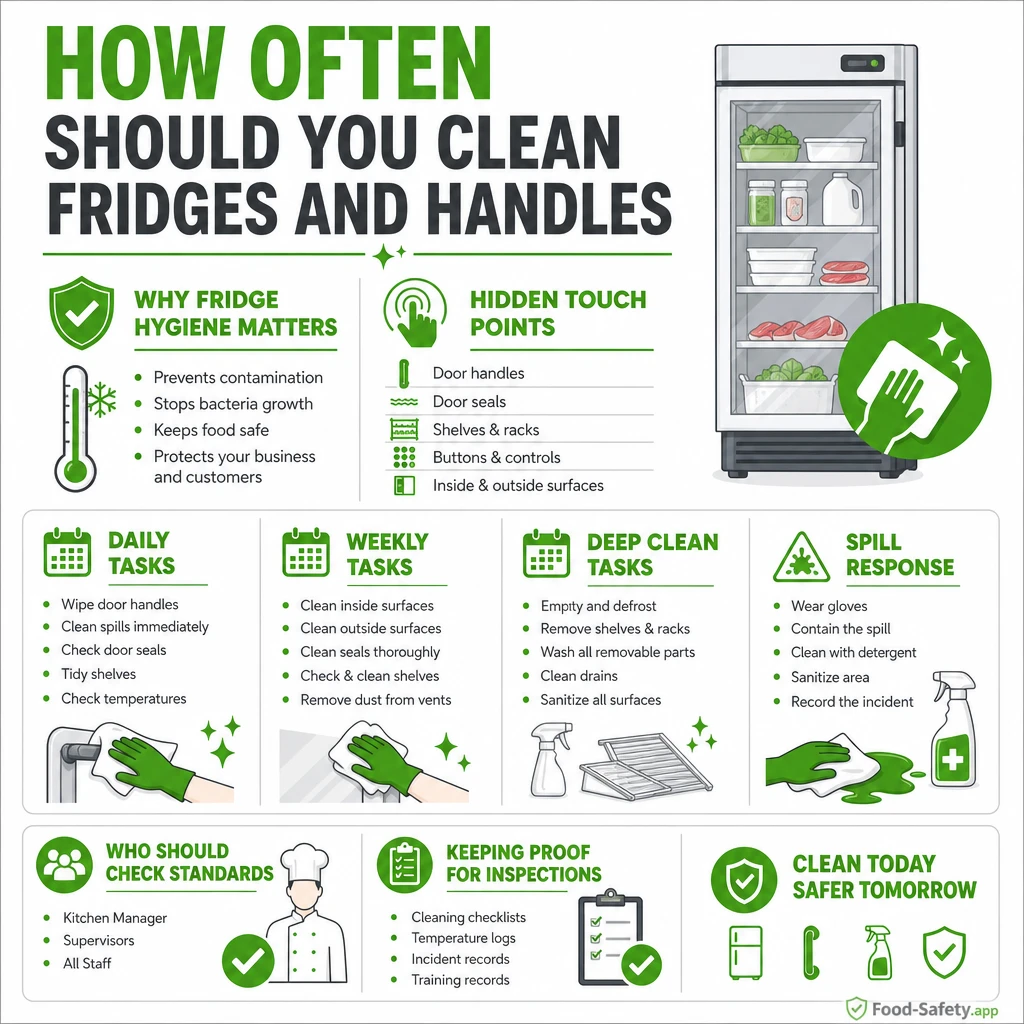
In busy catering environments, fridge hygiene matters because cross contamination can occur from door handles, seals, and shelving to perishable ingredients. For simple food safety tips for busy kitchens, see our quick guide.
Odours from compromised items indicate failures in storage or cleaning, while spills can spread bacteria if not contained. Temperature stability near cold storage is essential to slow microbial growth. When hygiene routines slip, you risk not only product quality but inspections and reputational damage.
What good practice looks like in practice includes maintaining clean external surfaces, confirming seals seal properly, and logging temperature checks alongside a daily cleaning record. Regular attention to these basics reduces risk and supports a smoother service.
- Cross contamination risk from touching multiple products with the same hands and surfaces
- Odours signalling compromised storage or spoilage
- Spills that spread and create slip hazards or attract pests
- Temperature fluctuations that invite rapid bacterial growth
Hidden touch points that get missed
Hidden touch points inside and around cold storage are often overlooked. Fridge handles, door seals, and latches are frequently touched between moves of different foods. Shelves, temperature probes, door edges, delivery trays, and staff workflows near cold storage can carry surface contaminants from one area to another. If these points aren’t routinely cleaned, contaminants can lurk between service periods and undermine daily checks.
Hidden touch points can spread contamination between areas. For guidance on reducing allergen cross-contact during cleaning, see how to clean to reduce allergen cross-contact.
- Handles, knobs, and door edges
- Seals and gaskets with nicks or tears
- Shelves and dividers with spills or sticky residues
- Temperature probes and control panels
- Delivery trays and transfer surfaces
- Staff work zones close to cold storage during peak service
Daily cleaning tasks
Daily cleaning should be brisk, predictable, and well documented. Focus on high-touch points and obvious debris, then confirm that surfaces are dry and ready for stock handling. A short daily routine helps staff stay consistent even during service pressures.
- Wipe handles, door edges, and exterior surfaces with an approved sanitiser according to the dilution guidance.
- Remove spills straight away and wipe the area clean to prevent spread.
- Clean obvious debris from shelves and interior walls after service.
- Check door seals and gaskets for tears, cracks or gaps; note any damage.
- Record completion in the cleaning log and flag any issues for the next shift.
Weekly cleaning tasks
Weekly cleans go beyond surface wiping. They move stock to access hard-to-reach areas and tackle build-ups that can harbour residue or mould. A clear weekly plan helps managers audit performance and keeps fridges operating within safe expectations. The 4 Cs of food hygiene made practical.
- Move stock as needed to access all shelves and corners.
- Clean all shelves, dividers, and tray holders; wipe with sanitiser and dry thoroughly.
- Inspect and clean door seals and latching mechanisms; check for cracks or stiffness.
- Clean under and behind units where dust and spills collect.
- Tackle hard-to-reach areas, including behind condensers and vent grilles where accessible.
- Sanitise temperature probes and control surfaces; ensure readings are clearly legible.
Deep clean checks
A deep clean is a thorough overhaul that restores hygiene levels, especially after prolonged service pressure, a spill event, or signs of damage. Plan a no-rush session, empty the fridge, and reset storage with care.
- Completely empty the fridge, separating raw and cooked products to prevent cross contamination.
- Defrost if needed according to manufacturer guidance and power down if required to complete the task safely.
- Sanitise interior walls, shelves, gaskets, and door frames; wipe exterior surfaces and handles.
- Inspect for damage, corrosion, or mould growth; arrange maintenance or replacement as required.
- Return stock carefully, check temperatures, and re-establish a safe layout to minimise disturbance to stored items.
For best practice on temperature tracking, see how to check fridge temperatures properly.
Spill response steps
- Isolate the affected food and remove it to a clean area to prevent cross contamination. For guidance on digital food safety records, see what are digital food safety records and how do they help.
- Clean and sanitise the spill area thoroughly; dispose of waste according to stock type and containment rules.
- Check nearby items for possible contamination; segregate and re-label as needed.
- Log the incident, including time, actions taken, and any corrective measures to prevent recurrence.
- Review staff practice around cold storage handling to reduce repeats of similar incidents.
Who should check standards
Clear accountability keeps fridge hygiene consistent. In busy operations, checks should involve multiple roles and a simple handover process to ensure continuity across shifts.
- Chefs and line cooks – perform routine cleaning as part of daily service discipline.
- Supervisors – verify seals, record temperature logs, and sign off daily tasks.
- Closing staff – conduct end-of-day cleans, move stock for access, and secure units.
- Managers – review weekly and deep-clean records, address recurring issues, and oversee handover sheets.
Handover example: a short, shift-to-shift checklist noting last cleaned date/time, any frayed seals found, and actions required for the following shift.
How to keep proof for inspections
Auditable records reassure customers and regulators that cold storage hygiene is under control. Build evidence through structured cleaning records, timestamped checks, and clear corrective action logs. Exportable reports help prepare for environmental health visits and internal audits.
- Structured cleaning records that mirror the daily, weekly, and deep-clean cadence
- Timestamped checks and signatures from responsible staff
- Documented corrective actions with due dates and responsible persons
- Exportable reports for inspections and internal reviews
For official guidance on temperature control and safe handling, consult the Food Standards Agency’s resources at Food Standards Agency.
Food-Safety.app, a food safety management system for catering businesses, can customise cleaning tasks, log spill responses, timestamp records, and store proof of fridge hygiene for inspections.
Stay on top of fridge hygiene
Keep fridge hygiene on track with simple records and clear responsibilities so inspections go smoothly and staff stay confident about safe storage.