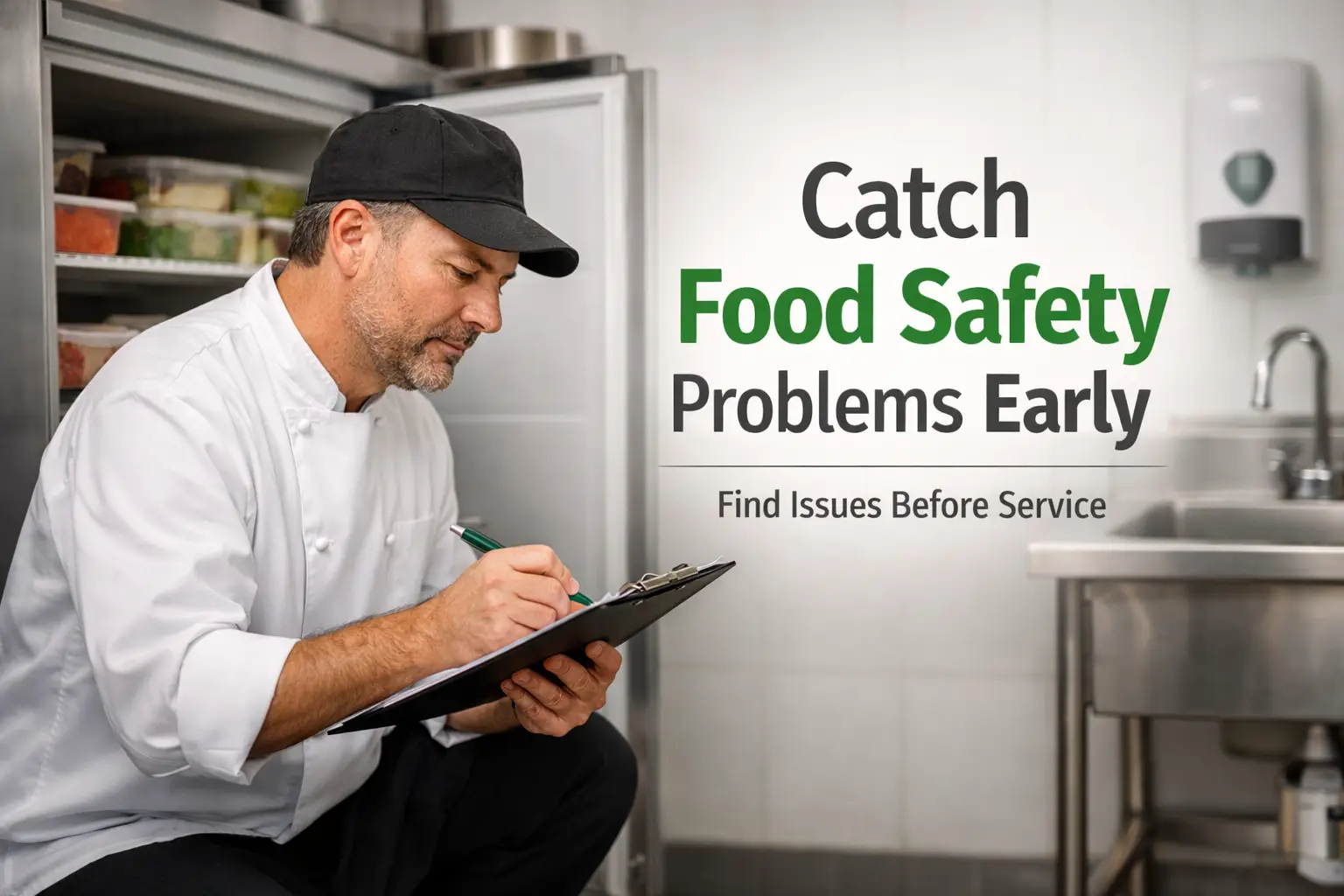
Build a fast opening check that catches food safety problems before service including chilled storage hand wash points and stock control.
Practical examples or scenarios
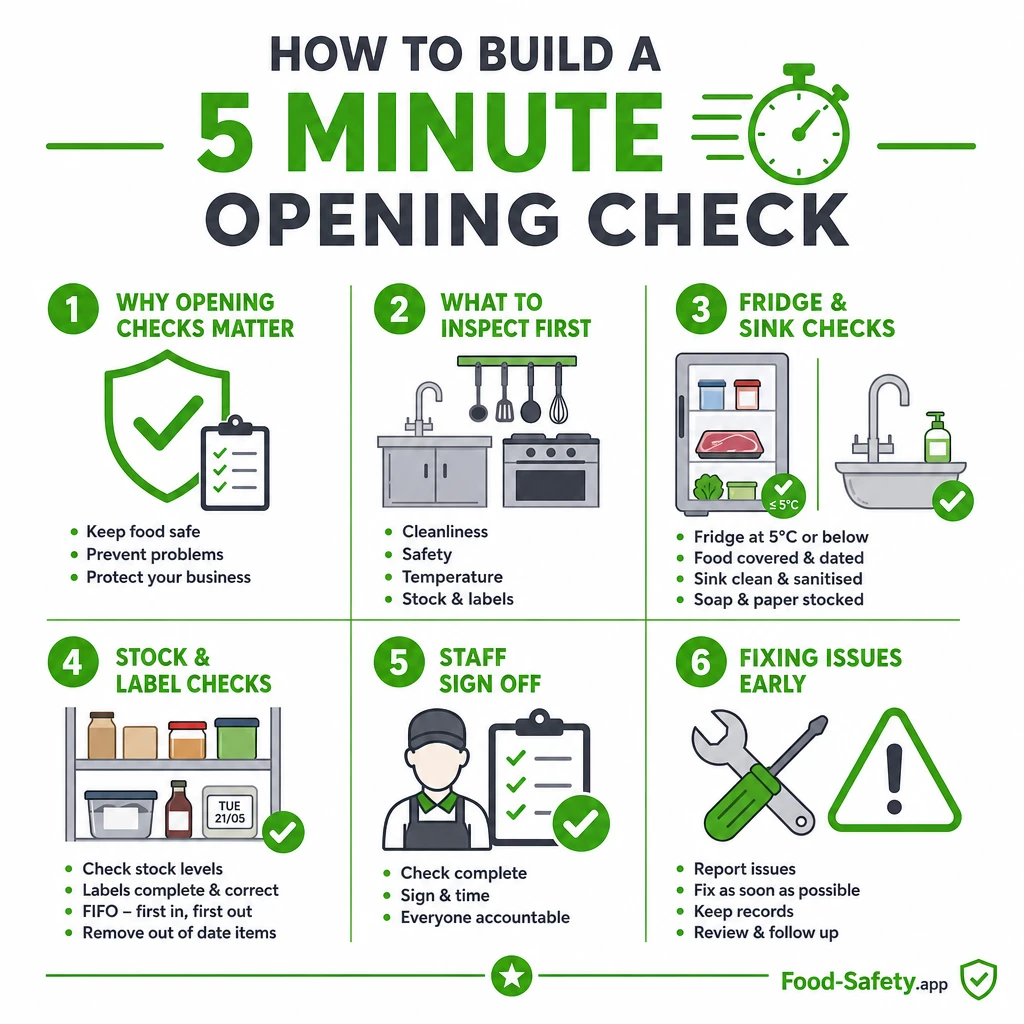
What to inspect first to avoid delays and safety risks
Fixed order you can use
Practical examples or scenarios
Fridge and freezer checks
Key items to inspect
Fridge practical-examples
Sink and handwash checks
What to verify
Sink practical-examples
Stock and label checks
Checklist of essentials
Stock practical-examples
Staff sign off
Fixing issues early
Why opening checks matter in busy catering operations
Opening checks prime the day with clarity. When staff verify key safety points first, the kitchen can start service without unclear conditions or hidden defects slowing production. The routine also creates a consistent audit trail, helping managers review performance after shifts and during inspections. In a busy catering environment, this discipline reduces the risk of serving faulted items and strengthens supplier and customer confidence. For quick guidance, see simple food safety tips for busy kitchens.
Practical examples or scenarios
- A prep fridge is found above safe temperature before breakfast service, prompting a quick isolation and corrective action record.
- A handwash sink is discovered without soap at opening; service proceeds after a rapid refill and note is logged.
- Delivered stock is checked against labels and dates before it goes into storage, preventing mislabelled or past-due items from entering the line.
What to inspect first to avoid delays and safety risks
Adopt a fixed opening order so nothing is missed. Begin with safety-critical checks that affect immediate service, then move to stock readiness and documentation. A predictable sequence saves minutes, limits backtracking, and makes late surprises less likely. For practical tips, see the 4 Cs of food hygiene.
Fixed order you can use
Sign-off and time taken for the opening check; access to clean handwashing facilities and personal protective equipment; food preparation surfaces and utensil cleanliness; fridge and freezer readiness, seals, and stock status; labeling, dating, and allergen information on incoming stock; records and corrective actions from any issues.
Practical examples or scenarios
Only after confirming handwash stations are ready does the team unpack ingredients for service.
If a label is missing or damaged on a product, staff pause usage and document the defect before storage.
Fridge and freezer checks: temperatures, door seals, stock rotation, spillages
Fridge and freezer checks protect the cold chain and prevent cross-contamination. Record readings, inspect door seals for gaps, review stock rotation (first in, first out), and clean up any spillages promptly. Keep a simple log so the team can reference evidence during shifts and inspections; see how to check fridge temperatures properly.
Key items to inspect
- Internal readings or indicators showing the unit is within its safe operating range
- Door seals: intact, without cracks or warping
- Stock rotation: oldest items moved to front, labels aligned
- Spillages: cleaned and surfaces disinfected
- Damaged packaging or compromised containers identified and quarantined
Practical examples or scenarios
A prep fridge door seal is found with a small gap; the unit is logged and escalated if not resolved, before food is moved inside.
New deliveries are checked against dates and labels before storage to prevent mislabelled or expired stock entering the line.
| Area | Item | Status | Notes |
|---|---|---|---|
| Fridge | Internal temperature | Within range | Record reading for the day |
| Fridge | Door seals | Good | Replace if damaged |
| Freezer | Seal integrity | Ok | Check defrost schedule |
Sink and handwash checks: hot water, soap, towels, cleanliness, access
Accessible, well-supplied handwashing is non-negotiable. At opening, ensure hot water is available, soap dispensers function, towels are stocked, and the sink area is clean and unobstructed. Any lapses here can slow service and compromise hygiene standards. Document and rectify immediately to keep service moving smoothly.
What to verify
Hot water is available and reaches the required temperature quickly; Soap dispensers are full and functioning; Towels or disposable hand-dry options are stocked; Sink basins and surrounding surfaces are clean and free of debris; Access to handwashing is unobstructed for all staff.
Practical examples or scenarios
A handwash sink is missing soap at opening; staff perform a quick refill and log the action.
A blockage is found in a prep-area sink; the issue is escalated and work proceeds with an alternative sink until fixed.

Stock and label checks: use-by dates, allergen labels, date coding, damaged packaging
Stock and label checks prevent accidental misuse. Verify use-by dates, allergen declarations, date coding, and the integrity of packaging. Remove any item that is unlabeled or damaged and record the action. Clear, consistent labeling supports tracing and reduces confusion across shifts; clear allergen labeling on packaged food.
Checklist of essentials
- Use-by dates and sell-by dates are legible and within safe windows
- Allergen information is present and correctly displayed
- Date coding is consistent and traceable
- Packaging is intact with no tears or bulges
- Items without clear labeling are quarantined until identified
Practical examples or scenarios
Delivered stock is checked against labels and dates before it goes into storage to prevent cross-contact risks.
An unlabeled container is removed from use until identified and recorded.
Staff sign off: who completed the check, when it was done, what was found
Documenting who did the opening check, when it was completed, and what was found is essential for accountability. A clear sign-off helps during audits and ensures follow-up actions are assigned and traceable. Keep it simple: a single line per shift with the key details, then file for the day’s records.
For practical guidance on training, train new kitchen staff on day one.
Fixing issues early: isolating stock
An early response prevents small faults from becoming service blockers. Isolate suspect stock, report defects with clear descriptions, and record immediately the corrective actions taken. This discipline protects the safety of operations and supports a proactive culture in the kitchen; how to stop cross-contamination in service.
For teams seeking to digitise and standardise this process, Food-Safety.app is a food safety management system for catering businesses.
Explore more food safety resources
Discover how to digitise opening checks and standardise safety workflows across your catering operation with practical tools and templates from Food-Safety.app.