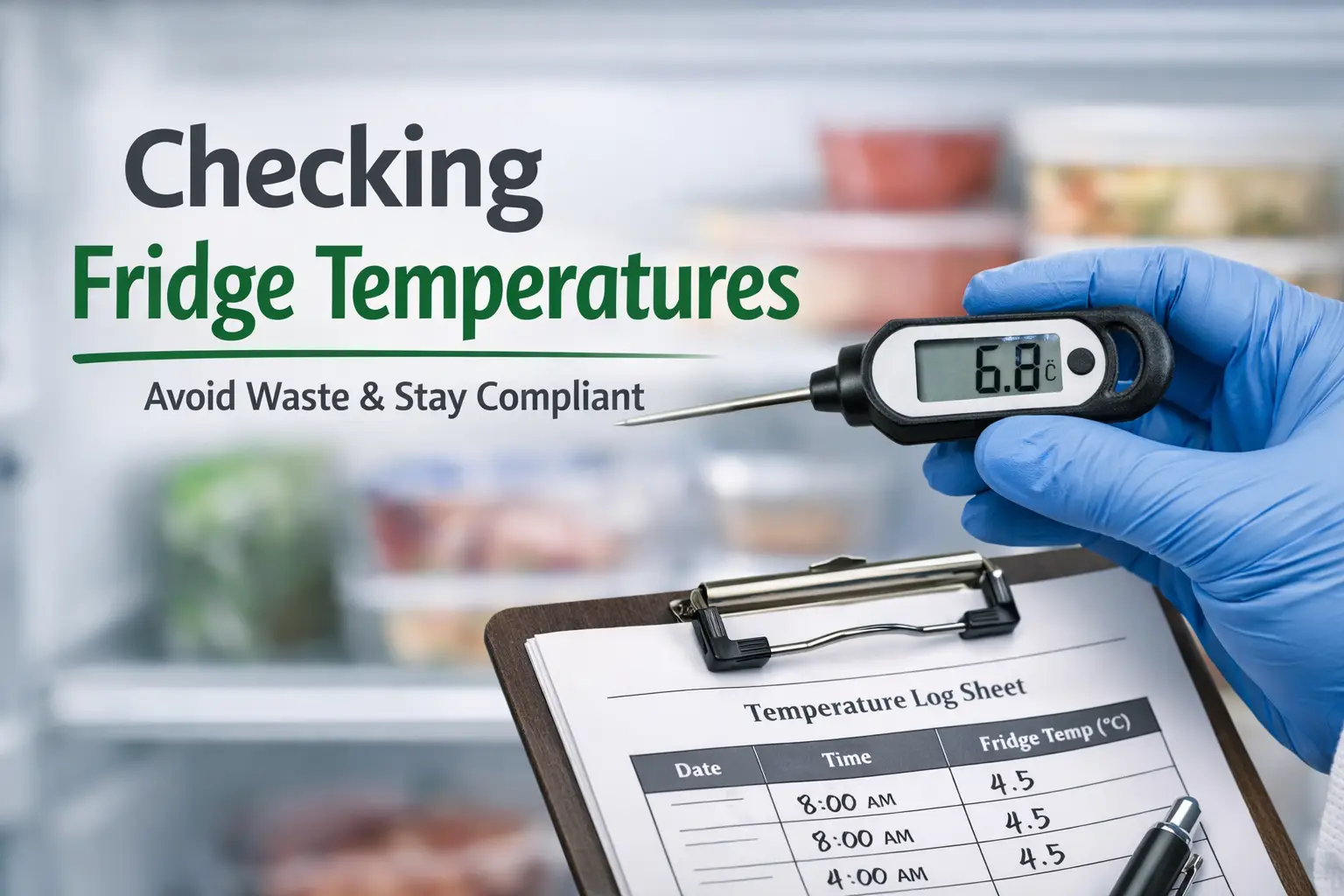
Learn how to check fridge temperatures properly and what to do when readings drift. A simple routine can prevent waste risk and weak monitoring.
Why fridge temperature checks matter
Regular fridge temperature checks reduce the risk of spoilage and bacterial growth in chilled foods, helping to protect customers and your reputation. This discipline aligns with HACCP principles.
Connecting practice to safety and inspection readiness
In a busy service, it’s tempting to rely on a display panel or assume a door seal is fine. But probe-based checks in the right spots catch problems before they escalate. Recording results builds a transparent history for Environmental Health Officers (EHOs) and internal audits, reducing the chance of unexpected findings during inspections.
Safe target temperatures
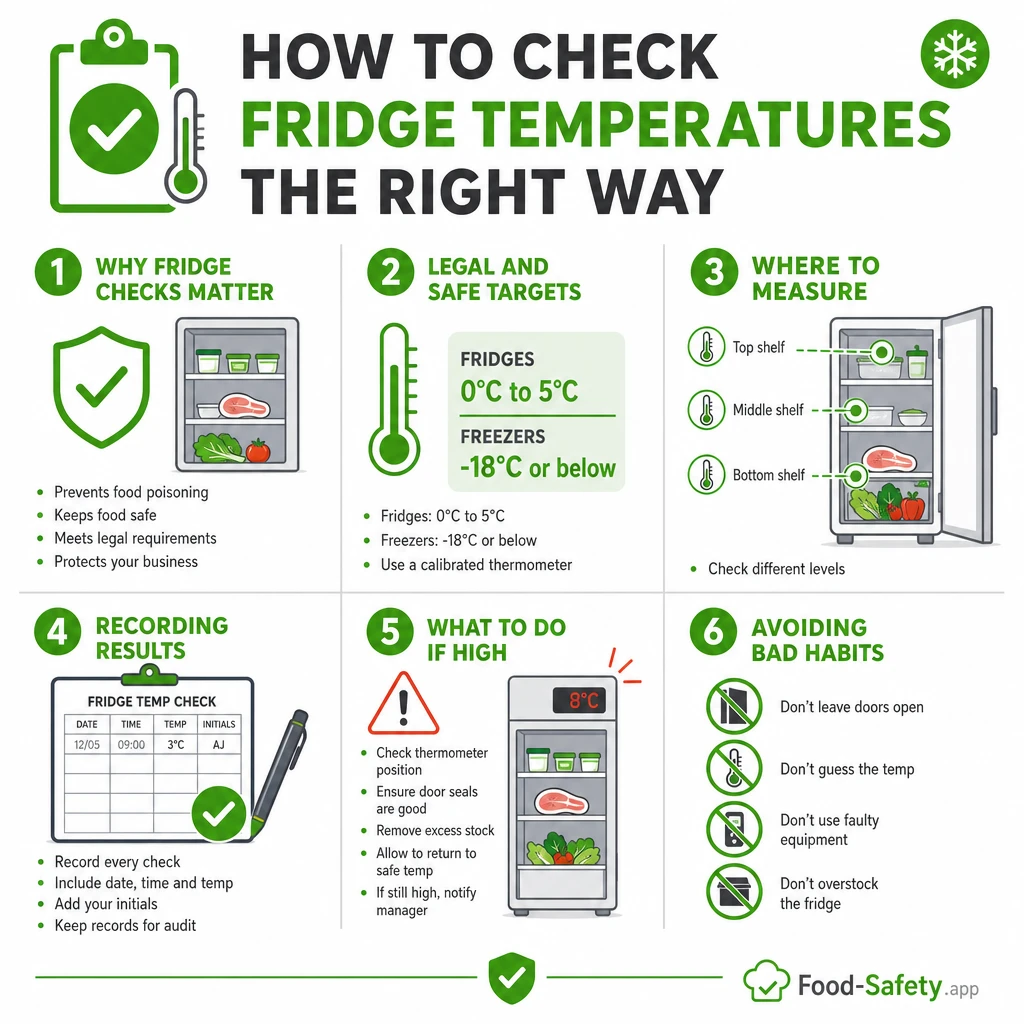
Keep all chilled foods at 5°C or below to maintain safety margins. Local procedures or customer contracts may require tighter control for certain products, such as ready-to-eat meals or high-risk ingredients, so follow those rules where applicable. Treat 5°C as your default baseline and adjust only with approved procedures and documented risk assessment. This aligns with the 4 Cs of food hygiene.
Adapting to different storage needs
Some items may be stored in small blue or red bins with specific time-temperature controls. When in doubt, base decisions on established food safety plans for your operation and seek guidance from your appointed supervisor or the person responsible for HACCP documentation.
Where to measure
Place the probe between packs, not against the door or back wall. Measure the warmest area inside the fridge to reflect the actual risk to stored foods. For different sections—meat, dairy, produce—use representative spots and record the reading for each relevant area as part of your routine.
Measurement points and placement tips
- Front-right shelf or drawer area – typically the warmest near the door.
- Between items with different temperatures to capture peak readings.
- Avoid vents or condensation-prone zones which can give misleading results.
For official guidance on temperature control in catering, see the external guidance from HSE on temperature control.
How often to check
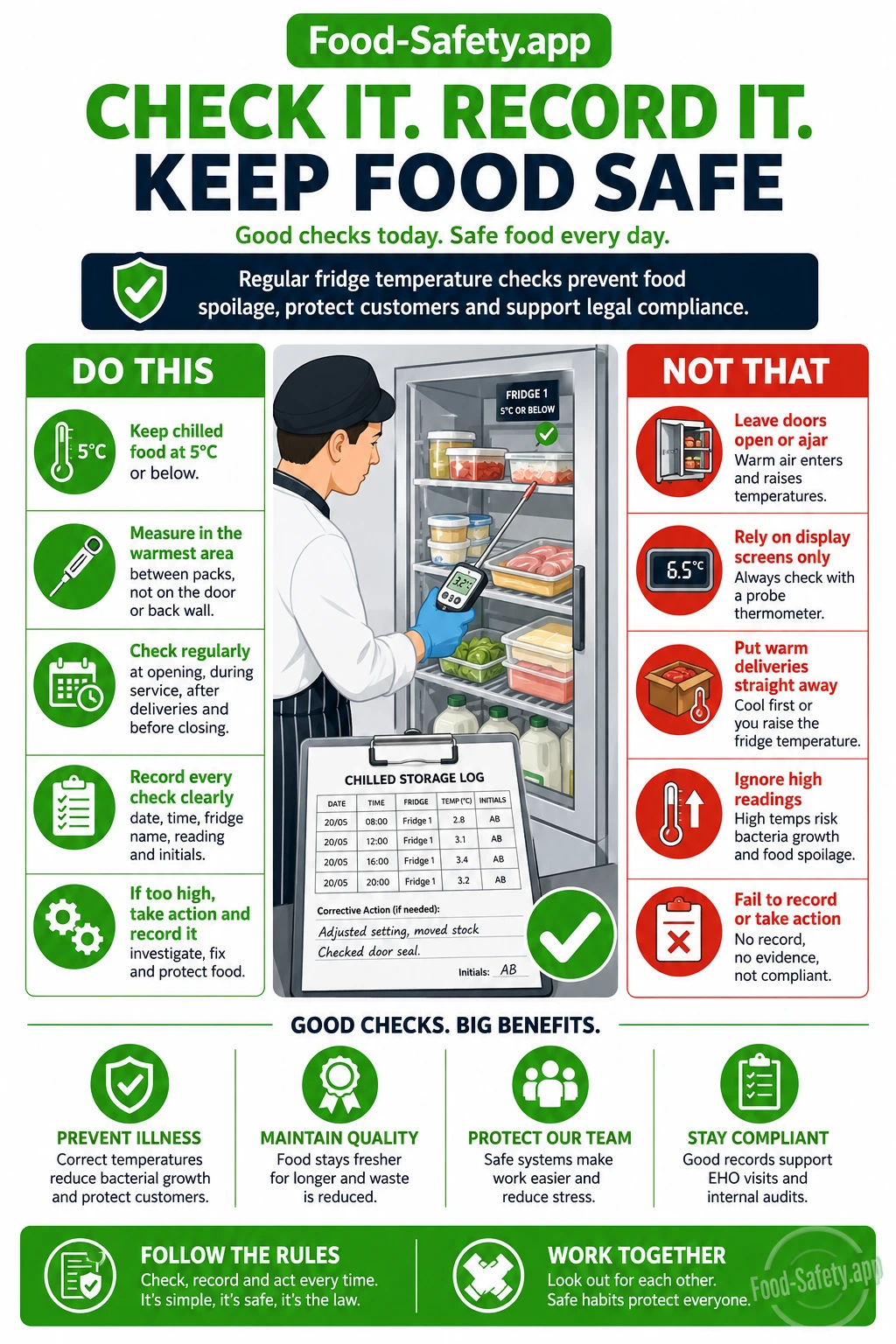
Build a simple cadence that fits your service pattern. Common routines include opening checks, routine spot checks during the day, and post-delivery checks after busy periods. Capture readings at the start of service, mid-service when activity peaks, and at closing to ensure any drift is detected and corrected before the next day. This approach reflects HACCP-based timing and monitoring principles.
Suggested check cadence
- Opening checks before service begins.
- Spot checks during peak activity (every 2–3 hours in high turnover kitchens).
- After deliveries or shifts that involve temperature-sensitive goods.
- Closing checks to confirm readiness for the next day.
Recording results
Record keeping should be simple and review-friendly. Each entry should note date, time, fridge name, reading, and initials of the helper. Keep records easy to review during audits and to share with staff during handovers. A single chilled storage log is often sufficient if it captures all required fields consistently. Using an SFBB diary can help structure this process.
What to do if temperature is too high
- Isolate affected food and label it as out of range.
- Check door seals for gaps or misalignment and repair if needed.
- Adjust fridge settings to restore proper temperature, and allow time for stabilization.
- Move stock from the warm zone to a cooler unit if necessary.
- Notify maintenance if the issue persists or if a fault is suspected.
- Record corrective actions and communicate the outcome to the team.
For ongoing guidance on preventing cross-contamination and maintaining hygiene during corrective actions, see how to stop cross-contamination in service.
Avoiding bad habits
- Avoid blindly relying on a single fridge check every day without confirming trends across other units.
- Don’t rely solely on display screens; probes give a true reflection of product temperature.
- Never leave doors open during service or for extended periods while taking readings.
Practical routines to embed in the kitchen
Turn fridge checks into a simple, repeatable routine that aligns with opening and closing tasks. Attach the checks to shift handovers and delivery processes so every team understands the routine. Use a one-page log that new staff can complete without extensive training, and review logs during shift briefings to reinforce good habits.
Scenarios you may face
- A prep fridge left ajar after lunchtime service, causing a rise in temperatures.
- A delivery placed into a warm fridge before being chilled properly.
- A back-of-house fridge running too warm overnight due to door fatigue or defrost issues.
- A catering van fridge checked before dispatch and found to be out of range.
For ongoing guidance on preventing cross-contamination and maintaining hygiene during corrective actions, see how to stop cross-contamination in service.
Official guidance and compliance focus
Keep your procedures aligned with official guidance and internal policies. Use a simple chilled storage log, link fridge checks to opening and closing routines, and record corrective actions when readings are out of range. Keeping solid documentation helps with EHOs and internal audits, and supports a confident, audit-ready kitchen. This aligns with broader best practices and compliance considerations.
Conclusion and next steps
Consistent fridge temperature checks are a practical pillar of day-to-day kitchen control. By measuring in the right places, maintaining clear records, and acting promptly on out-of-range readings, you reduce waste and strengthen safety. Integrate these routines into your opening and closing procedures, and keep the team aligned on expectations and actions. Food-Safety.app, a food safety management system for catering businesses, can help log fridge temperatures, time-stamp readings automatically, and keep a full history for inspection, including digital food safety records.
Improve fridge temperature monitoring
Streamline daily fridge checks with clear logs, alarms, and quick corrective actions. Integrate these routines into your team shifts and audits to maintain safety and reduce waste.