If you are trying to use SFBB in a busy small kitchen without turning your paperwork into a second full-time job, the good news is this: it can be done. SFBB should make day-to-day food safety easier, not add drama to the prep list. In a fast-moving commercial kitchen, the trick is to keep the system simple, consistent and close to the work, so records support due diligence instead of becoming dead paperwork shoved in a drawer next to three broken whisk attachments. For a structured approach, many kitchens align SFBB with HACCP principles explained.
Table of contents
What SFBB is and why it matters
SFBB means Safer Food, Better Business. It is the UK’s food safety management approach for small catering and hospitality businesses, and it is designed to help you control the common hazards that matter in everyday service. That includes cooking, cooling, cross-contamination, cleaning, chilling and personal hygiene.
For restaurants, cafés, takeaways, school canteens, hotel kitchens and caterers, the real value of SFBB is not the folder itself. It is the routine behind it. If the system helps your team keep food safe during a busy lunch rush, then it is doing its job. If it only gets updated when an inspector is due, it is probably not.
UK guidance is the basis for SFBB, and practices can vary in other countries, so businesses outside the UK should always check local rules.
How to use SFBB in a busy small kitchen
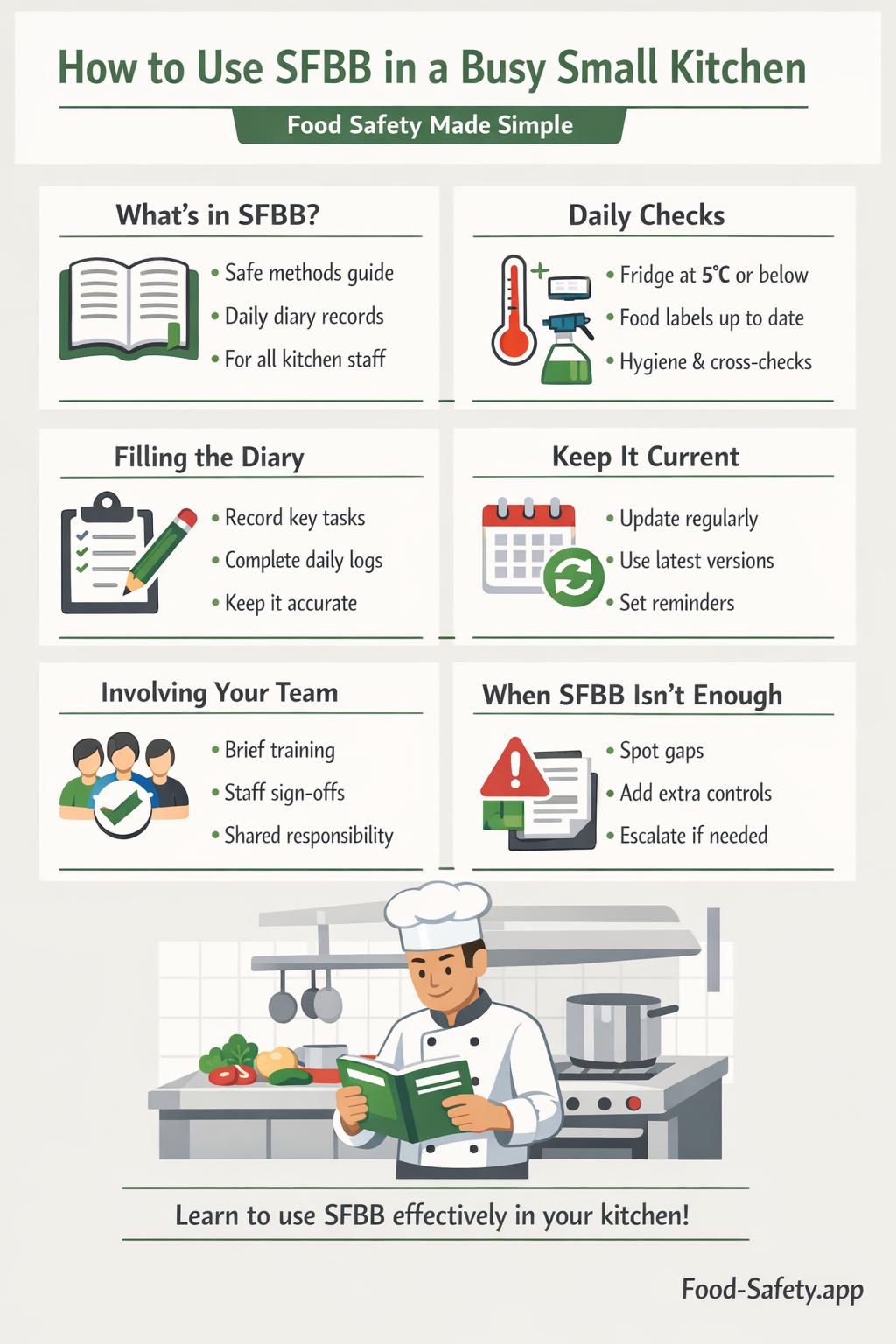
The simplest way to use SFBB in a busy small kitchen is to build it around what already happens during service. Do not create a system that depends on someone having a quiet hour and a fresh pen in a golden mood. Instead, link SFBB checks to moments the team already remembers: opening, delivery, prep, service, closing.
Start with the risks your kitchen actually has
A small kitchen does not need every possible control under the sun. It needs the controls that fit its menu, equipment and workflow. For example:
- A sandwich café may need strong controls for chilled storage, allergen separation and date labelling.
- A busy takeaway may need tight controls for hot holding, rapid service and avoiding mix-ups with allergens.
- A school canteen may need reliable cooking checks, safe cooling and clear records across multiple staff.
- A hotel kitchen may need consistent handover between shifts, breakfast prep and late-service cleaning.
Think of SFBB as your kitchen’s traffic system. You do not need a motorway on every corridor, but you do need to stop people walking through the same doorway with raw chicken, clean plates and a tray of bread rolls all at once.
For allergen management guidance, see Allergen management made practical for UK food businesses.
Use one clear folder or digital system
Whether you use paper or software, keep everything in one place. Split it into the basic sections your team needs to see quickly, such as:
- Opening checks.
- Delivery checks.
- Chilling and temperature monitoring.
- Cooking and hot holding checks.
- Cleaning schedule.
- Allergen management.
- Staff training and issues found.
If staff have to hunt for the right page while service is moving, the system is already losing the fight.
Make responsibility obvious
Every SFBB task should have an owner. In a small kitchen, that may be the head chef, duty manager, supervisor or shift lead. If nobody owns the check, everybody assumes somebody else has done it. That is not a system; that is wishful thinking with a clipboard.
Daily routines that keep SFBB manageable
Busy kitchens survive on routine. The best SFBB systems are built into those routines so they happen naturally and do not rely on memory alone.
Opening checks
At the start of the day, check that the kitchen is ready for safe production. A practical opening routine might include:
- Fridges and freezers are working and visibly clean.
- Hand wash areas are stocked with soap and towels.
- Cleaning chemicals are stored correctly.
- Allergen information is available where needed.
- Food contact surfaces are clean and ready.
Keep it short. If the checklist looks like a tax return, people will skim it, and skimming is not a food safety control.
For temperature control specifics, see fridge temperature monitoring.
Delivery checks
When ingredients arrive, do not just rush them into storage because the van is blocking the alley. Check condition, packaging, temperatures where relevant, use-by dates and any visible damage. If something is clearly not right, reject it and record the action.
This matters in small kitchens because storage space is limited. One poor delivery can contaminate a whole fridge section or create a stock rotation headache for the rest of the week.
Cooking, cooling and hot holding checks
SFBB should help your team control the highest-risk parts of the day. That means:
- Cooking food thoroughly.
- Checking food is hot enough before it goes out.
- Keeping hot food safely hot if it is being held.
- Cooling food quickly and safely if it will be reused.
- Reheating thoroughly where appropriate.
Use a probe thermometer correctly, clean it between checks, and record only the readings that matter. A number written down after the event is useful only if it reflects what actually happened.
Closing checks
End-of-day routines are where many SFBB systems either shine or collapse. A strong close-down should include:
- Food put away, covered and labelled.
- Fridges closed and checked.
- Waste removed.
- Cleaning completed and signed off.
- Problems passed to the next shift.
If a late finish means the closing checklist gets rushed, simplify the layout rather than pretending the team has suddenly discovered extra hours.
For cleaning schedules for better food safety management, see Cleaning schedules for better food safety management.
Records that actually help in service
The best SFBB records are the ones people use. In a small commercial kitchen, records should do three jobs: show control, highlight problems and help the next shift pick up where you left off.
Keep records short and specific
Short records are more likely to be completed properly. A good record should show:
- What was checked.
- When it was checked.
- Who checked it.
- What action was taken if something was wrong.
Examples of useful notes include “salad fridge warm, moved food to back-up unit and engineer contacted” or “delivery of chicken rejected due to damaged packaging”. That is far better than “all ok”, which can mean absolutely anything.
Only record what you will act on
Too much paperwork creates noise. Focus on the controls that tell you whether food safety is being managed properly. If a form is never read, never used to spot trends and never leads to action, it is probably not earning its keep.
Use corrective actions properly
SFBB is not just about spotting problems. It is about doing something sensible when they appear. If a fridge is too warm, the corrective action may be to move food to a working unit, check for signs of spoilage and call maintenance. If cleaning has been missed, the action may be to clean immediately, recheck and remind the team. The key is to record the problem and the fix.
Common SFBB mistakes in small kitchens
Small kitchens often make the same mistakes, usually because the team is busy rather than careless. Here are the ones that come up most often:
- Paperwork done at the end of shift from memory: this is less a record and more a bedtime story.
- Too many checklists: staff stop taking them seriously.
- Unclear responsibilities: everyone assumes someone else has done it.
- No follow-up on issues: the same fault appears again and again.
- Training only for new starters: regular reminders are still needed.
If your SFBB system is not helping the team work faster and safer, it may need trimming, not expanding.
How to get the team on side
Good SFBB use depends on staff understanding why it matters. In a busy kitchen, training should be practical and repeated in small bites rather than delivered as a grand lecture no one can remember after lunch.
Train around real tasks
Show people how to complete the actual checks they will do on shift. For example, demonstrate fridge checks at the fridge, allergen controls at the pass, and cleaning sign-off at the end of service. That makes the system feel like part of the job, not a separate admin project.
Track progress with training records.
Use shift handovers well
Handover is where many small kitchen systems succeed or fail. Make it standard to pass on:
- Equipment faults.
- Food held back or discarded.
- Cleaning issues.
- Allergen warnings.
- Anything unusual about stock or deliveries.
A clear handover can prevent a minor issue becoming a full-blown service wobble.
Reviewing and updating your SFBB system
SFBB should change when your business changes. New menu items, new equipment, a new service style, staff turnover or a larger delivery schedule can all affect your controls. Review the system regularly and after any food safety incident, complaint or near miss.
A useful review asks:
- Are the checks still realistic for the pace of service?
- Are staff completing them correctly?
- Are problems being followed up?
- Have any new allergen or temperature risks appeared?
UK businesses can also check current advice from the Food Standards Agency for practical guidance on safer food controls and small business support.
Practical takeaway
Using SFBB in a busy small kitchen is not about creating more bureaucracy. It is about making food safety part of normal service, with simple checks, clear ownership and useful records that actually help the team. Keep the system short, link it to the work already happening, and make sure problems lead to action. That is how SFBB stays alive in a commercial kitchen instead of drifting into the paperwork graveyard.
If you want a more streamlined setup, a food safety management system for catering businesses like Food-Safety.app can help keep the process organised without turning every shift into a paperwork marathon. The aim is simple: safer food, smoother service, fewer headaches.
Explore safer food management
Discover how a dedicated food safety management system can simplify checks, improve team accountability, and keep service running smoothly. With practical templates, clear ownership, and automated reminders, you can maintain safer food, reduce wasted time, and boost confidence across shifts.