Allergen training is important because it helps staff protect customers, reduce mistakes during busy service, and keep food businesses compliant with UK food safety expectations. In a professional kitchen, even a small lapse can lead to a serious reaction, a complaint, or a lost customer. Good allergen training for staff gives teams the confidence to handle ingredients properly, answer questions clearly, and put safe systems in place every day. A HACCP-based approach helps identify critical control points for allergen control. See HACCP principles explained for more.
Whether you run a restaurant, café, hotel kitchen, school canteen, takeaway, or catering operation, training should be practical, consistent, and easy to apply during service. In the UK, food allergen control is part of day-to-day food safety management, although requirements can vary in other countries. This is supported by clear allergen labeling on packaged foods, and the key is to make sure every member of staff understands the risks and knows exactly what to do when a customer asks about allergens.
Table of contents
- Why allergen training matters
- What staff need to know
- Common risks in professional kitchens
- How to train staff effectively
- Day-to-day allergen controls that work
- What to do when things go wrong
- Building a culture of safety
- Conclusion
Why allergen training matters
Allergen training for staff matters because allergen mistakes are often made under pressure, not because people do not care. A chef may be dealing with a busy service, a front-of-house team member may be taking orders quickly, and a kitchen porter may be handling cleaned utensils without understanding the risk of cross-contact. Training brings everyone onto the same page.
The main goal is simple: prevent allergen exposure wherever possible. That means helping staff recognise the 14 major allergens, understand ingredient labels, avoid accidental contamination, and treat every customer query seriously. It also helps businesses respond properly when a customer changes an order, asks for “just a little bit” of something removed, or says they have an allergy but cannot remember the name of the ingredient involved.
For managers, training also supports consistency. For UK-specific governance, Natasha’s Law shapes how allergen information is communicated. A safe process should not depend on one experienced person being on shift. If someone is absent, the team should still know how to check recipes, communicate with colleagues, and stop a dish going out if there is uncertainty.
For customers, it builds trust. People with allergies often choose where to eat based on confidence as much as menu choice. Clear procedures and knowledgeable staff can make the difference between a one-off visit and a long-term customer.
What staff need to know
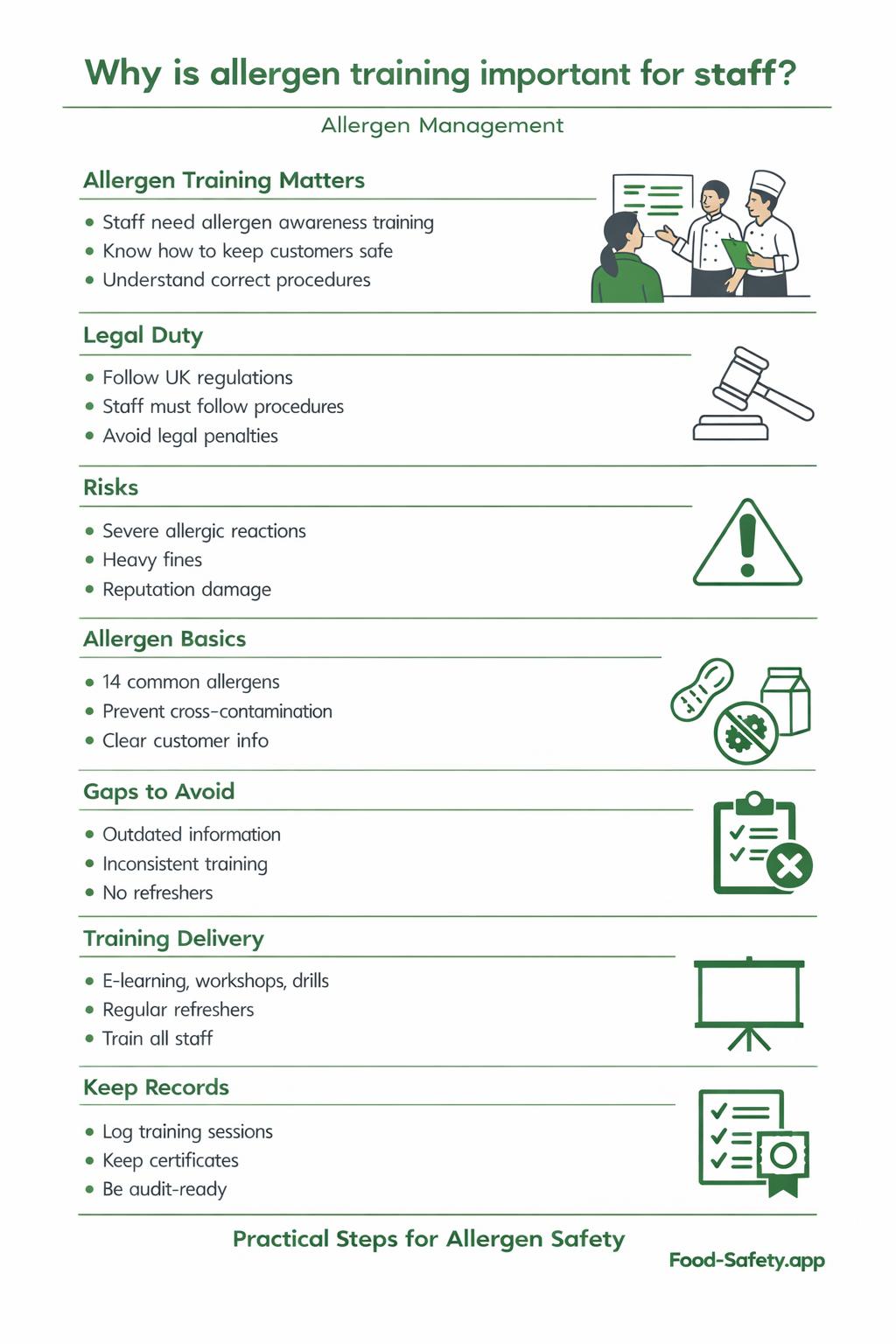
Training should be practical and specific to the business. Staff do not need a lecture; they need useful habits they can follow during a busy shift.
Core knowledge every team member needs
- The main food allergens and which dishes on the menu are likely to contain them.
- How to read labels and ingredient specifications correctly.
- The difference between an ingredient being absent and a dish being safe from cross-contact.
- How allergen information is stored and updated in the business.
- How to pass allergy information accurately between front-of-house and the kitchen.
- What to do if they are unsure about an ingredient or preparation method.
This applies across the team. A receptionist taking bookings, a server taking orders, a chef prepping food, and a supervisor checking output all need different but connected knowledge. A good training plan covers each role, not just the kitchen.
Common risks in professional kitchens
Most allergen incidents come from familiar, preventable situations. In a busy kitchen, it is easy for small shortcuts to creep in. Training helps staff spot these risks before they become a problem.
Cross-contact during prep
Shared chopping boards, tongs, fryers, sauce bottles, and garnish containers can transfer traces of allergens from one dish to another. For example, a gluten-free meal can be contaminated if it is plated on a surface where breaded food was just handled. Staff should know when equipment must be cleaned, changed, or dedicated to a specific task.
Wrong ingredient used
During busy service, staff may grab the wrong sauce, stock cube, dressing, or dessert topping. Training should cover checking labels every time, not just when a delivery arrives. Ingredients can change, and a familiar product may no longer be suitable.
Unclear communication
One of the biggest risks is poor handover. A customer may tell a front-of-house team member about an allergy, but the message may not reach the chef clearly. Or a waiter may assume a dish is safe because “it usually is”. Training must make it clear that assumptions are never enough.
Recipe changes and specials
Daily specials are useful commercially, but they create risk if allergen details are not checked before the dish is sold. Every recipe change should trigger a quick allergen review. That includes sauces, toppings, marinades, and side dishes.
How to train staff effectively
Effective allergen training for staff should be short, regular, and linked to the actual menu. A generic annual session is not enough on its own. Staff remember what they use in practice.
Make training role-specific
Front-of-house staff need to know how to answer customers politely, avoid guesswork, and pass requests to the kitchen accurately. Kitchen staff need to know how to check ingredients, manage prep, and stop cross-contact. Supervisors need to know how to verify systems, oversee handover, and deal with mistakes.
Use menu examples
Training works better when it uses real dishes from the business. Show staff which menu items are higher risk, such as sauces, baked goods, fried items, shared desserts, and dishes with mixed components. Explain how one ingredient can affect several menu items. See managing allergens safely in a busy kitchen for practical tips.
Include simple checks
A good training routine should end with a practical check. For example:
- Can the staff member find the allergen information for a dish?
- Can they explain what to do if they are unsure?
- Can they identify where cross-contact might happen during prep?
- Can they pass an allergy request to the right person without delay?
Train new starters quickly
New staff should not wait weeks before learning allergen controls. Basic training should be part of induction, followed by supervised practice. In a high-turnover environment, this is especially important because temporary or seasonal staff may be serving customers within days of joining.
Refresh training regularly
Menu updates, supplier changes, new equipment, and seasonal dishes all affect allergen control. Short refresher sessions are often more effective than one long annual session. A five-minute briefing before service can be enough to highlight a new risk or a changed recipe.
Day-to-day allergen controls that work
Training only helps if it turns into reliable daily practice. The strongest systems are usually simple, visible, and repeated.
Keep allergen information current
Allergen charts, recipe folders, and digital systems should all match the menu being served. If a recipe changes, update the information straight away. Out-of-date paperwork creates false confidence and makes staff more likely to rely on memory.
Use clear communication routines
When a customer discloses an allergy, the message should be repeated back, confirmed, and visible to the kitchen. Many businesses use written order markers, tablet notes, or colour-coded ticket systems. Whatever method you use, the key is consistency.
Separate and clean properly
Where possible, use dedicated utensils, pans, chopping boards, and storage containers for allergen-sensitive prep. If that is not possible, clean and sanitise thoroughly before starting the next task. Staff should be trained to understand that wiping a surface is not always enough if allergen residue could remain.
Check every step before service
A simple pre-service routine can prevent a lot of problems. Check that:
- Allergen information is up to date.
- High-risk ingredients are stored correctly.
- Dedicated equipment is available where needed.
- The team knows which specials need allergen checking.
- Everyone understands who signs off an allergen request.
What to do when things go wrong
Even with good systems, mistakes can happen. Training should prepare staff to stop, act quickly, and escalate the issue rather than hoping it will go unnoticed.
Corrective action in the kitchen
If there is any doubt about a dish, do not serve it. Start again using clean equipment, checked ingredients, and clear confirmation from the person responsible. If the dish has already started, it is safer to remake it than to guess.
How staff should respond to a mistake
- Stop service on the affected dish.
- Tell the supervisor or manager immediately.
- Check whether the customer has already been served.
- Follow the business’s emergency response process if exposure may have occurred.
- Record the incident so the system can be improved.
Training should make it clear that reporting a near miss is a good thing. A team that hides mistakes will repeat them. A team that reports them can improve quickly.
Building a culture of safety
The most effective allergen control happens when staff take it seriously without feeling frightened to ask questions. In a professional kitchen, confidence matters. People should feel able to say, “I’m not sure, let me check,” instead of taking a risk.
Managers can support this by praising good practice, keeping procedures simple, and making sure the right tools are available. If the kitchen is regularly under-resourced, no amount of training will fully remove the risk. Training should be matched with realistic staffing, clear labels, and workable prep routines.
For best practice, many businesses also use a food safety management system for catering businesses, such as Food-Safety.app, to keep allergen controls organised, recorded, and easier to review. See food safety systems in place.
For UK-specific public guidance, the Food Standards Agency is a useful reference point: Food Standards Agency allergen guidance for food businesses.
Conclusion
Allergen training is important because it protects customers, supports staff, and reduces the chance of preventable mistakes in busy service. The best allergen training for staff is practical, role-specific, and built around the way your kitchen actually works. It should cover communication, ingredient checks, cross-contact control, and clear action when something is uncertain.
If you run a food business, focus on making the system easy to follow every day. Keep information current, train new starters early, refresh knowledge regularly, and make sure staff know that asking questions is part of doing the job properly. That approach is better for customer safety, better for service, and better for the business.