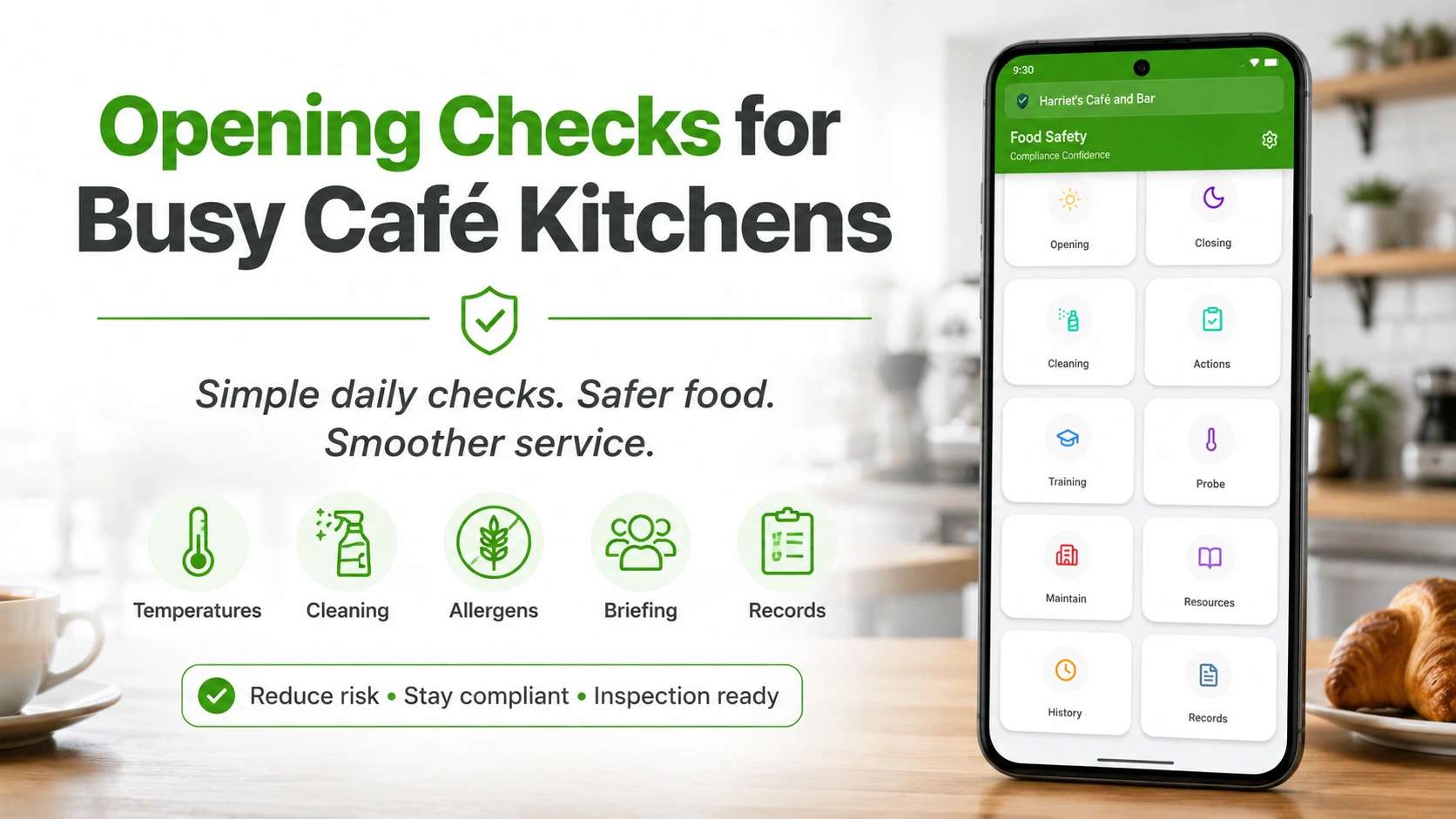
Opening checks for a small café provide a practical, disciplined approach to prevent service issues before the door opens. By focusing on essential items—temperature control, cleaning, allergen controls, staff briefings and fault spotting—they reduce waste, prevent complaints and stay inspection-ready with clear, time-stamped records. This approach aligns with Natasha’s Law for small food businesses.
Table of contents
- Why opening checks matter in a busy cafe kitchen
- Checking fridge, freezer and hot holding temperatures before service
- Cleaning at prep stations, hand wash points and service areas
- Allergen controls: labels, separate tools and menu information ready for the day
- Briefing staff on specials, high-risk items and daily tasks
- Spotting faults early and corrective actions
- Keeping records that show what was checked, when, and by whom
- Compliance and operational focus
Why opening checks matter in a busy cafe kitchen
In a fast-paced café, the first service moments set the tone for the day. Opening checks reduce the risk of temperature abuse, cross-contamination and missed tasks when staff are moving quickly. They also help managers identify issues from the previous shift before customers arrive. For example, a rushed morning can lead to unlabeled ingredients or an unclean prep area; catching these early avoids last-minute scrambles.
Good practice aligns with guidance from recognised authorities on safe food handling. See the Food Standards Agency for practical hygiene guidance. Food Standards Agency.
Use opening checks as part of a HACCP-based routine, and keep them simple enough to complete consistently each day. A small café can build confidence with a concise list that staff can complete in minutes rather than hours. how-to-stop-cross-contamination-in-service.
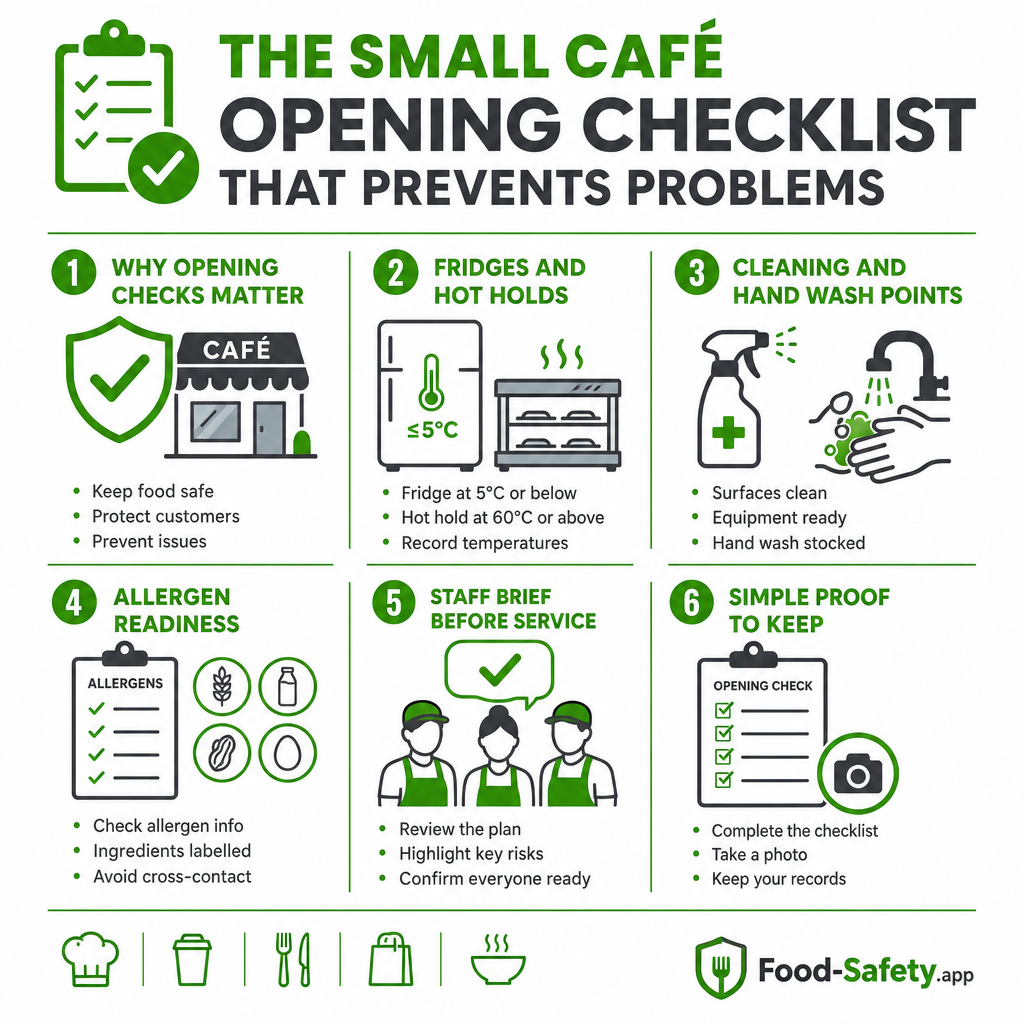
Checking fridge, freezer and hot holding temperatures before service
What to check
Verify that refrigeration units are maintaining correct temperatures, freezers are solidly cold and hot holding equipment is ready to serve hot foods at safe temperatures. Calibrate probes regularly and use the same logbook for all readings each shift.
How to record
Record the readings at the start of service, noting date, time, who checked, the unit and the actual reading. Include any corrective actions taken if out of range.
Practical scenario
A fridge reads higher than the safe range before breakfast; the unit is moved to a standby location, full batch items are placed in alternate equipment, and the fridge is set for a cold start under supervision.
A hot hold unit fails to reach a service-ready temperature before lunch; staff switch to plated items from a warm, approved standby and document the action taken.
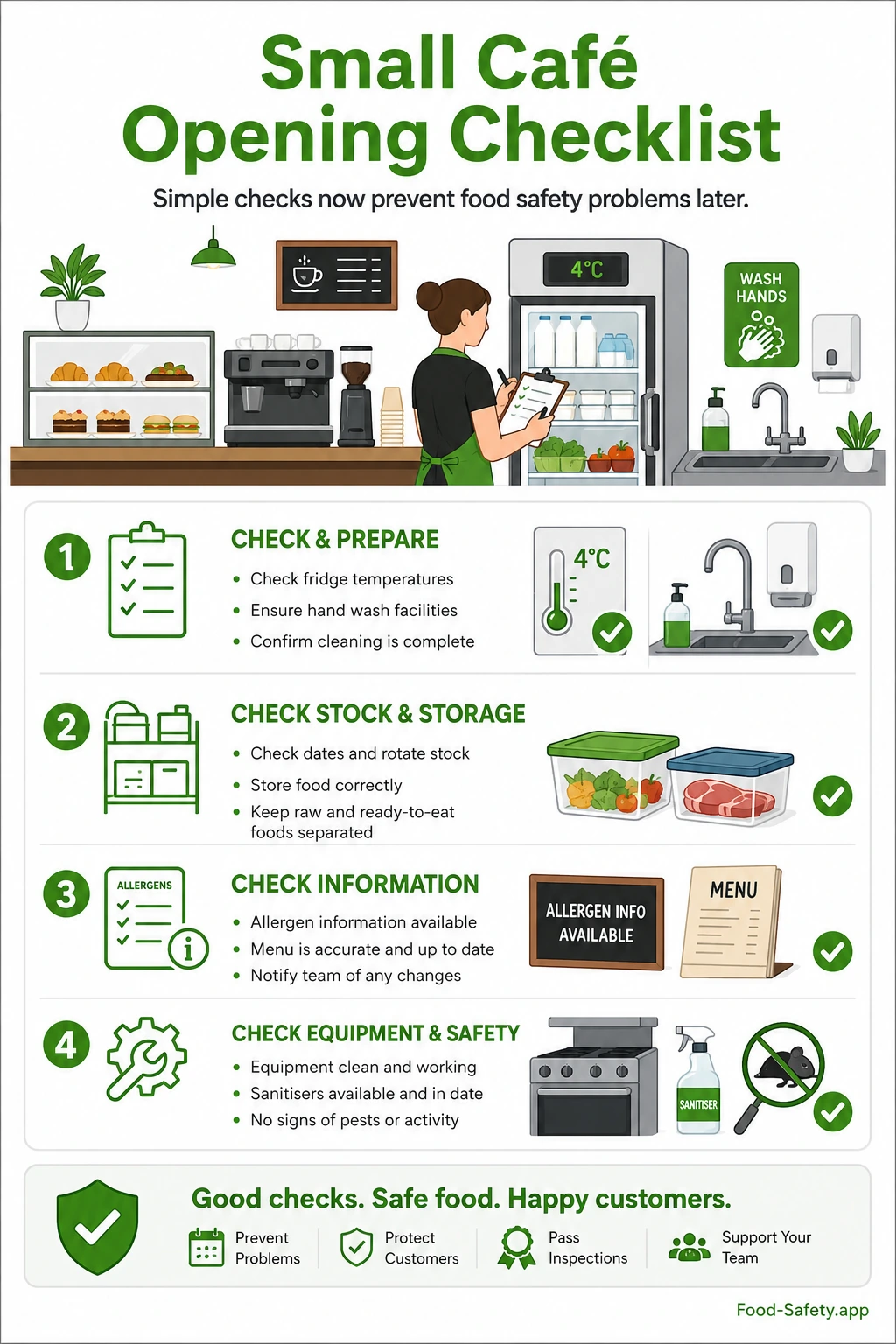
Cleaning at prep stations, hand wash points and service areas
What to check
Confirm that all prep surfaces, cutting boards and tool handles are clean; hand wash basins are stocked with soap and towels; service areas and counters are free of debris. A quick wipe-down at opening reduces cross-contact risks and keeps service areas visible to the team.
How to record
Note the cleaning tasks completed, who performed them and when. Include any issues found (sticky floors, clogged drains) and the action taken.
Practical scenario
Opening reveals a hand wash basin without soap or paper towels; the issue is corrected immediately and logged, with a reminder for a mid-shift check if stock runs low.
A prep station shows a blocked drain; housekeeping is alerted and the problem is recorded with a corrective action note.
Allergen controls: labels, separate tools and menu information ready for the day
What to check
Ensure every allergen has clear labels, separate utensils are in use for allergen-free work, and menu information is up to date for the day. Verify that any new deliveries come with proper allergen packaging and that staff know where to find the information quickly.
How to record
Log allergen checks with a simple confirm checklist and capture who reviewed the labels and packaging. Record any changes to recipes or suppliers that affect allergen information.
Practical scenario
A delivered ingredient arrives without clear packaging; staff flag it, update the team, and ensure the item is labeled and stored correctly before prep begins.
Briefing staff on specials, high-risk items and daily tasks
What to cover
Use a short briefing to highlight daily specials, high-risk items (ready-to-eat, raw or marinated foods, dairy-heavy dishes) and the cleaning tasks due for the day. Include any issues from the previous shift and what was done to resolve them.
How to record
Document who led the briefing and a brief summary of decisions or actions. A quick sign-off log helps establish accountability and traceability.
Spotting faults early and corrective actions
Faults to look for
Be vigilant for broken fridge seals, low sanitiser levels, missing probes, blocked drains, pests or leaks. Early discovery limits risk and helps maintain service continuity.
Corrective actions
Use a simple priority framework: priority one (no immediate danger, log and fix by shift end), priority two (needs attention within 24 hours), priority three (monitor until next routine). Record actions taken and responsible person.
Keeping records that show what was checked, when, and by whom
What a practical record looks like
Keep a compact opening log that captures the essential checks: date, staff member, items checked, results and any corrective actions. The goal is to create a straightforward evidence trail for inspections and audits without creating bureaucracy.
Simple example
| Item | Check/Result | Checked by | Time | Action taken |
|---|---|---|---|---|
| Fridge temperature | Within target range | A. Patel | 07:15 | N/A |
| Prep area cleanliness | Clear and sanitized | J. Smith | 07:18 | Re-cleaned splash zone |
| Allergen labels | Present and legible | R. Chen | 07:20 | Added label to new ingredient |
| Hand wash station | Soap and towels available | H. Lewis | 07:22 | Soap refill needed by 11:00 |
Compliance and operational focus
Turn opening checks into a clear, repeatable practice that supports compliance and day-to-day efficiency. Documenting checks consistently builds confidence with staff and inspectors alike. It also helps management spot patterns, such as recurring drain issues or late deliveries, so you can address root causes rather than chasing symptoms.
Practical, observable routines reduce bounce rate and increase engagement with your food safety processes. Use the findings to reinforce training and drive continuous improvement in your café’s daily workflow.
To support ongoing efficiency, consider a tool that centralises opening checks and records. Food-Safety.app is a food safety management system for catering businesses.
Explore food safety management for catering
Centralise your opening checks and records to save time, improve consistency and support inspections with a simple, scalable food safety management approach for catering businesses.