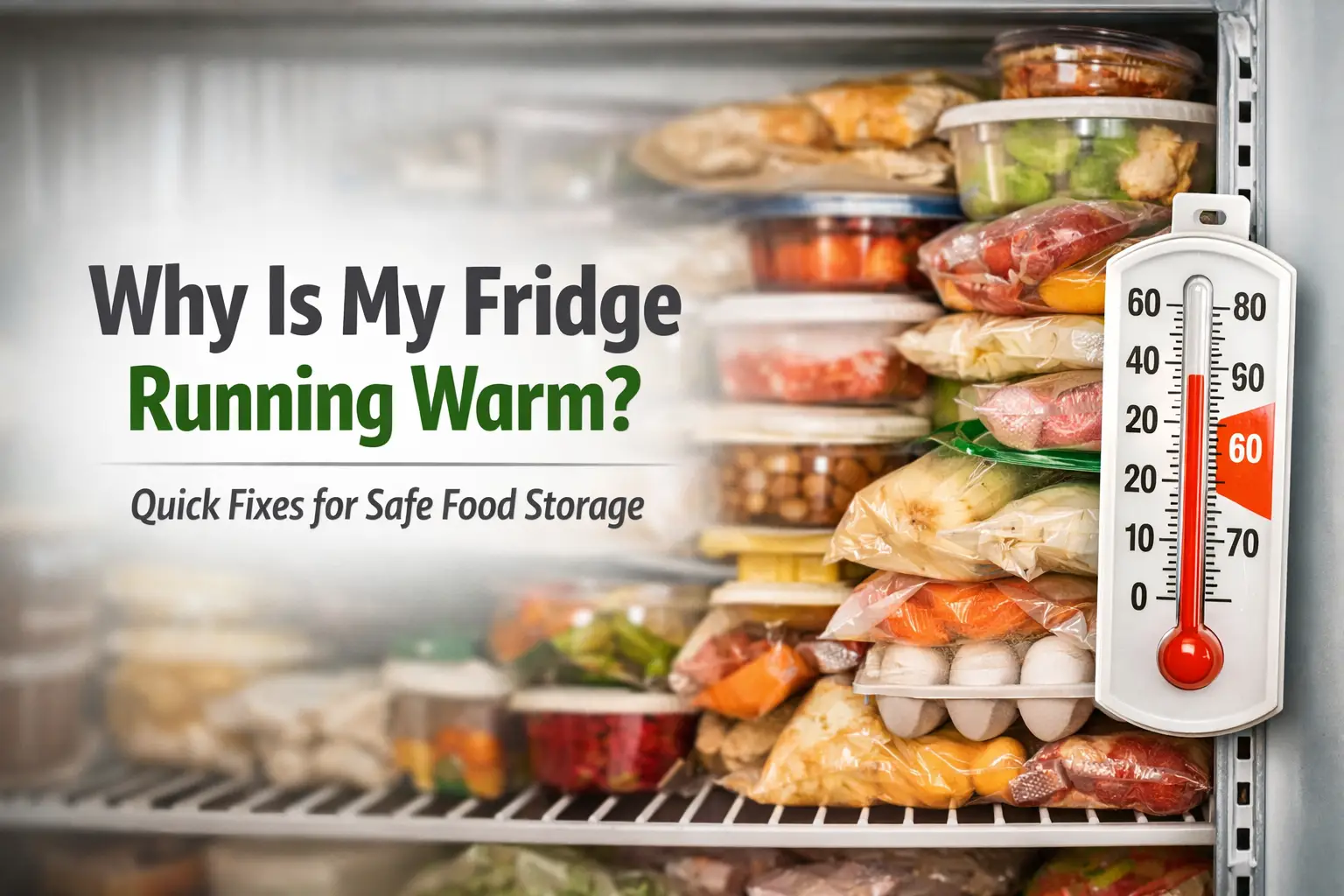
Find out why a working fridge still runs warm and what staff can fix straight away. Great for kitchens dealing with repeat temperature issues.
Table of contents
Why fridges run warm during service
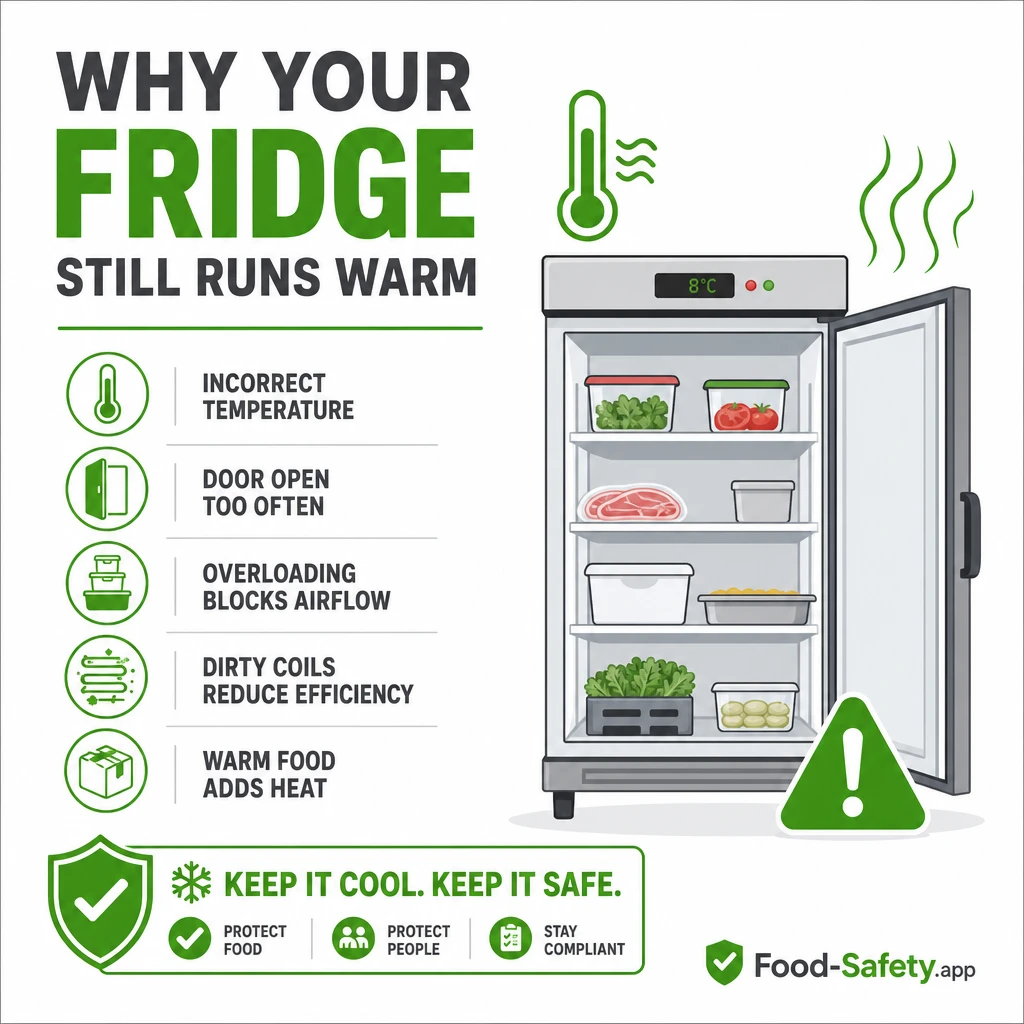
In busy catering operations, fridges can drift above safe temperatures due to airflow issues, overloaded shelves, and heat transfer from prepped items. Keeping food cold is as much about airflow as it is about temperature readings. When mean temperatures creep above 5°C, risk rises for perishable items across recipes, garnishes, and dairy.
Airflow and overload
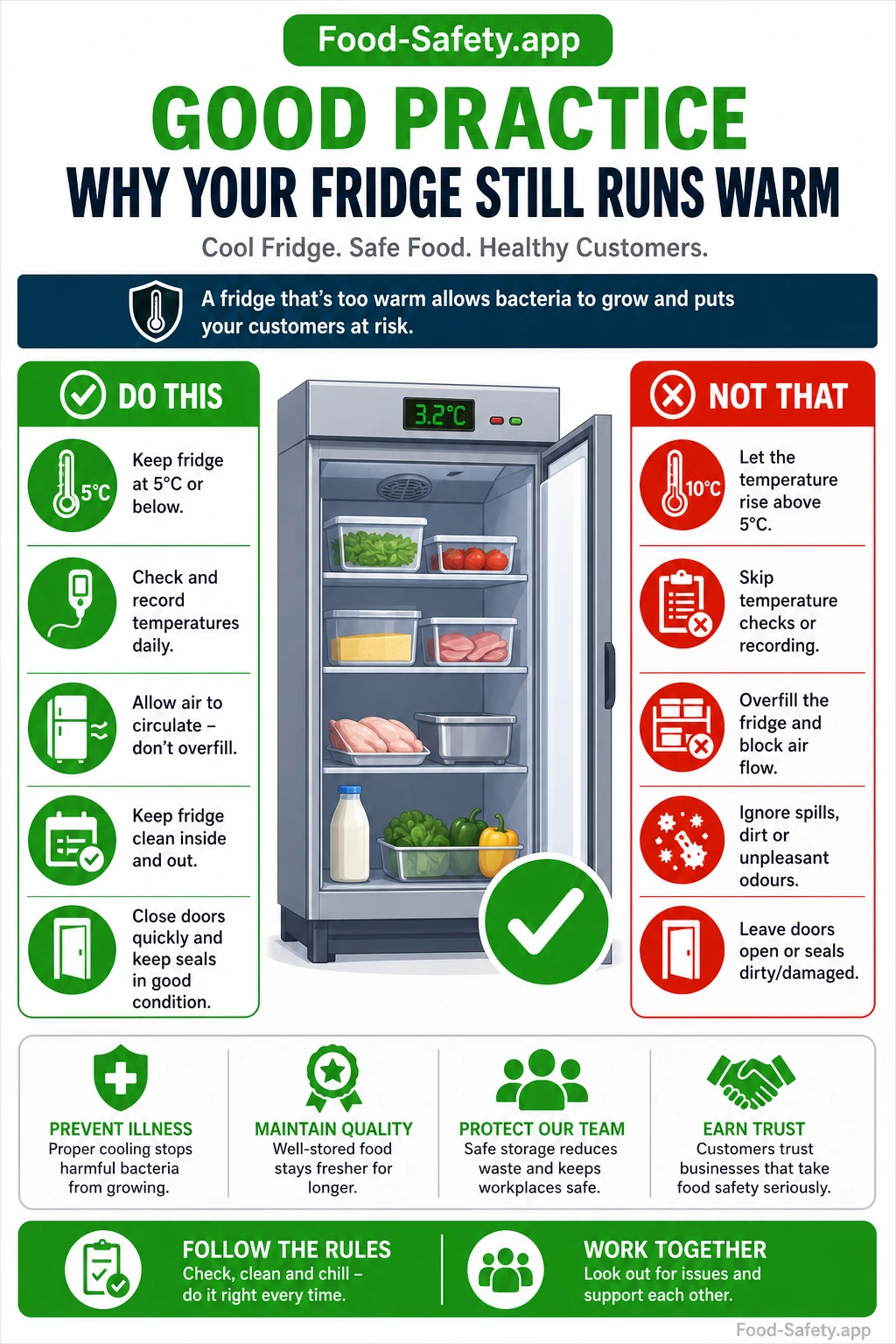
Overloading blocks air channels; stacked containers press against doors; air cannot circulate to reach every shelf. Always respect stack limits and ensure there is space between items to let cold air move.
Heat from hot items
Hot or warm items entering cold storage can warm the interior quickly. Cool hot items on a separate counter before stacking them into the fridge, not into the bottom shelves.
Common storage mistakes that trap heat
Simple missteps are common in busy service. Correcting them saves energy, protects product quality, and eases inspections.
Blocking vents and improper shelving
Vent blocks disrupt airflow. Keep vents clear, and arrange shelving to allow air to circulate around every container. For broader cross‑contamination guidance, see cross-contamination in food safety explained.
Separating hot and cold items properly
Avoid placing hot trays directly on cold shelves; use cooling racks, and allow ventilation space between items to prevent heat pockets. This also reduces cross-contamination risk—see allergen training for new and agency staff.
The impact of door opening habits
Frequent or protracted door openings during service raise the fridge’s mean temperature and increase condensation and frost risk. Plan open times and designate runners for quick restocking to minimise time doors stay open.
Duty of service: door-open duration
Set a maximum door-open window per service and train staff to keep doors closed during checks. For legal responsibilities and best practices, see the law and your responsibility.
Getting accurate temperature readings
Probe placement, calibration, and reading methods matter more than you think. Relying on a single probe or reading from the door can mislead you about overall performance.
Probe location and calibration
Place probes in representative areas away from vents and doors; calibrate with ice-water method or manufacturer guidelines; use a second sensor for cross-check.
Air temp vs core temp: why it matters
Air temp does not always reflect the core temperature of stored items. Use core temperature checks for critical items like dairy and ready meals when possible. For guidance on inspections, see FHS scores explained.
Quick fixes you can implement today
When temperatures drift, quick organisational moves can bring readings back within range and restore compliance during inspections.
Reorganise layouts and separate streams
Move non-perishables away from the cold area; create dedicated zones for raw and cooked to prevent cross-contamination while improving airflow.
Stagger deliveries and open-door discipline
Schedule deliveries away from peak service; use door-open reminders and quick-checks to limit time the doors stay ajar.
Logging and monitoring with templates
Keep a simple records trail: date, item, temperature, action taken, and staff initials. Recalibrate probes and log results for audit-ready history. For guidance on essential records, see what-food-safety-records-should-a-small-business-keep.
When repairs are needed and how to document actions
Not all issues are user error. Gasket wear, fan failure, or defective seals can cause persistent warming. Clear corrective action records facilitate audits and maintenance planning.
Common faults: gasket wear, fan failure
Inspect seals for cracks, confirm fan operation, and listen for unusual noises. Replace faulty parts and test after repair. For guidance on record-keeping, see what-food-safety-records-should-a-small-business-keep.
Creating corrective action records for audits
Document fault, fix, date, and verification. Keep a history view that shows trends and improvements over time. For HACCP concepts, see what-is-haccp-in-food-safety-management.
Practical scenarios
Use these real-world examples to refine your routine.
- Scenario 1: Fridge overloaded with prepped garnishes; temperature drifts above 5°C. Action: remove excess items, re-layout shelves, monitor with probe calibration; log in the app.
- Scenario 2: Service runs late, door left ajar; temp rises near 8°C. Action: implement door-open reminders and quick-filtered checks.
- Scenario 3: Thermometer placed in dead air; readouts misrepresent core temps. Action: relocate probe, calibrate, and verify with a secondary sensor.
- Scenario 4: Shelves stacked to the top blocking vents. Action: reduce load, improve airflow, document corrective actions.
- Scenario 5: New staff ignore routine checks. Action: assign opening/closing tasks and training reminders via app templates.
Conclusion and next steps
Maintaining safe temperatures in a busy catering environment requires consistent organisation, precise readings, and clear corrective actions. Use the routine checks, logs, and simple fixes above to keep fridges within safe ranges and to stay audit-ready during inspections. Consider adopting a structured system to support ongoing compliance. A HACCP-based approach can help you build robust controls and documentation. See what-is-haccp-in-food-safety-management for guidance.
Food-Safety.app is a food safety management system for catering businesses.
Further resources
Discover practical fridge management resources, templates, and ongoing guidance to help your team maintain safe temperatures, document actions, and stay audit ready across busy catering operations.