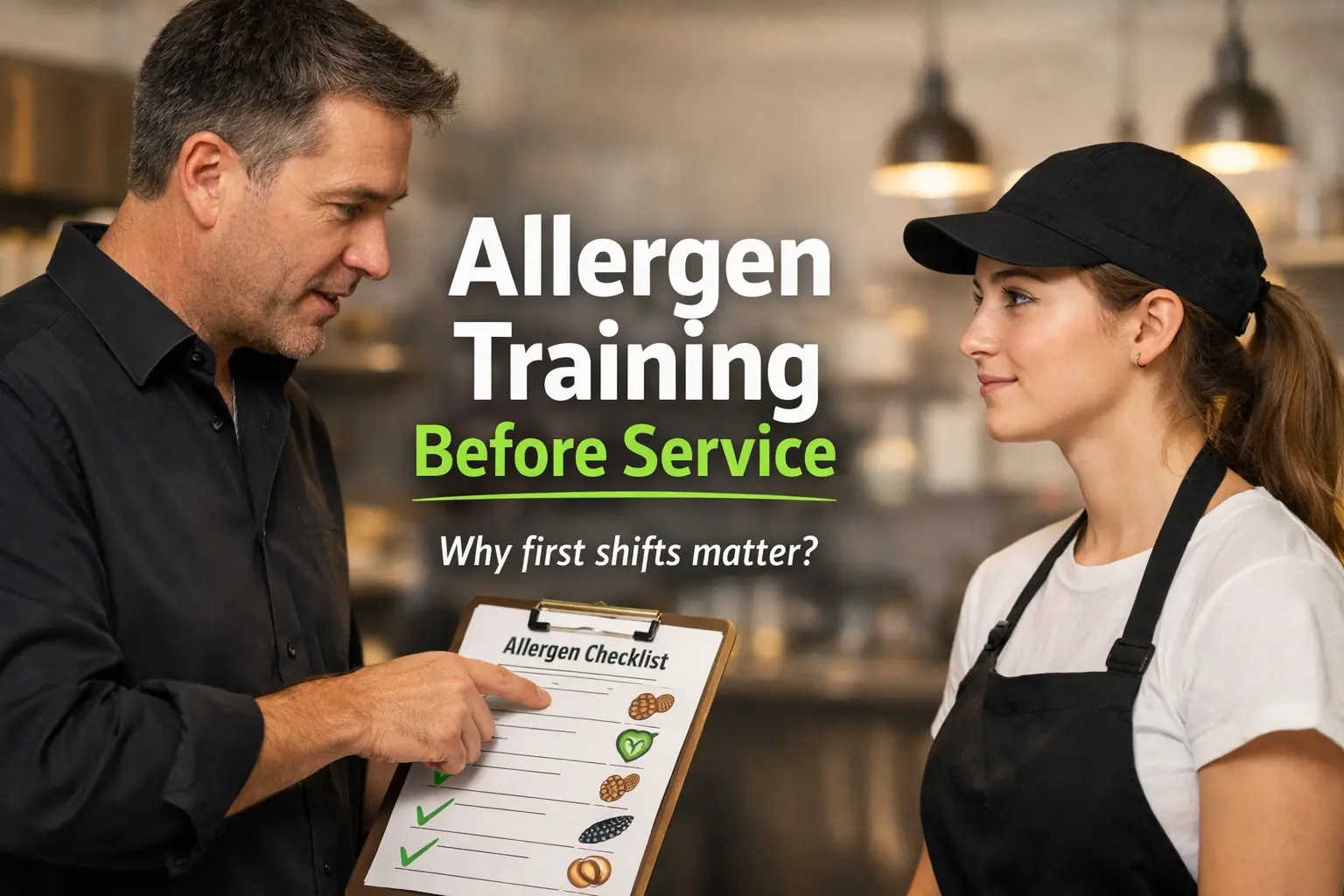
New staff need allergen training before service. A simple checklist helps managers stay in control.
Why the first shift matters
The first shift sets the baseline for allergen control. If new staff or agency workers start without clear allergen responsibilities, the risk of cross-contact increases during prep, service, and cleaning. A defined start-up routine reduces mistakes, supports consistent customer communication, and lowers the likelihood of an incident that could trigger a reputational or regulatory risk.
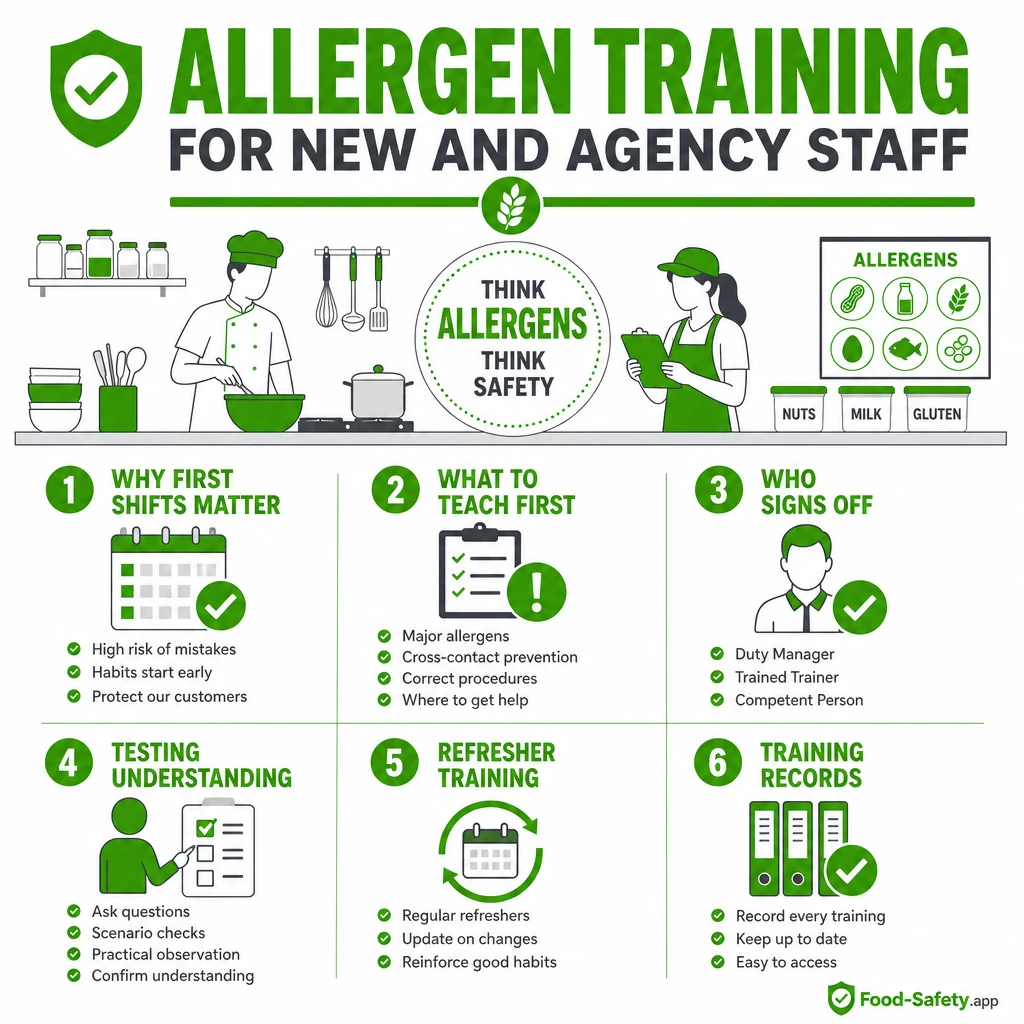
Key considerations for the first shift include understanding who is responsible for allergen checks, how to communicate allergen needs to the kitchen, and how to document what has been learned. When the shift routine is predictable, even mixed teams can operate confidently and safely.
What to teach first
the 14 recognised allergens
Start with the official list used in most UK catering environments. Natasha’s Law provides regulatory context. Ensure every new and agency worker can recognise these allergens and where they commonly appear in dishes and ingredients:
- cereals containing gluten (such as wheat, barley, rye, oats, spelt, kamut)
- crustaceans
- eggs
- fish
- peanuts
- soybeans
- milk
- tree nuts
- sesame
- sulphur dioxide and sulphites (at certain levels)
- lupin
- molluscs
- celery
- mustard
Explain how these appear on the menu, in sauces, garnishes, and in pre-prepared items. Encourage workers to ask for confirmation if unsure.
menu items and where allergens are listed
Teach staff to locate allergen information for every menu item, whether on a printed allergen guide, a digital menu, or supplier sheets. Make it a habit to check the version of the allergen information before taking orders or starting a dish. Clear allergen labelling on packaged food.
avoiding cross-contact in prep, storage, and service
Cross-contact prevention requires clear separation of equipment, surfaces, and storage. Use colour-coded boards and dedicated utensils, label containers, and assign specific preparation zones for allergen-free items. Implement simple handoff routines so that any allergen concerns are communicated to the kitchen before work continues. How to clean to reduce allergen cross-contact.
handwashing, glove changes, and cleaning between tasks
Hand hygiene and cleaning are non-negotiable between tasks. Instruct staff to wash hands for at least 20 seconds, change gloves when moving from allergen-containing tasks to allergen-free work, and wipe surfaces with approved cleaners between tasks. Keep basic cleaning logs to show when the last clean occurred and which products were used. Why staff still get handwashing wrong.
what to-do if a customer asks about allergens or has a reaction
Provide a clear, practical response protocol. A staff member should listen, confirm the exact items involved, and relay the information to the kitchen team or allergen champion. If a reaction occurs, follow the business’s emergency plan: assess the situation, seek medical help if needed, document the incident, and review what went wrong to prevent recurrence. How to stop cross-contamination in service.
who signs off training
Clear accountability is essential. Training should be signed off by someone with authority to confirm understanding before a staff member works unsupervised.
- supervisor
- head chef
- manager
Make sign-off a formal step in induction and ongoing with agency staff. Use a short, verifiable check to confirm understanding, not just completion of a worksheet. If gaps are found, re-train immediately and document the correction.
testing understanding
Testing should be practical and immediate, not theoretical only. Use quick checks to confirm retention and application.
- short verbal check: ask staff to explain how they would pass an allergen request to the kitchen
- simple scenario questions: present a common service scenario and ask for the correct steps
- observe safe practice on the job: supervise during opening and service to confirm routines are followed
Document outcomes of each testing step. If understanding is lacking, provide concise re-training and re-test before deployment on the floor.
refresher training
Refresher training should occur after changes or at planned intervals. Use triggers such as menu updates, new equipment, incidents, or the return of agency staff to re-align the team on key points. Regular short refreshers help casual or seasonal staff stay current and reduce the chance of drift in practice.
- menu changes
- new equipment or process changes
- incidents or near misses
- agency staff returning after a break
training records
Maintain clear, dated records of who was trained, who delivered the training, and what was covered. Link training to specific menu items and allergen information, and record the date for review. Keeping well-organised records supports inspection readiness and demonstrates due diligence.
operational routines and practical examples
Concrete routines help teams apply allergen training consistently. Consider these practical examples and how they map to daily tasks:
- Agency waiter takes an order and must pass allergen requests accurately to the kitchen, noting any required substitutions.
- New kitchen porter cleans surfaces after nut-containing prep and before the next task begins, with a fresh cleaning cloth and sanitiser.
- Seasonal staff member serves the same dish with different allergen requirements and checks the correct version first.
- Supervisor notices a gap in understanding during service and offers immediate re-training with a quick, focused demonstration.
key resources
For official guidance on allergens, see reputable authorities such as the Food Standards Agency. the 4 Cs of food hygiene practical guidance can further support day-to-day practice.
Explore allergen controls in practice
Learn practical allergen controls you can apply daily in catering to protect guests, reduce risk, and support regulatory compliance at your operation.