Paperwork can hurt your hygiene rating when the kitchen looks spotless, the team is on top of service, and the inspector still cannot see enough evidence of safe management. A strong food hygiene rating is not just about shiny worktops and neat fridges; it also depends on whether your records show that food safety is controlled, checked, and followed through day after day. In the UK, that matters a lot, though rules and scoring can differ in other countries.
In other words, a tidy pass at the pass is great, but if your temperature logs, cleaning schedules, and allergen controls are patchy, the paperwork can make your business look less reliable than it really is. Here is how that happens, what inspectors are looking for, and what busy catering teams can do to keep the paperwork from quietly undoing all the hard work in the kitchen.
Why paperwork matters to a food hygiene rating
The food hygiene rating system is not just a photograph of how clean your kitchen looks on the day. Inspectors also judge how well you manage food safety overall. That includes whether you can prove the basics are being done consistently: safe cooking, cooling, chilling, cleaning, pest control, allergen management, and staff training.
If records are missing, incomplete, or clearly only filled in when someone suddenly remembered at 4.45pm, confidence in management drops. And once confidence drops, so can the score. A business might have good habits in practice, but if it cannot show those habits clearly, it risks looking disorganised. Inspectors are not mind readers, sadly. This aligns with HACCP principles explained.
This is especially important in restaurants, hotel kitchens, school canteens, takeaways, cafés and contract catering where several people handle the same tasks. If one person knows the chill checks are done and another is sure they are “probably done”, the paperwork is often what reveals the truth.
What inspectors look for in records
Good paperwork should make it obvious that food safety controls are understood and used. Inspectors will usually want to see records that are current, completed properly, and matched to what is happening on site.
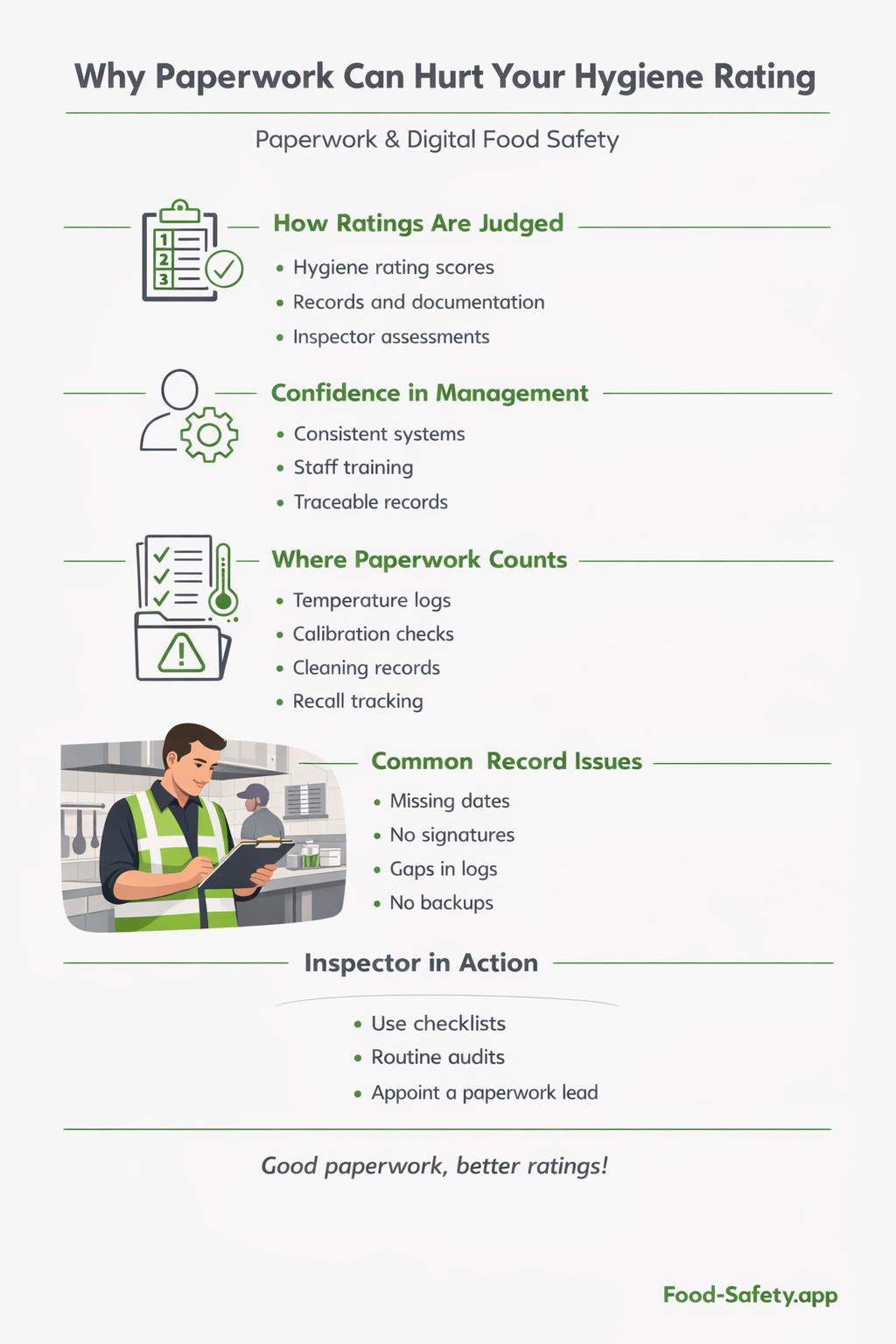
Examples of records that matter
- Daily temperature checks for fridges, freezers and hot holding.
- Cooking and cooling records for high-risk foods.
- Cleaning schedules showing what was cleaned, when, and by whom.
- Allergen information checks and ingredient control records.
- Staff training records, especially for new starters and key controls.
- Pest control visit reports and follow-up actions.
- Maintenance records for broken seals, faulty thermometers or equipment issues.
The important bit is not just having a folder of forms. It is showing that the records connect to real practice. If a fridge log says the walk-in has been checked every morning, but staff cannot explain what happens when the temperature is out of range, that is a problem. A clean-looking kitchen can still score badly if the paperwork suggests the team is winging it.
Common paperwork pitfalls that drag ratings down
Most paperwork failures in food businesses are not dramatic. They are the small, repeated issues that make a system look weak. You know the sort: the forms are there, but they are not quite telling the story you want.
1. Records are incomplete
Blank boxes, missing signatures, no corrective action, no date, no name. That is the paperwork equivalent of saying, “I definitely did it” while holding nothing in your hands. Incomplete records make it hard to prove that checks were actually completed.
2. Checks are done, but not reviewed
Some teams dutifully fill in logs and then file them away forever. If nobody reviews the sheets, recurring issues are easy to miss. For example, a fridge that keeps creeping warm every Friday night because of overloading or late deliveries will stay a hidden problem until someone notices the pattern.
3. The paperwork does not match the kitchen
If your cleaning schedule says the deli slicer is cleaned daily, but the slicer is still sticky on inspection day, the paperwork loses credibility fast. Inspectors notice when the record and the environment do not line up.
4. Old forms are still in use
Using an outdated template can mean missing key controls such as allergen checks, cooling times or sign-off sections. It can also suggest poor management, even if the team is trying hard.
5. Staff do not understand the paperwork
If only one manager knows where the temperature log lives, or half the team thinks allergen checks are someone else’s job, the system is fragile. Paperwork should support the team, not sit there looking important on a shelf like a decorative potato.
How to fix weak food safety paperwork
The answer is not more paperwork for the sake of it. The answer is better paperwork: simple, consistent, and tied to daily routines.
Make records short and practical
Use forms that busy staff can complete quickly and accurately. If a sheet takes ten minutes to fill in, people will rush it or skip it. Keep each record focused on one task, with clear prompts for date, time, result, corrective action and initials.
Build checks into the working day
Attach logs to routine moments: opening checks, end-of-service close-down, delivery receiving, and shift handovers. When paperwork is linked to something that already happens every day, it is less likely to be forgotten.
Assign clear responsibility
Every log needs an owner. Not “the team”, not “whoever sees it first”, but a named role or person. That way, if something is missed, you know where to fix the gap.
Use corrective actions properly
Do not just write down a problem. Record what was done about it. If a fridge was too warm, note whether food was moved, the engineer was called, or the unit was emptied and repaired. This shows control, not just awareness.
Review records regularly
Set aside time each week to check logs for patterns and gaps. Look for repeated misses, missing signatures, or checks that seem too perfect to be true. If every fridge is always exactly the same temperature every day, either you have a miracle appliance or somebody is copying yesterday’s answer.
A practical daily paperwork routine
A reliable routine can stop paperwork becoming a last-minute scramble before inspection. Here is a simple approach that works in busy catering environments. For training resources, see Training records.
Opening checks
- Check fridge and freezer temperatures.
- Confirm food delivery temperatures where relevant.
- Record any equipment faults or stock issues.
- Make sure allergen information and prep plans are available.
During service
- Monitor hot holding and chilled storage.
- Record cooking and cooling checks for high-risk foods.
- Note any changes to menus, recipes or substitutions.
- Keep cleaning tasks updated as they are completed.
End of day
- Review outstanding actions and close them off.
- Sign off completed cleaning tasks.
- Check any out-of-range temperatures have been dealt with.
- Store records where the next shift can find them quickly.
These steps are simple, but they help show consistency. In a school canteen or hotel kitchen, that consistency is often what separates a decent inspection from a disappointing one.
Paper files or digital records?
Both can work if they are used well. Paper is fine in some kitchens, especially where systems are simple and the team is stable. Digital systems can make it easier to track trends, spot missed checks, and keep records in one place. They can also support temperature control in kitchen monitoring.
The best system is the one your team will actually use during a busy service, not the one that looks impressive in a supplier brochure. A digital system can reduce missing records, but only if staff are trained and logs are completed in real time. Paper can work too, but it needs discipline, clear filing, and regular review.
If you manage several sites, digital records may help you keep standards consistent across the business. That matters when one site is well organised and another has a clipboard that seems to have gone on holiday.
Showing better management in a busy kitchen
When inspectors see strong management, they see evidence that food safety is under control even when the kitchen is under pressure. That means staff know what to do, records are available, and problems are dealt with properly.
A helpful rule is this: if a stranger walked in during peak service, could they quickly understand how you manage hygiene from your records and team behaviour? If the answer is yes, your paperwork is doing its job.
UK guidance from the Food Standards Agency is a useful place to check what good food safety management looks like for your type of business. If you work outside the UK, local rules and inspection systems may differ, so always follow the standards that apply where you operate. For broader context, see Understanding food hygiene ratings.
For teams that want to tidy up the admin side without making life harder, a food safety management system for catering businesses like Food-Safety.app can help keep records consistent and easier to review.
Final takeaway
Paperwork can hurt your hygiene rating when it fails to prove that food safety is managed properly. The kitchen may look clean, the team may be doing the right things, and the service may run like clockwork, but if the records are incomplete or messy, confidence in management drops.
Focus on simple, accurate, well-reviewed records that match daily practice. Keep checks short, assign responsibility clearly, record corrective actions, and review patterns before they become problems. Do that consistently, and your paperwork will support your food hygiene rating instead of quietly sabotaging it behind the scenes.