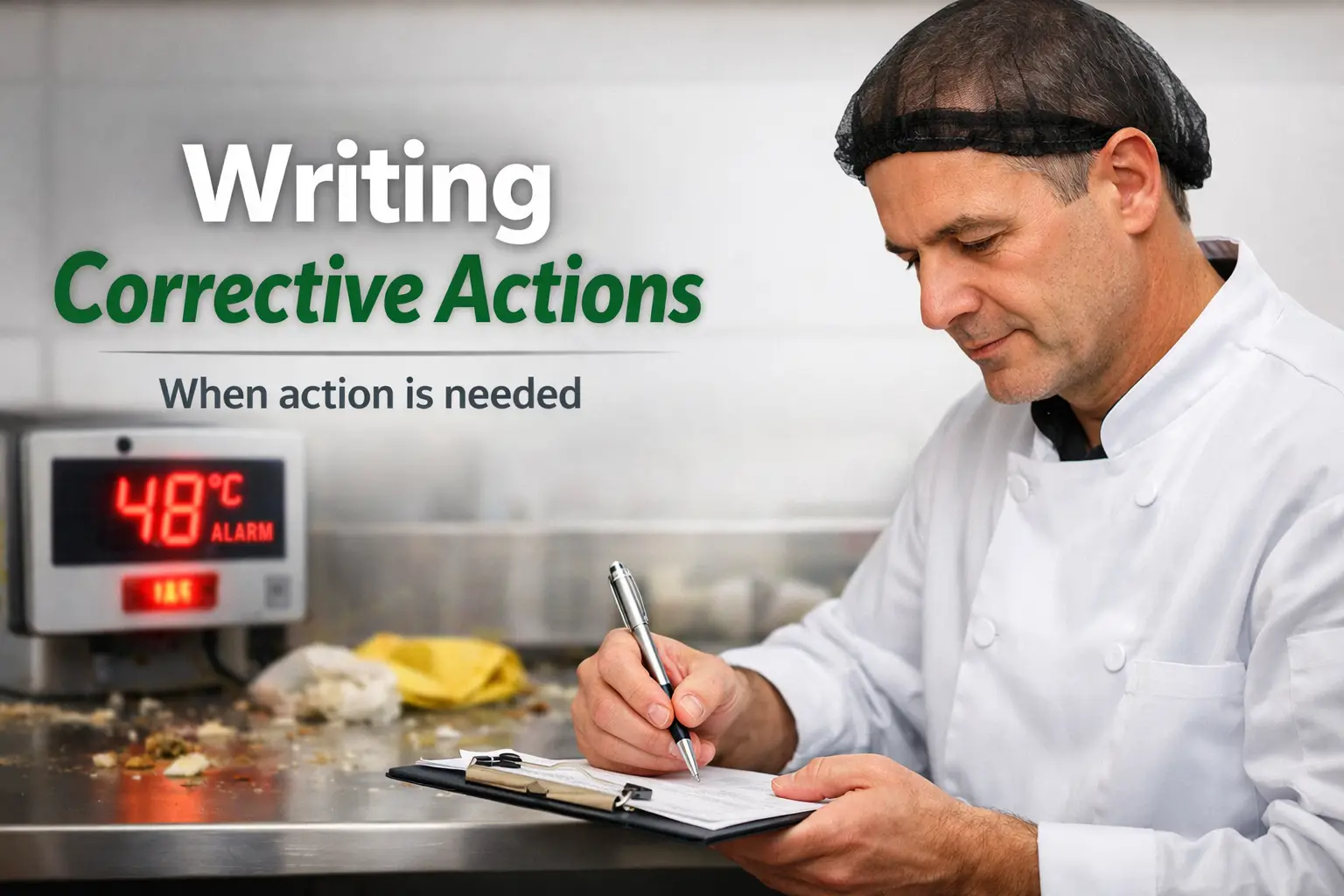
See what counts as a corrective action in food safety and how to record it clearly so your paperwork shows control not guesswork after a problem.
Table of contents
- What counts as a corrective action in food safety
- When staff should act: triggers for corrective action
- Recording corrective action: what to include
- Practical examples and scenarios
- Linking corrective action to traceability and management review
- Building a compliant records system
- Operational tips for corrective actions
What counts as a corrective action in food safety
Definition and purpose
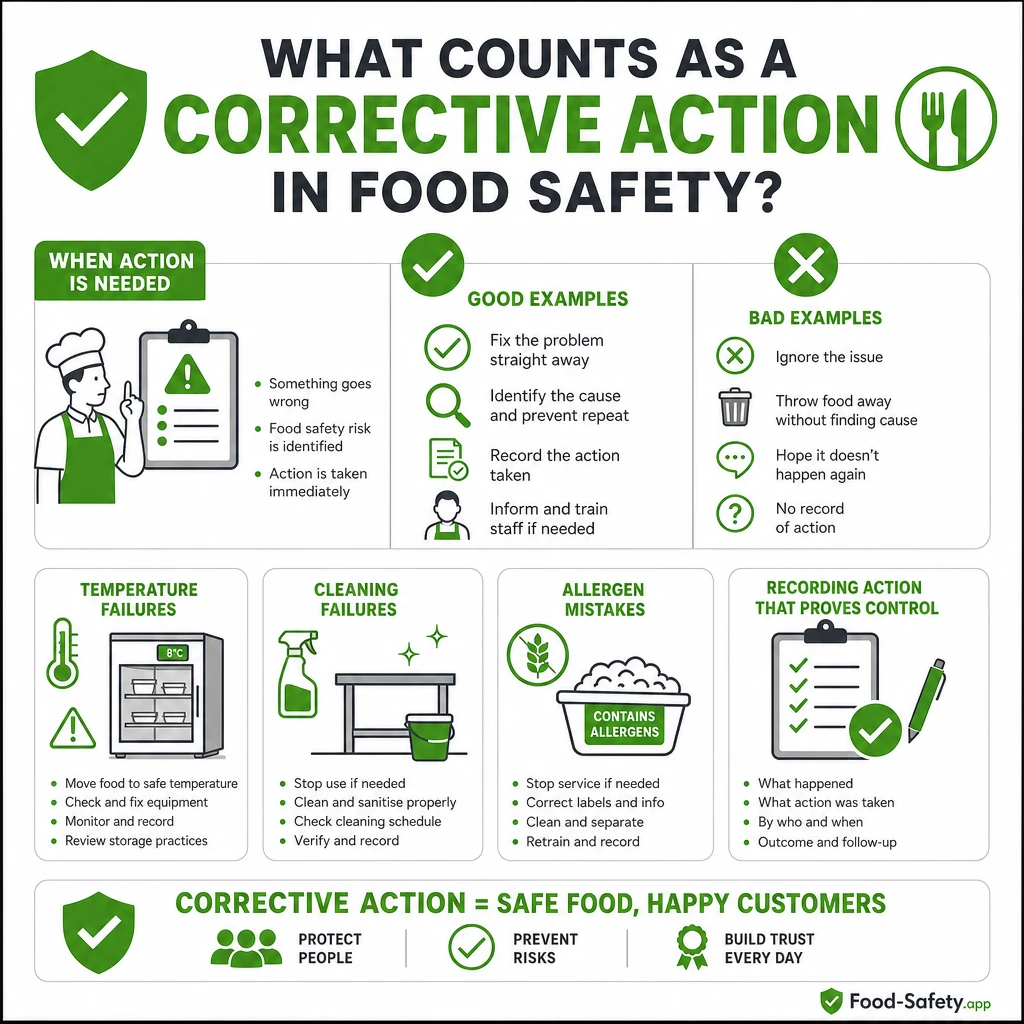
Corrective action is the step taken to fix a food safety issue and reduce risk. It is more than noting a fault; it leads to a safe condition and prevents recurrence in a busy kitchen.
The 4 Cs of food hygiene made practical offer a concise framework.
What makes a good corrective action record
A good corrective action record is specific, dated, and easy to review. It states what happened, what was done, who carried it out, and the outcome. It should show evidence of control and any necessary follow-up actions to prevent a repeat.
When staff should act: triggers for corrective action
Key triggers
- Failed checks or deviations from critical limits
- Unsafe temperatures detected during storage or service
- Cleaning gaps or missed sanitation tasks
- Allergen mistakes or mislabelling
- Damaged equipment that could compromise safety
- Pest sightings or signs of infestation
- Delivery issues such as faults, damaged packaging, or late arrival
Recording corrective action: what to include
Recording should capture the full response, not just the fault. A clear entry helps with traceability and inspection readiness. Guidance from the Food Standards Agency reinforces these expectations.
Simple food safety tips for busy kitchens help keep records clear.
| Date | Time | Issue observed | Action taken | Person responsible | Verification / Effectiveness | Outcome |
|---|
Use the table below to capture corrective actions; add rows as issues are addressed. The template supports multiple entries per day and across different risk areas.
Practical examples and scenarios
Chiller found above safe limit
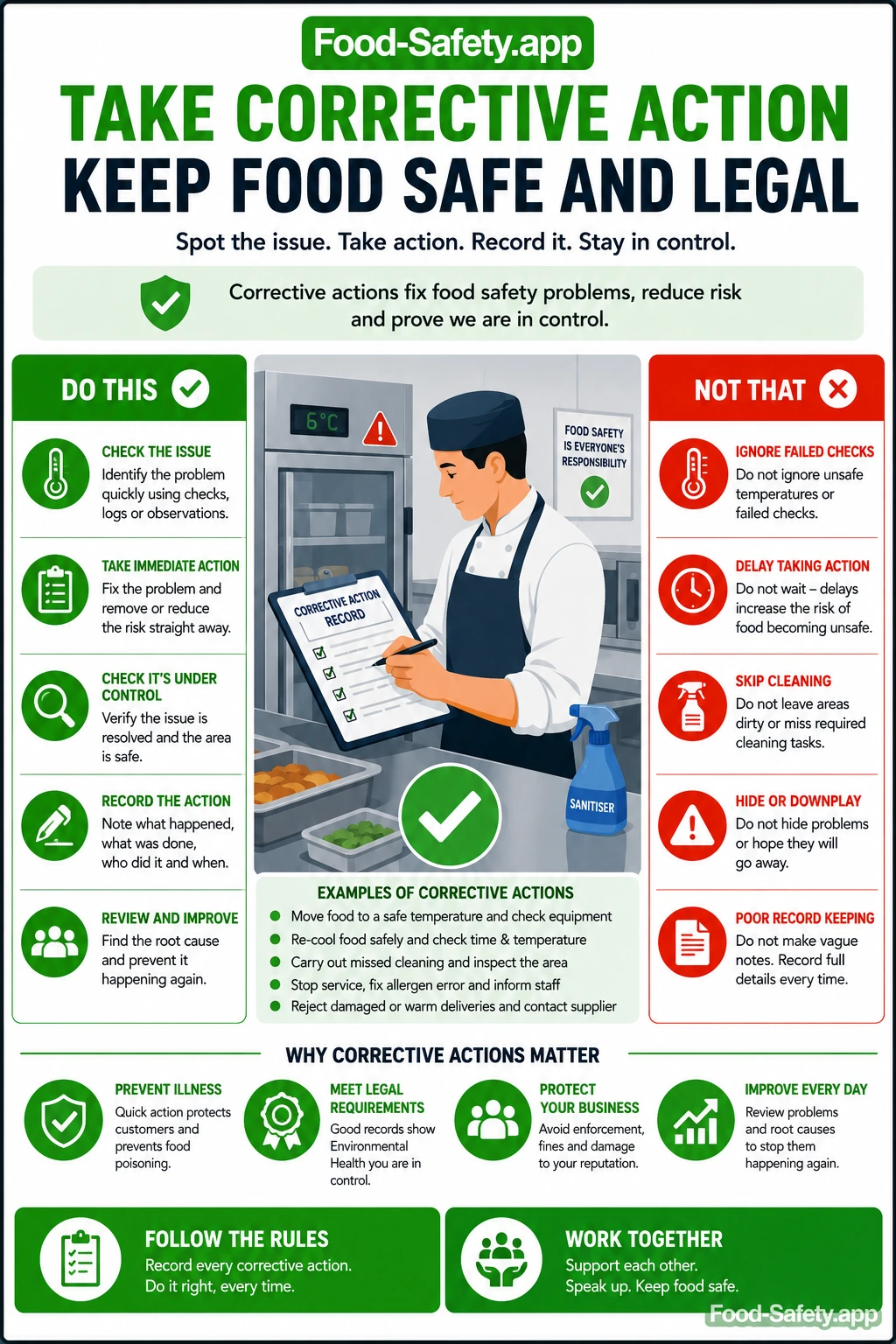
Move affected food to a secure area, recheck product temperatures, adjust the plant settings or call an engineer if needed, and dispose of or recondition any product as appropriate. Record the change, the person who authorised it, and the action taken to restore cold chain.
Cooling too slowly
Split large portions into smaller containers, ensure rapid cooling to the required temperature, and document how time and temperature were controlled. Verify the cooling process and adjust procedures if this becomes recurrent.
Cleaning task missed
Carry out the missed clean, inspect the area, note follow-up action (including retraining if needed), and confirm next scheduled cleaning. Record who checked the result and the date/time of completion.
Allergen error on menu item
Stop service for the item, relabel or remake the dish, inform staff of the allergen controls, and document the steps taken to prevent a recurrence. Include staff briefings and any supplier checks if relevant.
Delivery arrived warm or damaged
Reject the items, contact the supplier, and document the condition and the action taken. Record any corrective actions to prevent recurrence, such as changes to receiving procedures or supplier communication.
Linking corrective action to traceability and management review
Corrective actions should feed into traceability records so you can track where and how issues were resolved. Regular management review helps identify recurring problems, prompting deeper actions such as maintenance, retraining, or procedure changes. Use the records to demonstrate continuous improvement and sustained control across the operation.
Traceability: link actions to specific batches, delivery notes, and storage locations.
Management review: aggregate data to identify trends and plan preventive measures.
Escalation: define thresholds that trigger maintenance or supplier audits.
Building a compliant records system
To keep records practical and inspection-ready, establish a simple, consistent approach across all risk areas. The aim is clarity, speed, and reliability in a busy catering environment.
Define which events require corrective action records and the fields to capture (date, time, issue, action, person, verification, outcome).
Use a single, standard template for all corrective actions to ensure consistency.
Assign clear responsibilities for recording, reviewing, and approving actions.
Ensure time-stamped entries and easy accessibility for audit needs, including offline capability where relevant.
Schedule regular reviews to identify patterns and trigger preventive measures.
How to complete the SFBB diary properly provides practical guidance on digital records.
Operational tips for corrective actions
Practical routines help you stay ahead of issues and maintain robust records through busy service periods.
Open with a quick risk check at shift start; close with a concise recap of any corrective actions taken during service.
Integrate corrective actions with temperature monitoring, cleaning logs, allergen checks, delivery checks, and defect reports in one clear system.
Train staff to document actions immediately, with direct, outcome-focused language.
Use short, sharp follow-up tasks to prevent recurrence, such as equipment maintenance or retraining sessions.
Review recurring actions monthly to adjust procedures, supplier agreements, or training plans.
Food-Safety.app is a food safety management system for catering businesses.