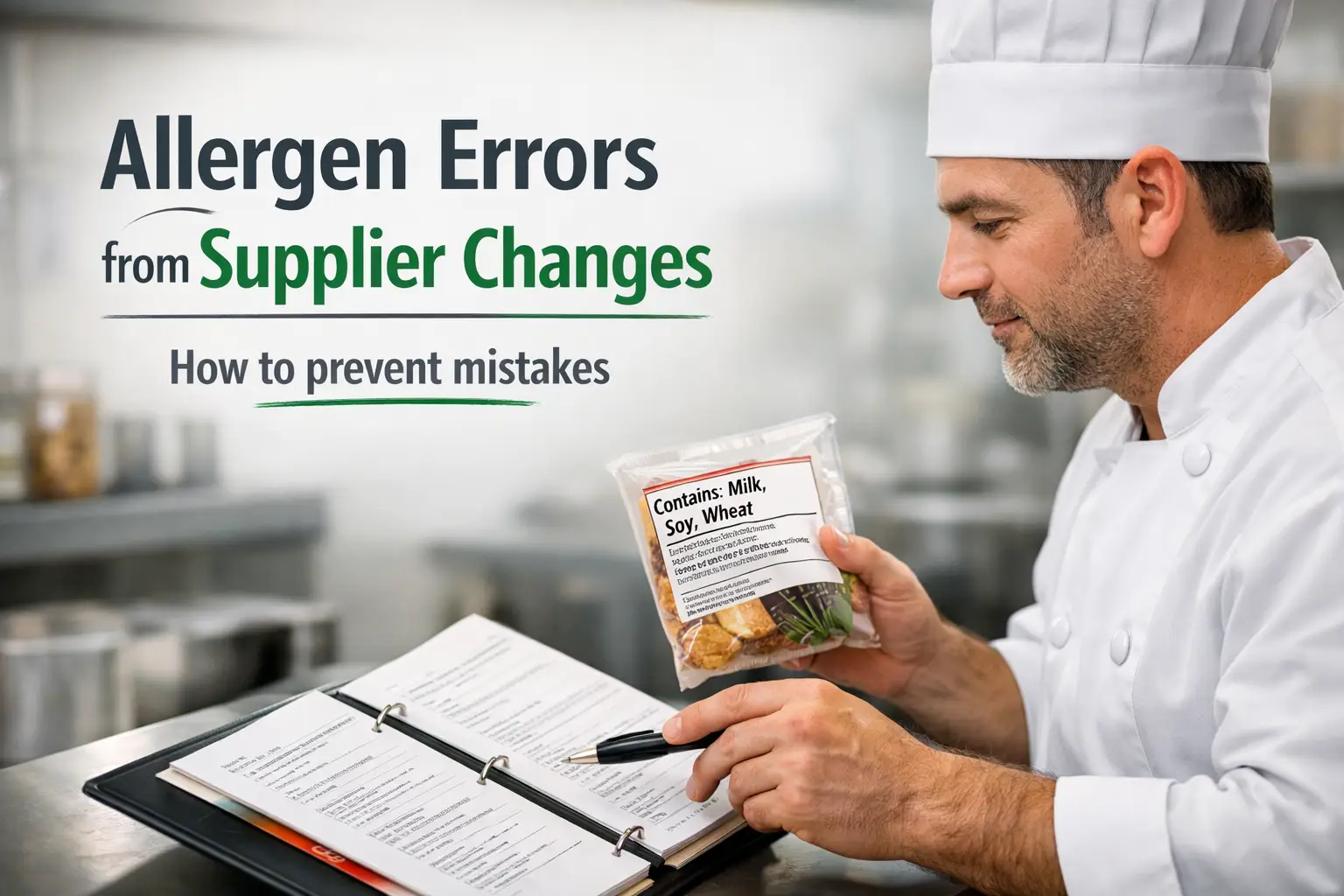
Supplier changes can alter allergens overnight. Check ingredients before using new stock.
Why supplier swaps happen
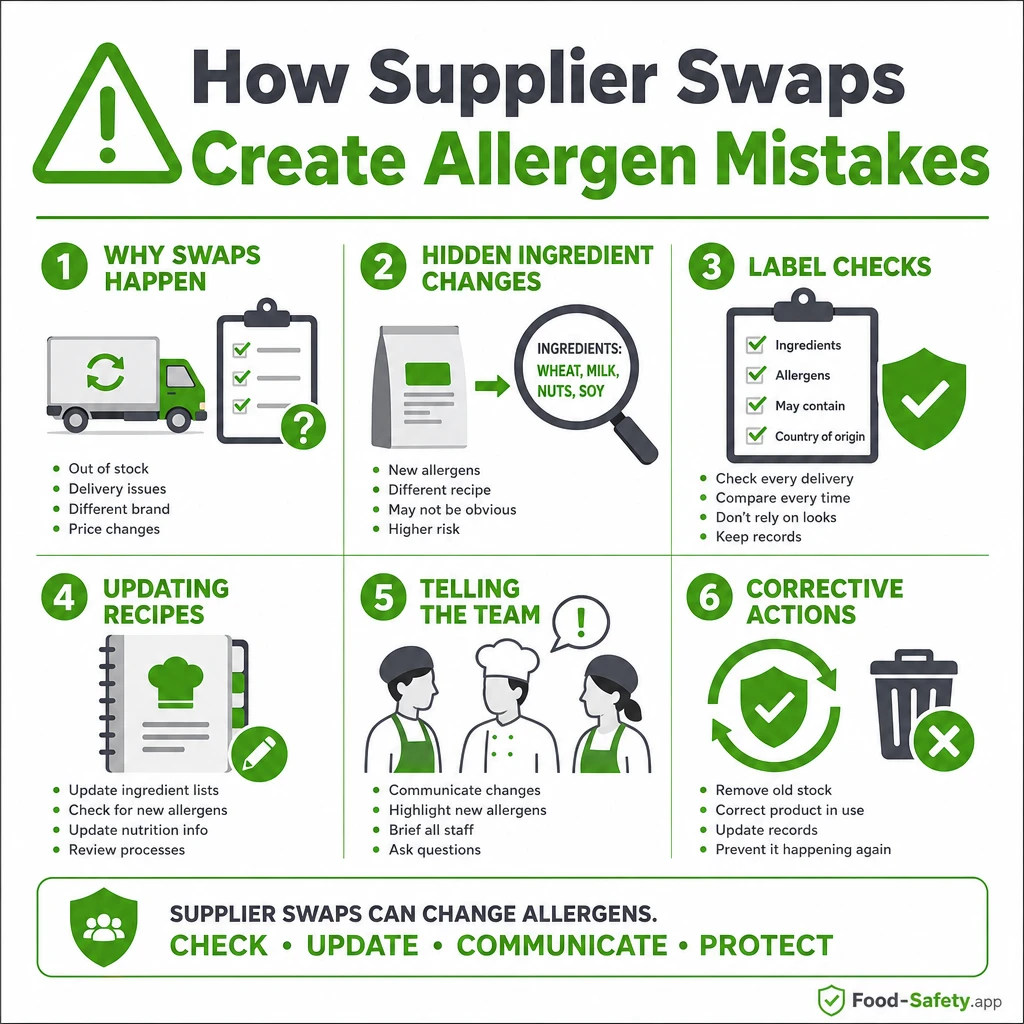
Supplier swaps occur when shortages, price changes, or brand substitutions affect what arrives on a kitchen doorstep. Last-minute substitutions can carry different allergen risks, especially during emergency deliveries. For regulatory context, see the law and your responsibility.
- Shortages and back-order scenarios
- Price volatility or promotional substitutions
- Brand changes or private label replacements
- Emergency deliveries or courier delays
Hidden ingredient changes
Even when the product name stays the same, reformulations or new accompaniments can alter allergen profiles. Hidden ingredient changes may involve new sauces, seasoning blends, garnish items, or pre-made components that introduce, remove or shift allergen contents without immediate visibility on packing. an allergen matrix for your menu can help prevent surprises.
Label checks and delivery verification
Label accuracy is the frontline defence against allergen mistakes. A robust delivery verification routine helps catch changes before products reach the pass. Cross-contamination in food safety explained provides broader context for prevention.
- Inspect the label on arrival for allergen statements, “may contain” warnings, and ingredient lists.
- Compare the current item with the last known specification and the purchase order.
- Review any changes in allergen wording, even when the product name remains unchanged.
- If a discrepancy is found, quarantine the item and escalate to procurement or the chef on duty.
- Record the outcome and communicate the change to the menu records and allergen file.
Updating recipes and menu records
When a swap occurs, the recipe and allergen records must reflect the new reality. This keeps front-of-house staff informed and supports accurate guest communication and compliance reporting. Allergen training for new and agency staff helps ensure consistent handling.
Telling the team: briefing chefs, front of house, and relief staff
Clear, timely communication prevents substitutions from slipping through the cracks. Each shift should include a quick briefing on any substitutions, especially for dishes that carry complex allergen profiles. Toolbox talks that actually help staff learn food safety.
- Chefs receive a concise alert detailing the substitution and updated allergen notes.
- Front of house staff understand which dishes are affected and what to inform guests about.
- Supervisors and relief staff are briefed to maintain consistency during handovers.
- A written log or digital note confirms staff acknowledgement and action steps.
Corrective actions when a swap creates risk
Swift, disciplined actions protect guests and maintain operational control. When a substitution appears unsafe or unverified, follow these steps: How long should you keep food safety records.
Take decisive steps such as rejecting or returning unsuitable items to the supplier where possible; isolating affected stock to prevent accidental use; escalating the issue to the head chef or manager and documenting the decision path; logging the corrective action with date, product, batch and reason for rejection; and reviewing procurement notes to identify patterns and trigger a supplier follow-up.
Reviewing risk after a swap
After a supplier swap, run a quick risk review focused on cross-contact and high-risk dishes. This helps close gaps before the next service and informs supplier discussions.
Practical scenarios
A pasta sauce supplier changes cheese content without warning
Cheese type or quantity changes alter dairy allergen exposure. Promptly verify the new ingredient list, adjust the recipe and allergen matrix, and inform service staff to avoid miscommunication on a popular dish.
A sandwich filling arrives in a new brand with different allergen wording
New wording can shift “may contain” statements and require a quick menu update and guest advisory for those with dairy or egg allergies.
A dessert garnish contains nuts after a substitute delivery
Nut-bearing garnish introduces a cross-contact risk. Isolate affected garnish, remove from use, and re-train staff to check garnish provenance during prep.
A pre-made curry mix now includes mustard or celery
Mustard or celery in a ready mix changes the dish’s allergen footprint. Re-audit the curry station, update the allergen matrix, and brief the team before service.
A chef uses an approved replacement but forgets to update the allergen matrix
The substitution bypasses the records. Correct quickly by updating the matrix and delivering a short staff reminder about the new ingredient and allergen status.
Suggested compliance or operational focus
Keep a clear record of delivery checks and product changes. Use allergen specs and menu records to confirm what is safe to serve. Build a simple process for approving substitutions before use. Record corrective actions when a swap creates an allergen risk. Make sure all staff know where to find the latest allergen information.
Learn more about allergen controls
Strengthen your allergen management by building reliable processes for supplier substitutions, delivery checks, recipe updates, and staff communication. Practical guidance and digital tools can help keep records current, reduce mistakes, support compliance, and give your team confidence when serving customers with food allergies.