Near misses reveal weak points early. Record them properly and act on them fast.
Why allergen near misses matter
A near miss is a warning sign that a mistake could recur, especially under pressure in a commercial kitchen or busy service. Close calls expose gaps in labelling, handover, cross‑contact controls, or timing of checks. They matter because today’s near miss can become tomorrow’s incident if not logged and addressed. Recording details creates a traceable history you can review with the team, auditors, and inspectors, and it supports safer menus and calmer service. This aligns with allergen management protocol for food businesses.
What to record straight away
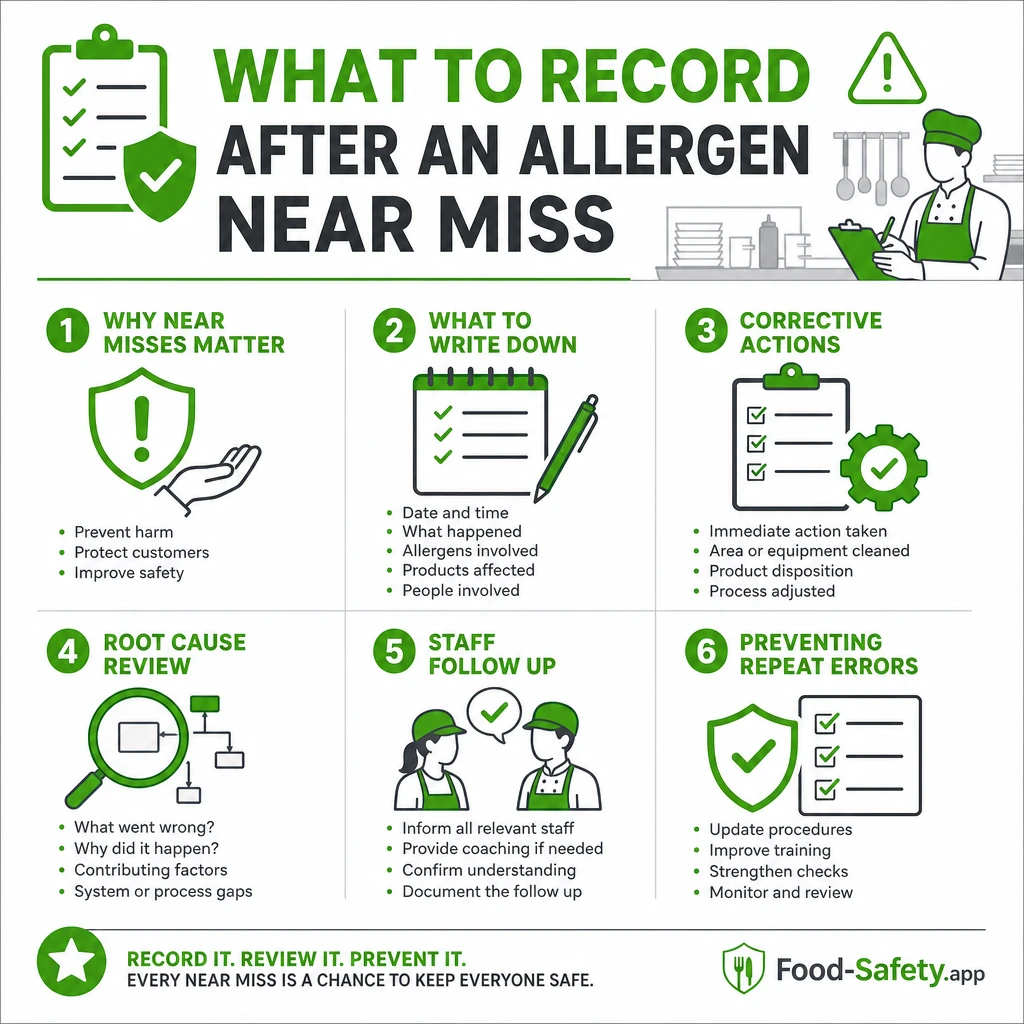
Capture the following promptly to build a reliable incident log. A structured record makes corrective actions traceable and reviewable, supporting cross-contamination prevention.
| Field | What to capture | Example |
|---|---|---|
| Date | Exact date of the near miss | 2026-07-28 |
| Time | Exact time or shift when the issue was identified | 18:45, during service shift 2 |
| Location | Where the issue occurred | Main prep table, pass-through window |
| Staff involved | Names or roles of people involved in spotting or handling the issue | Chef de partie; wait staff observed |
| Dish, ingredient, or delivery involved | What product or item was in play | Tomato sauce containing milk listed as dairy-free |
| Allergen risk identified | Which allergen was at risk and how it was flagged | Milk risk; label mismatch flagged during service |
| What was served, prepared, or nearly served | How the item appeared in service | Sauce plated; final garnish pending |
| How the issue was spotted and stopped | Method of detection and containment | Line cook noticed unexpected dairy; halted service and isolated batch |
Corrective actions
Immediate actions should prevent any patient exposure or cross-contact and document the decision path for future reference.
- Hold back, remake, relabel, or discard affected portions as appropriate
- Clean and sanitise equipment and surfaces that touched the risk item
- Withdraw or temporarily change the menu item if the risk cannot be controlled
- Inform suppliers if the issue originated with goods in; request documentation or replacement
- Document how the item was corrected and when it is deemed safe again for service
Root cause review
Identify the underlying reason for the near miss and determine whether training, process, or supervision needs adjustment.
- Wrong label or mislabelling on packaging or internal labels
- Poor handover between shifts or stations
- Cross-contact on shared surfaces or equipment
- Missed checks during prep or before service
- Rushed service leading to shortcut of critical steps
Document the root cause and assign a responsible person to implement a preventive action within a defined timeframe.
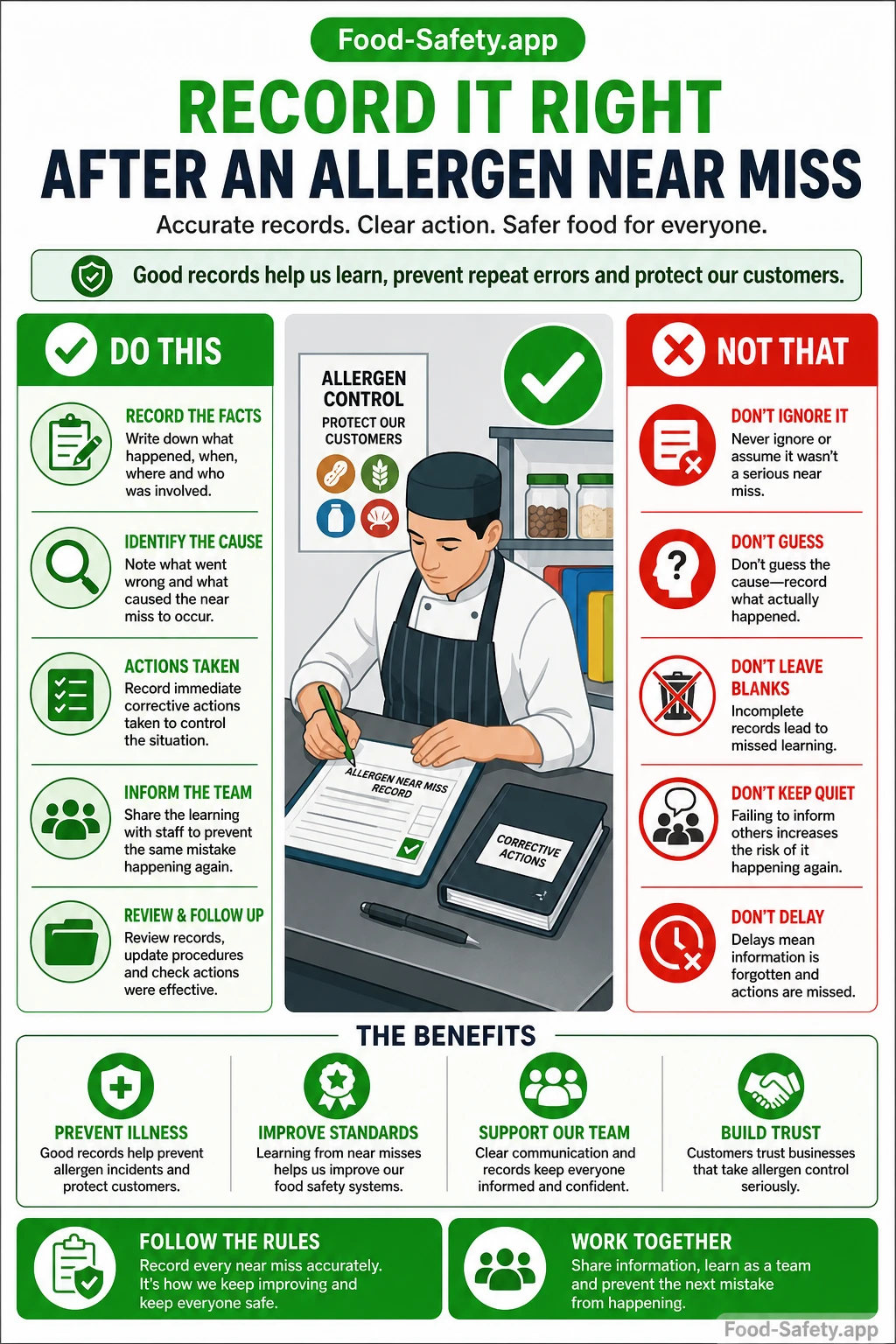
Staff follow-up and training
Clear communication and refreshed routines help the team prevent repeats.
- Brief the team about the near miss and the fix implemented
- Update task instructions and reference checklists used during prep and service
- Schedule targeted refresher training on allergen controls (labelling, cross-contact, and handover)
- Ensure both front and back of house understand the fix and how to apply it during busy service
Preventing repeat errors
Turn learnings into durable controls that survive busy service and staff turnover.
- Strengthen allergen checks at prep, during service, and at point of delivery
- Link records to specific menu items and established house rules for allergen handling
- Use trend review in the history view to spot repeat patterns and adjust processes
Compliance and documentation
Clear written evidence supports EHO visits, audits, and internal reviews. Use structured records with timestamps and clearly defined corrective actions to show due diligence and proactive risk reduction.
For official guidance on allergen information and safe practices, see the Food Standards Agency. Food Standards Agency – allergen labelling guidance.
Closing thoughts
Regularly reviewing allergen near misses strengthens your control environment, reduces risk, and supports confident menu decisions. By recording what happened, why it happened, and how you fixed it, your team builds a robust routine that survives busy service and inspections. Food safety is a daily discipline, not a one-off check. For practical guidance, see what food safety do small businesses need.
Food-Safety.app, a food safety management system for catering businesses.
Further reading on allergen safety
Discover practical allergen controls, logging best practices, and staff training strategies to improve safety, streamline operations, and maintain compliant kitchens across busy service periods.